
Sign up to save your podcasts
Or

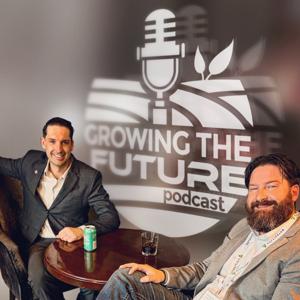

Somewhere on the prairies, there's a producer trying to do it all. The agronomy. The marketing. The books. The succession. The banking. The strategy. And they're wearing every hat at once — running hot, making decisions with incomplete information, and wondering why the numbers never quite tell the full story.
The top farms? They stopped doing that a long time ago.
This Growing the Future Productions live event puts Dan Aberhart at the table with seven of the most plugged-in financial and business minds working in Canadian agriculture right now: Evan Shout (Maverick Ag / Farmer Coach), Brian Mack and Justin Simpkins (Grow Lytics), Travis Gerrard and Roxanne Olynick from MNP, and Courtney Thevenot and Tanner Gerwing from Scotiabank Agricultural Banking. The conversation runs nearly 90 minutes and covers the full spectrum — from bookkeeping basics to billion-dollar family legacy questions. Not a panel of polished talking points. A real room of real advisors who already work together behind closed doors, and now you get to hear it.
What gets covered in this episode:
The 2% / 18% / 80% Split — Where Does Your Farm Land?
Evan Shout opens with a number that should stop people cold: over the last 20 years, as farm revenues have gone up and risk has increased, financial acumen in the industry has actually gotten worse. The top 2% aren't just profitable — they're operating with a completely different level of financial sophistication. The next 18% are closing the gap. The other 80% are still treating finance as a back-seat discipline.
(00:07:00) — Evan breaks down what separates the top tier, and why building a team is the single most powerful thing an operation can do to move up that ladder.
Access to Capital vs. Strategic Advice — They're Not the Same Thing
Grow Lytics started by reverse-engineering the perfect credit deal. Not by handing out money — by working backward from what a lender actually needs to say yes, and building the farm's story from there. Brian Mack draws a clear line between knowing your costs and knowing what the bank is looking at when you walk through the door.
(00:10:00) — The panel unpacks the difference between getting financed and being financially positioned. You don't want your banker to tell you it's a bad deal. You want to already know that before you show up.
What Scotiabank Actually Looks For — And It's Not Just the Numbers
Courtney Thevenot is direct: lending decisions aren't just financial. Management strength, character, who you've got in your corner, whether you're trying to do it all yourself — that all goes into the picture. A farm that walks in with a team behind them sends a completely different signal than one that shows up with a stack of paper and no story.
(00:12:00) — Courtney makes the case for the banking relationship as an ongoing partnership, not a transactional event. Quarterly calls. Farm visits. The relationship should be built long before you need something.
The Mental Health Moment Nobody Planned — But Everybody Needed
An audience member, Harry Siemens, drops a question about the farm suicide rate — 3.5 times higher than any other industry. Dan opens the floor. What follows is one of the most honest conversations this panel has. Evan doesn't give the diplomatic answer. He gives the hard one: farming culture has tied identity and legacy to a business in a way that makes failure feel unsurvivable. That's not the truth. But it's the pressure people are carrying.
(00:27:00) — Justin Simpkins adds context from time spent in Australia, where the numbers are even more stark. Courtney mentions the Canadian Centre for Agriculture Wellbeing as a real resource. Roxanne talks about peer groups as one of the most underrated tools for connection and permission to be honest. This segment wasn't on the agenda — but it might be the most important twelve minutes in the episode.
Benchmarking, Peer Groups & the Trucker Who Blew Everyone's Mind
Travis Gerrard talks about what happens when you put a trucking company's operational metrics in front of a room full of grain farmers. Nobody expected it. Everyone walked away wanting to know their numbers that much better. The benchmarking group MNP runs is covering 14% of Saskatchewan farmland — and the data is clear on what the best operations have in common.
(00:19:00) — Travis and the panel dig into the power of cross-industry benchmarking, and why getting outside the agriculture bubble — like Dan's example of Strategic Coach — can be the jolt that resets how a producer sees their own operation.
AI, Data & the Role of the Farm's Next Hire
The panel lands on something the audience was clearly hungry for: the missing seat at the table isn't another accountant or banker. It's a CTO. A tech integrator. Someone who can get real-time data flowing — from grain cards, JD Ops, harvest profit, bookkeeping — so that the advisors in the room can do insight work instead of cleanup work.
(00:44:00) — Evan lays out the vision clearly: AI isn't replacing thought leadership, but it will replace data entry, and that changes everything about how fast good decisions can get made.
The Third Generation Curse — And the Harder Question Nobody's Asking
John Gibson brings it live from the audience floor: why do so many family farm operations succeed through two generations and fall apart in the third? The panel doesn't flinch. Evan talks about the knowledge that gets lost when the generation that built through hard times doesn't transfer that context. Brian Mack says something that stops the room: are you trying to preserve the farm, or are you trying to preserve wealth for future generations? Because sometimes those are two different decisions.
(00:49:00) — Evan makes the case for the family office model — keeping the farm intact across generations rather than selling it off every 40 years to settle estates. The math at today's land prices makes the traditional approach nearly impossible.
Succession Planning — Separate Rooms, Real Conversations
Travis's point lands hard: get the kids in a separate room. Get the parents in a separate room. Because what the next generation actually wants — and what mom and dad assume they want — are often two very different things. That gap, unaddressed, is where farm transitions collapse.
(00:38:00) — Roxanne talks about seeing a generational shift in how clients are bringing younger family members into meetings earlier. Evan talks about farm operations actively recruiting external CEOs to run the business while family members stay involved as shareholders. The structure is changing.
Who's Missing from the Dream Team?
Lawyers. The panel admits it freely. Wills, shareholder agreements, prenups, joint venture agreements — verbal handshakes between multimillion-dollar operations. Evan doesn't mince words: Walmart isn't doing verbal agreements anymore. Neither should you.
(01:23:00) — The closing segment also touches on life insurance, climate advisors, agronomists as financial team members, and the AI-specific skill set that's becoming the next frontier for farm advisory teams.
Featured in this episode:
Resources mentioned:
Connect with the panelists:
More from Growing the Future:
Register for the Convergence Conference at convergence.ag and stay updated by subscribing to the Growing the Future Podcast at growingthefuturepodcast.ca.
 View all episodes
 By Dan Aberhart , Terry Aberhart
5
11 ratings
Somewhere on the prairies, there's a producer trying to do it all. The agronomy. The marketing. The books. The succession. The banking. The strategy. And they're wearing every hat at once — running hot, making decisions with incomplete information, and wondering why the numbers never quite tell the full story.
The top farms? They stopped doing that a long time ago.
This Growing the Future Productions live event puts Dan Aberhart at the table with seven of the most plugged-in financial and business minds working in Canadian agriculture right now: Evan Shout (Maverick Ag / Farmer Coach), Brian Mack and Justin Simpkins (Grow Lytics), Travis Gerrard and Roxanne Olynick from MNP, and Courtney Thevenot and Tanner Gerwing from Scotiabank Agricultural Banking. The conversation runs nearly 90 minutes and covers the full spectrum — from bookkeeping basics to billion-dollar family legacy questions. Not a panel of polished talking points. A real room of real advisors who already work together behind closed doors, and now you get to hear it.
What gets covered in this episode:
The 2% / 18% / 80% Split — Where Does Your Farm Land?
Evan Shout opens with a number that should stop people cold: over the last 20 years, as farm revenues have gone up and risk has increased, financial acumen in the industry has actually gotten worse. The top 2% aren't just profitable — they're operating with a completely different level of financial sophistication. The next 18% are closing the gap. The other 80% are still treating finance as a back-seat discipline.
(00:07:00) — Evan breaks down what separates the top tier, and why building a team is the single most powerful thing an operation can do to move up that ladder.
Access to Capital vs. Strategic Advice — They're Not the Same Thing
Grow Lytics started by reverse-engineering the perfect credit deal. Not by handing out money — by working backward from what a lender actually needs to say yes, and building the farm's story from there. Brian Mack draws a clear line between knowing your costs and knowing what the bank is looking at when you walk through the door.
(00:10:00) — The panel unpacks the difference between getting financed and being financially positioned. You don't want your banker to tell you it's a bad deal. You want to already know that before you show up.
What Scotiabank Actually Looks For — And It's Not Just the Numbers
Courtney Thevenot is direct: lending decisions aren't just financial. Management strength, character, who you've got in your corner, whether you're trying to do it all yourself — that all goes into the picture. A farm that walks in with a team behind them sends a completely different signal than one that shows up with a stack of paper and no story.
(00:12:00) — Courtney makes the case for the banking relationship as an ongoing partnership, not a transactional event. Quarterly calls. Farm visits. The relationship should be built long before you need something.
The Mental Health Moment Nobody Planned — But Everybody Needed
An audience member, Harry Siemens, drops a question about the farm suicide rate — 3.5 times higher than any other industry. Dan opens the floor. What follows is one of the most honest conversations this panel has. Evan doesn't give the diplomatic answer. He gives the hard one: farming culture has tied identity and legacy to a business in a way that makes failure feel unsurvivable. That's not the truth. But it's the pressure people are carrying.
(00:27:00) — Justin Simpkins adds context from time spent in Australia, where the numbers are even more stark. Courtney mentions the Canadian Centre for Agriculture Wellbeing as a real resource. Roxanne talks about peer groups as one of the most underrated tools for connection and permission to be honest. This segment wasn't on the agenda — but it might be the most important twelve minutes in the episode.
Benchmarking, Peer Groups & the Trucker Who Blew Everyone's Mind
Travis Gerrard talks about what happens when you put a trucking company's operational metrics in front of a room full of grain farmers. Nobody expected it. Everyone walked away wanting to know their numbers that much better. The benchmarking group MNP runs is covering 14% of Saskatchewan farmland — and the data is clear on what the best operations have in common.
(00:19:00) — Travis and the panel dig into the power of cross-industry benchmarking, and why getting outside the agriculture bubble — like Dan's example of Strategic Coach — can be the jolt that resets how a producer sees their own operation.
AI, Data & the Role of the Farm's Next Hire
The panel lands on something the audience was clearly hungry for: the missing seat at the table isn't another accountant or banker. It's a CTO. A tech integrator. Someone who can get real-time data flowing — from grain cards, JD Ops, harvest profit, bookkeeping — so that the advisors in the room can do insight work instead of cleanup work.
(00:44:00) — Evan lays out the vision clearly: AI isn't replacing thought leadership, but it will replace data entry, and that changes everything about how fast good decisions can get made.
The Third Generation Curse — And the Harder Question Nobody's Asking
John Gibson brings it live from the audience floor: why do so many family farm operations succeed through two generations and fall apart in the third? The panel doesn't flinch. Evan talks about the knowledge that gets lost when the generation that built through hard times doesn't transfer that context. Brian Mack says something that stops the room: are you trying to preserve the farm, or are you trying to preserve wealth for future generations? Because sometimes those are two different decisions.
(00:49:00) — Evan makes the case for the family office model — keeping the farm intact across generations rather than selling it off every 40 years to settle estates. The math at today's land prices makes the traditional approach nearly impossible.
Succession Planning — Separate Rooms, Real Conversations
Travis's point lands hard: get the kids in a separate room. Get the parents in a separate room. Because what the next generation actually wants — and what mom and dad assume they want — are often two very different things. That gap, unaddressed, is where farm transitions collapse.
(00:38:00) — Roxanne talks about seeing a generational shift in how clients are bringing younger family members into meetings earlier. Evan talks about farm operations actively recruiting external CEOs to run the business while family members stay involved as shareholders. The structure is changing.
Who's Missing from the Dream Team?
Lawyers. The panel admits it freely. Wills, shareholder agreements, prenups, joint venture agreements — verbal handshakes between multimillion-dollar operations. Evan doesn't mince words: Walmart isn't doing verbal agreements anymore. Neither should you.
(01:23:00) — The closing segment also touches on life insurance, climate advisors, agronomists as financial team members, and the AI-specific skill set that's becoming the next frontier for farm advisory teams.
Featured in this episode:
Resources mentioned:
Connect with the panelists:
More from Growing the Future:
Register for the Convergence Conference at convergence.ag and stay updated by subscribing to the Growing the Future Podcast at growingthefuturepodcast.ca.
228,366 Listeners
149 Listeners
128 Listeners
13 Listeners
764 Listeners
257 Listeners
127 Listeners
392 Listeners
45,900 Listeners
350 Listeners
39,501 Listeners
408 Listeners
16,345 Listeners
2 Listeners