
Sign up to save your podcasts
Or

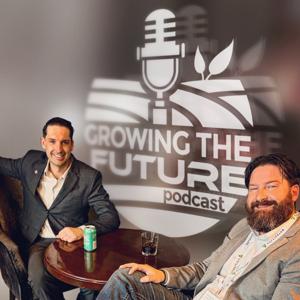


You paid for the nitrogen and put it down the tube on the drill. How much of it did the crop actually use? And if you cannot say, what is next year’s rate based on?
Greg Patterson of A&L Laboratories Canada has spent 35 years building nitrogen models for variable rate, starting in the mid-1990s with corn, tobacco and potatoes. In this first live session of Engine of the Soil Season 2, he shows how those models changed, from a heavy calculation to simpler indexes, and why the rate depends on more than a nitrate test. Trevor Thornton, who uses the models with growers in Manitoba, adds what he sees at the farm gate in a year when budgets are tight. Melissa Werkema joins for a frank exchange on boron, balance and what agronomists owe the people they advise.
What’s Inside
• Why Greg says a good year gets only about 45 to 50 percent of applied nitrogen into the crop, and about 15 percent of potassium
• How potassium sets up nitrogen use, including his rule of thumb of about three pounds of potassium for each pound of nitrogen early in the season
• The potassium to magnesium ratio he aims for, about 0.25 to 0.35, and the 10 to 30 percent more nitrogen his models call for when it falls below 0.15
• Why liming without revisiting the nitrogen rate can hurt crop quality, because nitrogen use efficiency rises with calcium base saturation
• Nitrogen holding capacity: why a sandy soil may hold only about 70 pounds of ammonium nitrogen from one application, and when to split it
• Why estimated nitrogen release and soil moisture often matter more than temperature, and what a 2.5 acre grid shows that a bulk nitrate sample hides
• How Trevor’s clients spend variable rate dollars, in his experience: about half the time the same money placed differently, a fifth to a quarter of the time more, and a quarter to 30 percent of the time less
• Cutting costs in a tight year: Greg’s advice to pull back on marginal acres first, and Trevor’s flags-in-the-field method for variable rate without a million-dollar machine
Related Episode:
Your Soil Type Is Costing You Yield
GTF Podcast: Where Does 46% of Your Nitrogen Actually Go?
Connect with Growing the Future
Website: growingthefuture.ca
YouTube: Growing the Future
Instagram: @growingthefuturepodcast
LinkedIn: Growing the Future
Subscribe to the Growing the Future Podcast wherever you listen, and register for Convergence Conference 2027 at convergence.ag.
Register for the Convergence Conference at convergence.ag and stay updated by subscribing to the Growing the Future Podcast at growingthefuturepodcast.ca.
Fewer listings than last year. Bigger packages. The highest dollar value of farmland listed for sale in ten years. In April, Tim Hammond told the room the market was splitting, with good land still climbing and average land moving sideways. Six months later he is back with a different word for what he sees: not a weakening market so much as a maturing one, with supply and demand closer to balance than they have been in years.
Tim, of Hammond Realty, has been in farmland for thirty years. In this live session with Dan Aberhart he takes the questions on people’s minds: what affordability does to the next decision, why access to capital came out on top when the room was polled, and how a transfer of around $50 billion in farmland, mostly inside families, actually gets done.
What’s Inside
• Why Tim calls this market maturing and not weakening, and what that looks like in practice: sideways, a little up, a little down
• How listings can fall in number and still hit a ten-year high in dollar value, and why a September to August crop year is the fairer way to count
• Why he takes technical analysis of land values seriously if it is read over a hundred years, and what a 20 percent pullback would mean for lenders in his view (he is not predicting one)
• Land as an input or as an investment: how a producer buying to produce thinks differently from a buyer chasing an asset
• Why a 5,000 acre package was easier to sell than a 500 acre one three years ago, and why that has reversed
• What the room said in a live poll: more people looking to buy or transfer than to sell, and financing as the biggest obstacle
• Why a succession plan is one thing and carrying it out is another, and the quarterback role an advisor can play
• The Hammond Huddle: one meeting with the accountant, lawyer, lender, wealth advisor and insurance advisor, the dangers, opportunities and strengths exercise, and the risks no one had named, from digital passwords to an unfinished to-do list
• When to list (off the combine), why auctions suit only some packages, and why pasture demand is rising
Dan opens on the numbers: fewer listings, bigger farm packages, and a ten-year high in the dollar value of farmland listed, close to double with the Monette Farms sale included. Tim explains how he counted by crop year and why this looks like a maturing market. He covers affordability, the technical analysis work he and Trent did on land values, and the difference between buying land as an input and as an asset.
The room is polled twice: what people are trying to do (buy, sell, transfer) and what stands in the way. Financing comes out on top. Tim says that for families the hard part is carrying a plan out, and he describes the Hammond Huddle he held in September for his own family and advisors, with his kids in the room.
The session closes with audience questions on irrigated and pasture land, which regions are active, when to list, and auctions.
Key Topics
• Maturing versus weakening markets
• Affordability and access to capital
• Land as an input versus an investment
• Family transfer and the role of advisors
• Timing a listing and choosing how to sell
Resources Mentioned
• Trent Klarenbach’s technical analysis of farmland values and his newsletter (klarenbach.ca)
• Strategic Coach: the dangers, opportunities and strengths exercise, and the three-years-from-now question
• Farm Credit Canada’s farm equity analysis, cited by Dan
Connect with Growing the Future
Website: growingthefuture.ca
YouTube: Growing the Future
Instagram: @growingthefuturepodcast
LinkedIn: Growing the Future
Subscribe to the Growing the Future Podcast wherever you listen, and register for Convergence Conference 2027 at convergence.ag.
Register for the Convergence Conference at convergence.ag and stay updated by subscribing to the Growing the Future Podcast at growingthefuturepodcast.ca.
Five invoices a day. That is what a CFO friend of Dan’s says a farm can see in a busy season, and each one has to be checked, categorized and matched to a receipt. Most people in agriculture have nobody to hand that to, which leads to the question Dan hears most: what can I take off my plate first?
This live session starts there and then follows the room. Dan sets out to show one job and ends up building three things in front of the audience, answering a hard question about security, and being candid about what is still a demo. He is not a machine learning expert and says so. What he does offer is a working method.
What’s Inside
• Why the first step is context, not a tool, and why Dan says dictating to the machine beats typing to it
• A grain basis tracker for a terminal that keeps its prices behind a password: ask the company for a supported connection first, then look at what browser and computer control can do
• Why the basis numbers in the live demo were made up, and what a verified source for one specific terminal still has to prove
• A soil test tracker built live from a few questions: matching lab shipment receipts to returned reports, then checking what the grower portal shows
• A morning dashboard changed by voice while the room watched: weather, email summary, market news, futures report
• Where to start with agents: one agent that does one job, then a small group, named and organized like staff
• The privacy question, answered without a sales pitch: what goes to the cloud, what can stay local, and why computer control is the feature to be most careful with
• The tire torque reminder: an assistant that read an invoice email and flagged a safety item nobody asked it to watch for
Dan opens with a problem every farm office knows: invoices, receipts and the people chasing them in a busy season. He says the real question people bring him is what to take off their plate first. He tells how he rebuilt his own business with a team of AI agents. He also tells how an assistant read a tire shop’s invoice email and reminded him to get his wheel nuts re-torqued, something he had not asked it to watch for.
Dan had planned to demonstrate one job, an invoice dashboard, but the audience questions take the session elsewhere. One participant wants to track grain basis over time from a grain company’s login-protected site. Dan explains the options in order: ask the company whether a supported connection exists, then use browser or computer control with a login. He also sends his voice agent out to research verified sources. It finds basis history for one regional elevator on a commercial data service. It cannot confirm coverage of the participant’s exact terminal or the licensing. The dashboard Dan builds for the demo uses fictional numbers, and the participant points that out.
A second participant wants to reconcile soil test shipment receipts with returned lab reports and check that a grower portal was updated. Dan has his voice agent interview her for the key facts: the matching identifier, the portal and the volume. He then builds a soil test tracker demo with fictional data. The demo screen warns that a field ID is a clue and not a unique key, and that a received report does not prove the portal was updated.
The session closes on a direct question about security. Dan answers as a user, not an expert. Most people, including his cohort, use cloud models. Computer control is one of the more dangerous features. Sensitive intellectual property belongs in local AI. Everyone should do their own research. He then describes his upcoming AI training cohort and answers questions about format.
Key Topics
• Starting with one small job and the context you give the machine, not with a tool
• Dictation as the fastest way to give AI context
• Getting at data behind a login: supported connections first, computer control second
• Matching lab shipment receipts to returned soil test reports, and why a received report does not prove the portal was updated
• Data security and local AI, from a user’s point of view
Resources Mentioned
• Claude Code, including its Chrome extension and computer use feature
• OpenAI Codex, which Dan prefers for voice
• Wispr Flow, for dictation (spelled “Whisper Flow” in the captions)
• A commercial market data service and a grain company’s basis page
• Connections Dan names: Asana, Canva, Descript, DocuSign, Gmail, Google Drive, HubSpot, Mailchimp, Notion, Zoom, QuickBooks
Connect with Growing the Future
Website: growingthefuture.ca
YouTube: Growing the Future
Instagram: @growingthefuturepodcast
LinkedIn: Growing the Future
Subscribe to the Growing the Future Podcast wherever you listen, and register for Convergence Conference 2027 at convergence.ag.
Register for the Convergence Conference at convergence.ag and stay updated by subscribing to the Growing the Future Podcast at growingthefuturepodcast.ca.
Working hard is how most farm successors earn their place. It is not the same as being prepared to lead. A successor can run the sprayer, raise the crop and know the ground, and still be missing the decision-making, the numbers and the family conversations that the founder has carried without ever naming them.
Patti Durand, family business advisor and author of The Future Leader, and Chris Corbett, her partner at Brightrack, join Dan Aberhart for a live briefing built on three questions: How well do you know yourself? How well do you know your farm business? How well do you know your farm family? They explain why the successor's job is to prepare to lead and the founder's job is to prepare to leave, why "my parents have a plan" is an assumption worth checking, and what to do when a conversation gets hot.
What's Inside
• Why being operationally strong is not the same as being ready to lead, and which decision-making skills are usually missing
• Why the founder's job is to prepare to leave, and why that is harder than it sounds
• The assumption that parents have a plan they will reveal when the time comes, and the case for saying plainly that you don't have one yet
• Why the family's general accountant or lawyer may not be the right specialist for succession, using a family doctor and a hip replacement as the comparison
• How to notice when you are triggered, why a time-out of at least twenty minutes helps, and the safe word one family agreed on
• Four prompts that open a hard conversation: help me understand, say more, tell me more, I'm curious
• How to tell whether you have a transition question or a business sustainability question
• Why you don't have to love the numbers, but you do need to read the dashboard
• How to start family meetings: a meeting about meetings, a short agenda and a shared picture of the outcome you want
Key Topics
• Successor preparation and founder letting go
• Assumptions about a plan that may not exist
• Choosing the right specialist advisor for succession
• Self-awareness, time-outs and repairing a hard conversation
• Reading your farm's financial dashboard
• Starting family meetings and agreeing on the outcome
Resources Mentioned
• The Future Leader, by Patti Durand
• A successor assessment tool from Farm Credit Canada, mentioned by Patti
Connect with Growing the Future
Website: growingthefuture.ca
YouTube: Growing the Future
Instagram: @growingthefuturepodcast
LinkedIn: Growing the Future
Subscribe to the Growing the Future Podcast wherever you listen, and register for Convergence Conference 2027 at convergence.ag.
Register for the Convergence Conference at convergence.ag and stay updated by subscribing to the Growing the Future Podcast at growingthefuturepodcast.ca.
Your banker calls it coffee. In Craig Macfie's experience, it is an interview. They are reading your numbers, and they are reading how you manage.
Harvest ends, Christmas comes, and twelve months of bookkeeping land on the accountant's desk with everyone else's. Reports can arrive in April, just as the field work starts again. Next year's decisions are already underway while the picture of last year is still missing.
Dan Aberhart sits down with Craig, a CPA, P.Ag. and the founder of Spring CFO, who works alongside farm owners as their fractional CFO. A live poll of the room found only about a third had grain inventory and working capital numbers that were current and checked. Craig explains why the numbers are always an estimate, and what it takes to build the finance side of an operation on a solid base.
What's Inside
• Why a lender's "coffee" is really an interview, and what they read across the table
• Why grain inventory is always an estimate, and why the adjustment more often hurts next year's profitability than helps
• The building blocks of farm finance: strategy and risk first, then transactions, bookkeeping, reporting, forecasting and the bank
• How to get bookkeeping current when decisions are being made on information months old
• Cash flow lending versus asset-based lending, and the production reconciliation inside AgriStability
• How the Entrepreneurial Operating System gives a farm a simple structure for strategy, a scorecard and meetings
Resources Mentioned
• Traction (the book behind the Entrepreneurial Operating System)
• Good to Great, by Jim Collins
Connect
• springcfo.com
Connect with Growing the Future
Website: growingthefuture.ca
YouTube: Growing the Future
Instagram: @growingthefuturepodcast
LinkedIn: Growing the Future
Subscribe to the Growing the Future Podcast wherever you listen, and register for Convergence Conference 2027 at convergence.ag.
Register for the Convergence Conference at convergence.ag and stay updated by subscribing to the Growing the Future Podcast at growingthefuturepodcast.ca.
A grain farm carrying roughly $500 of crop per acre on 5,000 acres is carrying about two and a half million dollars of exposure to grain prices. It doesn't need an open trading account to be in the market.
Ryan Bonnett started as a 21-year-old grain merchant and later began trading his own account. He won early, then lost ten or twelve trades in a row because, as he puts it, he was trading on feel and had no system. He joins Dan to explain why almost nobody is taught how to use hedging tools, what changes when you have rules for getting in and a point where you know you're wrong, and how a farm can think about protecting the bottom end of its price. Live questions from the audience cover cross-hedging, technical analysis and how much time to give the markets each week.
What's Inside
Website: growingthefuture.ca
YouTube: Growing the Future
Instagram: @growingthefuturepodcast
LinkedIn: Growing the Future
Subscribe to the Growing the Future Podcast wherever you listen, and register for Convergence Conference 2027 at convergence.ag.
Register for the Convergence Conference at convergence.ag and stay updated by subscribing to the Growing the Future Podcast at growingthefuturepodcast.ca.
The hardest thing to fix on a farm doesn't have a part number. It's whatever went wrong between people, and unlike a tractor, you can't just order the replacement part.
Dan built this session around an experiment: using the same diagnostic logic a farm already trusts, soil test, tissue test, soil map, applied to people instead of fields. He walks through his own Kolbe, CliftonStrengths, and Enneagram results live, then brings on Robert Woolf to tell a real story: when Dan and Robert negotiated Robert's return for Cohort 3, they each let an AI interview them for hours, then let the two AI agents work out 90 percent of the deal before either of them read a final draft. Stefano Zanotto, early in his own cohort, joins to talk about what the same diagnostics surfaced for him.
What's Inside
Register for the Convergence Conference at convergence.ag and stay updated by subscribing to the Growing the Future Podcast at growingthefuturepodcast.ca.
Robert Woolf is 67. He is not a programmer. In season he is scouting fields fourteen to sixteen hours a day, and he used to get home and forget half of what he'd found before he could write it up.
His grandson brought up AI at a rodeo. Robert's first thought was that he was too close to retirement to bother learning it. He didn't retire. He built thirteen AI agents instead, one of which checks the other twelve, and this conversation is him walking through exactly how.
What's Inside
Related Episodes
Connect with Robert Woolf
Available through the Growing Your Future Operating System cohort
Connect with Growing the Future
Website: growingthefuture.ca
YouTube: Growing the Future
Instagram: @growingthefuturepodcast
LinkedIn: Growing the Future
Subscribe to the Growing the Future Podcast wherever you listen, and register for Convergence Conference 2027 at convergence.ag.
Register for the Convergence Conference at convergence.ag and stay updated by subscribing to the Growing the Future Podcast at growingthefuturepodcast.ca.
A farm and its neighbour, same region, same growing conditions, can sit $187 an acre apart in what actually gets made. That gap decides what gets paid down, what gets replaced, and eventually what gets passed on.
This is the third session in MNP's Know Your Numbers series. The first two took the conversation from the books to the whole-farm benchmark. This one goes past the fence line and into the field.
What's Inside
Related Episodes
Connect with Dean Klippenstine:
MNP: mnp.ca/en/personnel/dean-klippenstine
LinkedIn: Dean Klippenstine
Connect with Mike Palmier:
MNP: mnp.ca
Connect with Growing the Future
Website: growingthefuture.ca
YouTube: Growing the Future
Instagram: @growingthefuturepodcast
LinkedIn: Growing the Future
Subscribe to the Growing the Future Podcast wherever you listen, and register for Convergence Conference 2027 at convergence.ag.
Register for the Convergence Conference at convergence.ag and stay updated by subscribing to the Growing the Future Podcast at growingthefuturepodcast.ca.
Canola is priced off documents written in another country, and most of the people growing it have never read one.
Susan Stroud spent more than fifteen years in the cash grain business, buying by truck and rail and loading out on barge, before building No Bull Ag into a grain and oilseed analysis service. She joins Dan and co-host Ryan Bonnett of ABB Solutions for a working session on the policy machinery underneath the canola market.
What's Inside
Resources Mentioned
No Bull Ag market insights, with a two week preview
AgVentures international tours
Connect with Susan Stroud:
No Bull Ag: nobullag.com
X: @SusanNobull
Connect with Ryan Bonnett:
ABB Solutions
Connect with Growing the Future
Website: growingthefuture.ca
YouTube: Growing the Future
Instagram: @growingthefuturepodcast
LinkedIn: Growing the Future
Subscribe to the Growing the Future Podcast wherever you listen, and register for Convergence Conference 2027 at convergence.ag.
Register for the Convergence Conference at convergence.ag and stay updated by subscribing to the Growing the Future Podcast at growingthefuturepodcast.ca.
From the publisher's feed
Ranked by our users in the last 21 days

227,479 Listeners
147 Listeners
126 Listeners
14 Listeners
737 Listeners
257 Listeners
129 Listeners
385 Listeners
46,079 Listeners
353 Listeners
39,409 Listeners
407 Listeners
15,926 Listeners
2 Listeners