
Sign up to save your podcasts
Or

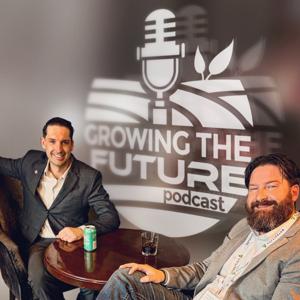


Somewhere between the farm and your plate, the story of how your food is grown got hijacked. Not by farmers. By people who have never touched a seed, never watched a crop fail, never had to explain to their banker why the weather won.
Dennis Bulani is a fourth-generation Saskatchewan farmer, CEO of The Rack -- one of Western Canada's most respected independent ag retailers -- founder of the Trust Your Plate movement, and author of What a Farmer Wants You to Know About Food. He sat in a room full of entrepreneurs in Arizona while a speaker told everyone that modern farming was poisoning the world. He went home and wrote a book about it.
Nine in ten people trust farmers. One in five trust modern farming practices. This is the conversation about how that gap happened -- and what to do with it.
Topics and Timestamps
0:00 -- Dan's open: "Somewhere between the farm and your plate, the story got hijacked"
1:07 -- Dennis on the farm right now: wheat year, 1,000 acres, single-crop rotation
1:28 -- The one-crop-per-year strategy and why it works for a busy CEO-farmer
4:15 -- Pulse rotation research: 15% average yield lift across all other crops
5:52 -- Solving phomyces root rot: 5-year research taking peas from 25 to 75 bushels
7:37 -- Published in the American Journal of Plant Science
8:49 -- The Rack's research program: PhD scientist, 6 agronomists, 12 field trials annually
10:00 -- The 100-bushel canola goal and what the "kitchen sink" trial actually proved
13:06 -- How "Rogue" was born: Dr. Bill Brown, manganese-zinc surfactant, and 10-12% yield lift
17:10 -- Rogue in Liberty Canola and what glyphosate actually does to manganese and zinc
18:36 -- Dennis's animal science degree: balancing plant rations is the same science as balancing cattle rations
22:13 -- From Eli Lilly to building The Rack: how an animal nutritionist ended up selling gas
26:00 -- Strategic Coach and the size of the problems Dennis is now willing to take on
30:00 -- The Arizona room: a speaker says modern farming is poisoning the world. Dennis goes home and writes a book.
35:00 -- The trust gap: 9 in 10 people trust farmers but only 1 in 5 trust modern farming practices
38:00 -- The MSG story: how one bad idea gets into the bloodstream of a culture and never leaves
39:39 -- Fertilizer supply chain: urea forecasting, import terminals, and the 2026 seeding sprint
41:13 -- Trump and geopolitics: the Straits of Hormuz theory and what it means for urea prices
43:05 -- Are farmers making money? The 2026 economics at $820 spring wheat
44:09 -- Why Canadian farmers are the most resilient in the world -- and the crow rate story that explains it
47:06 -- "The most advanced, educated farmers in the world" -- how adversity built Western Canadian agriculture
50:52 -- Biological products: the seaweed trial, what the research actually showed, and how to think about new claims
53:48 -- Zinc deficiency in 70% of soil tests -- the right form, timing, and strategy for zinc
59:27 -- Phosphate threshold: 20-25 ppm as the floor that separates good yields from great ones
1:04:29 -- The Rack spends $600,000 a year on replicated research -- and shares results with competitors for free
1:07:00 -- The retail landscape is changing: what separates partners from order-takers
1:08:53 -- AI and the future of ag retail agronomy
1:17:57 -- The novel: 60% true story, Kyrgyzstan, post-communist winter wheat, and Fibonacci numbers
1:20:07 -- Writing the book for "Aunt Nancy from Vancouver" -- and hiring four fact-checkers
1:22:13 -- "Never have we lived longer, never have we been healthier" -- Canada's 84-year life expectancy
1:26:07 -- Aunt Nancy from Vancouver: why farmers avoid the conversation -- and why they shouldn't
1:27:09 -- TrustYourPlate.com as a reference tool for farmers to use in the moment
1:30:42 -- The three biggest myths in consumer agriculture
1:31:15 -- The eyedrop analogy: one-third of one drop per square foot per year is all the chemical farmers apply
Resources Mentioned
What a Farmer Wants You to Know About Food -- Dennis Bulani (book, available on Amazon, Kindle edition)
Trust Your Plate -- trustyourplate.com (reference tool for answering food safety questions)
The Rack -- Rack Petroleum, Bigger, Saskatchewan (ag retail, fuel, fertilizer, research division)
Rogue -- The Rack's proprietary manganese-zinc surfactant product (developed from Dr. Bill Brown's research)
American Journal of Plant Science -- published The Rack's pea phomyces root rot research
Ultimate Yield -- The Rack's agronomy division
AgLink Canada -- independent ag retailer association (Dean Falls, Director)
Nutrients for Life Canada -- distributing the book to school teachers across Canada
Dr. Aaron Corey -- PhD scientist, The Rack research division
Dr. Bill Brown -- glyphosate and surfactant researcher, Ontario; Hellfire surfactant
Strategic Coach -- Dan Sullivan's entrepreneurship program
CAAR -- Canadian Association of Agri-Retailers
University of South Dakota / University of Nebraska -- crop rotation and phosphate research referenced
Connect with Dennis Bulani
Website: trustyourplate.com
Book: What a Farmer Wants You to Know About Food -- search Amazon
LinkedIn: Dennis Bulani
Connect with Growing the Future
Website: growingthefuture.ca
YouTube: Growing the Future
Instagram: @growingthefuturepodcast
LinkedIn: Growing the Future
Register for the Convergence Conference at convergence.ag and stay updated by subscribing to the Growing the Future Podcast at growingthefuturepodcast.ca.
On the Bone Trail: What Farming Does to Fathers -- Jeff Bennett, Unfiltered
12 days before Father's Day, Jeff Bennett -- a fourth-generation Saskatchewan farmer whose dad's farm sits 800 feet from his own door -- sat down to say the things most fathers in agriculture are thinking and nobody will say out loud. The debt. The legacy. The math that doesn't add up. Whether the farm is a gift or a burden. And whether he can pass it to his sons without crushing them. No panel. No slides. No consulting-speak.
This is Episode 1 of On the Bone Trail -- Growing the Future's foremost live briefing series built around the farmers who are still standing, still building, and still trying to figure out how to hand something worth having to the next generation.
Topics and Timestamps
0:00 -- "12 days from now, it's Father's Day." Dan's open on what the farm costs a father
0:57 -- Platform and partner acknowledgments: Bone Trail Originals, Crop-Aid, Hammond Realty, GRIPP, Convergence 2027
4:47 -- Jeff: "When you're a father, you're also a son. You're living in both worlds -- the past and the future."
6:12 -- How becoming a father changed everything: from "how do I expand" to "how do I pass this off"
7:05 -- The three-son plan: each gets a trade first -- mechanic, electrician, carpenter -- then comes back to the farm
12:46 -- The belt and the combine: two generational philosophies about when to call the dealer
18:44 -- "What did your dad envision for you?" Jeff: "I honestly don't know."
23:51 -- "The problem with farming now is it's not farming then, and I don't think that generation understands it"
26:48 -- 2021: "absolutely kicked my ass" -- the brutal math begins
28:56 -- Input costs tripling: UAN from $100 to $600+ per acre; rent from $35 to $90 per acre
30:05 -- The Manette situation and what it says about the farming model
31:17 -- "I hate owing people money. I'll pay all my bills. They're just not gonna be on time."
31:47 -- Why still want this life for your sons? "Purpose is what drives a man. There is nothing more purposeful than farming."
38:07 -- What Jeff is doing better as a father: being present, being stable, being open
40:56 -- Two years ago bad news broke me. Now I put the phone in my pocket and keep picking rocks.
41:38 -- The on-an-island reality: "My kids are way too young to do this. If I can't do this, there's no one else."
43:43 -- What farming specifically does to fathers: the physical presence advantage
46:12 -- The four dark years: deleting social media, talking to no one, shutting everything off
50:09 -- Dan: "You were a ghost. A shell of a man." And the Farmer Stress Line conversation
49:58 -- The Bone Trail moment: Jeff shows the Bennett Code piece -- "Protect your family, honor the elders, always leave your mark"
53:27 -- The 3D crystal gift: how Dan gave his dad a piece with the farm map and portrait for his 75th birthday
54:53 -- Last question: What do you want your kids to know as a farmer and a father?
55:20 -- Jeff: "You can do it. And it's worth it."
56:29 -- Final word: "The most useful advice my grandfather ever gave my father was: pick that rock. You'll never be closer to it."
Resources Mentioned
Bone Trail Originals -- custom laser-engraved glass, wood, and 3D crystal pieces. bonetrail.ca
Farmer Stress Line -- 1-866-327-6701 (mentioned by Dan; referenced in context of Dallas LeDuc)
AgTalk -- domore.ag/agtalk -- anonymous, farmer-to-farmer online space, clinically moderated
Crop-Aid Nutrition -- platform partner, Saskatchewan-based soil health
Hammond Realty -- platform partner, Ag Exits and Acquisitions
GRIPP -- platform partner, farm data and QR code systems
Convergence Conference 2027 -- GTF flagship event, Regina, Doubletree
Connect with Jeff Bennett
Bone Trail Originals: bonetrail.ca
Instagram and social: search Bone Trail Originals
Connect with Growing the Future
Website: growingthefuture.ca
YouTube: Growing the Future
Instagram: @growingthefuture
LinkedIn: Growing the Future
Register for the Convergence Conference at convergence.ag and stay updated by subscribing to the Growing the Future Podcast at growingthefuturepodcast.ca.
Content note: This episode includes open conversation about mental health, suicidal ideation, and personal crisis. If you are struggling, please know you are not alone. In the U.S., call or text 988. In Canada, call Talk Suicide Canada at 1-833-456-4566.
A conversation with Trevor Muir -- leadership coach, keynote speaker, poet, and co-founder of SurePoint, the Alberta-based company he helped scale from $4 million to over $120 million in revenue while holding on to its people through a near-bankruptcy and a pandemic.
This is not an episode about farming or fuel prices. It is a conversation about what happens when you get everything you thought you wanted and still feel empty on the bathroom floor of a condo you own. It is about terminal uniqueness -- the belief that nobody could possibly understand -- and the slow, expensive way most of us learn it isn't true.
Trevor and I met earlier this year in a leadership course he was teaching with Corliss Russell. I broke down in the intro. A room full of oilfield and farm guys went there with me. This episode is the conversation I wanted to have with Trevor once the dust settled.
Topics and Timestamps
0:00 -- Introduction: Trevor Muir, Lean In to Lead, and why this episode exists
6:57 -- SurePoint: how ten farm kids from Grand Prairie built a $92M company
8:17 -- The bathroom floor: Edmonton, 2011, the worst and best day of Trevor's life
10:44 -- Dr. Gons and the life coach: "I get it. I totally get it."
13:13 -- Terminal uniqueness: the belief that nobody could understand your pain
14:21 -- Mount Kilimanjaro and the billionaire: testing whether all humans feel the same
20:00 -- SurePoint near-bankruptcy: going full-vulnerable with team, vendors, and clients
23:00 -- Buying the company back in 2018 and the pandemic decision
25:43 -- The pandemic pay cuts: 10%-35%, keeping every employee
27:39 -- $30M to $98M to $125M: how caring became a competitive advantage
30:00 -- Scale Like You Give a Shit -- Trevor's book in progress
37:00 -- "Change Your Someday to Today": the poem, Marty's CPR story, and Brian's car
43:11 -- The three A's of change: awareness, acceptance, action
44:34 -- The flooding basement analogy
51:00 -- Affirmations: "I am enough, I deserve abundance, I love you [name]"
57:02 -- 30 days in the mirror: the NASA research and Jack Canfield connection
1:00:04 -- Gratitude as the number one brain hack
1:07:29 -- Wave of fortune: Dan's Thailand story and Vadim Zeland's Transurfing
1:15:00 -- Walking one kilometer every day for 365 days
1:27:00 -- How Trevor works with business owners now, and where AI fits in
1:35:12 -- Trevor's closing challenge: change your someday to today
Resources Mentioned
Addiction to Poetry -- Trevor Muir (book, available on Amazon)
Lean In to Lead -- Trevor's podcast, launching soon
Scale Like You Give a Shit -- Trevor's book in progress on the SurePoint story
Jack Canfield -- affirmation and manifestation framework
Mindvalley / Vishon Lakhiani -- gratitude research
Wim Hof Method -- 90-day cold exposure and breathwork program
Transurfing -- Vadim Zeland (wave of fortune concept)
12 Rules for Life -- Jordan Peterson (lobster and serotonin, referenced by Dan)
Corliss Russell -- Conversations with Corliss podcast; LEED event Saskatoon, November 2026
Connect with Trevor Muir
LinkedIn: search Trevor Muir -- he reads his messages and responds, especially from people who are struggling
Lean In to Lead podcast: launching soon
Connect with Growing the Future
Website: growingthefuture.ca
YouTube: Growing the Future
Instagram: @growingthefuture
LinkedIn: Growing the Future
Crisis Support
If you or someone you know is struggling:
Canada -- Talk Suicide Canada: 1-833-456-4566
U.S. -- Call or text 988
Register for the Convergence Conference at convergence.ag and stay updated by subscribing to the Growing the Future Podcast at growingthefuturepodcast.ca.
Tim Hammond opens with one frame: most buyers are reactive. The phone rings, the land is available, they start figuring out whether they can buy it. Tim's position is that question should have been answered two years before the call. The prepared buyer already has the number. The unprepared buyer watches somebody else close it.
Wade walks the Four Ds from the buyer's seat -- Define (kitchen table, ambitions, logistics), Discover (compile, blueprint), Design (three options, pros/cons, recommendation), Deliver (execute). Tim notes the process is not linear; in practice they cycle back to Define as new information surfaces. The container for all of it is the war room: accountant, lender, lawyer, and real estate advisor in the same room at the same time. Poll 2 found zero percent of the audience had done this. Tim was not surprised.
The second half opens the capital question. Wade is working a live deal where a seller with a $70M holding is willing to retain $30M to make the transaction possible for a buyer who cannot finance the full amount. Tim names the industry horizon: not enough capital exists in the system to transition all the farms that need to move in the next two to three decades, and creative structures -- tranches, seller retention, equity partnerships -- will become the standard, not the exception. Two topics flagged for future episodes: right of first refusal (common, well-intentioned, six-figure exit consequences if set up wrong) and the young farmer entry question (Joshua from Lethbridge, land at $20K-$30K per acre -- Tim's answer: start the conversation before you think you need to).
KEY TOPICS
- Poll 1: 55% said biggest barrier is structure (no entity or plan); 33% said finding land; 9% financing; 0% timing
- Poll 2: 0% have a war room with all advisors at the table; 40% partially; 30% no; 10% did not know that was the move
- Poll 3: 33% actively looking or in a deal; 8% positioned and waiting; 17% thinking about it; 25% harvest mode; 17% advisors here for the framework
- Four Ds applied to the buyer: Define, Discover, Design, Deliver -- not linear, frequently cycles back to Define
- The war room: accountant + lender + lawyer + real estate advisor in the same room at the same time
- Most expensive mistake in 30 days: buying land that doesn't fit your operation (Wade: "You've just spent $500K to $1M on a quarter you shouldn't have bought, and now when the right one shows up, you might not be able to")
- Seller retaining $30M on a $70M deal: creative structure enabling the deal to close for a buyer who can't finance the full amount
- Capital supply gap: not enough capital in the system to transition all farms needing succession in the next 2-3 decades
- Saskatchewan: average farmer owns 2/3 of the land they farm -- highest ratio in the world (US is 40%, Europe is 10-20%)
- Cap rate gap: investors require 2.5-4%; farmers outbid investors because they capture both land return and operating return
- Right of first refusal: flagged as common-but-misunderstood tool with major exit consequences -- future episode
- Young farmers question: Joshua from Lethbridge, land at $20K-$30K per acre; Tim's answer: start the conversation before you think you need to
CONNECT
- Tim Hammond and Wade Berlinic: hammondrealty.ca
- growingthefuture.ca
Register for the Convergence Conference at convergence.ag and stay updated by subscribing to the Growing the Future Podcast at growingthefuturepodcast.ca.
Dan opens in the water off Koh Lanta, Thailand. The science: a 133-foot tsunami wave registers as zero in deep water. Depth neutralizes force before it ever arrives. The wave only becomes a wave when the ocean floor rises to meet it. That is the operating principle for this session: the operators who get hurt in an AI-disrupted industry are not the ones who were too far away from the change. They are the ones who were too shallow when it arrived.
Dan then goes personal. The company collapse. Ten years of revenue, one email in Thailand, zero in January. A leadership meeting where he broke down in front of his team. A vision board that had to be rebuilt around actual DNA rather than borrowed aspiration. Kolbe 7-2-9-2: Quick Start 9, Fact Finder 7 -- the profile that explains why he was always ahead of the room and always restless inside frameworks built for Follow-Thru operators. The session is a product launch, but the argument for the product is rooted in scar tissue, not pitch mechanics.
The second half is live demos. Personal Operating Diagnostic: a multi-instrument synthesis agent that reads your personality assessments and outputs a build order for your first three AI agents, sequenced to how you actually work. Robert Andjelic GPT: asked where to buy farmland in Western Canada, it answered with the specificity of a researcher and the posture of a trusted advisor. Melissa the nutrition coach GPT. Then: a full website built in 35 minutes with Claude Code -- the same work that cost $5K and months with a contractor. Dan's own fleet of 50 agents, all running on a markdown brain. Agents include a completion system, a voice-lock drafting agent, and a decision brief agent. The demos are not proof of concept. They are the product, already running.
The offer: GYFOS Cohort 1. $1,997 USD one-time. 90 days. 12-13 live sessions. 8-12 operators per cohort. 30-day money-back guarantee. $29/month continuation access after the cohort closes. The pitch is precise: this is not a course. It is a guided build. You leave with an operating system that reflects how you think, not a certificate that something was completed.
KEY TOPICS
- Wave physics as positioning strategy: depth not distance, get in the sweet spot before the ocean floor rises
- Dan's company collapse and rebuild arc -- scar tissue behind the GYFOS product design
- Kolbe 7-2-9-2 and core values (Integrity, Growth, Wisdom) as the foundation for AI agent design
- Personal Operating Diagnostic -- multi-instrument personality synthesis, AI build order output
- Live demo: Robert Andjelic farmland GPT, Melissa nutrition coach GPT, 35-minute website build with Claude Code
- Fleet of 50 agents on a markdown brain (completion system, voice-lock drafting, decision brief)
- Adoption context: 1.8% of Western Canadian agribusiness using AI; 19% of all businesses; 41% of workers
- Historical wave pattern: horses to tractors, zero-till (called "trash farming"), internet (2.6M users 1990 to 2B by 2010)
- Three takeaways: You are not late. Start with yourself, not the AI. Learn to orchestrate, not operate.
- GYFOS Cohort 1 offer: $1,997 USD, 90 days, 8-12 operators, 30-day guarantee
CONNECT
- Dan Aberhart: growingthefuture.ca
- GYFOS enrollment: growingthefuture.ca (GTF Mastermind)
Register for the Convergence Conference at convergence.ag and stay updated by subscribing to the Growing the Future Podcast at growingthefuturepodcast.ca.
Robert Andjelic, Canada's largest private farmland owner, sits down with a panel that includes a 2,500-acre farmer who has no plans to grow. Kevin Hursh, Tim Hammond, John Kotylak, and a rural fire chief all push back on Robert in different ways, and the conversation turns into a real debate about whether there is a right size for a farm at all.
What's Inside
Related Episodes
- Is There a Capital Squeeze in Ag? -- the credit story this conversation builds on
- The Great Canadian Bull with Robert Andjelic -- the follow-up this episode was recorded to set up
Connect
Connect with Growing the Future
Website: growingthefuture.ca
YouTube: Growing the Future
Instagram: @growingthefuturepodcast
LinkedIn: Growing the Future
Register for the Convergence Conference at convergence.ag and stay updated by subscribing to the Growing the Future Podcast at growingthefuturepodcast.ca.
Tom Wolf opened with the frame that carried the session: doing the right thing at the right time. Take away the right time part and the right thing is irrelevant. Spraying has changed dramatically -- operators who used to make two passes a year now make three to five, and the equipment cost running at roughly $400 an hour means every minute away from spraying is measurable. The first section covered water quality, built around five numbers from a standard water test. Darren Sander opened with the operator's version of the lesson: Crop-Aid's farm pulls from a cold well at 1,200 TDS, so they tank it into black poly storage and spray from the warmest tank first. Cold water hurts efficacy -- especially glufosinate. Tom then walked through pH (most mixes fine; what matters is the final mix pH, not source pH), TDS and conductivity (under 500 is clean; most Prairie wells come in over 1,000; the number tells you whether to look further), bicarbonates (500 ppm is the threshold; above it, ammonium sulfate is the most versatile fix), total hardness (calcium carbonate equivalent; Jeff Bennett's water had very low hardness but elevated sodium, which still antagonizes glyphosate and glufosinate), and turbidity (aluminum sulfate as a flocculant for dugouts; stir and leave 24 to 48 hours). Jeff's live water test from Agvise became the worked example. Tom's verdict: low hardness, elevated sodium, ammonium sulfate recommended.
The coverage section opened with a number that reframed the whole conversation: according to a Mesonet researcher in North Dakota, 100 percent of nights in the state experience thermal inversions. Some are worse than others, but the baseline is total. Under an inversion, fine droplets go where they want -- downhill if there is topography, anywhere if there is not. Tom's prescription: start on the downwind side of the field, spray perpendicular to the wind, turn into the headwind on every pass. Never spray down and then back against the wind. The droplet size discussion followed: coarser nozzles, deployed early in Canada before most countries, allowed operators to spray in slightly windier conditions without adding drift risk. Air induction tips are the go-to for general spraying. Spray pressure -- as low as 30 psi for AI tips -- adjusts droplet size one category in either direction. Water sensitive paper laid on the ground is the cheapest coverage check available. On water volume, Tom's position was direct: more is better. Complex tank mixes behave better with more water. More water allows coarser droplets without losing coverage. Later-season applications -- PGRs, fungicides, desiccants -- want 10 to 15 gallons per acre. Cutting back on water to improve logistics is a trade with a real cost.
The logistics section brought Jay Peterson into the conversation. He runs a 1,600-gallon machine with a 120-foot boom and a dedicated water truck driver. His fill times on easy mixes: seven to nine minutes on three-inch plumbing. Complex mixes with dry products that need to hydrate: 15 minutes. Tom confirmed those numbers are right. The tendering revolution changed spraying fundamentally: a 30-minute fill is now a five-minute fill, which means filling is the stressful moment and spraying is the calm one. Continuous rinsing systems collapsed a three-quarter-hour triple rinse down to five minutes. Tom's recommended exercise: when the sprayer engine is running, write down what you're doing if you're not spraying. Data entry, monitor troubleshooting, looking for a menu -- every one of those is a round you did not spray. The session closed on the same line it opened with: an important job is worth doing well.
Key Topics
Resources Mentioned
Connect
Register for the Convergence Conference at convergence.ag and stay updated by subscribing to the Growing the Future Podcast at growingthefuturepodcast.ca.
Dan opens with a Call of Duty analogy that lands: you keep getting smoked because they can see you, but you cannot see them. That is the position of a Canadian canola or wheat farmer every time they price grain. The buyers on the other side of the trade know what has been sold, where it is going, when it ships, and what it cleared for. The farmer does not. In the United States, any large grain sale must be reported to the USDA within 24 hours, and the weekly export sales report has been publicly available since 1973 - a direct response to the Great Grain Robbery, when U.S. grain companies oversold and nearly emptied the country's supply. Canada never built the equivalent. The port load data that used to come out of Vancouver every Friday - commodity, volume, destination - disappeared when the Wheat Board ended. The room has less data than it had 20 years ago.
Marlene Boersch, who has spent her career studying the architecture of how Canadian grain moves, presented findings from two commissioned reports. The 2021 "Data Requirements for Transparent Markets" study mapped what data growers would find useful and found near-zero timely information on the export side - Stats Canada data runs 2-3 months behind execution, 4-6 months behind the farm decision. The 2024 supply chain impact study tried to put a number on the silence. Using U.S. data as a simulation proxy, it found that a 5% improvement in data availability translates to a minimum of 5 cents per acre in wheat, and that export sale announcements in the U.S. improve basis by 6-14 cents per bushel for 1-3 weeks following publication. Across Canada's export volumes, the conservative estimate is $56.5 million per year in foregone farm income. Boersch emphasized these were the most conservative assumptions possible - one variable, one commodity window.
John De Pape, who was trading from a Vancouver Cargill desk in 1984 and watched the market explode past $700 per ton because no one knew what anyone else had sold, made the structural argument plainly: this will not be solved by private industry because grain companies have grain company hats on. When he built pdqinfo.ca after the Wheat Board ended - a price transparency tool that aggregated posted bids from seven major grain companies - it required Jerry Ritz to explicitly threaten legislation before the companies cooperated. The current moment, with Bunge-Viterra merged and Grains Connect folded into P&H, makes the concentration problem worse, not better. De Pape also flagged target contracts specifically: when a farmer signs a good-till-cancel grain pricing order with one company, they are selling a call option without receiving a premium, while the buyer covers a hidden export position and no one in the market knows the trade happened. Short-duration GPOs only, or none at all.
Key Topics
Resources Mentioned
Connect
Register for the Convergence Conference at convergence.ag and stay updated by subscribing to the Growing the Future Podcast at growingthefuturepodcast.ca.
The Prairie farmland market has changed in ways the traditional listing industry has not kept pace with. A quarter that traded at $300 an acre in 1967 now moves north of $5,000 to $15,000 in some areas. A 10-quarter farm that was worth $500,000 two decades ago may now carry a value of $5 million to $10 million. The advice infrastructure around those transactions has not scaled with the numbers. Tim Hammond and Wade Berlinic started Hammond Realty with a conviction that a $30 million event could not be managed with a sign at the end of the lane and a handshake at the elevator. In 2024, they moved a 15,000-acre operation in three months. The family's children did not know it was for sale until the family was ready to tell them. Neither did the staff. Neither did the neighbors.
The Ag Exits and Acquisitions Advisory Framework is their answer to the gap. Four phases: Define, Discover, Design, Deliver. Define locks the agreement and expectations before any marketing begins. Discover maps every asset -- land title structures, yield history, landlord relationships, equipment, grain -- and identifies the tax and structural questions that need to be resolved before the farm is positioned. Design produces a blueprint with options, including a draft purchase and sale agreement built around what the seller needs, before any buyer has been approached. Deliver is the market phase -- and it is the only phase the traditional listing model touches. Wade and Tim bring in the lawyer, the accountant, the lender, and the wealth advisor together, often for the first time. They described sitting with a pair of brothers and watching the stress leave the room after that first coordinated meeting. The advisors who are in the room frequently say afterward that they have never done it that way before and should have been doing it all along.
The live audience polls gave the conversation its sharpest moments. When asked what worries them most about a farm exit, tax exposure and family conflict tied at 33 percent each. Getting the right price was essentially an afterthought. Wade's response: the highest price after tax does not necessarily start with the highest price to begin with. Structure matters more than the number on the listing. On team coordination, only 19 percent of the room said all their advisors talk to each other. Thirty-one percent said: what team? Tim noted that roughly 20 percent of the people they sit with have done the hard work of building a coordinated plan. The rest range from partial to none. Ryan Hillstead from Core Wealth confirmed the pattern from the wealth advisor side: too many families arrive after the transaction is already done and ask to sort out the taxes. Harry Siemens closed with a dairy succession story from Grunthal, Manitoba, where a family had no plan when their father had his first heart attack. They built one after he recovered. When he passed from a second heart attack, the plan worked. Harry's words: had they not had it, it would have been a complete disaster.
Key Topics
Resources Mentioned
Connect
Register for the Convergence Conference at convergence.ag and stay updated by subscribing to the Growing the Future Podcast at growingthefuturepodcast.ca.
The format is a pitch competition. Three operators come in cold, each shows the room exactly what they have built, and the audience votes. No PowerPoints about what AI could do. No vendor demos. Just a farmer, a coach, and an entrepreneur holding up real work.
Trevor Muir went first. After leaving SurePoint Technologies - which he scaled from $4 million to over $120 million in revenue before buying it back from U.S. private equity and handing it to the employees who built it - he found himself without a team and without a system. He built one. He started by asking AI to construct a board of directors for his goals, then turned each board position into a persistent custom persona. The result is Serena - a named AI executive assistant and strategic thinking partner Trevor has used for more than a thousand hours, exclusively by voice. He has never typed into a chat window on a computer except twice, for demos. On the call, he introduced Serena live; she spoke, answered Dan's questions about hallucination and memory, and explained her own purpose more clearly than Trevor could. He has since deployed the board-of-directors framework inside ten companies and has a course in development, not yet public. His warning to the room: AI will validate you when it should push back, and information overload - not a lack of data - is the actual problem most operators face.
Steve Langston pitched AI literacy, not AI tools. A Manitoba entrepreneur and video producer who has renovated 25-30 rural properties, cycled 35,000 kilometres, and written a book on rural community revival, Steve spent the first 45 minutes of an 8-hour AI consulting engagement delivering everything the client needed - then had to rethink what consulting even means. His practical framework: block an hour to be curious, not productive. Stop using AI like a search engine. Create an AI brief - a persistent context document about your business and yourself - so the tool knows who it is talking to. The example that resonated: instead of asking for a shareholder's agreement, ask AI to surface the 10 questions it needs to build one properly. On rural communities and AI displacement, his position was calm and direct: if it is a repeatable task, it is at risk. But rural communities have trades, proximity, affordability, and quality of life that no algorithm replaces. He sees rural Canada as structurally insulated and, if anything, better positioned than the urban centres.
Chris Unrau closed with the session's most surprising arc. He opened humble - told Dan he would be a disappointment - and then spent fifteen minutes describing a full vibe-coding operation built on Base44 while watching hockey games. He replaced a $10,000 custom app with a $40-a-month subscription that does more. He built a credit card receipt tracker that scans email, assigns expenses to eight companies, and generates reports. He built a crew field-tracking app with scoreboards after his team asked for one. All in evenings. He also told the room about using ChatGPT to handle Manitoba Health's roastery licensing questions 100% by AI - and getting approved - and about using AI to navigate the adoption and care of three boys with trauma backgrounds. His therapist endorsed it. His takeaway for the room: if you have an idea for an app, tell the tool what you want and it will make it. His next hire will likely be an AI specialist to maintain the growing ecosystem he cannot document fast enough. Tracey Wiedmeyer gave Chris the edge for demonstrating AI's widest surface area in a single operation - business, personal, relational, and creative all at once.
Key Topics
Resources Mentioned
Connect
Register for the Convergence Conference at convergence.ag and stay updated by subscribing to the Growing the Future Podcast at growingthefuturepodcast.ca.
From the publisher's feed
Ranked by our users in the last 21 days

227,479 Listeners
147 Listeners
126 Listeners
14 Listeners
737 Listeners
257 Listeners
129 Listeners

385 Listeners

46,079 Listeners
353 Listeners

39,409 Listeners
407 Listeners

15,926 Listeners
2 Listeners