
Sign up to save your podcasts
Or

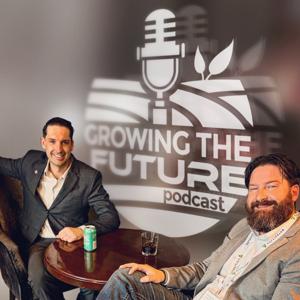

Tim Hammond opens with one frame: most buyers are reactive. The phone rings, the land is available, they start figuring out whether they can buy it. Tim's position is that question should have been answered two years before the call. The prepared buyer already has the number. The unprepared buyer watches somebody else close it.
Wade walks the Four Ds from the buyer's seat -- Define (kitchen table, ambitions, logistics), Discover (compile, blueprint), Design (three options, pros/cons, recommendation), Deliver (execute). Tim notes the process is not linear; in practice they cycle back to Define as new information surfaces. The container for all of it is the war room: accountant, lender, lawyer, and real estate advisor in the same room at the same time. Poll 2 found zero percent of the audience had done this. Tim was not surprised.
The second half opens the capital question. Wade is working a live deal where a seller with a $70M holding is willing to retain $30M to make the transaction possible for a buyer who cannot finance the full amount. Tim names the industry horizon: not enough capital exists in the system to transition all the farms that need to move in the next two to three decades, and creative structures -- tranches, seller retention, equity partnerships -- will become the standard, not the exception. Two topics flagged for future episodes: right of first refusal (common, well-intentioned, six-figure exit consequences if set up wrong) and the young farmer entry question (Joshua from Lethbridge, land at $20K-$30K per acre -- Tim's answer: start the conversation before you think you need to).
KEY TOPICS
- Poll 1: 55% said biggest barrier is structure (no entity or plan); 33% said finding land; 9% financing; 0% timing
- Poll 2: 0% have a war room with all advisors at the table; 40% partially; 30% no; 10% did not know that was the move
- Poll 3: 33% actively looking or in a deal; 8% positioned and waiting; 17% thinking about it; 25% harvest mode; 17% advisors here for the framework
- Four Ds applied to the buyer: Define, Discover, Design, Deliver -- not linear, frequently cycles back to Define
- The war room: accountant + lender + lawyer + real estate advisor in the same room at the same time
- Most expensive mistake in 30 days: buying land that doesn't fit your operation (Wade: "You've just spent $500K to $1M on a quarter you shouldn't have bought, and now when the right one shows up, you might not be able to")
- Seller retaining $30M on a $70M deal: creative structure enabling the deal to close for a buyer who can't finance the full amount
- Capital supply gap: not enough capital in the system to transition all farms needing succession in the next 2-3 decades
- Saskatchewan: average farmer owns 2/3 of the land they farm -- highest ratio in the world (US is 40%, Europe is 10-20%)
- Cap rate gap: investors require 2.5-4%; farmers outbid investors because they capture both land return and operating return
- Right of first refusal: flagged as common-but-misunderstood tool with major exit consequences -- future episode
- Young farmers question: Joshua from Lethbridge, land at $20K-$30K per acre; Tim's answer: start the conversation before you think you need to
CONNECT
- Tim Hammond and Wade Berlinic: hammondrealty.ca
- growingthefuture.ca
Register for the Convergence Conference at convergence.ag and stay updated by subscribing to the Growing the Future Podcast at growingthefuturepodcast.ca.
 View all episodes
 By Dan Aberhart , Terry Aberhart
5
11 ratings
Tim Hammond opens with one frame: most buyers are reactive. The phone rings, the land is available, they start figuring out whether they can buy it. Tim's position is that question should have been answered two years before the call. The prepared buyer already has the number. The unprepared buyer watches somebody else close it.
Wade walks the Four Ds from the buyer's seat -- Define (kitchen table, ambitions, logistics), Discover (compile, blueprint), Design (three options, pros/cons, recommendation), Deliver (execute). Tim notes the process is not linear; in practice they cycle back to Define as new information surfaces. The container for all of it is the war room: accountant, lender, lawyer, and real estate advisor in the same room at the same time. Poll 2 found zero percent of the audience had done this. Tim was not surprised.
The second half opens the capital question. Wade is working a live deal where a seller with a $70M holding is willing to retain $30M to make the transaction possible for a buyer who cannot finance the full amount. Tim names the industry horizon: not enough capital exists in the system to transition all the farms that need to move in the next two to three decades, and creative structures -- tranches, seller retention, equity partnerships -- will become the standard, not the exception. Two topics flagged for future episodes: right of first refusal (common, well-intentioned, six-figure exit consequences if set up wrong) and the young farmer entry question (Joshua from Lethbridge, land at $20K-$30K per acre -- Tim's answer: start the conversation before you think you need to).
KEY TOPICS
- Poll 1: 55% said biggest barrier is structure (no entity or plan); 33% said finding land; 9% financing; 0% timing
- Poll 2: 0% have a war room with all advisors at the table; 40% partially; 30% no; 10% did not know that was the move
- Poll 3: 33% actively looking or in a deal; 8% positioned and waiting; 17% thinking about it; 25% harvest mode; 17% advisors here for the framework
- Four Ds applied to the buyer: Define, Discover, Design, Deliver -- not linear, frequently cycles back to Define
- The war room: accountant + lender + lawyer + real estate advisor in the same room at the same time
- Most expensive mistake in 30 days: buying land that doesn't fit your operation (Wade: "You've just spent $500K to $1M on a quarter you shouldn't have bought, and now when the right one shows up, you might not be able to")
- Seller retaining $30M on a $70M deal: creative structure enabling the deal to close for a buyer who can't finance the full amount
- Capital supply gap: not enough capital in the system to transition all farms needing succession in the next 2-3 decades
- Saskatchewan: average farmer owns 2/3 of the land they farm -- highest ratio in the world (US is 40%, Europe is 10-20%)
- Cap rate gap: investors require 2.5-4%; farmers outbid investors because they capture both land return and operating return
- Right of first refusal: flagged as common-but-misunderstood tool with major exit consequences -- future episode
- Young farmers question: Joshua from Lethbridge, land at $20K-$30K per acre; Tim's answer: start the conversation before you think you need to
CONNECT
- Tim Hammond and Wade Berlinic: hammondrealty.ca
- growingthefuture.ca
Register for the Convergence Conference at convergence.ag and stay updated by subscribing to the Growing the Future Podcast at growingthefuturepodcast.ca.

228,163 Listeners
148 Listeners
129 Listeners
13 Listeners
784 Listeners
258 Listeners

122 Listeners
392 Listeners

46,005 Listeners
350 Listeners

39,503 Listeners

404 Listeners
16,392 Listeners

2 Listeners