
Sign up to save your podcasts
Or

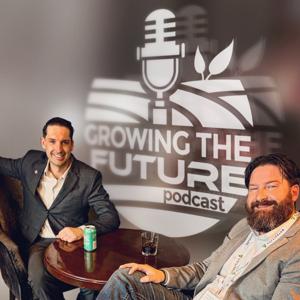


Half of Saskatchewan is watching the canola fill pods. The other half is still sitting in water. 30% of the cropland in the province rated moisture surplus at the time of this conversation, and the ministry's own word is that flooding is the number one source of crop damage in Saskatchewan this year. Yellowing fields, drowned-out low spots, pulses going backwards. The decision framework for in-season nutrition changes when you're not sure which half of the province you're in.
Greg Patterson has been doing tissue analysis at A&L Canada Laboratories for decades. Darren Fischer is a technical advisor with Crop-Aid Nutrition who was in the fields in real time during this conversation. This is what they said on July 13, 2026, with the season in exactly the condition it was in.
What's Inside
- Two seasons on the prairies at once: what each one means for your in-crop nutrition decisions right now
- A farm-walk report from Darren Sander at Sander Farms near Sovereign, Saskatchewan -- his fungicide and foliar strategy mid-season
- Why you should never apply a fungicide without pairing a foliar with it, and why that's even more true in a wet year
- Potassium as the yield driver in both wet and dry conditions: for every pound of nitrogen the crop needs early, it needs three of potassium
- How to read a tissue report: the fuel-gauge analogy, what dropping levels actually mean, and why a great crop should drive you crazy
- The phloem connection: how potassium and boron work together to move photosynthates through the plant, and what happens when boron is low
- The nitrate accumulation trap: when it looks like a nitrogen problem but it's actually a potassium and boron imbalance
- Boron in Western Canada: why we're afraid of it, why that's costing yield, and what the research on microbial activity actually says
- Foliar selection by condition and crop stage: which product when, and how to think about tank mixing with herbicides and fungicides
- Handheld tissue testers vs. lab analysis: what the correlation data actually shows
- The fastest way to get a tissue sample to the lab: paper bag, Purolator envelope, 24-hour turnaround
- The economics: how to think about a $5-6 foliar pass when you're already sending the sprayer out for fungicide
- Frost risk in a late year: why well-fertilized crops mature faster and reduce your window of exposure
If you want more from Greg Patterson on soil biology and tissue analysis, the Engine of the Soil series is where he goes deep -- look for those episodes in the GTF Podcast back catalog. And if shallow rooting and soil health in a wet year is where your season is, that same series has the framework.
Resources Mentioned
A&L Canada Laboratories -- alcanada.com (plant monitoring program, tissue analysis, 24-hour turnaround)
Crop-Aid Nutrition -- cropaidnutrition.com (foliar products, educational videos, crop tour program)
Ag in Motion -- Crop-Aid Nutrition at Booth 381; A&L Canada Laboratories on site
Connect with Greg Patterson
A&L Canada Laboratories -- alcanada.com
Call the lab and ask for Greg, Beth, Mike, or Chris -- they take questions and find answers
A&L technical reps in the field are trained directly by Greg
Connect with Darren Fischer
Crop-Aid Nutrition -- cropaidnutrition.com
1-866 number and email on the website -- ask for Darren Fischer by name
Crop-Aid Nutrition on YouTube -- educational videos on foliar timing and application
Connect with Growing the Future
Website: growingthefuture.ca
YouTube: Growing the Future
Instagram: @growingthefuturepodcast
LinkedIn: Growing the Future
Register for the Convergence Conference at convergence.ag and stay updated by subscribing to the Growing the Future Podcast at growingthefuturepodcast.ca.
Register for the Convergence Conference at convergence.ag and stay updated by subscribing to the Growing the Future Podcast at growingthefuturepodcast.ca.
Cory Doctorow has spent 25 years at the Electronic Frontier Foundation watching the same story repeat across industries: a digital lock gets built in, a legal framework gets constructed around it, and the people who depend on the machine lose the right to fix it. He coined the word for how this happens. Enshittification is now in the Oxford English Dictionary.
In agriculture, the mechanism is called parts pairing -- a chip that decides who is allowed to fix your equipment and what components can connect to it. The data your tractor generates is a second layer of the same argument. And the remote immobilization of stolen tractors in Ukraine is a third. Cory's position is that all three are the same issue, that the law enabling them passed in 2012 after 6,132 Canadians said no and 53 said yes, and that farmers are one of the most effective political forces in this country when they choose to use it. This is not Growing the Future's verdict on any equipment manufacturer.
What's Inside
- What enshittification means and why John Deere became Cory's clearest example of it outside tech platforms
- Parts pairing: how a chip on your equipment determines who can fix it and what components can connect to it
- How data generated by your tractor was being siphoned -- and why data ownership and right-to-repair are the same underlying issue
- Honeybee, a Saskatchewan head-end manufacturer, cannot connect their products to Deere equipment because of digital locks, not any technical limitation
- Canada's Bill C-11: the Copyright Modernization Act passed in 2012 after 6,132 Canadians opposed it and 53 supported it
- Digital sovereignty: from Ukraine's remotely immobilized tractors to what happens if that switch gets turned toward Alberta
- Why voting with your wallet does not work in a monopoly, and what the Grangers' fight with the railroads in 1890 has to do with where we are right now
- A specific call to action: CCLA, Open Media, and the EFF -- and why farmers are one of the most effective political forces in this country when they choose to be
Also discussed: Cory's new book "The Reverse Centaur's Guide to Life After AI" -- Number 1 Canadian bestseller, New York Times list, and in the same week enshittification was added to the Oxford English Dictionary.
Resources Mentioned
The Reverse Centaur's Guide to Life After AI -- Cory Doctorow (Number 1 Canadian bestseller -- available at Indigo and McNally Robinson)
Electronic Frontier Foundation -- eff.org
Open Media -- openmedia.ca
Canadian Civil Liberties Association -- ccla.org
pluralistic.net -- Cory's daily newsletter
Honeybee -- Canadian head-end manufacturer, Saskatchewan
Agri GPS bridge -- referenced by audience member Jim Hale as an example of third-party ag tech workaround
If you want to hear more from the GTF back catalog on what it costs when farm equipment goes down, start with: Matt Yanick's episode: Downtime: The ROI Killer.
And if the data question from this conversation stays with you, Wade Barnes' Farmers Edge series looks at who owns what comes off your farm.
Connect with Cory Doctorow
pluralistic.net
craphound.com
Book: The Reverse Centaur's Guide to Life After AI -- Indigo, McNally Robinson, and all major booksellers
Connect with Growing the Future
Website: growingthefuture.ca
YouTube: Growing the Future
Instagram: @growingthefuturepodcast
LinkedIn: Growing the Future
Register for the Convergence Conference at convergence.ag and stay updated by subscribing to the Growing the Future Podcast at growingthefuturepodcast.ca.
In agriculture, being busy is practically a badge. Ask anybody how they're doing and you'll get some version of underwater. So how does a 25-year-old fifth-generation grain farmer from Churchbridge, Saskatchewan, who also writes federal grain policy, finishes a master's thesis, teaches university, and referees hockey across the country, have more room in her day than most people do? Kate Sauser has ADHD, a system she built around how her brain actually works, and a tattoo on her wrist that reads "everything in time." This is the episode where she explains it.
Resources Mentioned
Albert Einstein: "Time is relative, its only worth depends on what we do as it is passing"
Billy Joel: "Vienna" -- "Slow down, you're doing fine. You can't be everything you want to be before your time."
Google Calendar -- Kate's primary scheduling tool
ChatGPT -- Kate uses it for daily task planning, meal planning, and workouts
Connect with Growing the Future
Website: growingthefuture.ca
YouTube: Growing the Future
Instagram: @growingthefuturepodcast
LinkedIn: Growing the Future
Register for the Convergence Conference at convergence.ag and stay updated by subscribing to the Growing the Future Podcast at growingthefuturepodcast.ca.
One refinery south of Edmonton will process a million tonnes of canola feedstock this year, more than 10% of Canada's entire canola crop at a single facility. The US renewable fuel standard needs another 2.7 million tonnes on top of that, and Indonesia is moving toward a 50% biodiesel blend requirement. In the 2000s, corn ethanol turned a $2.50 crop into a $9 crop in under a decade. Growing the Future's foremost live briefing examines whether canola is about to run the same play, and what the structural demand shift already means for Prairie land values.
Topics and Timestamps
0:00 -- Opening: the renewable diesel demand story and the canola-as-fuel structural shift
3:00 -- Sponsor acknowledgments and panelist introductions
5:00 -- Is canola food or fuel, and does the distinction matter?
6:00 -- Shaun Wildman: calorie analysis and why food affordability is not the argument
9:00 -- Quick Dick McDick: Saskatchewan's 24 million canola acres and the case for playing both markets
13:00 -- Ryan Bonnett: the corn ethanol parallel and how US biofuel policy drives domestic demand
14:00 -- RIN credits and the 12-cent-per-pound penalty for Canadian-sourced canola in US markets
16:00 -- Indonesia's B50 blend requirement and what global feedstock scale actually looks like
18:00 -- Local processing expansion: Cargill in Regina, LDC and Richardson in Yorkton doubling capacity
22:00 -- The bottleneck: crush capacity is the ceiling, not canola production
27:00 -- Scale check: the US diesel market and how much canola it would take to move the needle
28:00 -- EPA rates canola second-best vegetable oil for US renewable fuel programs
32:00 -- Saskatchewan's carbon advantage: 67% lower footprint through zero-till canola
36:00 -- US winter canola expansion as a future risk to Canadian market share
39:00 -- Could canola's price floor shift from $500 to $700 per tonne?
45:00 -- Prairie land values: what the renewable diesel demand shift means for buyers and holders
48:00 -- Large land acquisitions, the Minette deal, and what it means for the next generation of operators
52:00 -- Closing round: one takeaway from each voice in the room
Connect with Growing the Future
Website: growingthefuture.ca
YouTube: Growing the Future
Instagram: @growingthefuturepodcast
LinkedIn: Growing the Future
Register for the Convergence Conference at convergence.ag and stay updated by subscribing to the Growing the Future Podcast at growingthefuturepodcast.ca.
In April 2026 the United Nations revised its worst-case climate scenarios downward and declared the most catastrophic projections highly implausible. Almost no one in Canada covered it. Dr. Sylvain Charlebois, director of the Agri-Food Analytics Lab at Dalhousie University and host of Canada's number one rated food podcast, has spent 25 years doing the work the room needs: holding science, policy, and politics to the same standard. In this conversation, he takes on three issues agriculture keeps being told what to think about, climate policy, gene editing, and the Canadian fear of failure, and gives the room the version it hasn't been getting.
Topics and Timestamps
0:00 -- Dan's opening question: think of one issue in agriculture you've changed your mind on in the last five years
1:30 -- "Don't Follow the Flock" -- live intro and platform housekeeping
3:00 -- Dr. Sylvain Charlebois: The Food Professor Podcast, Dalhousie, Canada's number one food podcast with zero budget
4:00 -- Ireland, Brexit, and the economic lesson Canada keeps missing about CUSMA
10:00 -- Audience poll: when you hear a strong opinion from a non-farmer, what's your first instinct?
11:00 -- Why civic engagement in food systems makes farming stronger, not weaker
13:00 -- Demand chain management: build from the consumer back, not the farm gate forward
15:00 -- How Canadian media coverage became one-sided and why it keeps getting harder to correct
22:00 -- The GTF promotion ad that was rejected -- and what that reveals
23:00 -- Topics Sylvain is asked not to raise on Ottawa stages
25:00 -- The "mini-me" problem in academia: conform, or get canceled
33:00 -- MYTH 1: Climate change -- the UN revised its worst-case scenarios downward; almost no Canadian outlet covered it
40:00 -- Carbon pricing at $110 a tonne with emissions still rising: what the data actually shows
44:00 -- MYTH 2: Gene editing -- why transparency and consumer buy-in are the one thing the industry keeps skipping
46:00 -- MYTH 3: Going broke is bad -- what a Purdue lunch table of ag entrepreneurs revealed about Canadian risk culture
49:00 -- Monette's bankruptcy, Robert Andjelic, and why Canada should treat risk-takers as a national asset
51:00 -- Ryan Bonnett's question: Sylvain's three priorities for Canadian agriculture
52:00 -- Where Canada leads the G20 in agricultural science, and where it falls short
53:00 -- CUSMA, July 1st, and what the non-renewal actually signals for investment in Canadian ag
54:00 -- Close and upcoming: Strathcona renewable diesel with Quick Dick McDick and Sean Wildman; right-to-repair tractors with Cory Doctorow
Resources Mentioned
The Food Professor Podcast -- Dr. Sylvain Charlebois (available on Apple Podcasts, Spotify, and all major platforms)
Episode: Interview with US Ambassador Pete Hoekstra -- on The Food Professor Podcast
Agri-Food Analytics Lab -- Dalhousie University (dal.ca/agri-food-analytics-lab)
Postmedia op-eds -- Dr. Sylvain Charlebois writes every two to three days (available at major Postmedia outlets)
MNP / Dalhousie G20 agricultural science comparison study -- referenced in conversation, available through Agri-Food Analytics Lab
Connect with Dr. Sylvain Charlebois
The Food Professor Podcast: thefoodprofessor.ca
Dalhousie University Agri-Food Analytics Lab: dal.ca/agri-food-analytics-lab
X / Twitter: @FoodProfessor
Connect with Growing the Future
Website: growingthefuture.ca
YouTube: Growing the Future
Instagram: @growingthefuturepodcast
LinkedIn: Growing the Future
Register for the Convergence Conference at convergence.ag and stay updated by subscribing to the Growing the Future Podcast at growingthefuturepodcast.ca.
The person everyone asks how they do it all is usually the last person to have a tidy answer. Kate Sauser is a policy manager at Grain Growers of Canada, a fifth-generation farmer from Churchbridge, SK, a high-level hockey referee, a competitive softball player, and a master's student finishing her thesis, all at 25. In this conversation, she shares the three-part framework behind her course on time: the problem most operators carry but rarely name out loud, the single decision that changes how the whole calendar feels, and the practical moves that make it work week to week.
Topics and Timestamps
0:00 -- Pre-registration responses: what does "I don't have time" actually mean?
1:00 -- Live intro: "How Does She Do It All?" and platform housekeeping
3:00 -- Kate's background: family farm near Churchbridge, Grain Growers, U of S, hockey, softball, 25
6:00 -- The over-committer's honest answer: time is relative to what you decide to do with it
9:00 -- Live poll: which of these sounds like your week?
11:00 -- Why technology makes the time problem worse before it makes it better
12:00 -- Kate's daily to-do list system: schedule blocks, high-priority vs. rolling low-priority tasks
14:00 -- Pen to paper: why writing it down works better than any app
15:00 -- "Everyone gets angry at time but doesn't work with it" -- the shift that started everything
16:00 -- The $86,400 analogy: if you had that many dollars to spend today, would you waste it?
18:00 -- The "Everything in Time" tattoo and the philosophy behind it
19:00 -- Modern myths about time and the scarcity loop they reinforce
21:00 -- Harry Siemens on day-timers, five priorities, and why four and five often disappear by noon
22:00 -- Hard stops and focused blocks: how Kate finished her master's thesis
25:00 -- ADHD, late diagnosis at 23, and the paralysis that comes before the system
31:00 -- Is ADHD a disability or a superpower? Kate's answer
34:00 -- Turning guilt into fuel: how a negative emotion becomes next-day productivity
37:00 -- Burnout is real: Kate's honest account of hitting the wall and what actually helps
38:00 -- Attitude as a daily choice: Harry Siemens' 1986 motto and why Kate agrees
42:00 -- Calendar as a bank account: if you want to be rich with time, check it often
45:00 -- Alex Clark in the chat: values alignment and what "pouring from an empty cup" actually means
45:00 -- Habit stacking: doing two things at once with purpose, not guilt
49:00 -- Kate's live exercise: "Did you spend yesterday, or did you let it happen to you?"
52:00 -- CTA: Everything in Time -- Kate's full course inside the Growing the Future Mastermind
53:00 -- Close and upcoming: Dr. Sylvain Charlebois on Friday
Resources Mentioned
Atomic Habits -- James Clear
The Perfectionist's Guide to Losing Control -- Katherine Morgan Schafler
Verity -- Colleen Hoover (fiction; mentioned as Kate's last great read)
Goodreads -- book-tracking and rating app (goodreads.com)
Google Calendar -- Kate's primary calendar tool
75 Hard -- fitness and discipline challenge referenced for habit stacking
Connect with Kate Sauser
Grain Growers of Canada: graingrowers.ca
Connect with Growing the Future
Website: growingthefuture.ca
YouTube: Growing the Future
Instagram: @growingthefuturepodcast
LinkedIn: Growing the Future
Register for the Convergence Conference at convergence.ag and stay updated by subscribing to the Growing the Future Podcast at growingthefuturepodcast.ca.
Every July, Prairie operators make new-crop decisions that set their cash flow for the next twelve months, usually reading the same headlines as everyone else and reacting to the loudest one. In this conversation, grain marketing advisor Ryan Bonnett puts his daily client read on a stage: what is actually moving canola, wheat, corn, and soybean markets right now, and where the summer selling window sits inside the seasonal pattern. Colin Brisebois, VP of Products and Market Strategies at FCC, adds the lender's view, what disciplined marketing looks like once it shows up in an operation's cash flow.
Topics and Timestamps
0:00 -- The spring everyone just lived, and why the marketing window opens at the worst possible time
3:30 -- Welcome to Ryan Bonnett and Colin Brisebois
6:00 -- Live poll: how much of your 2026 crop is still unpriced
10:00 -- Beat the average, not the top: Ryan's core marketing philosophy
13:00 -- Colin on discipline: know your cost of production before you build a plan
16:00 -- Seller's remorse, and the parameters that remove it
19:00 -- The 80/20 problem: why most operators miss the top of the market
21:00 -- Crop conditions across the Prairies and the US heading into summer
28:00 -- Know your unique ability: when to hire the discipline you don't have
31:00 -- Ryan's seasonal chart: why prices rally into seeding and fall after
34:00 -- The summer selling window, and put options as price insurance
39:00 -- Reading the charts: double tops, RSI, and shifting momentum
42:00 -- China, Iran, and the headlines that don't move price until money does
45:00 -- New biofuel regulation, the floor under canola, and the policy risk underneath it
49:00 -- Bullish or bearish, defend your answer: Ryan's discipline test
52:00 -- Domestic processing and the case for building crush capacity at home
55:00 -- Colin's three pillars at FCC: knowledge, advice, capital
58:00 -- The $50 billion wealth transfer, and who replaces the next generation of ag talent
1:01:00 -- The cohort program: Ryan and FCC's plan to bring this education to more operators
1:03:00 -- Close
Resources Mentioned
Ryan Bonnett's grain marketing client cohort program, run in partnership with FCC
Connect with Ryan Bonnett
Grain marketing advisor (public brand name pending -- link to follow once confirmed)
Connect with Colin Brisebois
VP, Products and Market Strategies, Farm Credit Canada (FCC)
Connect with Growing the Future
Website: growingthefuture.ca
YouTube: Growing the Future
Instagram: @growingthefuturepodcast
LinkedIn: Growing the Future
Register for the Convergence Conference at convergence.ag and stay updated by subscribing to the Growing the Future Podcast at growingthefuturepodcast.ca.
Robert Andjelic has been bearish more often than not for three years. In January, he stood in front of a packed room and called a capital squeeze. This time he came back fired up about something different: three converging forces he believes put Canada in the strongest agricultural position in a generation.
What follows is Robert defending three years of public predictions, line by line, before laying out the new one.
Topics and Timestamps
0:00 -- Dan opens. Robert's backstory: escaping Croatia as a boy, building a commercial real estate empire, the Saskatchewan land bet that started at $400 an acre
5:00 -- Audience poll: who's bullish, neutral, or bearish right now
8:00 -- Why farmer suicide rates stay high even when the numbers look good
12:00 -- The fall 2023 call to lock in farm debt, revisited
18:00 -- Mark to market: the Saskatchewan farmland call, three years of FCC data
21:00 -- Why Robert owns zero acres of farmland in the United States
23:00 -- The eight early signs of credit tightening, in order
30:00 -- What a major operator's financial trouble this year means for the rest of the industry
41:00 -- Rent versus buy: the framework Robert actually uses on his own land
45:00 -- Why the smaller rural towns keep shrinking
52:00 -- Why Canada is technically in a recession as of mid-2026
59:00 -- The Hormuz oil shock compared to the 1979-81 shock
1:04:00 -- How the live audience rated Robert's three-year track record
1:06:00 -- The cattle herd rebuild that's still years from equilibrium
1:10:00 -- The bullish thesis: the Strait of Hormuz, a developing super El Nino, and the aquifers running dry
1:13:00 -- Robert's probability breakdown for an agricultural super cycle, 2026 to 2028
1:20:00 -- Why Robert doesn't trust AI to predict what happens next
1:21:00 -- Inside the Strait of Hormuz: vessels waiting, insurers pulling back, years to rebuild
1:29:00 -- Closing: investing by the numbers, not the narrative
Resources Mentioned
FCC Farmland Values Report -- cultivated land value data cited for Saskatchewan, Manitoba, and Alberta
NOAA El Nino Watch, issued May 14, 2026
Reuters reporting on Strait of Hormuz vessel traffic and tanker movement
Connect with Robert Andjelic
Canada's largest private farmland owner, 450,000+ acres across Western Canada
Connect with Growing the Future
Website: growingthefuture.ca
YouTube: Growing the Future
Instagram: @growingthefuturepodcast
LinkedIn: Growing the Future
Register for the Convergence Conference at convergence.ag and stay updated by subscribing to the Growing the Future Podcast at growingthefuturepodcast.ca.
The math of buying in has changed. The math of staying in has too. David Widmar of Agricultural Economic Insights and Eric Olsen of MNP Farm Management bring the US and Canadian numbers together to examine what farmland affordability, cash rent pressure, and the post-ZIRP interest rate environment actually mean for producers running a farm in 2026. Two countries. One calculator. The gap between what land is worth and what it can earn has never been wider.
Topics and Timestamps
0:00 -- Dan opens: the 16-year cash rent stat and what it signals about the moment we are in
0:07 -- David Widmar: how ZIRP (Zero Interest Rate Policy) inflated asset values from 2008 onward
0:08 -- New Fed chair Kevin Warsh: five review areas, inflation as priority one, what it means for rates
0:09 -- Eric Olsen: Canadian interest rate outlook -- stable to slightly up, no major jumps expected
0:11 -- David: US row crop squeeze -- lower commodity prices, stubborn cost structure, Iran conflict pushing energy and fertilizer back up
0:12 -- US government ad hoc payments: second highest since the 1920s, and why that carries risk
0:14 -- Eric: Canadian farm support programs -- AgriStability, crop insurance (98% participation in Manitoba), GARS
0:17 -- David: How ARC and PLC work -- risk management programs with a built-in payment delay problem
0:19 -- David: "Musical chairs" -- why ad hoc programs create systemic risk rather than resolve it
0:20 -- Eric: AgriStability explained -- margin-based, plannable, based on your numbers not a county average
0:23 -- Eric: "Farmers are sophisticated businesspeople" -- the $2-3M floor that surprises people outside agriculture
0:24 -- David: The paradox of risk management -- tools that reduce short-term pain can build long-term fragility
0:30 -- Dan introduces the farmland affordability calculator David built for registrants
0:31 -- Metric 1: Down payment years -- Indiana at $15K/acre, $326 rent, 35% down = 16 years of cash rent saved (was 6 in the 1990s)
0:34 -- Eric: Canadian read on Metric 1 -- $8,500/acre in the Regina plains, $180/acre rent, nearly identical ratio
0:36 -- US vs Canada land ownership structure: 60%+ rented in Illinois regions, 70% owned in western Canada
0:38 -- Harry Siemens (audience): How does the farm community make sense of high land values and next-generation transition?
0:39 -- David: Path to equilibrium -- lower land values, lower interest rates, slower appreciation, or some combination of all three
0:41 -- Eric: The case for separating the real estate business from the farm operating business; barriers to entry for young producers
0:44 -- Harry Siemens: Are large corporate landowners (200,000+ acres) healthy for the industry?
0:45 -- Eric: Supply and demand reality -- large land releases will affect prices; the market is starting to work
0:47 -- David: How lenders managed large land holdings in the 1980s crisis and what that signals for today
0:49 -- David Schmidt (Rabobank, Alberta): Are lenders shifting from asset-based to cashflow-based lending decisions?
0:49 -- Eric: Yes -- lenders taking a harder look at business fundamentals; younger producers will feel it first
0:51 -- Metric 2: First-year payment calculator -- US approaching 300% (3 acres to cover payment on 1), Canada at 195-250% depending on rate
0:56 -- Alex Clark (Rabobank): Not tightening so much as asking better questions -- creative lending options, extended amortization
0:57 -- David: Closing takeaway -- about half of US farmland appreciation since the 1980s came from falling interest rates; don't assume you are immune to rate risk if you own land outright
0:59 -- Eric: Thanks, upcoming MNP benchmarking series; Dan previews Robert Andjelic's return next week (bullish on commodities super cycle)
1:01 -- Dan closes: Building Your Operating System cohort update, August cohort opening
Resources Mentioned
Agricultural Economic Insights farmland affordability calculator (shared with registrants via event link)
ARC and PLC farm bill programs (US) -- risk management programs for row crop producers
AgriStability -- Canada's margin-based whole-farm income support program
GARS -- private margin-based insurance product for Canadian producers
Connect with David Widmar
Agricultural Economic Insights: https://aei.ag/overview
Connect with Eric Olsen
MNP Farm Management: mnp.ca
Connect with Growing the Future
Website: growingthefuture.ca
YouTube: Growing the Future
Instagram: @growingthefuturepodcast
LinkedIn: Growing the Future
Register for the Convergence Conference at convergence.ag and stay updated by subscribing to the Growing the Future Podcast at growingthefuturepodcast.ca.
CONTENT WARNING: This episode discusses farm financial stress, identity, and mental health in agriculture, including reference to suicide rates in the farming community. If you or someone you know is struggling, support is available. Numbers are listed at the end of these notes.
Three to one is the male-to-female suicide ratio in agriculture. Most of the people carrying the hardest financial weight in farming right now are also carrying it alone, measuring their worth by what they produce. Corliss Rassyle has spent decades working in the space between what a farm earns and what a farmer is worth. Dan built this room for those people.
Topics and Timestamps
0:00 -- Cold open
1:30 -- Dan's disclosure: a company erased to zero and what the new start required
4:00 -- Welcome: who this room is built for and the three-to-one ratio in agriculture
5:00 -- Mom at the Easter griddle: "I've done nothing with my life"
6:30 -- Why we get the measure of success wrong and where it starts
9:00 -- Saskatchewan is resource-rich -- so why do so many people in agriculture feel unfulfilled?
10:00 -- Subconscious programming: the belief systems formed in childhood still running adult lives
13:00 -- The 1,111 vision: how Lead Conference Canada came to be
15:00 -- Sitting in the back row of the venue: the moment the number confirmed itself
17:00 -- Workshop begins: Corliss takes the room
22:00 -- The question to sit with: what belief are you holding about yourself right now?
23:00 -- Thoughts create emotions, emotions create actions, actions create results
27:00 -- The Five A's: Aware, Acknowledge, Assess, Affirm, Accept
29:00 -- The five most powerful sentences: I am, I can, I will, I release, I forgive
30:00 -- Acceptance: Corliss's brother and the question "Why won't you let me help you?"
33:00 -- Dan's experience: what happened when a room of men did this work together
37:00 -- Same rain, two different meanings: the drought and the wedding
38:00 -- Corliss's divorce: rebuilding one step at a time from a two-bedroom apartment
43:00 -- Love what you do: Corliss's father and 60 harvests
47:00 -- 86 tickets on launch day vs. a goal of 1,111: what fear does and what vision does instead
52:00 -- Mom gives permission for the TEDx: "You should use it to help people"
54:00 -- You have full power over your story
55:00 -- Corliss's programs and how to connect
Resources Mentioned
TEDx Talk by Corliss Rassyle -- search "Corliss Rassyle TEDx" (Dan to confirm link)
Lead Conference Canada 2026: corliss.ca/led2026
Called to Lead (self-paced personal development program): corliss.ca
Do More Agriculture Foundation: domore.ag
Saskatchewan Farm Stress Line: 1-800-667-4442
This episode is brought to you by Bone Trail Originals, Crop-Aid Nutrition, Hammond Realty, and GRIPP.
Connect with Corliss Rassyle
Website: corliss.ca
Lead Conference Canada: corliss.ca/led2026
Connect with Growing the Future
Website: growingthefuture.ca
YouTube: Growing the Future
Instagram: @growingthefuturepodcast
LinkedIn: Growing the Future
CRISIS SUPPORT
If you are struggling, please reach out.
Canada -- Talk Suicide Canada: 1-833-456-4566
Canada -- Saskatchewan Farm Stress Line: 1-800-667-4442
Canada -- Do More Agriculture Foundation: domore.ag
U.S. -- Call or text 988
Register for the Convergence Conference at convergence.ag and stay updated by subscribing to the Growing the Future Podcast at growingthefuturepodcast.ca.
From the publisher's feed
Ranked by our users in the last 21 days

227,479 Listeners
147 Listeners
126 Listeners
14 Listeners
737 Listeners
257 Listeners
129 Listeners

385 Listeners

46,079 Listeners

353 Listeners

39,409 Listeners
407 Listeners

15,926 Listeners
2 Listeners