
Sign up to save your podcasts
Or

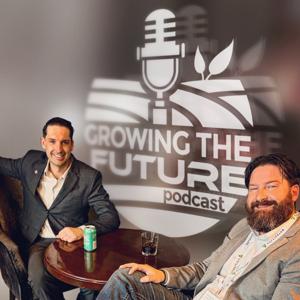

Half of Saskatchewan is watching the canola fill pods. The other half is still sitting in water. 30% of the cropland in the province rated moisture surplus at the time of this conversation, and the ministry's own word is that flooding is the number one source of crop damage in Saskatchewan this year. Yellowing fields, drowned-out low spots, pulses going backwards. The decision framework for in-season nutrition changes when you're not sure which half of the province you're in.
Greg Patterson has been doing tissue analysis at A&L Canada Laboratories for decades. Darren Fischer is a technical advisor with Crop-Aid Nutrition who was in the fields in real time during this conversation. This is what they said on July 13, 2026, with the season in exactly the condition it was in.
What's Inside
- Two seasons on the prairies at once: what each one means for your in-crop nutrition decisions right now
- A farm-walk report from Darren Sander at Sander Farms near Sovereign, Saskatchewan -- his fungicide and foliar strategy mid-season
- Why you should never apply a fungicide without pairing a foliar with it, and why that's even more true in a wet year
- Potassium as the yield driver in both wet and dry conditions: for every pound of nitrogen the crop needs early, it needs three of potassium
- How to read a tissue report: the fuel-gauge analogy, what dropping levels actually mean, and why a great crop should drive you crazy
- The phloem connection: how potassium and boron work together to move photosynthates through the plant, and what happens when boron is low
- The nitrate accumulation trap: when it looks like a nitrogen problem but it's actually a potassium and boron imbalance
- Boron in Western Canada: why we're afraid of it, why that's costing yield, and what the research on microbial activity actually says
- Foliar selection by condition and crop stage: which product when, and how to think about tank mixing with herbicides and fungicides
- Handheld tissue testers vs. lab analysis: what the correlation data actually shows
- The fastest way to get a tissue sample to the lab: paper bag, Purolator envelope, 24-hour turnaround
- The economics: how to think about a $5-6 foliar pass when you're already sending the sprayer out for fungicide
- Frost risk in a late year: why well-fertilized crops mature faster and reduce your window of exposure
If you want more from Greg Patterson on soil biology and tissue analysis, the Engine of the Soil series is where he goes deep -- look for those episodes in the GTF Podcast back catalog. And if shallow rooting and soil health in a wet year is where your season is, that same series has the framework.
Resources Mentioned
A&L Canada Laboratories -- alcanada.com (plant monitoring program, tissue analysis, 24-hour turnaround)
Crop-Aid Nutrition -- cropaidnutrition.com (foliar products, educational videos, crop tour program)
Ag in Motion -- Crop-Aid Nutrition at Booth 381; A&L Canada Laboratories on site
Connect with Greg Patterson
A&L Canada Laboratories -- alcanada.com
Call the lab and ask for Greg, Beth, Mike, or Chris -- they take questions and find answers
A&L technical reps in the field are trained directly by Greg
Connect with Darren Fischer
Crop-Aid Nutrition -- cropaidnutrition.com
1-866 number and email on the website -- ask for Darren Fischer by name
Crop-Aid Nutrition on YouTube -- educational videos on foliar timing and application
Connect with Growing the Future
Website: growingthefuture.ca
YouTube: Growing the Future
Instagram: @growingthefuturepodcast
LinkedIn: Growing the Future
Register for the Convergence Conference at convergence.ag and stay updated by subscribing to the Growing the Future Podcast at growingthefuturepodcast.ca.
Register for the Convergence Conference at convergence.ag and stay updated by subscribing to the Growing the Future Podcast at growingthefuturepodcast.ca.
 View all episodes
 By Dan Aberhart , Terry Aberhart
5
11 ratings
Half of Saskatchewan is watching the canola fill pods. The other half is still sitting in water. 30% of the cropland in the province rated moisture surplus at the time of this conversation, and the ministry's own word is that flooding is the number one source of crop damage in Saskatchewan this year. Yellowing fields, drowned-out low spots, pulses going backwards. The decision framework for in-season nutrition changes when you're not sure which half of the province you're in.
Greg Patterson has been doing tissue analysis at A&L Canada Laboratories for decades. Darren Fischer is a technical advisor with Crop-Aid Nutrition who was in the fields in real time during this conversation. This is what they said on July 13, 2026, with the season in exactly the condition it was in.
What's Inside
- Two seasons on the prairies at once: what each one means for your in-crop nutrition decisions right now
- A farm-walk report from Darren Sander at Sander Farms near Sovereign, Saskatchewan -- his fungicide and foliar strategy mid-season
- Why you should never apply a fungicide without pairing a foliar with it, and why that's even more true in a wet year
- Potassium as the yield driver in both wet and dry conditions: for every pound of nitrogen the crop needs early, it needs three of potassium
- How to read a tissue report: the fuel-gauge analogy, what dropping levels actually mean, and why a great crop should drive you crazy
- The phloem connection: how potassium and boron work together to move photosynthates through the plant, and what happens when boron is low
- The nitrate accumulation trap: when it looks like a nitrogen problem but it's actually a potassium and boron imbalance
- Boron in Western Canada: why we're afraid of it, why that's costing yield, and what the research on microbial activity actually says
- Foliar selection by condition and crop stage: which product when, and how to think about tank mixing with herbicides and fungicides
- Handheld tissue testers vs. lab analysis: what the correlation data actually shows
- The fastest way to get a tissue sample to the lab: paper bag, Purolator envelope, 24-hour turnaround
- The economics: how to think about a $5-6 foliar pass when you're already sending the sprayer out for fungicide
- Frost risk in a late year: why well-fertilized crops mature faster and reduce your window of exposure
If you want more from Greg Patterson on soil biology and tissue analysis, the Engine of the Soil series is where he goes deep -- look for those episodes in the GTF Podcast back catalog. And if shallow rooting and soil health in a wet year is where your season is, that same series has the framework.
Resources Mentioned
A&L Canada Laboratories -- alcanada.com (plant monitoring program, tissue analysis, 24-hour turnaround)
Crop-Aid Nutrition -- cropaidnutrition.com (foliar products, educational videos, crop tour program)
Ag in Motion -- Crop-Aid Nutrition at Booth 381; A&L Canada Laboratories on site
Connect with Greg Patterson
A&L Canada Laboratories -- alcanada.com
Call the lab and ask for Greg, Beth, Mike, or Chris -- they take questions and find answers
A&L technical reps in the field are trained directly by Greg
Connect with Darren Fischer
Crop-Aid Nutrition -- cropaidnutrition.com
1-866 number and email on the website -- ask for Darren Fischer by name
Crop-Aid Nutrition on YouTube -- educational videos on foliar timing and application
Connect with Growing the Future
Website: growingthefuture.ca
YouTube: Growing the Future
Instagram: @growingthefuturepodcast
LinkedIn: Growing the Future
Register for the Convergence Conference at convergence.ag and stay updated by subscribing to the Growing the Future Podcast at growingthefuturepodcast.ca.
Register for the Convergence Conference at convergence.ag and stay updated by subscribing to the Growing the Future Podcast at growingthefuturepodcast.ca.

228,383 Listeners
148 Listeners

129 Listeners

13 Listeners

764 Listeners

257 Listeners

127 Listeners

392 Listeners

45,948 Listeners

350 Listeners

39,483 Listeners

407 Listeners

16,332 Listeners

2 Listeners