
Sign up to save your podcasts
Or

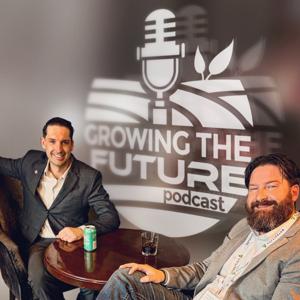


Most producers pay an accountant every year, file the statements, and use them for the bank. David Sullivan's position is that this wastes information the farm has already bought. A consultant for over twenty years and now with Global Ag Risk Solutions, he joins Dan to take a set of farm financials apart and rebuild them into something you can make a decision with, using the five-bucket framework two advisors taught him at his own family's kitchen table in 1999.
What's Inside
Resources Mentioned:
Global Ag Risk Solutions
The five-bucket worksheet, shared free
Connect with David Sullivan:
Global Ag Risk Solutions
LinkedIn: David Sullivan
Connect with Growing the Future
Website: growingthefuture.ca
YouTube: Growing the Future
Instagram: @growingthefuturepodcast
LinkedIn: Growing the Future
Subscribe to the Growing the Future Podcast wherever you listen, and register for Convergence Conference 2027 at convergence.ag.
Register for the Convergence Conference at convergence.ag and stay updated by subscribing to the Growing the Future Podcast at growingthefuturepodcast.ca.
Agriculture does not run along a single track. The agronomy decisions, the farm business pressures, the succession conversations, and the quiet health questions underneath all of it are connected -- and for most people in agriculture, they never land in the same room. Convergence Conference 2027 was built for that room.
You are invited.
Convergence Conference 2027 | February 2 to 4, 2027
DoubleTree by Hilton, Regina, Saskatchewan
Theme: Cross Currents
Four pillars. One room. A few hundred people who think the way you do -- or challenge the way you do.
Agronomy. Farm Business Management. Health and Wellness. Agri-Food Production.
Get your tickets now at: www.eventbrite.ca/e/convergence-conference-2027-tickets-1989958462329
In this briefing, Dan Aberhart sits down with Terry Aberhart (conference founder), Warren Bills (MNP), Laura Shoemaker (farmer and repeat attendee), and Courtney Thevenot (Scotiabank) to talk about what the room has produced over three years and what is being built for 2027. Warren Bills makes a live money-back guarantee on YouTube. Laura Shoemaker proposes a retirement workshop and is elected to chair the committee before the hour is out.
We are also working on Ag Rocks for Charity, an opening-night live music and community fundraiser in support of STARS Air Ambulance. We will share more as that piece takes shape.
Topics and Timestamps
0:00 -- Four pillars: agronomy, farm business management, health and wellness, agri-food production
1:00 -- Convergence Conference 2027 is open -- February 2 to 4, DoubleTree Regina
2:00 -- Platform partners and panel introductions: Terry Aberhart, Warren Bills, Laura Shoemaker, Courtney Thevenot
5:00 -- Terry Aberhart on the gap in agriculture that started the conference
8:00 -- Jessica Jansen keynote and the moment that defined what Convergence actually is
10:00 -- Warren Bills on the post-COVID case for in-person gatherings
12:00 -- Laura Shoemaker: the live-concert analogy for being in the room
14:00 -- Courtney Thevenot on what makes this conference different from any other in agriculture
17:00 -- Terry on choosing your own journey -- and why unexpected speakers land hardest
19:00 -- Diamond Fernandez, integrative health, and the cholesterol research nobody expected
22:00 -- Warren's three takeaways: being seen, Matt Havens on generations, Diamond Fernandez
25:00 -- 2027 banquet: Patty Durand and Chris Corbett, family business improv
27:00 -- Laura on farm succession, transition planning, and the retirement conversation agriculture avoids
33:00 -- Warren on the life change he made at Convergence 2025, and his live money-back guarantee for 2027
37:00 -- Terry's three takeaways: network, deep-topic breakouts, agriculture as an optimistic room
46:00 -- The conference hall of fame: years of speakers and why the roster matters now
48:00 -- convergence.ag -- four pillars, why it matters, ticket call to action
49:00 -- Journey Track preview: arriving prepared, going deeper, leaving with a plan
51:00 -- 2027 speaker roster taking shape
53:00 -- Courtney's three takeaways: caliber of speakers, breadth of topics, intimacy of the room
55:00 -- Laura's three takeaways: holistic approach, always at least one thing you didn't expect
58:00 -- Warren's live guarantee on YouTube: e-transfer your money back if you don't get value
1:00:00 -- Audience survey, the retirement workshop idea hatched on air, Cross Currents theme confirmed
1:01:00 -- Closing: February 2 to 4, 2027, DoubleTree Regina, convergence.ag
Connect with Growing the Future
Website: growingthefuture.ca
YouTube: Growing the Future
Instagram: @growingthefuturepodcast
LinkedIn: Growing the Future
Register for the Convergence Conference at convergence.ag and stay updated by subscribing to the Growing the Future Podcast at growingthefuturepodcast.ca.
Most operators assume the best farms in their region are spending a lot more to get a lot more out of their land. The data says otherwise. Travis Girard, a farm management consultant with MNP, and Dean Klippenstine, also with MNP, return for the second session in the Know Your Numbers benchmarking series, drawing on a database that now covers roughly 1,500 farms and 8.5 million acres across the Prairies.
What's Inside
- Why the production expense gap between top performing farms and average ones came in at just seven dollars an acre, not the twenty five to fifty most people guessed
- Seven years of profitability data across the region, including the one year almost everyone assumes was the worst, and wasn't
- The three things Dean Klippenstine says separate profitable farms from the rest, starting with crop selection
- Why labor, power, and machinery costs come down to mindset more than acres under management
- What bringing your three worst fields up to your own farm's average gross margin could be worth in a year
Resources Mentioned
MNP
MNP Know Your Numbers benchmarking series
Connect with Travis Gerrard:
Travis Gerrard
Connect with Dean Klippenstine:
Dean Klippenstine
Website: growingthefuture.ca
YouTube: Growing the Future
Instagram: @growingthefuturepodcast
LinkedIn: Growing the Future
Register for the Convergence Conference at convergence.ag and stay updated by subscribing to the Growing the Future Podcast at growingthefuturepodcast.ca.
A $1.2 million combine is only as fast as the slowest part of the yard behind it, and for most harvests, that slow part isn't the field. It's the space between the combine and the bin: the trucks, the augers, the dryer, and the person running between all three. Dan Aberhart brought three operators together who've each solved that bottleneck a different way, from a hundred-thousand-dollar retrofit to a fully automated grain-handling site eight months and one generation in the making.
What's Inside
If the data side of this conversation landed for you, look for the back-catalog episode with sprayer specialist Tom Wolf on calibration and coverage. It's the same instinct Trevor brings to a drop pan, applied to the boom instead of the header.
Resources Mentioned
Connect
Website: growingthefuture.ca
YouTube: Growing the Future
Instagram: @growingthefuturepodcast
LinkedIn: Growing the Future
Register for the Convergence Conference at convergence.ag and stay updated by subscribing to the Growing the Future Podcast at growingthefuturepodcast.ca.
Canola's up on a good rally, fertilizer's down from its spring highs, and for the first time in a while, Western Canadian producers have a little swagger back. But every rally raises the same question: is this the one you lock in, or the one that convinces you to wait too long?
Dave Norris of Norris Crop Consulting and Todd Rowan of IXL Innovations, two grain marketing advisors working with the top tier of Western Canadian producers, join Darren Sander of Crop Aid Nutrition, a working farmer near Rosetown, Saskatchewan, to read where this crop actually stands and what it means for pricing decisions this fall.
The math is tight. Two bushels an acre off the Canadian canola average works out to about a million tons. With crush running at 14 million tons and exports near 9 million, a crop landing at 21 million tons instead of 23 leaves someone rationed. The panel breaks down the real story on crop size, why China stepping back into the market matters more than most producers realize, and what the fertilizer and fuel numbers actually tell you about locking in the 2026 crop now.
What's Inside
If this conversation makes you think about who's actually watching your marketing decisions, go back in the catalog for our episode with Derek Squair on what a grain market coach actually gets paid to do, a conversation that asks the same question from the other side of the table.
Resources Mentioned
Connect with Dave Norris
Connect with Todd Rowan
Connect with Darren Sander
Connect with Growing the Future
Website: growingthefuture.ca
YouTube: Growing the Future
Instagram: @growingthefuturepodcast
LinkedIn: Growing the Future
Register for the Convergence Conference at convergence.ag and stay updated by subscribing to the Growing the Future Podcast at growingthefuturepodcast.ca.
Picture the one person your farm cannot run without. Now picture their chair empty tomorrow morning. Can someone else access the accounts, make payroll, or explain what the farm owes and why? If those answers only live in one person's head, the farm is not prepared, no matter how good the balance sheet looks.
Jace Young grew up watching his grandfather's 55 year, multimillion dollar Kansas farm operation collapse into bankruptcy in 2005, then built Legacy Farmer to help other families get their financial house in order before the same thing happens to them. Jolene Bolding, Manager of Advisory Services at Farm Credit Canada, has her own story of a farm sale her family decided on before she ever got a seat at the table. Wade Berlinic, Associate Broker with Hammond Realty's Ag Exits and Acquisitions Strategies team, sees what happens when that conversation gets put off until the land is already on the market.
Together they walk through why only 12 percent of Canadian farms have an actual transition plan, what it costs a family when nobody has one, and the five stage process Jace uses to move an operation from financial blind spots to a plan everyone in the family can actually see.
What's Inside
- Why a farm can look bulletproof on paper and still not be prepared for one empty chair
- The story behind Jace Young's grandfather losing a 55 year, multimillion dollar Kansas operation, and what it did to the family afterward
- Why only 12 percent of Canadian farms have a written transition plan, and what that gap actually costs
- The five stage process Legacy Farmer uses to move a family from financial blind spots to a real plan: Position, Production, Profit, Protection, and Prosper
- Why the conversation almost never starts with the numbers, it starts with pride, ego, and who is willing to ask for help
- What $55 billion in Canadian farm assets transferring in the next decade means for every family still putting this conversation off
If this conversation hits home, go back in the catalog for our episode with Elaine Froese on farm family transition and communication, one of the clearest voices in Western Canada on getting these conversations started before they're forced. It also pairs well with our conversation with Robert Andjelic on where farmland capital is actually moving right now.
Resources Mentioned
Legacy Farmer's five stage framework: Position, Production, Profit, Protection, Prosper
Connect with Jace Young
LegacyFarmer.com
Connect with Jolene Bolding
Reach out to your local FCC field office to connect with a business advisor
Connect with Wade Berlinic
- Hammond Realty
Connect with Growing the Future
Website: growingthefuture.ca
YouTube: Growing the Future
Instagram: @growingthefuturepodcast
LinkedIn: Growing the Future
Subscribe to the Growing the Future Podcast wherever you listen, and register for Convergence Conference 2027 at convergence.ag.
Register for the Convergence Conference at convergence.ag and stay updated by subscribing to the Growing the Future Podcast at growingthefuturepodcast.ca.
Every farmer has somebody they call. The story we tell about that is a
farmer who doesn't know what he's doing, hiring someone else to think
for him. Jaeda Hoppe thinks that story is wrong.
She went independent at 24, after two of her clients tracked her down
through her mother's hair salon and asked her to work for them
privately. Four years later, she still has the same five clients she
started with. This conversation is about what she actually gets paid
for, once the theory runs out.
What's Inside
- What a producer is actually paying an independent agronomist for, once
the theory runs out
- Why she recommends every young agronomist start in ag retail, even
though almost nobody treats it as an end goal
- The built-in objectivity problem when a retailer's margin depends on
which product they recommend
- Why she's seen close to zero measurable results from the biological
products she's evaluated
- Compartmentalizing stress: the skill she says separates the farmers
and agronomists who last from the ones who don't
- Her weekly Sunday text subscription sharing field observations, and
why she built it
Connect with Jaeda Hoppe
Hoppe Agronomy
Connect with Growing the Future
Website: growingthefuture.ca
YouTube: Growing the Future
Instagram: @growingthefuturepodcast
LinkedIn: Growing the Future
Register for the Convergence Conference at convergence.ag and stay updated by subscribing to the Growing the Future Podcast at growingthefuturepodcast.ca.
John Kempf, Melissa Werkema, and Kevin Elmy on Regenerative Economics
GTF Productions Live Briefing, in partnership with Sask Soils | August 5, 2026
17,000 farmers registered for a national program teaching cover cropping,
nitrogen management, and grazing. 10,000 are actively engaged. When
surveyed, 89% said they had already implemented, expanded, or enhanced
one of those practices. The holdup was never belief. It was cost, cash
flow, and not knowing the ROI.
This briefing puts three specialists on that exact question, with the
economics front and center the whole way through.
What's Inside
- John Kempf's nitrogen protocol: ammonium and nitrate ratios, replacing
25% of your first 100 units of nitrogen with sulfur, and why foliar
urea outperforms soil-applied nitrogen 4 to 1
- The trace minerals, boron, manganese, cobalt, and molybdenum, behind a
claimed 25 to 30 percent yield bump
- Why the form of a nutrient matters more than the amount on your soil
test, and how sap analysis catches what a standard report misses
- Cover cropping as functional plant groups, and the economics of
building soil through custom grazing
- Why ruminant manure, bison and cattle specifically, builds soil biology
that cold-climate soils can't get any other way
- What actually triggers a producer to change practices, and why it's
rarely curiosity
If you want more on tissue and sap testing, look for the Late Crop, Right
Call and Tissue Testing episodes in the GTF Podcast back catalog.
Resources Mentioned
Advancing Eco Agriculture
Cover Crops Canada -- Kevin Elmy's consulting practice, author of Not Just Dirt
Sask Soils (Saskatchewan Soil Conservation Association)
Farmers for Climate Solutions, FARM program -- funding partner behind this briefing
Rangeland Bison -- Dean Andrus
Connect with John Kempf
Advancing Eco Agriculture
Connect with Melissa Werkema
Future Analytics -- Red Deer, Alberta
Connect with Kevin Elmy
Cover Crops Canada
Connect with Sask Soils
sasksoils.ca -- annual conference February 10-11, 2027 in Regina
(Sask Soils' 40th anniversary), cover crop workshops this fall
Connect with Growing the Future
Website: growingthefuture.ca
YouTube: Growing the Future
Instagram: @growingthefuturepodcast
LinkedIn: Growing the Future
Register for the Convergence Conference at convergence.ag and stay updated by subscribing to the Growing the Future Podcast at growingthefuturepodcast.ca.
A drought area of Saskatchewan just got two weeks of standing water.
Harvest is coming and margins are tight either way, but the numbers still
have to work. Most farm finance advice arrives as a binder nobody opens.
This conversation is five numbers, in plain language, from a CPA who goes
home to a working grain and lentil farm at night.
Richelle Boyd, MNP's National Leader for Crop Services, and Dean
Klippenstine, a senior partner in MNP's agriculture practice, walk through
what good looks like on a real operation and what to check first when
something feels off.
What's Inside
- Gross margin: whether the crop is producing enough room for the rest of
the farm
- Cost of production: finding your real break-even number per acre
- Cash flow: why a profitable year on paper doesn't mean the account is
ready
- Debt servicing: manageable debt versus debt that leaves no room for a
bad crop
- Working capital: the cushion between what you can turn into cash and
what's coming due
Resources Mentioned
MNP -- "The Numbers Every Farm Business Should Know" -- mnp.ca/en/insights/directory/the-numbers-every-farm-business-should-know
MNP Agriculture practice -- mnp.ca/en/industries/agriculture
Connect with Richelle Boyd
MNP -- mnp.ca/en/personnel/richelle-boyd
Connect with Dean Klippenstine
MNP Agriculture -- mnp.ca/en/industries/agriculture
Connect with Growing the Future
Website: growingthefuture.ca
YouTube: Growing the Future
Instagram: @growingthefuturepodcast
LinkedIn: Growing the Future
Register for the Convergence Conference at convergence.ag and stay updated by subscribing to the Growing the Future Podcast at growingthefuturepodcast.ca.
Four operators in Western Canadian agriculture spent thirty days building with AI, then sat down to tell Dan Aberhart what actually changed. An independent agronomist carrying sixty-plus harvests of judgment, a six-thousand-acre farmer who calls himself a nine who never finishes anything, an entrepreneur scaling a plasma-activated-water nitrogen business, and a Saskatchewan farmland realtor running a team of thirteen all walked into the same AI cohort a month earlier. What they bring back: a satellite-imagery call that stopped an unnecessary reseed, a combine deal an AI advisor told them to walk away from, an agent built at four in the morning that caught financial red flags nobody assigned it to find, and a hard-conversation coach one of them didn't know he needed.
Topics and Timestamps
0:00 -- Cold open: the AI cohort joke
2:51 -- Welcome to Growing the Future Productions Live
4:15 -- How this started: 60 days from signal to launch
7:08 -- Meet the panel: Robert, Joe, Chris, Tim
15:16 -- What business problem each of them was actually trying to solve
20:20 -- What the personal operating diagnostic revealed about each of them
30:00 -- Talking openly about AI skepticism and confidentiality
35:39 -- Robert: the gopher-field call satellite imagery corrected
40:34 -- Joe: the combine deal, the AI advisory board, and slowing down emotional decisions
42:51 -- Chris: building diagnostics and agents for the whole team
43:52 -- Tim: the AI tool built to help him have hard conversations
45:57 -- Tim: strategic blueprints and running land-value scenarios
48:24 -- Where each of them takes this next
55:06 -- Cohort 2 details: dates, seats, price, and the guarantee
56:02 -- The real vision: a course with a room, or a room with a course
57:53 -- Closing words from the panel
59:57 -- Sign-off
Resources Mentioned
GYFOS (Growing Your Future Operating System) Cohort 2 -- application at growingthefuture.ca
Personal Operating Diagnostic (built from Kolbe, CliftonStrengths, and Enneagram assessments)
AgriTrend -- the independent agronomy mentorship network Robert Woolf came up through
Nitride Corp / Green Lightning -- plasma-activated water, a nitrogen source
Pioneer Seed and Covers & Co. -- Joe Larre's seed businesses
Hammond Realty -- Saskatchewan farmland brokerage
Connect with the Panel
Robert Woolf CCA -- Crop Innovations Inc., independent agronomy
Joe Larre -- MJM Ranches, St. Walburg SK (Pioneer Seed, Covers & Co.)
Chris Nykolaishen -- Nitride Corp
Tim Hammond -- Hammond Realty
Connect with Growing the Future
Website: growingthefuture.ca
YouTube: Growing the Future
Instagram: @growingthefuturepodcast
LinkedIn: Growing the Future
Register for the Convergence Conference at convergence.ag and stay updated by subscribing to the Growing the Future Podcast at growingthefuturepodcast.ca.
From the publisher's feed
Ranked by our users in the last 21 days

227,479 Listeners
147 Listeners
126 Listeners
14 Listeners
737 Listeners
257 Listeners
129 Listeners
385 Listeners

46,079 Listeners
353 Listeners

39,409 Listeners
407 Listeners

15,926 Listeners
2 Listeners