
Sign up to save your podcasts
Or

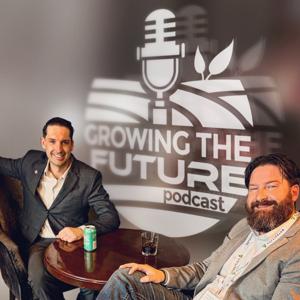


The post came after a long drive home from a production show.
Jay Peterson had spent the day talking to people at booths, catching up with friends, listening to the Manitoba and Saskatchewan numbers come out on the radio. And somewhere between Saskatoon and Swift Current, something settled on him. Nobody was really having the conversation. Not out loud. Not honestly.
So he made a video. Johnny Cash in the background. A simple question underneath it. Why is nobody talking about the fact that nothing we can grow in 2026 is going to make us money?
The comments came in five flavors. Some farmers said they'd never quit, no matter what. Some were close to a breaking point. Some said it was just another cycle. Some thought bigger forces were reshaping the whole industry. And some were just trying to make sense of it.
This episode is the conversation that followed.
Four farmers. Real numbers. No prescriptions. No easy answers.
The question underneath all of it: when the math stops working, what are we actually farming for?
Guests
Jay Peterson — JSP Farms Chris Allam — Allen Farms Norm Shoemaker — Shoemaker Ag Ventures Partnership Jeff Bennett — Bone Trail Land Company
Timestamps
00:00 — Jay's TikTok, the long drive home from the production show, and why the comments hit a nerve.
08:34 — The live poll. How does your farm pencil out for 2026? 26% profitable. 42% break even at best. 16% likely a loss.
09:14 — Jay on what he was actually feeling when he made the post. Inputs still high. Prices not following. The sense that everyone was in the same position but nobody was saying it.
13:48 — Norm on the math. It used to take a metric ton of durum to break even. Now it takes close to two. Costs went one way and didn't come back.
15:22 — Jeff on why he stopped trying to predict what the year would bring. Four tough years before a good one. The numbers change every two months. You still show up.
17:09 — Chris makes the case it's not that dire, at least in Alberta. Average contribution margin, a little bit of profit. But he's clear: this was never a one-year home run industry.
19:18 — Cycles. Nobody agrees on where we are. Norm says we got used to good years and probably over-invested in iron. Jay says he might just be a year-by-year guy.
21:44 — Jay on why he never wanted to be a home run farmer. Singles and doubles. The rare triple. What it felt like to watch the bottom fall out mid-harvest last fall.
28:53 — The second poll. What's putting the most pressure right now? Inputs at 55%. Commodity prices at 42%. Land costs at 36%. Equipment at 27%.
29:45 — Whether cutting production costs to meet the market is actually a strategy. Chris says you produce more, not less. Jeff says fertilizing for disaster is its own kind of disaster.
31:43 — Jay on buying base chemical components instead of prepackaged. Why he grows mustard and not canola. Efficiency over volume when the rain isn't coming.
34:24 — Norm on land values. A million dollars a quarter. A son and a son-in-law coming into the operation. The math on return when you run those numbers.
36:32 — What farmers are actually doing differently this year. Variable rate fertilizing. Weekly peer group meetings. Cost benchmarking. Lean Six Sigma on the farm.
43:18 — Jeff on switching acres to canary seed and specialty canola. Crop rotation as a profit strategy. Finally back to a third, third, third rotation after years of disease pressure.
46:00 — The last question. What are you farming for when the numbers don't work?
47:27 — Chris: the next generation, and watching marginal land get better year after year.
48:16 — Jeff: fourth or fifth generation on this land. Leaving a starting point better than the one he was handed.
49:38 — Norm: the kids, the grandkids, and the table. Number six on the way. Who's at the table is what matters.
50:32 — Jay: he got into it because he loves farming. Loves farming with his dad. Loves doing it as well or better than the generations before him.
52:27 — Why Dan wanted to create a room for this conversation. And why it matters that farmers are willing to say it out loud.
Platform partners
Bone Trail Originals — www.instagram.com/bonetrailoriginals/
Hammond Realty — hammondrealty.ca
Crop-Aid Nutrition Gripp — gripp.ag
Connect with Growing the Future
growingthefuture.ca
Register for the Convergence Conference at convergence.ag and stay updated by subscribing to the Growing the Future Podcast at growingthefuturepodcast.ca.
Back in June 2025, Trent Klarenbach of Klarenbach Research did something nobody had done before. He charted Saskatchewan farmland values going back a hundred years and applied technical analysis to what he found.
The chart went viral on YouTube. 52,000 views. And for good reason.
The RSI had been signaling overbought conditions for over thirteen years. Previous times the market crossed that line and broke below the two-year exponential moving average, the results were not subtle. A 54% drop after 1922. A 22% drop after 1968. A 60% drop after 1982. Those aren't predictions. That's the historical record. Most people buying land today have never seen it.
Tim Hammond runs Hammond Realty. He's been on the floor of the Saskatchewan farmland market since 2002. He manages 80,000 acres for investors, negotiates rental agreements, and watches the bid sheets on every tender. What he's seeing right now is something he hasn't seen before. A split market. Good land in a good area still moving. Average land struggling. Inventory quietly doubling. The spread between the top bid and the second bid widening from close together to five, ten, fifteen percent apart.
The top bid is still setting records. But Tim's point is that land is only worth what the second highest bidder will pay. And that depth is getting thinner.
This is not a doom and gloom conversation. Saskatchewan farmers hold somewhere around 65 billion dollars of farmland free and clear. The balance sheets are strong. The ag lenders are still positive. If there's a correction, Tim thinks agriculture can absorb the first 15 to 20 percent without a cascade. The question is where it goes from there.
That's the conversation this episode holds. What the chart says, what the ground says, and what it means for the decisions you're making right now.
Guests
Trent Klarenbach — Klarenbach Research. Technical analyst. The first person known to have charted Saskatchewan farmland values across a hundred years of data.
Tim Hammond — Founder and CEO, Hammond Realty. Agricultural real estate specialist, former ag lender, manages land for sophisticated investors across Saskatchewan.
Timestamps
00:00 — Dan sets the stage. The Robert Angelic webinar in January, tightening capital conditions, and why this conversation needed to happen.
04:00 — The Klarenbach Research farmland study. 52,000 YouTube views. What happens when you apply a hundred years of technical analysis to land values for the first time.
05:00 — Introducing Trent Klarenbach and Tim Hammond.
08:34 — Live audience poll: where do you think Saskatchewan farmland values are headed? Results reveal a split room.
11:50 — Trent walks through the chart. RSI, the two-year exponential moving average, and what the historical pullbacks actually looked like. 54% in 1922. 22% in 1968. 60% in 1982.
13:00 — What overbought actually means and why the RSI can stay elevated for years before anything moves.
15:00 — Tim on what the chart means personally. His great-grandfather handed back the keys in 1933 when land values had halved. The Hammond family's hundred years of farming mapped almost exactly onto Trent's cycle lines.
17:00 — What Dan took from the chart that nobody talks about at the kitchen table.
18:00 — Tim on what he's seeing on the ground right now. The split market. Good land still competitive. Average land going sideways or down. The first split he's seen since 2002.
20:00 — Second live poll on local market conditions. 52% say steady but not as aggressive. 30% still seeing competitive multiple-bid situations. 12% starting to see softening.
21:30 — Inventory. How much farmland has come to market since January and what the doubling of listings actually means in context of one per rural municipality.
23:00 — The bid depth problem. Tenders that used to get ten offers are now getting two or three. The spread between top bid and second bid is widening. What that means for actual land values beneath the headline numbers.
26:00 — Trent on the catalysts that could trigger a trend change. Credit tightening, geopolitics, commodity cycles, retiring farmers reconsidering their position.
30:00 — The long-term buyer question. Tim's dad bought land in 1981 at 80,000 a quarter. It took 27 years to look like a great investment. He still has it.
33:00 — What a 33-year wait looks like depending on your age and whether you can survive the cycle. Trent on what happened to the people who couldn't.
34:00 — If there is a pullback, what does buying the dip actually look like and who has the dry powder to do it.
38:00 — Tim's cell signal. What price movement would actually constitute a sell signal on Trent's chart and how close we may or may not be to that line.
39:00 — The retired farmer wildcard. 30 to 40 percent of Saskatchewan farmland is held by retired farmers and farm families who stopped selling when the asset kept appreciating. What happens if that calculus changes.
42:00 — Audience poll: do you believe technical analysis has value for farmland decisions? 64% say somewhat useful but not definitive. 20% say yes, charts reveal important signals. 16% say farmland is different from other markets.
43:00 — The shift from expansion to efficiency. Why buyers are getting stronger instead of bigger.
45:00 — Rental rates. Poll results: 43% say increasing, 40% holding steady, 11% starting to soften. Tim on managing 80,000 acres of rental agreements and what he's seeing in renegotiations this year for the first time.
49:00 — Rent versus land value. When you're getting 1% on an asset that might start declining, when does the math change?
51:00 — How much Saskatchewan farmland is rented versus owner-operated. Tim's gut on the percentage turns out to be almost exactly right.
53:00 — Rent versus purchase in a tighter market. Why locking in for three years looks different than committing for twenty.
54:00 — Credit conditions and balance sheets. Tim on whether he's seen lenders kill deals yet and what the equity cushion actually looks like.
57:00 — Nutrient mining clauses in rental agreements. Are landlords enforcing them?
58:00 — 42.1% of Saskatchewan farmland is free and clear. What that number means in dollars.
59:00 — Are boomers selling? Why the transfer of farmland may matter as much to the market as new buyers entering it.
01:01:00 — Trent on where he's taking the research next. An announcement coming. Subscribe to find out.
01:02:00 — The next generation question. What happens to the land when the people who said they didn't want it are the ones who inherit it.
Connect with Trent Klarenbach klarenbachresearch.com — subscribe to the free newsletter to receive the farmland study directly
Connect with Tim Hammond and Hammond Realty hammondrealty.ca
Connect with Growing the Future growingthefuture.ca
Register for the Convergence Conference at convergence.ag and stay updated by subscribing to the Growing the Future Podcast at growingthefuturepodcast.ca.
Most farm families in Western Canada have built more wealth over the past two decades than any generation before them on the land. A lot of it is sitting in the ground. And that concentration, it turns out, is quietly creating a set of problems most producers have never been introduced to.
This session brought the Kohr Wealth team to the Growing the Future Productions live room. Ryan Hillstead, a CPA who spent 16 years in public practice carrying a heavy ag book, walked through three client stories that stopped people cold. Shane Shepherd laid out how whole life insurance works as something you own, not just something you pay for. And tax lawyer Kelly Caruk explained why buying insurance in the wrong place can cost you the very tax advantages you were trying to protect.
The conversation also got into what Ryan calls the tax liability can. The one being kicked down the road from generation to generation, growing in step with every acre of appreciating land. Somebody's eventually going to pick it up. This conversation is about making sure there's a plan when they do.
Guests: Larry Scammel, Shane Shepherd, Ryan Hillstead, Kelly Caruk — Kohr Wealth
Timestamps:
00:00 — Welcome and setup. Why capital concentrated in one asset class can narrow your options across generations.
03:52 — Larry introduces Kohr Wealth, their new partnership with Blue Star Equity, and their two beer rule for working with clients.
06:30 — How Kohr approaches life insurance from a balance sheet perspective. Liquidity, tax exposure, succession, long-term family control.
08:22 — Ryan Hillstead introduces himself. 16 years as a CPA in public practice, partner level with a national firm, heavy ag client base across Saskatchewan.
09:39 — How agriculture has changed in 15 years. Land values, technology, and the shift toward viewing farming as a wealth-building business.
11:42 — The $50 billion of farmland set to transfer in the next decade and why succession conversations have taken over the kitchen table.
12:58 — The disappearing tax tools. TOSI rules, passive income changes, income splitting restrictions, and the removal of surplus strip planning in 2024.
19:00 — Ryan's three client stories. Uncle Gordon. Rod. The estate freeze family with farming and non-farming kids at the same table.
21:05 — Uncle Gordon did everything right. Died with a $4 million investment portfolio. The tax bill on his land ate the whole thing.
23:09 — Rod sold the farm when no one wanted to take it over. Year three, he came in looking deflated. Said he wished he had never done it.
24:40 — The estate freeze family. $40 million corporation. Mom and dad hold preferred shares. The farm may have to sell land just to cover the tax bill when they pass.
30:56 — Shane Shepherd explains whole life insurance. What cash value is, how it builds, and why it behaves differently than anything else on your balance sheet.
33:37 — The farmland analogy. You don't sell the land to access the equity. Whole life works the same way.
38:10 — Kelly Caruk on the tax architecture. Why insurance is taxed differently than almost every other asset class, what capital dividends are, and why structure matters before anything else.
43:50 — The risk of buying insurance in the wrong place. For farm families specifically, a wrong structure can cost you the farming tax preferences you would otherwise have.
48:52 — Audience question: Can insurance companies go broke in Canada? Shane answers. Kelly adds the regulatory backstop.
51:28 — Ryan on the intergenerational tax liability. Generations kicking the can down the road. What it looks like when somebody finally has to pick it up.
54:55 — Shane closes. Tax tools have narrowed. Timing matters. Capital structure is as important as the amount of capital you have.
58:59 — Audience Q&A on preferred shares and estate freezes. Ryan and Kelly explain what preferred shares actually are and how insurance can reduce the estate tax bill, not just fund it.
Connect with Kohr Wealth: kohrwealth.com
Connect with Growing the Future: growingthefuture.ca
Register for the Convergence Conference at convergence.ag and stay updated by subscribing to the Growing the Future Podcast at growingthefuturepodcast.ca.
Now I have the full transcript. Let me create the podcast summary and notes optimized for Simplecast and YouTube.
Episode Summary (for the Simplecast summary field):
When nothing you can grow in 2026 is projected to make money at average yields and average prices … what do you do? In this live workshop, Dan Aberhart sits down with Dave Sullivan from Global Ag Risk Solutions, Dean Klippenstine from MNP, and producer Jake Leguee to break down the farm financials, benchmark the best operators, and engineer a revenue floor before you seed a single acre. Dave walks through real spreadsheets showing break-even costs have more than doubled since 2010, why the largest crop in Canadian history barely generated a profit, and what the top 25% of managers are doing differently. The panel digs into how to stack crop insurance, AgriStability, and GARS products — including the brand new Yield Plus option — so you can farm with confidence even in a year where the math says you shouldn't be able to. If you only listen to one episode before spring, make it this one.
Episode Notes (with timestamps, formatted for Simplecast markdown and YouTube description):
Engineer Your Revenue Floor Before You Seed Season 8, Episode 6
The margins are tight. The projections are grim. And spring is coming whether you're ready or not. In this live workshop with nearly 300 registered producers, we cut through the noise and get to the numbers that matter.
Panel:
Timestamps:
[00:00:00] Welcome and why this workshop exists — the financial questions stacking up at the kitchen table
[00:02:55] Setting the stage — projections showing $25–$50/acre below break-even at average yields and prices
[00:04:37] Dave Sullivan shares what he's seeing across thousands of farm financials — and why having a common vernacular matters
[00:10:30] Break-even costs over time — how we went from $250 to $550/acre in 16 years
[00:13:19] The 2026 budget reality — $50–$75/acre losses on average, and why we haven't seen a starting point this tough since 2007–2008
[00:17:19] Top producers vs. top managers — why the most profitable farms aren't always the biggest spenders on inputs
[00:20:39] Southeast Saskatchewan benchmarks — the massive gap between top and bottom 25% and where it actually shows up (hint: it's LPM, not inputs)
[00:25:07] Jake Leguee on scouting, holding back that extra pass, and why spending more doesn't always mean earning more
[00:26:27] Dean Klippenstine busts the "fixed cost" myth — why that term needs to go
[00:27:33] Yield Plus explained — the brand new GARS product that layers crop insurance into the calculation and can save 40–70% on premiums
[00:30:26] Stacking your coverage — how to combine crop insurance, AgriStability, GARS, and GI-3 for the right fit on YOUR farm
[00:34:46] Why locking in canola at this rally matters — and the futures strategy conversation
[00:39:46] The AgriStability cashflow trap — great on a spreadsheet, but can you wait 12–18 months for the check?
[00:44:00] The "trough of despair" — why a 70% crop can actually pay better than a 90% crop when your coverage is stacked right
[00:49:23] Quotes move fast — why your GARS quote is only good until something weird happens (and weird things are happening a lot these days)
[00:54:52] How GARS treats futures contracts, delivery contracts, and trade accounts
[00:59:43] Why relationships with the right experts are the real competitive advantage
[01:00:50] Final takeaways — know your numbers, understand your options, and get yourself on the right side of the distribution curve
Key Takeaway: The gap between the top 25% and bottom 25% of farms is massive — and it's not about spending more on inputs. It's about knowing your numbers, controlling your LPM, benchmarking against your region, and engineering a financial floor before you ever hit the field. This is the year to get that right.
Resources mentioned:
Register for the Convergence Conference at convergenceconference.ca and stay updated by subscribing to the Growing the Future Podcast at growingthefuturepodcast.ca
Register for the Convergence Conference at convergence.ag and stay updated by subscribing to the Growing the Future Podcast at growingthefuturepodcast.ca.
Agriculture has experienced enormous asset appreciation over the past two decades, particularly in farmland. But as this conversation explores, high asset values do not automatically translate into financial flexibility.
In this special Growing the Future Productions live panel, host Dan Aberhart speaks with:
Larry Scammell – Corporate finance and investment strategy, KOHR Wealth
Shayne Shepherd – Capital raising and wealth preservation, KOHR Wealth
Ryan Hillstead, CPA, CGA – Accounting and tax advisory
Kelly Caruk, J.D., TEP – Tax lawyer specializing in insurance and estate planning
Together they unpack the role that life insurance can play as a long-term balance sheet tool for farm families, especially when succession, taxation, and liquidity become critical.
Kelly Caruk explains that insurance occupies a unique position in the Canadian tax system, noting that unlike traditional investments, the growth inside a life insurance policy can occur on a tax-deferred basis, with proceeds often paid out tax-free on death.
That structure creates planning opportunities for entrepreneurs and farm businesses, including the potential for capital dividends to shareholders when proceeds are received by a corporation.
The panel emphasizes that life insurance is not simply a product to purchase, but a planning tool that must be integrated with accountants, lawyers, and other advisors in order to properly structure solutions around succession, tax exposure, and family objectives.
A key theme throughout the discussion is that the purpose of life insurance is not merely to provide cash at death, but to solve financial problems that arise from the success of a farm business — including the ability to equalize non-farming heirs, protect accumulated earnings, and allow the farm to continue to the next generation.
As the panel explores, modern farm businesses increasingly require intentional capital structure, not simply asset appreciation.
Why many farm balance sheets appear strong but remain illiquid
How life insurance policies accumulate tax-deferred cash value
The concept of insurance as an asset class
Why succession planning is becoming more complex for farm families
How capital dividend accounts allow tax-efficient distribution of insurance proceeds
The role of collaboration between lawyers, accountants, and advisors
00:00 — Welcome to Growing the Future Productions
Larry Scammell
Shayne Shepherd
Ryan Hillstead, CPA, CGA
Kelly Caruk, J.D., TEP
Register for the Convergence Conference at convergence.ag and stay updated by subscribing to the Growing the Future Podcast at growingthefuturepodcast.ca.
Liquidity & Legacy
With Ted Cawkwell, The Cawkwell Group
Farm balance sheets may look strong on paper. But beneath the surface, lending behavior is changing, capital is more disciplined, and the margin for error is narrowing.
In this live conversation, Dan and Ted discuss:
Why profitable farms can still experience financial pressure
The difference between strategic sales and forced sales
How liquidity issues surface before they become obvious
What well-prepared farm operations tend to have in common
Why “just hold the land” isn’t always a complete strategy
Ted works directly with farm families, lenders, and advisors across Western Canada and beyond. As the #1 RE/MAX farmland realtor globally, he has been involved in hundreds of farmland transactions and sees patterns long before they become headlines.
This episode is not about predictions. It’s about structure, positioning, and understanding how capital behaves when conditions shift.
Chapters / Timestamps
00:00 – Introduction & why this conversation matters
02:30 – Market sentiment vs. reality on farmland values
06:45 – What’s changed recently in buyer and seller behavior
12:30 – Profitability, cash flow, and leverage pressures
18:00 – Liquidity vs. legacy: real tradeoffs
26:00 – Investor behavior, rental land, and capital availability
34:00 – Risk, balance sheets, and selling strategically
42:00 – Productive vs. marginal land dynamics
50:30 – Perspective, cycles, and long-term thinking
Register for the Convergence Conference at convergence.ag and stay updated by subscribing to the Growing the Future Podcast at growingthefuturepodcast.ca.
The first two parts of this event were Robert Andjelic's thesis and his plan. This is the room pushing back -- live audience questions, direct challenges, and Robert answering without notes.
What's Inside
- The audience's sharpest questions on Robert's thesis and plan
- Where Robert's answers held up under direct challenge and where the room disagreed
- The closing exchange on what producers should watch for next
- A preview of where this conversation went next, in The Great Canadian Bull
Related Episodes
- Is There a Capital Squeeze in Ag? -- Part 1
- How to Survive a Capital Squeeze in Agriculture Part II -- Part 2
- Too Big to Farm -- the next chapter in this conversation
In this session, Robert responds to questions about:
– Cash flow vs land value
– How banks actually behave when risk rises
– Why liquidity disappears before prices fall
– What breaks first when leverage is stretched
– How operators protect the land when margins compress
– And why “survival” is not failure, it’s strategy
Several moments in this Q&A landed hard, including Robert’s blunt reminder: “Your balance sheet won’t save you if your cash flow breaks.” This conversation isn’t theory. It’s lived experience, shared in real time.
00:00 Part 3 - Audience Q&A & Closing
05:40 Banking Relationships and Financial Advice
12:01 Global Agriculture and Market Dynamics
33:30 Cryptocurrency and AI in Agriculture
41:21 The Inevitability of War and Global Tensions
41:46 China's Ambitions and Global Power Dynamics
42:34 Climate Change and Carbon Credits
44:51 Agricultural Financing and Real Estate
51:42 Interest Rates and Economic Predictions
56:35 Farmland Investment Strategies
01:06:19 Global Trade and Agricultural Competitiveness
01:23:48 Closing Remarks and Final Thoughts
Connect with Growing the Future
Website: growingthefuture.ca
YouTube: Growing the Future
Instagram: @growingthefuturepodcast
LinkedIn: Growing the Future
Register for the Convergence Conference at convergence.ag and stay updated by subscribing to the Growing the Future Podcast at growingthefuturepodcast.ca.
Part 1 covered why Robert Andjelic believes the system is under pressure. This is where he tells you what to actually do about it: a 3-step action plan built for producers who did not lock in two years ago and need a defensive plan now, not a growth plan.
What's Inside
- A recap of Robert's 12-point thesis for anyone catching this one first
- The 3-step survival plan: get brutally clear on cash, talk to lenders early, raise guaranteed income fast
- Why land payments come first and everything else is negotiable
- What to bring to a lender conversation so it reads as credibility, not panic
- Why cutting capital drag on machinery is one of the fastest ways to stabilize an operation
Related Episodes
- Is There a Capital Squeeze in Ag? -- Part 1, the thesis this action plan responds to
- What Happens When Capital Tightens? Live Q&A -- Part 3, the audience questions this plan raised
- Too Big to Farm -- the follow-up conversation
Connect with Growing the Future
Website: growingthefuture.ca
YouTube: Growing the Future
Instagram: @growingthefuturepodcast
LinkedIn: Growing the Future
Register for the Convergence Conference at convergence.ag and stay updated by subscribing to the Growing the Future Podcast at growingthefuturepodcast.ca.
Robert Andjelic spent two weeks meeting with 20 to 30 lenders in Toronto before he picked up the phone to call this briefing. What he found there is the spine of this conversation: banks are not turning against agriculture, they are absorbing pressure from a commercial real estate sector years into extend-and-pretend, and that pressure is starting to reach the farm gate.
This is Part 1 of a three-part live event. Robert lays out his 12-point thesis on where the economy actually stands, why he believes this cycle could rival 1929, and what role banking oversight plays in what producers are starting to feel.
What's Inside
Related Episodes
Connect with Growing the Future
Website: growingthefuture.ca
YouTube: Growing the Future
Instagram: @growingthefuturepodcast
LinkedIn: Growing the Future
Register for the Convergence Conference at convergence.ag and stay updated by subscribing to the Growing the Future Podcast at growingthefuturepodcast.ca.
Why most diets work briefly—and then quietly collapse
The hidden cost of extreme approaches to food and fitness
Growing up overweight and learning to separate identity from behavior
Why protein, fiber, hydration, and sleep are foundational—not optional
The difference between weight loss and health
Alcohol, energy, and the trade-offs we don’t like to talk about
Why tracking creates awareness, not obsession
How agriculture schedules complicate nutrition—and how to adapt
Accountability as a support system, not a punishment
Building habits that can survive busy seasons, travel, and stress
This episode is a reminder:
You don’t need a new body.
You need a way of living that doesn’t break the one you have.
Register for the Convergence Conference at convergence.ag and stay updated by subscribing to the Growing the Future Podcast at growingthefuturepodcast.ca.
From the publisher's feed
Ranked by our users in the last 21 days

227,479 Listeners
147 Listeners
126 Listeners
14 Listeners
737 Listeners
257 Listeners
129 Listeners

385 Listeners

46,079 Listeners
353 Listeners

39,409 Listeners

407 Listeners

15,926 Listeners
2 Listeners