
Sign up to save your podcasts
Or

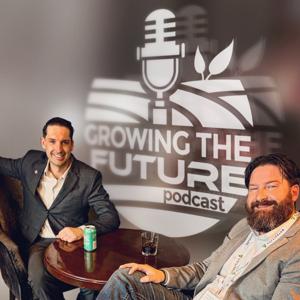


Chris Unrau has a number he's watched for twenty years: $3,500 an acre. That's roughly where land values sat when the phone started ringing with tile drainage questions, not before.
Unrau, who built his tile drainage business from scratch in Manitoba after a decade managing a potato farm's excess-moisture problem, joins fellow producers Daryl of Beaver Creek Farms and Jim Palace of Palace Farms to talk through what actually drives the decision to tile: rising land values, competition for limited acres, and the difference between a luxury input and a crop input that pays for itself. Beaver Creek Farms alone has tiled 9,000 of its 9,700 acres.
What's Inside
- Why rising land values, not just wet fields, are what actually triggers a tile drainage conversation
- The difference between farmers who see tile as a luxury and farmers who call it a no-brainer crop input
- What happens to corn and edible beans on tiled versus untiled ground in the same field
- Why some operations choose to tile existing acres instead of buying more land
- How a third-generation farm decided tile was worth investing in before the results were fully proven
Connect with Growing the Future
Website: growingthefuture.ca
YouTube: Growing the Future
Instagram: @growingthefuturepodcast
LinkedIn: Growing the Future
Subscribe to the Growing the Future Podcast wherever you listen, and register for Convergence Conference 2027 at convergence.ag.
Register for the Convergence Conference at convergence.ag and stay updated by subscribing to the Growing the Future Podcast at growingthefuturepodcast.ca.
STARS flies more than eleven missions a day across the Prairies, and nearly four thousand in a single year. Most people only hear about it on the worst day of someone's life.
Darren Entner, Clinical Operations Manager at STARS in Regina, joins Dan to talk about what air rescue actually looks like for rural communities: the kinds of calls the crews respond to, how the technology and logistics hold together under pressure, and how community support keeps the whole thing flying. Dan also explains why he agreed to be dropped into a remote location for a fundraising challenge on STARS' behalf.
What's Inside
- What kinds of missions STARS flies, and how scene calls differ from hospital-to-hospital transfers
- How the technology and operations behind a critical care aircraft work in rural areas
- How province-to-province differences, including Manitoba, change what a mission looks like
- Why patient stories, not statistics, are what the crews carry with them
- How community fundraising keeps STARS in the air
Connect with Growing the Future
Website: growingthefuture.ca
YouTube: Growing the Future
Instagram: @growingthefuturepodcast
LinkedIn: Growing the Future
Subscribe to the Growing the Future Podcast wherever you listen, and register for Convergence Conference 2027 at convergence.ag.
Register for the Convergence Conference at convergence.ag and stay updated by subscribing to the Growing the Future Podcast at growingthefuturepodcast.ca.
In the summer of 2023, Calem Watson got in a canoe in Fort Smith and didn't see a familiar face for 122 days. By the time he reached Tuktoyaktuk, he'd covered 3,000 kilometers alone.
Watson, a Regina-based adventurer who only picked up canoeing during the pandemic, joins Dan to talk through what that much solitude actually does to a person, the real risk calculus of traveling alone in remote wilderness, and why he thinks the danger of an expedition like this gets wildly overstated. It is a different kind of conversation about independence and self-reliance than the one farmers usually have with each other, and a surprisingly direct one.
What's Inside
- Why Watson treats every trip as if rescue isn't coming, even with a satellite messenger in his pack
- What a few years of progressively longer canoe trips taught him before he attempted this one
- The real difference between going alone and going with a partner, both the cost and the reward
- What a person's mind actually does after months away from constant information and noise
- Why he thinks wilderness travel is less dangerous than people assume, if you respect it
Connect with Growing the Future
Website: growingthefuture.ca
YouTube: Growing the Future
Instagram: @growingthefuturepodcast
LinkedIn: Growing the Future
Subscribe to the Growing the Future Podcast wherever you listen, and register for Convergence Conference 2027 at convergence.ag.
Register for the Convergence Conference at convergence.ag and stay updated by subscribing to the Growing the Future Podcast at growingthefuturepodcast.ca.
Every bushel that leaves a farm gets a grade, and the farmer rarely has a say in how it is decided.
Kyle Folk, founder and CEO of GroundTruth Ag, pitches a new approach to on-farm grain grading automation, and he does it to the people who would actually have to trust it. Matt Wallington, Brett Casavant, Riley Kushniruk and Scott Maurer, four Saskatchewan producers, press him on what it takes to earn their confidence, with live polling and audience questions in the mix. It is the first episode in the What Farmers Want series, presented by Cornerstone Credit Union's Rural Tech Activation initiative.
What's Inside
Register for the Convergence Conference at convergence.ag and stay updated by subscribing to the Growing the Future Podcast at growingthefuturepodcast.ca.
Outlook, Saskatchewan has a housing shortage, and it's a good problem to have. The irrigation industry around it is thriving enough that farm companies are buying houses in town just to put workers somewhere to live.
Ryan Husband runs that irrigation industry as executive director of Irrigation Saskatchewan, and runs the town as its mayor, while also co-owning Husbandry Farms with his wife Alicia, ten acres of haskap berries and garlic outside Outlook. He joins Dan to talk through what 250,000 acres of center-pivot irrigation actually takes to manage, why Saskatchewan has more water storage than Alberta but far fewer irrigated acres, and what it's like running a small town's infrastructure on a highway and a bridge that haven't been fixed in decades.
What's Inside
- Why Saskatchewan has more water storage capacity than Alberta but a fraction of the irrigated acres
- What it actually costs to expand a small town's infrastructure when the industry around it is growing
- The ten-acre math that makes a small high-value crop operation pencil out
- Why most of Saskatchewan's irrigation districts still don't have a full-time engineer
- How an engineer who planned to farm full-time ended up running a town instead
Connect with Growing the Future
Website: growingthefuture.ca
YouTube: Growing the Future
Instagram: @growingthefuturepodcast
LinkedIn: Growing the Future
Subscribe to the Growing the Future Podcast wherever you listen, and register for Convergence Conference 2027 at convergence.ag.
Register for the Convergence Conference at convergence.ag and stay updated by subscribing to the Growing the Future Podcast at growingthefuturepodcast.ca.
Soil Health Revolution: Unlocking the Potential Beneath Your Feet | Growing the Future Mastermind
Join host Dan Aberhart in the 'Engine of the Soil Igniting the Evergreen Revolution' webinar as he speaks with Greg Patterson, CEO and founder of A&L Canada Laboratories.
This webinar, presented by A&L Canada Laboratories and Growing the Future Productions, gathers a powerhouse of agronomic expertise to discuss soil health and its transformative potential in agriculture.
Greg shares his 40 years of experience and unveils a comprehensive soil health series that will bring agronomic insights to farmers in Western Canada and beyond.
The session explores the history of green revolutions, the importance of soil microbiomes, balanced fertility, and innovative techniques to boost crop yields while maintaining environmental sustainability.
Engage with the discussion, learn about the groundbreaking Soil Health Index, and discover how proper soil management can revolutionize agricultural productivity.
Stay tuned for future sessions and masterclasses aimed at elevating agronomy practices globally.
00:00 Welcome and Introduction
01:30 Excitement for Soil Health Series
03:04 Greg Patterson's Vision and Goals
06:00 Historical Overview of Fertility 06:18 The First Green Revolution
08:23 The Second Green Revolution
09:24 The Evergreen Revolution
09:50 Plant-Microbe Interactions
11:36 Soil Health and Microbial Activity
16:18 Case Study: Potato Production
19:49 A&L Biologicals and Soil Health
25:56 Balanced Fertility and Nutrient Management
33:14 Q&A Session: Soil Health and Fertility
47:59 Impact of Agriculture on Organic Matter
49:46 The Role of Sulfur in Soil Health
52:47 Microbial Activity and Soil Moisture
01:02:10 No-Till Farming and Soil Stratification
01:09:29 Soil Health Index and Microbial Populations
01:23:21 Introducing the Growing the Future Mastermind
Register for the Convergence Conference at convergence.ag and stay updated by subscribing to the Growing the Future Podcast at growingthefuturepodcast.ca.
A fertilizer quote in Western Canada is the last step in a chain that starts with export policy, damaged infrastructure, shipping lanes and industrial gas prices on the other side of the world.
Josh Linville analyses that chain for a living. Recorded ahead of the 2025 season, this conversation walks through the specific pressure points that were moving the market, and in doing so lays out how the market is actually built.
What's Inside
Register for the Convergence Conference at convergence.ag and stay updated by subscribing to the Growing the Future Podcast at growingthefuturepodcast.ca.
Most farm risk plans are built on break-even. The market does not care what your break-even is, and neither does the insurance behind it.
This live session, presented with Global Ag Risk Solutions, put four perspectives on the same problem: Dave Sullivan from Global Ag Risk, Dean Klippenstine and Tyson Kenneth from MNP, and producer Carl DeConnick Smith, known for a contrarian but disciplined approach to planning. They work through how insurance options, AgriStability, and forward pricing fit together, what a well-thought-out plan does for a farm when volatility hits, and how a young farm with no history gets started. Live questions from the audience shape much of the conversation.
What's Inside
- How the major insurance options and AgriStability work together, and where each one stops
- Why a plan built before volatility arrives changes how a farm behaves when it does
- How a new farmer with no production history approaches coverage
- What one producer's plan looks like when everything seems to be going against him
- The one number the panel agrees every farm should know before it plans the year
Connect with Growing the Future
Website: growingthefuture.ca
YouTube: Growing the Future
Instagram: @growingthefuturepodcast
LinkedIn: Growing the Future
Subscribe to the Growing the Future Podcast wherever you listen, and register for Convergence Conference 2027 at convergence.ag.
Register for the Convergence Conference at convergence.ag and stay updated by subscribing to the Growing the Future Podcast at growingthefuturepodcast.ca.
Wade Barnes says he had about twenty eight million dollars of value on paper the day Farmers Edge went public at seventeen dollars a share. He sold at roughly thirty cents.
This is Part 3, and it is the part he says he had never told publicly before. It covers the fundraising treadmill, the investor who insisted everyone hold the same class of shares, the decision to go public into a market that was screaming for technology listings, and what it felt like to watch the number fall every morning.
What's Inside
- The trap he walked into without seeing it: growth has to be shown to raise again, and spending is how you show growth
- The fork he still thinks about, where he could have stayed a profitable business at a fraction of the size and did not, because he was afraid of being swallowed
- Why the investor everyone warned him about turned out to be the one who insisted on treating every shareholder equally
- The exits he believes were missed, and the tension that comes from an investor who is genuinely committed to the business
- The advice he was given before the listing to leave carbon out of the story, the call from a former investor telling him the opposite, and which one he regrets following
- What it is like to be the seventh most subscribed listing of the year and still watch the share price go one direction
- Where he thinks the real advantage in farm data sits now, and why he does not think it sits with the companies making the loudest claims
- Starting again at 350,000 acres with people he worked with before, deliberately not trying to rebuild what he had
Related Episodes
Wade Barnes Part 1: What Happens When the Data Company Loses the Farmer
Wade Barnes Part 2: competing with Monsanto and John Deere
🎧 Why You Should Listen:
Wade provides an honest look into the pressures of being a tech entrepreneur in agriculture, including what he would have done differently and why he believes a more personal touch with farmers is the key to success. Whether you're in agribusiness, tech, or just love a great entrepreneurial story, this episode is packed with valuable lessons and insights.
Connect with Growing the Future
Website: growingthefuture.ca
YouTube: Growing the Future
Instagram: @growingthefuturepodcast
LinkedIn: Growing the Future
Subscribe to the Growing the Future Podcast wherever you listen, and register for Convergence Conference 2027 at convergence.ag.
Register for the Convergence Conference at convergence.ag and stay updated by subscribing to the Growing the Future Podcast at growingthefuturepodcast.ca.
Wade Barnes spent the early years of Farmers Edge quietly terrified of two companies. Not competitors his own size. Monsanto and John Deere.
This is Part 2 of a three part conversation. It picks up at the beginning, with a name chosen because he wanted the word Edge in it, and a field day where he walked twenty farmers through an oat crop where the strip with no nitrogen was the only part starting to lodge. The value was obvious. What was not obvious was how a Manitoba company was supposed to hold on to it.
What's Inside
- The early proof that variable rate worked, and why the farmers standing in that field could see it before the industry could
- Why he never trusted agronomic models, going back to risk advisories that arrived during stretches with no rain at all
- What changed the day Monsanto acquired Climate Corp, and the strategy he built in response: in-cab data, weather stations, and better inputs rather than more analysts
- The weather station finding that quietly explained years of variable rate complaints, once he could see three inches of rain difference inside three quarters of a mile
- A binding agreement worth more than twenty million dollars that evaporated when the counterparty was acquired, and the months of panic that followed while investors walked
- How he thought about data ownership, and the line he would not cross on selling farmer data
- Why he believes the grain trade made its money on information rather than on grain, and what the internet did to that advantage
- The partnerships that followed, and the independent dealers who told him they could not stay once he chose their largest competitor
Related Episodes
Wade Barnes Part 1: What Happens When the Data Company Loses the Farmer
Wade Barnes Part 3: the raise, the IPO, and starting over
Connect with Growing the Future
Website: growingthefuture.ca
YouTube: Growing the Future
Instagram: @growingthefuturepodcast
LinkedIn: Growing the Future
Subscribe to the Growing the Future Podcast wherever you listen, and register for Convergence Conference 2027 at convergence.ag.
Register for the Convergence Conference at convergence.ag and stay updated by subscribing to the Growing the Future Podcast at growingthefuturepodcast.ca.
From the publisher's feed
Ranked by our users in the last 21 days

227,479 Listeners
147 Listeners
126 Listeners
14 Listeners
737 Listeners
257 Listeners
129 Listeners

385 Listeners

46,079 Listeners
353 Listeners

39,409 Listeners
407 Listeners

15,926 Listeners
2 Listeners