
Sign up to save your podcasts
Or

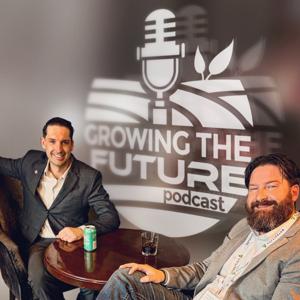


Farmers don’t need another polished sales pitch — they need tools that actually work when iron is hot and harvest pressure is on.
In this live episode of What Farmers Want, host Dan Aberhart puts ag-tech innovation to the test in a Shark Tank–style format designed for one audience only: farmers.
🎙 Andrew Leaman, Founder & CEO of Chariot Command, joins the show to present technology built around visual monitoring, thermal imaging, and AI — designed to detect overheating components, mechanical failures, and fire risks before they become catastrophic.
Andrew isn’t pitching to investors or executives.
He’s pitching directly to producers and agronomists who live with this equipment every day.
Wyatt Bolt – Bolt Seeds Farm
Darwin Kells – Lambton Agra
Riley Kushniruk – K4 Ag
With candid discussion from the live audience and real-world scenarios ranging from combine bearings to grain dryer fires, this episode dives into:
The true cost of downtime
Why most fires don’t come out of nowhere
How thermal imaging sees what humans can’t
Data ownership, insurance implications, and OEM relationships
What farmers would actually pay for preventative technology
🤝 Presented by Cornerstone Credit UnionLyndon Lisitza, Director of Rural Tech Activation at Cornerstone Credit Union, joins the conversation to share why supporting practical, farmer-driven innovation matters — and how financial institutions can play a role in accelerating adoption without hype.
This is an honest, unfiltered conversation about ag-tech, risk, and reality — exactly how farmers like it.
🔗 Learn moreChariot Command
Founder: Andrew Leaman
📧 [email protected]
Register for the Convergence Conference at convergence.ag and stay updated by subscribing to the Growing the Future Podcast at growingthefuturepodcast.ca.
Content note: This episode includes open conversation about mental health, burnout, and identity in agricultural leadership. If you are struggling, please reach out. Farm Stress Line: 1-866-327-6701. Talk Suicide Canada: 1-833-456-4566. In the U.S.: 988.
Most of us are taught that fulfillment arrives at a milestone: the next title, the next acre, the next target. Corliss Rassyle spent years collecting them. A small-town Saskatchewan farm girl, she built a long career in direct sales and rose to its top ranks, and says she still felt something was missing.
In this conversation with Dan Aberhart, Corliss, now an author, speaker and personal development coach, talks about the quiet work that began after a hard stretch at 40 stripped away the roles she had relied on. She offers a simple place to start: get clear on what you want, connect it to why it matters, and ask who you need to become to live it. It is a calm, practical conversation for anyone in agriculture who carries responsibility and wonders what the next season is for.
What's Inside
- What Corliss Rassyle's breakdown in agricultural leadership looked like and what she did next
- The difference between performing leadership and practicing it
- Why the leaders who are most in control are often the most at risk
- What Lead Conference Canada was built to address and how it came out of her own experience
- The question she asks every agricultural leader she works with now
Related Episodes
- You Are Not Your Tractor -- Corliss Rassyle on vulnerability, identity, and what the land does not owe you (GTF Productions, June 2026)
- What the Farm Asked of Andy Junkin -- succession, identity, and what farming costs a son
Timestamps
00:00 Welcome and episode introduction
01:07 Introducing Corliss Rassyle
03:15 Growing up on the farm
05:00 Building a business and finding purpose
09:32 The hero’s journey and hard seasons
13:02 Losing everything and rebuilding
17:00 Where real change begins
18:18 Vision, purpose, and leading your life
21:36 Becoming who you need to be
24:02 Learning to value the journey
27:17 Call to LEAD and leadership without titles
32:00 What changes after doing the work
33:13 Convergence Conference and what’s possible
39:04 Final reflections and where to connect
Guest
Corliss Rassyle
International Speaker, Author, Coach, and Founder of Corliss Co.
Website: https://www.corliss.ca
Connect with Growing the Future
Website: growingthefuture.ca
YouTube: Growing the Future
Instagram: @growingthefuturepodcast
LinkedIn: Growing the Future
Register for the Convergence Conference at convergence.ag and stay updated by subscribing to the Growing the Future Podcast at growingthefuturepodcast.ca.
In this episode of the Growing the Future Podcast, Dan sits down with a prairie-based entrepreneur and investor helping unlock a new wave of ag-tech innovation across Western Canada.
The conversation spans angel investing, Startup TNT, and the roots of prairie innovation — from early farm accounting software and fertilizer exits to today’s venture-backed ag-tech startups. Along the way, we dig into a powerful idea: agriculture doesn’t just need better technology, it needs farmers back in the innovation value chain as owners, not just test pilots.
This episode also reflects on the Yorkton Harvest Showdown Ag Tech Pitch, where Dan and his guest recently connected with emerging founders — several of whom will be featured in upcoming episodes.
If you’re a farmer, founder, investor, or someone curious about how ag-tech actually gets built and funded, this conversation offers a grounded, honest look at capital, community, and purpose-driven investing.
Key Topics / Bullets (Optional but recommended)
Angel investing in agriculture
Startup TNT and prairie startup ecosystems
The legacy of AgExpert and early ag innovation
Why farmers are losing equity in the value chain
Purpose, responsibility, and investing in community
How ag-tech startups actually get funded
Startup TNT: https://www.startuptnt.com
Growing the Future Podcast: https://www.growingthefuturepodcast.ca
Register for the Convergence Conference at convergence.ag and stay updated by subscribing to the Growing the Future Podcast at growingthefuturepodcast.ca.
Family operations are often harder on their own people than they would ever be on an employee, and every generation forgets what it was like to be the young one.
Matt Havens spent years inside a large corporation before moving to the stage, where he now helps leaders simplify how they work and bridge generational gaps with humour. Dan talks with him about why humour makes hard conversations easier, why constant information makes it harder to know what matters, and what that means on a farm where several generations share the work.
What's Inside
- Why humour helps a team talk about real issues
- What generational friction looks like in a family operation, and how to meet in the middle
- How to cut through noise and pick what actually deserves your attention
- Why shared human similarities matter more than small differences between age groups
- What this means for a farm transition
Connect with Growing the Future
Website: growingthefuture.ca
YouTube: Growing the Future
Instagram: @growingthefuturepodcast
LinkedIn: Growing the Future
Subscribe to the Growing the Future Podcast wherever you listen, and register for Convergence Conference 2027 at convergence.ag.
Register for the Convergence Conference at convergence.ag and stay updated by subscribing to the Growing the Future Podcast at growingthefuturepodcast.ca.
Tim Schaefer did not build a system because he wanted to. He built one because he had no choice. His operation was running at full capacity and still losing ground. The harder he worked, the more he had to manage.
The shift from Chaos Commander to intentional CEO is not a personality change. It is a structural one. This episode covers what that shift looks like in an ag business, and the three places operators most commonly lose control without knowing it.
What's Inside
- Why working harder without a system produces more chaos, not less
- The three structural gaps that keep most ag operations in reactive mode
- How to identify whether you are running your business or your business is running you
- What the transition from operator to owner looks like in practice
- The Gripp framework for building an ag business that does not depend on you being everywhere
Related Episodes
- Why Can't Your Farm Operate Without You? -- John Warrillow on enterprise value and the cost of dependence
- Engineer Your Revenue Floor Before You Seed (Mar 2026) -- the financial structure that supports intentional decisions
Connect with Growing the Future
Website: growingthefuture.ca
YouTube: Growing the Future
Instagram: @growingthefuturepodcast
LinkedIn: Growing the Future
Register for the Convergence Conference at convergence.ag and stay updated by subscribing to the Growing the Future Podcast at growingthefuturepodcast.ca.
Welcome back to Season 7, Episode 15 of the Growing the Future Podcast with Dan Aberhart and Nicole Dubé—coming to you from our brand-new studio!
In this episode, we take you inside the Growing the Future Mastermind, featuring soil scientist Greg Patterson, founder of A&L Laboratories Canada. Together, we dig into advanced soil science concepts that can transform how you farm:
Why cation exchange capacity (CEC) is the key to understanding nutrient availability.
How base saturation makes soil chemistry actionable for real-world farming.
Why the balance of calcium, magnesium, and potassium drives energy production and yield stability.
This is just a taste of what happens inside the Mastermind—a place where producers, agronomists, and ag entrepreneurs come together to learn what’s really working in the field.
👉 Want access to the full sessions, transcripts, and community? Join the Growing the Future Mastermind today.
🔗 Join the Mastermind here https://www.skool.com/gtfmastermind/about?ref=ea63befe7e934417a3e7ebb42bb2080c
Register for the Convergence Conference at convergence.ag and stay updated by subscribing to the Growing the Future Podcast at growingthefuturepodcast.ca.
Why digital scouting tools are becoming a game-changer for producers
How Agscouter streamlines reporting between agronomists, farmers, and retailers
The top frustrations farmers have with ag-tech (and how to fix them)
Where tech fits — and where it fails — in real-world decision-making
Exclusive insights from farmers on what they actually want from innovators
Featured Guests & Panelists:Jill & Kara (Agscouter Co-Founders) — sharing the vision and roadmap
Cherilyn Jolly-Nagel (Producer, Mossbank, SK)
Scott Maurer (Maurer Family Grains)
Brett Casavant (Casavant Family Farms)
Register for the Convergence Conference at convergence.ag and stay updated by subscribing to the Growing the Future Podcast at growingthefuturepodcast.ca.
Mike Palmier used to run his own agronomy consulting firm. His worry wasn't for himself, he was well insured, his family would be fine. His worry was that if he got hit by a bus, years of data and insight on every farm he worked with would go back to zero overnight.
A year ago, six independent agronomy businesses, fiercely protective of their independence, joined MNP, Canada's largest private accounting and advisory firm. Dean Klippenstine, Ryan Goodwin, and Mike Palmier join Dan to talk through what actually happened, why a group of agronomists who built their careers on not selling anything decided to merge into a firm with hundreds of agricultural specialists, and what changed and what didn't for the farms they work with.
What's Inside
- Why an agronomist's biggest risk to a client isn't bad advice, it's what happens to the relationship and the data if something happens to the agronomist
- The difference between a merger built to sell more and one built to keep independent advice from dying with the person giving it
- What actually changed for clients day to day, and what stayed exactly the same
- Why one team roughly doubled in a single year, and what that says about where young agronomists want to work
- The uncomfortable question Mike got asked when the merger was announced: why change if things were going well
Connect with Growing the Future
Website: growingthefuture.ca
YouTube: Growing the Future
Instagram: @growingthefuturepodcast
LinkedIn: Growing the Future
Subscribe to the Growing the Future Podcast wherever you listen, and register for Convergence Conference 2027 at convergence.ag.
Register for the Convergence Conference at convergence.ag and stay updated by subscribing to the Growing the Future Podcast at growingthefuturepodcast.ca.
Greg Patterson has spent 30 years in soil science, plant nutrition, and microbiology. His observation is simple and expensive: almost nobody accounts for soil type when building a fertility program. The agronomy charts don't. The handbooks don't. The recommendations your neighbor follows don't.
What your soil type actually needs is different from what the chart says. The gap between those two numbers is your lost yield.
This is a highlight session from the Growing the Future Mastermind, featuring three of Greg's most practical insights for producers who want to stop guessing and start building.
What's Inside
- Why soil type is the most overlooked variable in fertility planning -- and what it costs you
- How healthy plants reshape their own microbial environment to outperform their neighbors
- Why building soil health is also building drought insurance for dry land farmers
- The difference between a field that produces consistently and one that doesn't -- it's not what you think
- How to use your best-performing field as a benchmark and close the gap across the rest
Related Episodes
- Engineer Your Revenue Floor Before You Seed (Mar 2026) -- the financial side of agronomic decisions
- Before You Spray: 3 Things That Could Cost You Money This Season (May 2026) -- timing, inputs, and what the field actually needs
Connect with Growing the Future
Website: growingthefuture.ca
YouTube: Growing the Future
Instagram: @growingthefuturepodcast
LinkedIn: Growing the Future
Register for the Convergence Conference at convergence.ag and stay updated by subscribing to the Growing the Future Podcast at growingthefuturepodcast.ca.
Most fungicide decisions on a Prairie farm still come down to a feeling, weather, a neighbor's spray record, a sales call, rather than a measurement of what is actually happening in the crop.
Tayeb Soomro, founder of PathoScan, pitches an in-field device built to close that gap: a portable DNA-based test built to flag diseases like Sclerotinia and Fusarium in a crop before the damage shows. He presents it live to a panel of working producers and agronomists, Matt Wallington, Kris Mayerle, Janel Delage, and Scott Maurer, in the Shark Tank-style format Growing the Future Productions built for this series, with Doug Jones of Cornerstone Credit Union rounding out the panel.
What's Inside
- Why fungicide timing decisions are still driven more by instinct than data on most farms
- How an in-field DNA test differs from sending a sample to a lab
- What a working panel of agronomists and producers actually pushes back on when a founder pitches new ag-tech live
- Cornerstone Credit Union's Rural Tech Activation program, and why a credit union is involved in vetting ag-tech at all
Connect with Growing the Future
Website: growingthefuture.ca
YouTube: Growing the Future
Instagram: @growingthefuturepodcast
LinkedIn: Growing the Future
Subscribe to the Growing the Future Podcast wherever you listen, and register for Convergence Conference 2027 at convergence.ag.
Register for the Convergence Conference at convergence.ag and stay updated by subscribing to the Growing the Future Podcast at growingthefuturepodcast.ca.
From the publisher's feed
Ranked by our users in the last 21 days

227,479 Listeners
147 Listeners
126 Listeners
14 Listeners
737 Listeners
257 Listeners
129 Listeners

385 Listeners

46,079 Listeners
353 Listeners

39,409 Listeners
407 Listeners

15,926 Listeners
2 Listeners