
Sign up to save your podcasts
Or

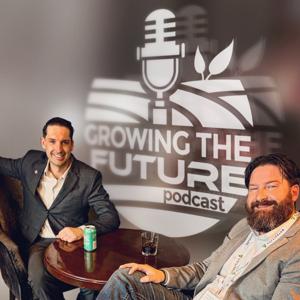


Wade Barnes spent years at the center of Canada's most-funded precision agriculture play. Farmers Edge raised hundreds of millions, signed thousands of farms, and promised to turn field data into decisions. Then the subscriptions stopped renewing.
This is Part 1 of a three-part conversation. It starts before Farmers Edge, with the question that drove Wade there in the first place and what he believed about precision ag before the market tested it.
What's Inside
- What Wade Barnes understood about adoption that the pitch deck did not account for
- Why farm data businesses and the farmers they serve can want very different things
- What the early years of precision ag in Canada looked like before the consolidation
- The question Wade was still trying to answer when Part 2 begins
Related Episodes
- Wade Barnes Pt 2: Battle of the Precision Ag Giants (Feb 2025)
- Wade Barnes Pt 3: From Billion-Dollar Startup to Starting Over (Mar 2025)
- Too Big to Farm (May 2026) -- scale, debt, and what the math looks like when it stops working
Timestamp:
00:00 Introduction to Precision Agriculture
01:07 Welcome to the Growing the Future Podcast
02:46 Meet Wade Barnes: A Visionary in Ag Tech
03:32 Wade's Early Life and Farming Roots
05:57 The Birth of Farmer's Edge
12:39 Challenges and Innovations in Precision Ag
19:47 Scaling Up and Industry Recognition
29:48 Consolidation and Growth
38:23 Key Partnerships and Business Lessons
Listen now and subscribe for Part 2 as we dive deeper into the story of innovation, persistence, and the future of digital agriculture.
Register for the Convergence Conference at convergence.ag and stay updated by subscribing to the Growing the Future Podcast at growingthefuturepodcast.ca.
Water on a field goes wrong in three ways: too much, not enough, or in the wrong place. Preston Marthey has spent his career on all three, and his view is that the answer is not always the one the industry wants to sell you.
Preston grew up in his father's land leveling and water management business, saw the technology move from laser to GPS, and now splits his time between design consulting and his role as a territory manager at CropX. In this conversation with Dan Aberhart, he walks through how surface design and subsurface drainage can work together, what changed when whole-field grading replaced dragging dirt from the high spots, and what he tells producers who want to cut technology spending when margins tighten.
What's Inside
• Growing up in a laser land-leveling business, and the moment GPS changed how he saw the technology
• Why a farmer benefits from a field design done by someone who is not also paid to move the dirt
• What grading the whole field does differently from dragging dirt off the high spots
• How taking pressure off the surface can reduce how much subsurface tile a field needs
• The limits of land forming: topsoil, residue and timing, and why some projects never get done
• Why he calls data management and precision inputs the meat of the budget, not the fat
• How moisture and nutrient data can help time nitrogen so it reaches the crop
• What he learned from his father and his mentors: keep plugging, treat everyone the same, and sell the vision
00:00 Welcome to Growing the Future Podcast
02:25 Introducing Today's Guest: Preston Marthey
03:12 Preston's Early Journey in Agriculture
06:23 Technological Shifts in Precision Agriculture
09:39 Generational Wisdom and Business Evolution
13:15 Challenges and Innovations in Water Management
26:39 Balancing Family and Work in Agriculture
31:38 The Art and Science of Land Forming
47:04 Balancing Simplicity and Precision in Farming
47:28 The Impact of OptiSurface on Land Leveling
48:10 Challenges and Solutions in Soil Management
50:14 Regional Differences in Agricultural Practices
53:33 The Importance of Precision Investment
55:17 Nutrient Management and Technology Integration
01:10:06 Mentorship and Personal Growth in Agriculture
01:27:40 Final Thoughts and Reflections
Related Episodes
- Your Soil Type Is Costing You Yield -- Greg Patterson on fertility planning and the variable the handbooks skip
- Before You Spray: 3 Things That Could Cost You Money This Season (May 2026) -- timing and what the field actually needs
Connect with Growing the Future
Website: growingthefuture.ca
YouTube: Growing the Future
Instagram: @growingthefuturepodcast
LinkedIn: Growing the Future
Register for the Convergence Conference at convergence.ag and stay updated by subscribing to the Growing the Future Podcast at growingthefuturepodcast.ca.
Benny Fisher runs a contracting company in Pittsburgh. He came to the Growing the Future audience through a keynote stage, but the thing worth listening for is quieter than that.
He had spent a year putting a proper operating system into his business when his younger brother died. The business kept running without him standing in it. He is direct about what that meant, and about the version of events where a business owner buries a brother and is back at work with the work face on the next morning.
What's Inside
- How a book sat on a pile for a year before he listened to it, and what clicked when he finally did
- What changed in six months of actually running a system rather than reading about one
- The space that system gave him when he needed it most, and what he thinks would have happened without it
- Untangling who you are from what your company is called, and why that is harder when your own name is over the door
- The question he puts to owners: if the business were gone tomorrow, who is left
- Why he thinks a tight grip on everything squeezes the life out of the things you are trying to protect
- Mental health, addiction and isolation in agriculture, and why self-worth tied to financial output is dangerous in a downturn
- What he decided to do with the story rather than keep it
Connect with Growing the Future
Website: growingthefuture.ca
YouTube: Growing the Future
Instagram: @growingthefuturepodcast
LinkedIn: Growing the Future
Subscribe to the Growing the Future Podcast wherever you listen, and register for Convergence Conference 2027 at convergence.ag.
Register for the Convergence Conference at convergence.ag and stay updated by subscribing to the Growing the Future Podcast at growingthefuturepodcast.ca.
A farmer could not spray because his monitor was full. Warren Bills walked him through the menus to clear enough space to get going again, and in doing it erased three seasons of that operation's records. He says the feeling in his stomach at that moment set the direction of his career.
This is a year-end conversation about a working partnership that runs back roughly two decades, and what the two of them have built out of it.
What's Inside
- How they met, and the farm that was always willing to let a new idea get tested on real acres
- Why they fell into a visionary and integrator split years before either of them had heard those words, and what made it work
- What a stretch inside two of the largest crop science companies gave him, and what it cost him
- Coming back out to build something smaller and closer to purpose, and what health and endurance training had to do with that decision
- The independent agronomy firms that face exactly the same succession, technology and transition problems their farm clients do
- What six of those firms decided to do about it, and why they brought in an accounting partner rather than merging alone
- The family office structure behind a group of operating businesses, and what it is meant to solve for the people working inside them
- Why breaking down silos between agronomy, business, health and science is the thread running through all of it
00:00 Catalyst for Change: Embracing New Beginnings
00:43 Welcome to Growing the Future Podcast
02:06 Introducing Esteemed Guests: Warren Bills and Terry Aberhart
04:01 The Journey Begins: Warren and Terry's Backstory
12:14 Agritrend and Its Impact
16:46 Convergence Growth: A New Vision
27:54 MNP Ag Intellect: A Collaborative Future
35:39 Aberhart Group: Family and Business Synergy
40:25 Convergence Conference: Join the Movement
47:09 Closing Thoughts and Future Plans
Connect with Growing the Future
Website: growingthefuture.ca
YouTube: Growing the Future
Instagram: @growingthefuturepodcast
LinkedIn: Growing the Future
Subscribe to the Growing the Future Podcast wherever you listen, and register for Convergence Conference 2027 at convergence.ag.
Register for the Convergence Conference at convergence.ag and stay updated by subscribing to the Growing the Future Podcast at growingthefuturepodcast.ca.
A grade-five student once asked Sara Shymko for a seed to plant cheese. It's a funny story, but it's also the whole problem: most kids growing up today, including plenty in farm country, have almost no real picture of where their food comes from or what modern agriculture actually looks like.
Shymko, executive director of Agriculture in the Classroom Saskatchewan and interim executive director for the national organization, joins the show to talk about what actually changes a kid's mind about agriculture, and it isn't a single assembly or a career-day pitch. It's repeated, hands-on experience: growing a plot, visiting a farm, holding a plant instead of just hearing about one. She's joined by the host and his teenage son, who brings a current high schooler's blunt take on what agriculture education actually looks like in the classroom right now.
What's Inside
- Why fewer than half of students in one survey thought farmers use a computer to do their job
- The difference between a one-and-done school visit and an experience that actually changes how a kid thinks about a career
- Why agriculture isn't part of the curriculum in most provinces, and what that means for the thousands of teachers who'd need to bring it in themselves
- What a current high schooler says would actually make agriculture look interesting to his classmates
- How a farm family can get involved, from hosting a tour to a simple per-acre donation
Connect with Sara:
Website: aitc-canada.ca
Facebook: AITCCanada
Twitter: AITCCanada
Instagram: aitccanada
Youtube: https://www.youtube.com/channel/UCbDjICByAj9euDpyUMb9aZg
Connect with Growing the Future
Website: growingthefuture.ca
YouTube: Growing the Future
Instagram: @growingthefuturepodcast
LinkedIn: Growing the Future
Subscribe to the Growing the Future Podcast wherever you listen, and register for Convergence Conference 2027 at convergence.ag.
Register for the Convergence Conference at convergence.ag and stay updated by subscribing to the Growing the Future Podcast at growingthefuturepodcast.ca.
In the late seventies and early eighties, Mennonite farmers in Saskatchewan and Manitoba had grain they could not move. Wheat Board quotas meant it was not going for export, so it sat. And on the six o'clock news they were watching famine.
Their conclusion was that sitting on piles of grain while that played out did not square with what they believed. So they found a way. The grain was bagged, set aside, kept separate from what the Board was moving as commodity, and shipped.
Rick Block of the Canadian Foodgrains Bank traces what that became. Five agencies came together formally in 1983. There are fifteen now, working alongside a long-standing partnership with the federal government, on two fronts: emergency food assistance, and the slower work of helping families grow more and better food on one or two acres.
What's Inside
- How the Foodgrains Bank started, and the quota problem that made it possible
- The two channels the organisation runs on, and why hunger in a displacement situation becomes urgent within the first day
- What smallholder farming actually looks like at one or two acres, and why scale there is counted in families rather than in acres
- The upstream work: conservation agriculture training, reducing post-harvest loss, nutrition, and the learning curve when a subsistence operation starts rotating crops
- Why village savings and loan programs sit alongside the agronomy
- What the organisation means when it describes itself as a Christian response to hunger
Connect with Rick:
Website: https://foodgrainsbank.ca
Facebook: https://www.facebook.com/CanadianFoodgrainsBank
X: https://x.com/Foodgrains
Instagram: https://www.instagram.com/foodgrains
Youtube: https://www.youtube.com/foodgrainsbank
Connect with Growing the Future
Website: growingthefuture.ca
YouTube: Growing the Future
Instagram: @growingthefuturepodcast
LinkedIn: Growing the Future
Subscribe to the Growing the Future Podcast wherever you listen, and register for Convergence Conference 2027 at convergence.ag.
Register for the Convergence Conference at convergence.ag and stay updated by subscribing to the Growing the Future Podcast at growingthefuturepodcast.ca.
Some leaders are promoted for the numbers. Arthur Ward's view is that they are promoted for what they do when nobody is watching. He grew up on a ranch in southwest Saskatchewan, sold John Deere equipment, and rose through the dealership ranks to become President of Pattison Agriculture, and then one of the vice presidents on Jim Pattison's corporate team in Vancouver.
In this conversation with Dan Aberhart, Arthur looks back at what that path taught him: how to build a team that is still standing at harvest when everyone's hair is on fire, what it was like to sit across the table in a boardroom and learn how very different industries run, and what happens when a project you planned to finish your career with comes to an end.
But it didn’t stop there. The Jim Pattison Group, a corporate giant with over 48,000 employees across 25 industries, saw something in him. Arthur became one of Pattison’s Vice Presidents, sitting at the same table as one of Canada’s most iconic businessmen. Jim Pattison’s leadership was simple and sharp: “Spend money like it’s your own,” and “Don’t do anything you wouldn’t want on the front page of the newspaper.” It was the kind of no-frills wisdom that fit Arthur like a glove.
In this episode, Arthur reflects on:
The lessons learned from farming and how they carried over into running dealerships and corporate boardrooms.
The challenges of balancing old-school agriculture with new business realities, including scaling operations while holding onto small-town values.
What he took away from working with one of Canada’s sharpest business minds—and why the hardest part wasn’t making it to the top, but staying there.
Now, Arthur’s back on prairie soil, working with Aberhart Group to build something real—businesses that serve their people, their customers, and the land. He’s traded in the skyscrapers for Saskatchewan sunsets, but the fight’s still the same: do right by people, take care of the customer, and build something that lasts.
Tune in for a conversation that’s as much about grit as it is about growth. Arthur’s journey is proof that whether you’re on a tractor or in a boardroom, it all comes down to knowing the value of hard work and the power of doing things the right way.
What's Inside
• How a small-town Saskatchewan ranch kid ended up running a 17-store John Deere dealership group • Why coaching and developing people turned out to matter more than any single sale
• What Jim Pattison expected of the businesses he bought, including "spend it like it's your own money" and the front-page rule
• What Arthur learned sitting in a corporate boardroom across very different industries, and what the successful ones had in common
• Why capital-intensive, high-risk farming is hard to scale for investors without a real connection to agriculture
• How the Entrepreneurial Operating System, the visionary and integrator roles, and meaningful meetings can give a family of companies a shared cadence
• Starting over with a clearer idea of what he wants to build, and why he says the measure of a leader is what they do when nobody's watching
Connect with Growing the Future
Website: growingthefuture.ca
YouTube: Growing the Future
Instagram: @growingthefuturepodcast
LinkedIn: Growing the Future
Subscribe to the Growing the Future Podcast wherever you listen, and register for Convergence Conference 2027 at convergence.ag.
Register for the Convergence Conference at convergence.ag and stay updated by subscribing to the Growing the Future Podcast at growingthefuturepodcast.ca.
Ready to learn, unlearn, and relearn how you run your farm?
In this episode of the Growing the Future Podcast, Matt Gosling breaks down many different concepts that every farmer should have the opportunity to hear.
From balancing nitrogen, to building dynamic soil zones, to challenging the status quo, Matt shares his 21 years of hands-on experience in agronomy, offering practical insights for treating your farm like the multi-million dollar business it is.
These aren’t just theories—they’re hard-earned lessons on soil health, smart decision-making, and innovation that will push your farm to the next level. Hear how mentorship, continual learning, and entrepreneurial spirit are shaping the future of farming—plus, why family and purpose are just as important as innovation.
Explore the future of farming with AI, data, and proven agronomy practices.
Subscribe now to learn the keys to smarter, more profitable farming!
What's Inside
- The wild oat threshold answer that started twenty years of asking why the same recommendation kept coming out regardless of the crop, the weed, or the stage
- Why more nitrogen is the easiest thing in the world to sell a farmer, and why balance is the harder and more profitable argument
- The unpaid months between quitting a good job and building the business, and the mentor who asked how big he wanted it to be
- What he learned about sulfur that changed how a region fertilized
Related Episodes
- The Robert Andjelic conversations, which Matt names on air as what brought him to the show
Connect with Matt:
Website: https://www.premiumag.ca/
Twitter: https://x.com/PremiumAg
Connect with Growing the Future
Website: growingthefuture.ca
YouTube: Growing the Future
Instagram: @growingthefuturepodcast
LinkedIn: Growing the Future
Subscribe to the Growing the Future Podcast wherever you listen, and register for Convergence Conference 2027 at convergence.ag.
Register for the Convergence Conference at convergence.ag and stay updated by subscribing to the Growing the Future Podcast at growingthefuturepodcast.ca.
Jeff Ivan grew up on a family farm south of Glenside, Saskatchewan. He left it because there was no room for him and spent the next 35 years becoming one of the most widely traveled fertilizer specialists in the world -- 80 countries, 25 countries in a single year at his peak, and a career that took him from cleaning grain elevator dustbins in Glenside to advising governments and companies across Africa, Asia, and Latin America.
The United Nations puts nitrogen loss at 46% of what is applied. Up to 90% of phosphate goes unused in the year of application. Jeff's position is that the answer is not to cut back on fertilizer. The answer is to make it work.
Soilgenic Technologies was built on that argument -- 60 patents on nitrogen stabilization and phosphate enhancement technology. Jeff was diagnosed with stage 3B colon cancer within a month of founding it.
What's Inside
Related Episodes
Your Soil Type Is Costing You Yield -- Greg Patterson on the fertility variable the handbooks skip
Before You Spray: 3 Things That Could Cost You Money This Season (May 2026) -- timing, inputs, and what the field actually needs
Connect with Jeff:
Website: https://www.soilgenic.com
Instagram: https://www.instagram.com/soilgenic/
Twitter: https://x.com/Soilgenic
Connect with Growing the Future
Website: growingthefuture.ca
YouTube: Growing the Future
Instagram: @growingthefuturepodcast
LinkedIn: Growing the Future
Register for the Convergence Conference at convergence.ag and stay updated by subscribing to the Growing the Future Podcast at growingthefuturepodcast.ca.
Jessica Janzen grew up on a grain farm west of Winnipeg. She traces the way she thinks about all of this back to an orange chair in a hospital room, watching her grandmother unwrap a piece of homemade pie for a husband who had just been told he was dying, and the two of them bowing their heads over it.
Years later she and her husband were given a diagnosis for their infant son that came with a life expectancy measured in months. What they decided to do with the time is what this conversation is about.
What's Inside
- The hospital room in her twenties that set the terms for everything after it
- Arriving in a new city at twenty with very little, and the work that followed
- How a boy in a Sunday school class introduced her to a rare disease years before it arrived in her own family
- The diagnosis, and the decision they made in the days after it about how the time would be spent
- Why she believes you do not choose the circumstances and you do choose the response
- The foundation they built, what it funds, and the families it reaches
- A four year campaign that changed newborn screening policy in one province, and why that means other families get a different answer
- What she tells rooms full of leaders about burnout, playing small, and scheduling joy on purpose
Connect with Growing the Future
Website: growingthefuture.ca
YouTube: Growing the Future
Instagram: @growingthefuturepodcast
LinkedIn: Growing the Future
Subscribe to the Growing the Future Podcast wherever you listen, and register for Convergence Conference 2027 at convergence.ag.
Register for the Convergence Conference at convergence.ag and stay updated by subscribing to the Growing the Future Podcast at growingthefuturepodcast.ca.
From the publisher's feed
Ranked by our users in the last 21 days

227,479 Listeners
147 Listeners
126 Listeners
14 Listeners
737 Listeners
257 Listeners
129 Listeners

385 Listeners

46,079 Listeners
353 Listeners

39,409 Listeners
407 Listeners

15,926 Listeners
2 Listeners