
Sign up to save your podcasts
Or

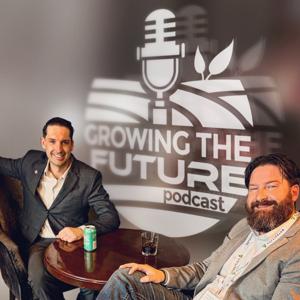


Every producer holding grain has a reason the price should come back. Trent Klarenbach's position is that the reason is the problem.
He grew up between two neighbours who shaped Prairie grain marketing, studied agricultural economics, farmed, and then came to technical analysis sideways in his fifties when his son introduced him to it. He now writes market reports built on price action rather than news.
What's Inside
- The two neighbours he grew up beside, one who brought a new crop to Western Canada in a car trunk and one who took the wheat board to the Supreme Court
- Why he thought charts were nonsense, and what changed his mind
- The idea that technical analysis is really the study of human behaviour, and why the same patterns appear in lentils, canola and equities decades apart
- The four stages every market moves through, explained with a drive west as the map
- Where he called the start of a major grain uptrend, and where he called its end
- Why producers carry a structural bullish bias, and what it costs when a market turns
- Anchoring: the trap of remembering what durum once was, and why the market does not care
- What to actually do in a decline, including the discipline most producers find hardest
Connect with Trent: Website: klarenbach.ca
Twitter: TrentKlarenbach
Connect with Growing the Future
Website: growingthefuture.ca
YouTube: Growing the Future
Instagram: @growingthefuturepodcast
LinkedIn: Growing the Future
Subscribe to the Growing the Future Podcast wherever you listen, and register for Convergence Conference 2027 at convergence.ag.
Register for the Convergence Conference at convergence.ag and stay updated by subscribing to the Growing the Future Podcast at growingthefuturepodcast.ca.
Vertical farming spent several years as the most overfunded idea in agriculture, and then the money stopped. Harry Duran has interviewed the founders on both sides of that correction.
He came to it sideways, from corporate marketing into podcasting, and built a show around controlled environment agriculture just before the industry hit its reckoning. This conversation is about what survives the hype cycle and what the honest case for indoor growing actually is.
What's Inside
Connect with Harry:
Website: https://harryduran.com
LinkedIn: https://www.linkedin.com/in/harryduran/
Facebook: https://www.facebook.com/HarryDuranFu...
Connect with Growing the Future
Website: growingthefuture.ca
YouTube: Growing the Future
Instagram: @growingthefuturepodcast
LinkedIn: Growing the Future
Subscribe to the Growing the Future Podcast wherever you listen, and register for Convergence Conference 2027 at convergence.ag.
Register for the Convergence Conference at convergence.ag and stay updated by subscribing to the Growing the Future Podcast at growingthefuturepodcast.ca.
Most new ag technology never makes it past the test plot. Jacqueline Keena, managing director of EMILI (the Enterprise Machine Intelligence and Learning Initiative), joins Dan to talk about Innovation Farm, a 5,500 acre commercial seed operation north of Winnipeg where new technology gets tested at real farm scale, with a working producer, before it's ever asked of a customer.
What's Inside
Connect with Jaqueline:
Twitter: emilicanada
LinkedIn: EMILI
Connect with Growing the Future
Website: growingthefuture.ca
YouTube: Growing the Future
Instagram: @growingthefuturepodcast
LinkedIn: Growing the Future
Register for the Convergence Conference at convergence.ag and stay updated by subscribing to the Growing the Future Podcast at growingthefuturepodcast.ca.
A grade five class is planting seeds. One student puts up a hand and asks for a seed to plant cheese.
That is a small moment and it is not the child's fault. There is no agriculture class in the K to 12 curriculum. Whatever a student learns about where food comes from arrives through a science or social studies unit, and depends almost entirely on whether an individual teacher decides to go and find it.
What's Inside
- What the organization actually does, and the scale of student experiences it delivers across the country each year
- Why demand from teachers has climbed sharply in recent years, and what is driving it
- The harder problem underneath: teachers who have no agricultural background themselves, working from whatever material they can find
- What a university student said about farmers that is worth hearing in full
- Why a combine parked at an elementary school is remembered for weeks, and the retention research behind that
- A program that takes grade three and four students out to compare a fertilized plot with an unfertilized one, and what they work out for themselves
- Four specific things a producer can do, including the one that costs nothing but a morning
- Why students think an ag career means a tractor seat, and the list of jobs that proves otherwise
Connect with Sara:
Website: https://aitc-canada.ca/en-ca/
Facebook: https://www.facebook.com/AITCCanada/
Twitter: AITCCanada
Instagram: https://www.instagram.com/aitccanada/
Youtube: https://www.youtube.com/channel/UCbDjICByAj9euDpyUMb9aZg
Connect with Growing the Future
Website: growingthefuture.ca
YouTube: Growing the Future
Instagram: @growingthefuturepodcast
LinkedIn: Growing the Future
Subscribe to the Growing the Future Podcast wherever you listen, and register for Convergence Conference 2027 at convergence.ag.
Register for the Convergence Conference at convergence.ag and stay updated by subscribing to the Growing the Future Podcast at growingthefuturepodcast.ca.
Only one in three fields gets soil sampled in a given year, which means most fertilizer decisions in Western Canada are still a guess. Jarrett Chambers, co-founder of ATP Nutrition and a soil fertility scientist who cut his teeth managing nutrition on golf courses and fresh produce farms before ever touching a canola field, joins Dan to talk about what those high stakes industries taught him that broad acre agriculture still hasn't caught up to.
What's Inside
Why golf course superintendents, judged every single Friday, became his real mentors on plant nutrition
The difference between a low salt fertilizer that's actually soluble and one that just looks good on paper
Why introducing a foreign biological organism to your soil is closer to a turf war than a fix
How a real time tissue and soil scanner can hand you a full nutritional readout in under fifteen minutes
Why "progress, not perfection" beats waiting for the perfect data before you act
Connect with Jarrett:
Website: atpag.com
Facebook:ATPNutritionLtd
Twitter: ATPNutritionLtd
Connect with Growing the Future
Website: growingthefuture.ca
YouTube: Growing the Future
Instagram: @growingthefuturepodcast
LinkedIn: Growing the Future
Register for the Convergence Conference at convergence.ag and stay updated by subscribing to the Growing the Future Podcast at growingthefuturepodcast.ca.
Andy Junkin grew up on a farm outside Bobcaygeon, Ontario. Seven generations. His father's farm. He came home from Guelph ready to work it. His dad plowed down his first crop because his uncle said it looked better.
That was the beginning.
What followed was a decade of trying to save his parents' marriage while figuring out whether he even had a right to farm. He eventually sat on a barn beam, in a dark place, and walked out. He has not been back to Bobcaygeon since. He now helps farm families in 22 states and five Canadian provinces find a different way through.
This is how that started.
What's Inside
- What farm succession actually costs the son or daughter who comes home to work it
- Why Andy believes most farm families are operating on an entitlement mindset -- and what replaces it
- The three-rule daily practice that turns farm conflict into working relationships
- Why only 12% of farms make it to the grandchildren -- and what the other 88% miss
- Andy's mission: to help families before the auctioneer shows up, not after
Related Episodes
- The Silent Killer in Ag -- Lesley Kelly on farm mental health and the things no one says
- Liquidity and Legacy (Feb 2026) -- when the farm math stops working and the family has to decide
Connect with Andy:
Website: https://stubborn.farm
Facebook: https://www.facebook.com/caygeon
Twitter: https://twitter.com/stubborn_farm
Instagram: https://www.instagram.com/stubborn.farm/
Youtube: https://www.youtube.com/@StubbornFarm
Aberhart Family of Companies:
https://aberhartagsolutions.ca
https://aberhartfarms.com
https://suregrowth.ca
https://www.convergencegrowth.com
Connect with Growing the Future
Website: https://growingthefuture.ca/
YouTube: https://www.youtube.com/@growingthefuturepodcast7899/videos
Instagram: https://www.instagram.com/@growingthefuturepodcast
LinkedIn: https://ca.linkedin.com/company/growing-the-future
Content note: This episode includes open conversation about mental health and suicidal ideation
on a family farm. If you are struggling, please reach out. Farm Stress Line: 1-866-327-6701.
Talk Suicide Canada: 1-833-456-4566. In the U.S.: 988.
Register for the Convergence Conference at convergence.ag and stay updated by subscribing to the Growing the Future Podcast at growingthefuturepodcast.ca.
Lewellyn Melnyk was twelve in the 1980s, on a third generation grain farm in Manitoba, and struggling with something nobody in a small town had language for yet.
She became a journalist, married, moved back to the farm, and kept adding to her plate without taking anything off it. The panic attacks arrived in her thirties. This conversation is about what she did next, and the book she wrote about it.
What's Inside
- What depression looked like for a kid in a rural community in the eighties, before anyone was talking about it
- The habits of a workaholic and a people pleaser, and how long they held before they did not
- What she means by building fences, and why a farm audience understands boundaries faster when they are explained that way
- Exercise as something she does for her head rather than her weight, and what changes when that is the actual reason
- Food, sleep and a nightly gratitude practice, described as maintenance rather than treatment
- Why rural stories go untold, and why the women running farms alongside everything else are the ones most often missing from them
- Her case that mental health in a small town is a collective job rather than a private one
Connect with Lewellyn:
Website: https://www.lewellynmelnyk.com
Facebook: https://www.facebook.com/lewellyn.melnyk
Twitter: https://twitter.com/lewellynmelnyk
Instagram: https://www.instagram.com/lewellynmelnyk/
Connect with Growing the Future
Website: growingthefuture.ca
YouTube: Growing the Future
Instagram: @growingthefuturepodcast
LinkedIn: Growing the Future
Subscribe to the Growing the Future Podcast wherever you listen, and register for Convergence Conference 2027 at convergence.ag.
Register for the Convergence Conference at convergence.ag and stay updated by subscribing to the Growing the Future Podcast at growingthefuturepodcast.ca.
A sales rep phones his manager, worried. He has just stood in front of twenty farmers who together represent about half a million dollars of his annual sales, and told them not to buy. Two dry years, too much nitrogen still in the ground, the product would not pay. The company's response was to celebrate it.
Trevor Thiessen spent more than two decades in agricultural biologicals before buying a Saskatchewan manufacturer in his forties. This is a conversation about what he learned on somebody else's money, and what changed when it became his own.
What's Inside
- Why not getting the banking job he trained for was the best thing that happened to him
- The long, unglamorous history of biologicals, including a 1912 sales manual priced at the same dollars per acre the same product sells for today
- What went wrong when they scaled a product before testing it in real field conditions, and what farmers had to do about it
- Buying a business two years after fire destroyed its production facility, and what the first three years actually looked like
- The audacious five-year goal they set for a demoralized team, why the number was never the point, and how long it actually took
- Harvest weed seed control explained plainly: three streams through a combine, why the weed seeds ride in one of them, and what it costs per acre
- The chaplain they hired while they were still broke, and the phone call that proved it was the right call
- What twenty years of selling to farmers on four continents taught him about what the job actually is
Connect with Trevor:
Website: redekopmfg.com
Facebook: redekopmfg
Twitter: redekopmfg
Youtube: MAVstrawchopper
Connect with Growing the Future
Website: growingthefuture.ca
YouTube: Growing the Future
Instagram: @growingthefuturepodcast
LinkedIn: Growing the Future
Subscribe to the Growing the Future Podcast wherever you listen, and register for Convergence Conference 2027 at convergence.ag.
Register for the Convergence Conference at convergence.ag and stay updated by subscribing to the Growing the Future Podcast at growingthefuturepodcast.ca.
Heather Deobald, Vice President of Operations at Quantum Genetics, sent her own husband out with a bag of test tubes eight years ago to try a new genomic test on their farm. The result came back negative for sclerotinia spores. He wanted to spray half the field anyway, just in case. She said no. They tested again five days later. Same result. They didn't spray.
In the eight years since, the farm has sprayed fungicide exactly three times, saving close to half a million dollars they would have spent spraying as a precaution. The technology behind it, a real-time DNA test that reads canola petals for disease spores in four hours instead of the ten days the original 1980s version took, grew out of a company that started in cattle genetics and pivoted through a Canadian flax export crisis before landing in crop disease prediction, and even did a stint running COVID tests during the pandemic.
What's Inside
Connect with Heather:
Website: Quantum Genetix
Facebook: Quantum Genetix
Twitter: quantumgenetix
Instagram: @quantumgenetix
Youtube: Quantum Genetix
Connect with Growing the Future
Website: growingthefuture.ca
YouTube: Growing the Future
Instagram: @growingthefuturepodcast
LinkedIn: Growing the Future
If you want to be part of the Growing the Future community, make sure to say hi on social at: https://linktr.ee/Growingthefuturepodcast
Register for the Convergence Conference at convergence.ag and stay updated by subscribing to the Growing the Future Podcast at growingthefuturepodcast.ca.
He graduated high school the year farmland hit the highest price it had ever been. Adjusted for inflation, the district has only just got back there. The catch in that year was a prime lending rate near twenty percent, which made buying land close to unthinkable.
What followed was twenty years of land values falling and twenty years of them climbing back. This is a kitchen-table conversation with a farmer who worked through all of it on the same ground his family bought before the war.
What's Inside
- A grandmother born under a wagon box while her parents built the house, and what the family was doing two days later
- A grandfather who failed at farming in the thirties, went to Detroit, and what the hiring signs at the plant actually said
- The tractor bought in 1939 that is still on the farm, restored and running
- The wet year he could not seed, why crop insurance did not help, and what the season finally cost him
- Buying a half section back from a bank that did not want to own it, and the neighbour who had nothing left to fight for
- Selling the cattle at what turned out to be exactly the wrong moment
- Watching soil drift in the eighties, and still finding the ridges of it at the edges of sloughs
- Finishing one succession with his father and starting the next with his daughter and son-in-law
- Why he runs an operation with no negative talk and no axes to grind, and what that has to do with his neighbours
Connect with Michael:
Phone: 1-306-736-7800
Email: [email protected]
Connect with Growing the Future
Website: growingthefuture.ca
YouTube: Growing the Future
Instagram: @growingthefuturepodcast
LinkedIn: Growing the Future
Subscribe to the Growing the Future Podcast wherever you listen, and register for Convergence Conference 2027 at convergence.ag.
Register for the Convergence Conference at convergence.ag and stay updated by subscribing to the Growing the Future Podcast at growingthefuturepodcast.ca.
From the publisher's feed
Ranked by our users in the last 21 days

227,479 Listeners
147 Listeners
126 Listeners
14 Listeners
737 Listeners
257 Listeners
129 Listeners

385 Listeners

46,079 Listeners

353 Listeners

39,409 Listeners

407 Listeners

15,926 Listeners
2 Listeners