
Sign up to save your podcasts
Or

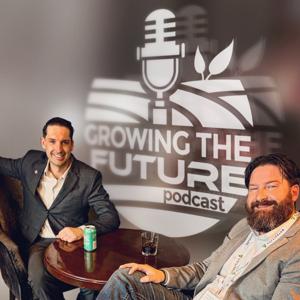


Every farm now runs on a handful of apps that each solve one problem and none of which speak to each other. Wilson Acton has seen this before, in a different industry. Enterprise software looked exactly like this in the nineties, and what came out the other side of it was Oracle, Salesforce and SAP.
Acton is managing partner at Tall Grass Ventures, a fifth generation Moose Jaw producer who became a mergers and acquisitions lawyer, spent a decade working on corporate deals, and then went back to building companies. His fund backs agricultural startups earlier than most investors will, and his description of what that work actually is stays useful whether or not you ever take investment: building a business is solving riddles, and the more of them you solve, the better you get.
What's Inside
- Why he thinks farm software is at the same stage enterprise software reached before its winners emerged, and what that means for the tools on your desk now
- The two things that kill a deal, learned across a decade of buying and selling companies
- Why founders who fall in love with a problem often build something the person in the field does not need
- His argument that capital went into turning peas into burgers while the majority of the world's protein stack sat under invested
- Why the buyer for a farm tool is sometimes the agronomist rather than the producer, and what that changes about pricing it
- What happened when a Moose Jaw kid on a twenty five hundred dollar horse turned up to compete against people named Cargill
Connect with Wilson:
LinkedIn: https://www.linkedin.com/in/wilsonacton/
Website: https://www.tallgrass.vc
Email: [email protected]
Connect with Growing the Future
Website: growingthefuture.ca
YouTube: Growing the Future
Instagram: @growingthefuturepodcast
LinkedIn: Growing the Future
Subscribe to the Growing the Future Podcast wherever you listen, and register for Convergence Conference 2027 at convergence.ag.
Register for the Convergence Conference at convergence.ag and stay updated by subscribing to the Growing the Future Podcast at growingthefuturepodcast.ca.
DOWNTIME -- The ROI Killer
Matt Yanick knows what an hour of downtime costs on a working farm. Not the parts. Not the labor. The window that does not come back.
This episode covers the one metric most operations track poorly and most operators underestimate. Equipment management is not a maintenance question. It is a margin question.
What's Inside
- How to calculate the true cost of downtime on your operation -- including the costs most producers do not count
- Why most farms underestimate unplanned downtime and what changes when they track it properly
- The systems that reduce downtime and protect your operating window
- What equipment selection looks like when you factor in downtime cost, not just purchase price
- How the most profitable operations approach their equipment strategy differently
Related Episodes
- Engineer Your Revenue Floor Before You Seed (Mar 2026) -- production decisions and the margin they protect
- Before You Spray: 3 Things That Could Cost You Money This Season (May 2026) -- timing, windows, and what it costs to miss them
Register for the Convergence Conference at convergence.ag and stay updated by subscribing to the Growing the Future Podcast at growingthefuturepodcast.ca.
Yevgen Mykhaylichenko spent a decade putting precision agriculture into practice on three continents. Ukraine and Moldova with a major equipment manufacturer, then Saskatchewan, then Western Australia, then a teaching post in Alberta building curriculum around GIS, drones and autonomous machinery.
In February 2022 the invasion of his home country made all of it relevant in a way nobody had planned for.
What's Inside
For donations: https://linktr.ee/dronestoukraine
Money transfers:
e-transfer/PayPal to [email protected]
Paysend/Wise to debit card: 4724-0905-5545-1283
Paysend can be sent from all over the world in any currency. Beneficiary currency - CAD
WhatsApp: +14034726662
In this episode, you will learn:
Connect with Yevgen:
Facebook: https://www.facebook.com/profile.php?id=100000996022732
Twitter: https://twitter.com/MYAGRO_CA
Instagram: https://www.instagram.com/mykola.mykhailichenko/
LinkedIn: https://www.linkedin.com/in/yevgen-mykhaylichenko-083541b3/
Check out Yevgen’s Youtube Videos:
Mazergroup (former Markusson New Holland) YouTube channel:
https://www.youtube.com/@mazergroup1003/videos
MY AGRO CANADA YouTube channel:
https://www.youtube.com/@myagrocanada2066/videos
Soil Compaction Maps YouTube channel:
https://www.youtube.com/@soilcompactionmaps.myagro.3348/videos
Connect with Growing the Future
Website: growingthefuture.ca
YouTube: Growing the Future
Instagram: @growingthefuturepodcast
LinkedIn: Growing the Future
Subscribe to the Growing the Future Podcast wherever you listen, and register for Convergence Conference 2027 at convergence.ag.
Register for the Convergence Conference at convergence.ag and stay updated by subscribing to the Growing the Future Podcast at growingthefuturepodcast.ca.
Ask most people in agriculture why the coverage is so bad and you will get an answer about bias. Toban Dyck has worked in newsrooms on both sides of that argument and thinks the answer is duller and more fixable.
He grew up on a fifth generation farm in southern Manitoba, left for a journalism career that ran through the CBC, a national daily and a downtown Toronto startup, then came home and stayed. He now writes a national agricultural column and runs a communications firm built around the industry.
What's Inside
- Walking off the street into a broadcaster's office as a student, asking for the boss, and the internship he was never eligible for
- The cold email to a national managing editor that got answered the same day, and where it led
- Why he thinks the coverage problem is a staffing problem rather than a bias problem, and where the industry should be spending its effort instead
- The line about objectivity that reframes the whole complaint
- What it is actually like to be the prairie farm kid at a rooftop party in downtown Toronto
- Why he refuses to say the city was terrible, and what that costs him in certain rooms
- Whether it matters that most people know nothing about agriculture, and the test he uses instead
- Writing as a trade: the void in agriculture for people who can tell a story, and the daily practice he lost and wants back
Connect with Toban: burrforest.com
Connect with Growing the Future
Website: growingthefuture.ca
YouTube: Growing the Future
Instagram: @growingthefuturepodcast
LinkedIn: Growing the Future
Subscribe to the Growing the Future Podcast wherever you listen, and register for Convergence Conference 2027 at convergence.ag.
Register for the Convergence Conference at convergence.ag and stay updated by subscribing to the Growing the Future Podcast at growingthefuturepodcast.ca.
The agronomist-as-advisor model is built around transactions. Lance Lindbloom thinks that is the wrong frame. The agronomy coaching model he champions treats the advisor as a high-performance coach and the producer as the player -- a long-term relationship where the goal is not the next recommendation but the next level of producer confidence and capability.
The biggest competitor for any agronomist, Lindbloom argues, is not another agronomist. It is the untreated acre.
What's Inside
- The 406 Agronomy Summit: designed to train the coaches (agronomists), not the players (producers) -- and why that distinction changes the whole event
- What the agronomy coaching model borrows from high-performance sports to change the advisor-producer relationship over time
- Why the biggest competition for any agronomist is the untreated acre, not another advisor
- Technical challenges in Havre, Montana: three consecutive seasons of drought, sawfly infestations, and emerging soil acidity
- From Power Zones and yield maps to NutriScanners and real-time tissue scanners -- where precision technology is and where it is going
- How automation and robotics answer a labor scarcity that no hiring campaign is going to solve
Related Episodes
Greg Patterson, "Engine of the Soil Pt 2" -- same cluster: agronomy expertise and the producer coaching relationship
Elston Solberg, "Learn, Unlearn, Relearn" (recommended new title) -- same cluster: the coaching and mentorship philosophy that drives agricultural performance
Connect with Growing the Future
Website: growingthefuture.ca
YouTube: Growing the Future
Instagram: @growingthefuturepodcast
LinkedIn: Growing the Future
Register for the Convergence Conference at convergence.ag and stay updated by subscribing to the Growing the Future Podcast at growingthefuturepodcast.ca.
Fertilizer pricing does not move like a normal commodity. It swings on geopolitics, supply shocks, and timing windows that punish anyone who waits too long or buys too early. Josh Linville has spent his career inside that volatility, reading the signals most producers never see.
This episode breaks down why fertilizer markets behave the way they do, and what that means for when you buy.
What's Inside
- Why fertilizer pricing does not follow the same logic as grain or livestock markets
- The supply and geopolitical factors that move nitrogen, phosphate, and potash prices
- What Josh Linville watches for before recommending a buying window
- The timing mistakes that cost producers the most on fertilizer spend
- How to read fertilizer market signals without a trading desk
Related Episodes
- The Input Your Fertility Plan Is Probably Missing -- Craig Davidson on the gap most fertility programs ignore
- Where Does 46% of Your Nitrogen Actually Go? -- Jeff Ivan on fertilizer efficiency and what is lost before the crop uses it
Connect with Josh:
Website:https://www.stonex.com
Twitter: https://twitter.com/JLinvilleFert
LinkedIn: https://www.linkedin.com/in/joshua-linville-9555a711/
Connect with Growing the Future
Website: growingthefuture.ca
YouTube: Growing the Future
Instagram: @growingthefuturepodcast
LinkedIn: Growing the Future
Register for the Convergence Conference at convergence.ag and stay updated by subscribing to the Growing the Future Podcast at growingthefuturepodcast.ca.
Greg Patterson has been a Certified Crop Advisor for over 30 years, one of the first in Canada to earn the designation. He is founder and CEO of A&L Canada Laboratories and co-founder of A&L Biologicals. His argument is simple and a little uncomfortable: most of what growers apply to their soil never reaches the plant at all.
The conversation traces fertility from Peruvian bird guano through the Haber-Bosch nitrogen era to what Greg calls the Evergreen Revolution, feeding the plant's own rhizosphere, its root-zone microbiome, so it can do more of the work itself. The payoff shows up in a real side by side comparison: one grower hit 300 bushels of corn an acre using under a pound of nitrogen per bushel, while his neighbor used more than double the nitrogen per bushel to grow half the corn.
What's Inside
Connect with Greg:
Website: https://www.alcanada.com/index
Twitter: https://twitter.com/alcanadalabs
Youtube: https://www.youtube.com/user/ALcanadalabs
Facebook: https://www.facebook.com/alcanadalabs
Connect with Growing the Future
Website: growingthefuture.ca
YouTube: Growing the Future
Instagram: @growingthefuturepodcast
LinkedIn: Growing the Future
If you want to be part of the Growing the Future community, make sure to say hi on social at: https://linktr.ee/Growingthefuturepodcast
Register for the Convergence Conference at convergence.ag and stay updated by subscribing to the Growing the Future Podcast at growingthefuturepodcast.ca.
A supplier contract ended and most of the business went with it, overnight. What saved it was a document written a month earlier that nobody had wanted to write.
Chris Jones built a sporting goods company out of a product he invented because he could not catch a football, ran it for nearly two decades, and now works with leadership teams on the operating system that got him through the worst of it. This conversation is about what happens after the floor goes.
What's Inside
- The contingency plan a mentor made him write before there was anything to plan for, and what it was worth when the call came
- Why decision capacity collapses under stress, and how a written plan turns hundreds of choices into a couple
- What the recovery actually looked like on the other side, and how long it took to pass where they had been
- The operating system underneath it: getting everyone on the same page, executing with accountability, and keeping the leadership team honest with each other
- Why most leaders believe they delegate badly, and why their teams agree with them
- The reason delegation fails even when the plan is sound, and what it means to be arguing with the emotional part of the brain rather than the rational one
- Why a good year for an owner usually comes down to two or three decisions, and what has to be cleared out of the way to make them well
- What happens to judgment when you never stop sprinting
Connect with Chris:
Website: https://www.relentlesschrisjones.com
LinkedIn: https://www.linkedin.com/in/chrisjonesyyc/
Instagram: https://www.instagram.com/RelentlessChrisJones/
Facebook: https://www.facebook.com/relentlesschrisjones
Download chapter one of Relentless AF https://www.relentlesschrisjones.com
Connect with Growing the Future
Website: growingthefuture.ca
YouTube: Growing the Future
Instagram: @growingthefuturepodcast
LinkedIn: Growing the Future
Subscribe to the Growing the Future Podcast wherever you listen, and register for Convergence Conference 2027 at convergence.ag.
Register for the Convergence Conference at convergence.ag and stay updated by subscribing to the Growing the Future Podcast at growingthefuturepodcast.ca.
Frank Grenaway has farmed in four countries. He grew up on a small farm in France, chased wide open spaces to Iowa, built an 1,800-acre Saskatchewan farm into 10,000 acres, then sold it, taught farmers in Haiti to use tractors more efficiently, and eventually landed on a wheat farm outside Three Forks, Montana, at the headwaters of the Missouri River.
What he's building there now is deliberately smaller and more direct: regenerative wheat, milled into flour, sold to people whose names he actually knows.
What's Inside
- Why Frank believes farming can produce more with meaningfully less synthetic fertilizer, and what the research already shows
- The difference between selling a truckload of grain to an elevator and milling flour for a customer you know by name
- A 2004 frost that cost the farm 180,000 dollars in one night, and how a grain-burning stove business helped carry them through it
- What changed when Frank's family sold their 10,000-acre Saskatchewan farm to start over in Montana
- His case against fertilizer-reduction mandates, and what he'd do instead to get producers there voluntarily
- Why he thinks the real disconnect isn't between farmers and government, it's between farmers and the people eating their food
Connect with Franck:
Website: https://livingskygrains.com
Twitter: https://twitter.com/franckgroeneweg/
Instagram: https://www.instagram.com/livingskygrains/
Facebook: https://www.facebook.com/LivingSkyGrains/
Email: [email protected]
Phone: 406-521-5234
Connect with Growing the Future
Website: growingthefuture.ca
YouTube: Growing the Future
Instagram: @growingthefuturepodcast
LinkedIn: Growing the Future
Register for the Convergence Conference at convergence.ag and stay updated by subscribing to the Growing the Future Podcast at growingthefuturepodcast.ca.
Most producers are excellent at execution. Ask the same person for a three year plan and the honest answer is usually that there has not been time.
This is a live session, recorded with an audience and open questions throughout, introducing Farmer Coach: a business management program built specifically for primary producers rather than adapted from one built for someone else. Evan Shout and Kristjan Hebert walk through what it is, where it came from, and what it is trying to fix.
What's Inside
- Why they built it from three existing programs rather than one, taking the peer group from one, the cadence from another, and the weekly accountability from a third
- The scheduling problem nobody solves for farms, and why the program runs on trimesters instead of quarters so sessions do not land in seeding and harvest
- Their argument that farm size is irrelevant to whether this works, and that mindset is the only real entry requirement
- Why the leader's job on a farm is one of the more isolating positions there is, and what changes when an idea gets tested by peers before it reaches your own team
- The claim that almost every mistake on a well run operation is a process failure rather than a people failure, and that most process failures trace back to how an expectation was communicated
- Labour and human resources as the largest untouched gap in the industry, and why farms were never required to build that skill before
- A red light, yellow light, green light approach to the handful of financial metrics that actually decide what a farm can do next
- Why they think teaching consultants and advisors matters as much as teaching producers
Related Episodes
- The Strategic Farmer: the conversation four months earlier where this program was first proposed on air
- Only One in Five Farms Has a Written Plan
Register for Farmer Coach: https://farmercoach.ca/programs/
Connect with Farmer Coach:
Website: https://farmercoach.ca
Twitter: https://twitter.com/Farmer_Coach
LinkedIn: https://www.linkedin.com/company/farmercoach/
Connect with Kristjan:
Website: https://kristjanhebert.com/blog/
Twitter: https://twitter.com/KristjanHebert
Instagram: https://www.instagram.com/kristjanhebert/
LinkedIn: https://www.linkedin.com/in/kristjan-hebert-cpa-50b46425/
Youtube: https://www.youtube.com/channel/UCCaw2ZgDB6GvUYXxfvYp3vA
Connect with Evan:
Twitter: https://twitter.com/evanshout?lang=en
LinkedIn: https://www.linkedin.com/in/evan-shout-985483209/?originalSubdomain=ca
Facebook: https://www.facebook.com/evan.shout
Connect with Growing the Future
Website: growingthefuture.ca
YouTube: Growing the Future
Instagram: @growingthefuturepodcast
LinkedIn: Growing the Future
Subscribe to the Growing the Future Podcast wherever you listen, and register for Convergence Conference 2027 at convergence.ag.
Register for the Convergence Conference at convergence.ag and stay updated by subscribing to the Growing the Future Podcast at growingthefuturepodcast.ca.
From the publisher's feed
Ranked by our users in the last 21 days

227,479 Listeners
147 Listeners
126 Listeners
14 Listeners
737 Listeners
257 Listeners
129 Listeners

385 Listeners

46,079 Listeners

353 Listeners

39,409 Listeners
407 Listeners

15,926 Listeners
2 Listeners