
Sign up to save your podcasts
Or

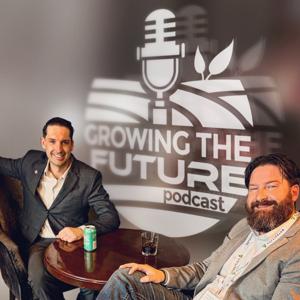


Elaine Froese has spent decades working with farm families across Canada on one problem that the business literature almost never addresses: the succession conversation that everyone knows needs to happen and almost no one starts.
The fields, the equipment, the operating loan -- farms handle those. What they struggle with is the conversation about who is getting what, when, and why. Elaine calls herself Canada's Farm Whisperer. Her work is creating the conditions for that conversation before it becomes a crisis.
What's Inside
- Why most farm succession plans fail not at the legal or financial stage but at the communication stage
- The most common conversations farm families avoid and what they cost when left too long
- How to open a succession conversation when the family dynamic makes it feel impossible
- What healthy farm succession actually looks like in practice -- who owns what, who decides what, who steps back
- The difference between a succession plan and a family agreement, and why you need both
Related Episodes
- Why Can't Your Farm Operate Without You? -- John Warrillow on building a farm that can transfer
- Driving the Transition Train: The Farmland Exit (May 2026) -- what the exit conversation looks like from the outside
Connect with Elaine:
Website: https://elainefroese.com
Twitter: https://twitter.com/elainefroese
Facebook: https://www.facebook.com/farmfamilycoach
Youtube: https://www.youtube.com/user/farmfamilycoach
LinkedIn: https://www.linkedin.com/in/elainefroese/
Elaine’s FREE gift to listeners: https://elainefroese.com/farm-family-coach/
Connect with Growing the Future
Website: growingthefuture.ca
YouTube: Growing the Future
Instagram: @growingthefuturepodcast
LinkedIn: Growing the Future
Register for the Convergence Conference at convergence.ag and stay updated by subscribing to the Growing the Future Podcast at growingthefuturepodcast.ca.
Sean O'Connor and Kyle Scott run Connexus Venture Capital and its ag-specific arm, the Emertech fund. Their argument is straightforward: generalist venture capital has been applying the wrong investment framework to agricultural technology, and the mismatch is costing Canadian ag-tech companies their best growth window.
The difference is not risk tolerance. It is product requirements. A farmer has roughly 40 growing seasons in a career. They cannot afford a minimum viable product.
What's Inside
- Why ag-tech requires finished products rather than minimum viable products, and what that changes about how capital has to be deployed
- The Emertech Grower Council: how working farmers stress-test product-market fit before capital is committed
- The Triple-Triple-Double-Double trajectory -- tripling revenue twice, then doubling twice -- and which portfolio companies are on that path
- Lucent Biosciences: nutrient delivery using cellulose from food waste in a circular economy model
- Tech Brew Robotics: autonomous mushroom harvesting as a direct response to critical labor shortages
- Intelliculture and Yuko: diagnostics and analytics moving into vineyards, orchards, and pest management
- Why "boots on the ground" practicality is a feature of ag-specific venture capital, not a limitation
Connect with Growing the Future
Website: growingthefuture.ca
YouTube: Growing the Future
Instagram: @growingthefuturepodcast
LinkedIn: Growing the Future
Register for the Convergence Conference at convergence.ag and stay updated by subscribing to the Growing the Future Podcast at growingthefuturepodcast.ca.
Korey Peters built Farmerizer around a straightforward observation: most farmers are operating with production systems that are sophisticated and marketing systems that are not. The gap between those two things is money left on the table.
This episode covers what farm marketing actually looks like when it is done intentionally -- not just waiting for a bid and accepting the best one, but building the conditions for a better bid before it arrives.
What's Inside
- Why the best operators in the field are often the worst marketers of their product
- What farm marketing systems look like and how they differ from one-time tactics
- How Korey Peters approaches direct marketing and relationship-based selling for farm operations
- The most common mistakes farm operations make when trying to sell their product at a better price
- What a farm marketing plan actually includes and where to start if you do not have one
Related Episodes
- Robert Andjelic Pt 2: Scary Predictions and Rich Opportunities -- where the land market is heading and what that means for operators
- Who Has the Export Data? (May 2026) -- grain markets, who sees what, and what to do with the information
Connect with Korey:
Twitter: https://twitter.com/KoreyPeters
Instagram: https://www.instagram.com/farmerizer/
Connect with Growing the Future
Website: growingthefuture.ca
YouTube: Growing the Future
Instagram: @growingthefuturepodcast
LinkedIn: Growing the Future
Register for the Convergence Conference at convergence.ag and stay updated by subscribing to the Growing the Future Podcast at growingthefuturepodcast.ca.
Nitrous oxide is 265 times more potent than carbon dioxide as a greenhouse gas, stays in the atmosphere for over a century, and almost nobody is talking about it. Dr. Thomas Papadopoulos, Director of Research and Development at Crop Intellect in the UK, joins Dan to explain A-Leaf, a mineral spray that uses ordinary sunlight, not UV, to convert atmospheric nitrous oxide directly into nitrate fertilizer on the leaf surface.
What's Inside
Connect with Tolis:
Website: cropintellect.co.uk
Twitter: cropintellect
Facebook: Crop Intellect Ltd
Linkedin: apostolospapadopoulos
Connect with Growing the Future
Website: growingthefuture.ca
YouTube: Growing the Future
Instagram: @growingthefuturepodcast
LinkedIn: Growing the Future
Facts sourced from The Alchemy of Air written by Thomas Hager
Register for the Convergence Conference at convergence.ag and stay updated by subscribing to the Growing the Future Podcast at growingthefuturepodcast.ca.
Most farm families are not short on caring. They are short on a way to start the conversation. The reasons are practical as much as personal: the worry about what a lender, an insurer or a landlord might think, and a culture that has long treated strength as the absence of struggle.
Lesley Kelly is a grain farmer, the co-founder of the Do More Agriculture Foundation, the host of the What the Farm podcast and the voice behind High Heels and Canola Fields. In this conversation she talks about what her family learned when they stopped avoiding the subject, and about the small, ordinary habits that help a working farm stay steady.
What's Inside
- What Lesley's first conversation about farm mental health publicly cost her -- and why she did it anyway
- How to recognize the signs in yourself and in the people farming around you
- The role parents play when a child on the farm is struggling
- What self-care looks like when the farm doesn't take days off
- Succession planning that accounts for mental health, not just land and equipment
- The impact Lesley's dad made on the community -- and what that meant when he was gone
Related Episodes
- What the Farm Asked of Andy Junkin -- succession, identity, and what farming costs a son
- What Breaks First -- Jeff Bennett's Raw Truth About Farming (Apr 2026) -- five hard years, unfiltered
In this episode, you will learn:
Connect with Lesley:
Website:https://highheelsandcanolafields.com
Twitter: https://twitter.com/lesleyraekelly
Facebook: https://www.facebook.com/highheelsandcanolafields
Instagram: https://www.instagram.com/highheelsandcanolafields/
Youtube: https://www.youtube.com/channel/UCAv8ctmfnYIN2BTOi4I5rxg
Shop Lesley’s merch here: https://highheelsandcanolafields.com/shop/
Aberhart Family of Companies:
https://aberhartagsolutions.ca
https://aberhartfarms.com
https://suregrowth.ca
https://www.convergencegrowth.com
Connect with Growing the Future
Website: growingthefuture.ca
YouTube: Growing the Future
Instagram: @growingthefuturepodcast
You are never alone help is a call away:
National Crisis Centre: 1-800-784-2433
Child/Youth Crisis Line: 250-723-2040
Mental Health Line: 211 or 211.ca
Kids Help Phone: 1-800-668-6868
Register for the Convergence Conference at convergence.ag and stay updated by subscribing to the Growing the Future Podcast at growingthefuturepodcast.ca.
Most people who criticize large scale farming have never stood inside one. Michelle Miller, known online as the Farm Babe and named one of Forbes' top farmers to follow, spent her twenties as a city dweller who believed every food label myth going. Then she moved to a working farm in Iowa and started asking the questions nobody in agriculture had bothered to answer for an urban audience.
What's Inside
Connect with Michelle:
Website: thefarmbabe.com
Twitter: thefarmbabe.com
Facebook: lowaFarmBabe
Instagram: thefarmbabe
Youtube: TheFarmBabe
Linkedin: Michelle Miller
Snapchat: thefarmbabe
TikTok: @thefarmbabe?
Connect with Growing the Future
Website: growingthefuture.ca
YouTube: Growing the Future
Instagram: @growingthefuturepodcast
LinkedIn: Growing the Future
If you want to be part of the Growing the Future community, make sure to say hi on social at: https://linktr.ee/Growingthefuturepodcast
Register for the Convergence Conference at convergence.ag and stay updated by subscribing to the Growing the Future Podcast at growingthefuturepodcast.ca.
Spring 2022. Commodity prices at records, fertilizer at records, a war reshaping the wheat market week to week, and Western Canada coming off one of the worst droughts on record.
Evan Shout's read on it is not that the year is dangerous. It is that the decisions in front of producers stopped being family farm decisions and became business decisions, with more zeros and more downside than the way most operations are set up to handle.
What's Inside
- Why the operations that pre-bought fertility the previous summer were sitting on a large margin advantage, and why the rest could not
- The reason insurance stays a hard sell: a combine sits in the yard where you can see it, and a policy is a piece of paper
- What he means by cash being a treasure chest, and how working capital turns into the ability to hold inventory and buy early when everyone else cannot
- The downturn he was already planning for, where commodity prices soften and input costs do not follow them down
- Why he expected a wave of land movement, and the difference between consolidation that happens by choice and consolidation that happens by necessity
- What a reactive industry looks like: financial statements arriving four months after year end, and what replaces them on the farms he works with
- The entrepreneurial operating system in plain terms, what hitting a ceiling means, and why goal setting is usually the first thing to get dropped
- Why he thinks the hardest shift in agriculture is away from doing it alone
Related Episodes
Farmer Coach: the program he and the Hebert Grain Ventures team launched four months after this conversation
Only One in Five Farms Has a Written Plan
Connect with Evan:
Website: https://maverickag.com
Twitter: https://twitter.com/EvanShout
https://twitter.com/Maverick_Ag
Linkedin: https://www.linkedin.com/in/evan-shout-985483209/
Farm Forum Event 2019: https://www.youtube.com/watch?v=gMv88zxEqm8
Evan’s first episode: https://www.youtube.com/watch?v=17HzGD_oSEw
Connect with Growing the Future
Website: growingthefuture.ca
YouTube: Growing the Future
Instagram: @growingthefuturepodcast
LinkedIn: Growing the Future
Subscribe to the Growing the Future Podcast wherever you listen, and register for Convergence Conference 2027 at convergence.ag.
Register for the Convergence Conference at convergence.ag and stay updated by subscribing to the Growing the Future Podcast at growingthefuturepodcast.ca.
In 2004 John Kempf rented a neighbouring field that had never carried the pesticide load his own ground had. He planted cantaloupe across the boundary. At harvest, the old side had eighty percent powdery mildew. The new side had none. Not less. None. The plants were touching.
That observation is where his whole practice starts. Kempf grew up Amish on a fruit and vegetable farm in the cloudiest corner of Ohio, left school at fourteen, and spent a decade spraying fungicides on a five to seven day interval before losing seventy percent of three consecutive crops anyway. What he found afterward is that plants have immune systems, and that the pest showing up in a field is usually reporting a nutritional problem rather than causing one.
What's Inside
- The field boundary in 2004 that made him stop treating symptoms, and what the two sides of it had in common
- Why a seed treatment that changes plant biochemistry works differently from one that kills the insect
- His argument that agriculture incentivised what could be patented, and what that left undeveloped
- The Law of the Maximum, and why the biggest yield response sometimes comes from applying less
- Why he insists every recommendation pay back in the same growing season rather than in five years
- What a longevity study running since 1938 has to do with how he builds a team
Buy Johns Book here: https://www.qualityagriculture.com
John’s thoughts on agriculture in 2050: https://www.youtube.com/watch?v=OeJ2IEslH4E&t=5s
Regenerative Agriculture Podcast:http://regenerativeagriculturepodcast.com
Advancing Eco Agriculture: https://www.advancingecoag.com
Connect with John:
Website: https://johnkempf.com
Twitter: https://twitter.com/realJohnKempf
Linkedin: https://www.linkedin.com/in/john-kempf-6b59a450/
Connect with Growing the Future
Website: growingthefuture.ca
YouTube: Growing the Future
Instagram: @growingthefuturepodcast
LinkedIn: Growing the Future
Subscribe to the Growing the Future Podcast wherever you listen, and register for Convergence Conference 2027 at convergence.ag.
Register for the Convergence Conference at convergence.ag and stay updated by subscribing to the Growing the Future Podcast at growingthefuturepodcast.ca.
A cover crop that pays in Ontario or North Dakota can cost you the moisture you need on the dry southern Prairies. Scott Gillespie, a regenerative agriculture consultant in southern Alberta and host of the Plants Dig Soil podcast, makes the case for treating a cover crop like any other input: it has to solve a real problem and earn its money back.
Scott grew up on a corn and soybean farm in Ontario and now works in Alberta's dryland and irrigated country. In this conversation with Dan Aberhart he describes what he says producers actually see in a short, semi-arid season, and where the hype runs ahead of the evidence.
What's Inside
• His FIRST framework: Fit, Implementation, Return on investment, Species and Termination, for deciding whether a cover crop belongs on a field at all
• Why holding soil in place in a windstorm may be the fastest, clearest return on dry land
• Why species comes last, and why a fancy mix is rarely the place to start
• How to weigh the cost of seed and seeding against what comes back in the next crop
• Why you need more than one plan to terminate a cover crop, and what a dry year can do to your moisture
• What relay interseeding into a standing crop could unlock that post-harvest seeding cannot
• Why he says the barriers are mindset, a system that still works, and the absence of incentives
• Why "regenerative" has no agreed definition, and how he uses it
Take the Cover Crop Course here: https://plantsdigsoil.thinkific.com/courses/cover-crops-prairies?coupon=future
Plants Dig Soil podcast: https://www.plantsdigsoil.com/podcast
Connect with Scott:
Website: plantsdigsoil.com
Twitter: scottgillespie
Linkedin: scottgillespie
Connect with Growing the Future
Website: growingthefuture.ca
YouTube: Growing the Future
Instagram: @growingthefuturepodcast
LinkedIn: Growing the Future
Subscribe to the Growing the Future Podcast wherever you listen, and register for Convergence Conference 2027 at convergence.ag.
Register for the Convergence Conference at convergence.ag and stay updated by subscribing to the Growing the Future Podcast at growingthefuturepodcast.ca.
Lacey Owens built the framework she now teaches on a night when nothing about her life was working. Divorced, working nights to clean houses while taking five university classes online, and raising three kids, she sat down with a scribbler from her kids' school supplies and started writing her way out.
What came out of that notebook became a book, a course, and a coaching practice built specifically for the agricultural community, where the culture still tends to treat exhaustion as a badge of honor. The centerpiece is a framework called Focus Five, five areas of life that need daily attention, not just the one that happens to be loudest that week. Lacey has returned to the same system repeatedly through the hardest parts of her own life, and talks candidly about what it actually takes to keep a business, a marriage, and a family intact at the same time.
What's Inside
Buy Lacey’s Journal Here: https://www.amazon.ca/dp/B09P278358
Connect with Lacey:
Website: https://twitter.com/LaceyRhea
Twitter: https://twitter.com/LaceyRhea
Linkedin: https://www.linkedin.com/in/lacey-owens-922b2aa8/
Instagram: https://www.instagram.com/laceyrheaowens/
Youtube: https://www.youtube.com/channel/UC5S-n1rsORdebYo2LT4bZRQ
Connect with Growing the Future
Website: growingthefuture.ca
YouTube: Growing the Future
Instagram: @growingthefuturepodcast
LinkedIn: Growing the Future
If you want to be part of the Growing the Future community, make sure to say hi on social at: https://linktr.ee/Growingthefuturepodcast
Register for the Convergence Conference at convergence.ag and stay updated by subscribing to the Growing the Future Podcast at growingthefuturepodcast.ca.
From the publisher's feed
Ranked by our users in the last 21 days

227,479 Listeners
147 Listeners
126 Listeners
14 Listeners
737 Listeners
257 Listeners
129 Listeners

385 Listeners

46,079 Listeners

353 Listeners

39,409 Listeners
407 Listeners

15,926 Listeners
2 Listeners