
Sign up to save your podcasts
Or

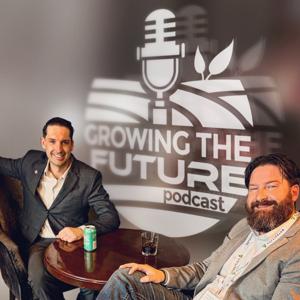


Roughly 60 percent of the food grown in Canada is wasted, and a lot of it never had anything wrong with it. Carrots and cucumbers get cut into fragments for grocery platters. Produce gets culled because it doesn't fit a store's mold, not because it isn't edible.
Craig and Carissa, co-founders of Trendi, built a mobile processing unit that goes straight to the farm and turns that excess into a shelf-stable product before it ever becomes waste. Trendi isn't a waste management company. It stops waste before it happens.
What's Inside
- Why 60 percent of Canada's food supply is wasted, and how that number connects to food insecurity affecting 4 million Canadians
- How the BioTrim mobile unit processes excess crops onsite into BioFlakes, shelf-stable at roughly 1/20th the original size, retaining 97 percent of nutrient density
- Why processing at the farm beats processing at a distant plant, and what a month in a grocery store fridge actually costs a vegetable's nutrient value
-The zero-cost, profit-share model that gives farmers a new revenue stream instead of a bill
-The "feed people first, animals second, soil third" philosophy behind every batch that comes through the machine
- What the Trendi circular economy app is being built to connect: farms, upcyclers, and buyers
Connect with Growing the Future
Website: growingthefuture.ca
YouTube: Growing the Future
Instagram: @growingthefuturepodcast
LinkedIn: Growing the Future
Register for the Convergence Conference at convergence.ag and stay updated by subscribing to the Growing the Future Podcast at growingthefuturepodcast.ca.
What If Your Next 5,000 Acres Didn't Require a Bank?
Joelle Faulkner is the CEO of Area One Farms, one of Canada's largest farmland operators and a company built on a simple idea: farmers who want to scale should not have to choose between their operation and their balance sheet.
Area One works with farm families to co-invest in land acquisition and expansion -- providing capital without requiring the operator to carry all the risk. Joelle has structured and managed these arrangements across millions of acres.
This is the conversation about what that model actually looks like, and when it makes sense.
What's Inside
- How the Area One Farms co-investment model works and how farmers qualify
- What Joelle looks for when evaluating a farm operation as a partnership candidate
- The difference between a partnership structure that supports a farm and one that complicates it
- How to scale acreage without over-leveraging the balance sheet
- What farm families give up and what they gain in a managed farmland partnership
Related Episodes
- Why the Biggest Buyer Can't Outbid the Farmer -- Robert Andjelic on who actually has the advantage in farmland markets
- Driving the Transition Train: The Farmland Exit (May 2026) -- what the farmland conversation looks like when it is time to exit
Connect with Growing the Future
Website: growingthefuture.ca
YouTube: Growing the Future
Instagram: @growingthefuturepodcast
LinkedIn: Growing the Future
Register for the Convergence Conference at convergence.ag and stay updated by subscribing to the Growing the Future Podcast at growingthefuturepodcast.ca.
Bryce Eger stepped into leadership at Corteva at the moment the company was being formed from several others, and the playbook he expected did not exist.
Eger, President of Corteva Agriscience in Canada, joins Dan to talk about what actually holds a large organization together: how the merged companies built a shared culture, the single most important skill when you step into a leadership role, and how the team stayed connected through the pandemic. He also looks ahead at how farming will change over the next decade, including carbon sequestration and what it means for farmers.
What's Inside
- What changed to make Corteva a strong organization after combining several companies
- The biggest skill needed when stepping into a leadership role
- How to communicate a mission, vision and purpose so a large team actually hears it
- How Corteva handled the pandemic, and what it focused on first
- Where the biggest obstacles and challenges sit for farmers right now
- What Eger expects farming to look like in ten years
Resources Mentioned:
Corteva Agriscience
Do More Ag Foundation
Connect with Bryce Eger:
Bryce Eger
Connect with Growing the Future
Website: growingthefuture.ca
YouTube: Growing the Future
Instagram: @growingthefuturepodcast
LinkedIn: Growing the Future
Subscribe to the Growing the Future Podcast wherever you listen, and register for Convergence Conference 2027 at convergence.ag.
Register for the Convergence Conference at convergence.ag and stay updated by subscribing to the Growing the Future Podcast at growingthefuturepodcast.ca.
Jake Leguee grows grain in Saskatchewan. He has watched dry years come and watched producers make very different choices about how to respond. Some waited. Some moved.
His argument is not about whether to farm in drought country. It is about which decisions are actually in your control in a year when the rain is not. Most operators confuse weather risk with business risk. They are related, but they are not the same thing.
This episode is about separating the two.
What's Inside
- The difference between weather risk and business risk on a Prairie grain farm
- What Jake Leguee does differently in a dry year vs. a wet one -- and why the decision-making process is the same
- Why hoping for better conditions is not a plan and what replaces it
- The financial and operational moves that protect a grain operation when the variable you cannot control goes wrong
- What resilient Prairie grain farmers have in common that has nothing to do with the weather
Related Episodes
- Engineer Your Revenue Floor Before You Seed (Mar 2026) -- the financial decisions that happen before the crop goes in
- Who Has the Export Data? (May 2026) -- where grain markets are heading and what that means for the plan
Want to connect with Jake?
https://ca.linkedin.com/in/jake-leguee-a45289106
Connect with Growing the Future
Website: growingthefuture.ca
YouTube: Growing the Future
Instagram: @growingthefuturepodcast
LinkedIn: Growing the Future
Register for the Convergence Conference at convergence.ag and stay updated by subscribing to the Growing the Future Podcast at growingthefuturepodcast.ca.
Most producers lump carbon tax and carbon offsets into the same frustration, and Bill Dorgan, who leads Trimble's carbon aggregation business and grew up on a fourth generation Saskatchewan grain and cattle operation, spends this conversation pulling the two apart. One is a cost. The other, done right, is one of the only places left where a farm's own management practices turn directly into a check.
What's Inside
- Why carbon offsets and carbon taxes are two completely separate issues that keep getting merged into one argument
- How Alberta's zero till protocol generated over 4 million tons of offsets and 50 million dollars for producers before hitting an expiry date
- The flawed census question that convinced regulators zero till was no longer "additional"
- What's coming next: soil organic matter protocols, nitrous oxide reduction, and beef feedlot efficiency credits
- Why chicken scratch on a notepad won't get you paid, and what real data capture for carbon actually requires
Bill Dorgan
Learn more about carbon here:
https://agriculture.trimble.com/software/agri-trend/
Connect with Growing the Future
Website: growingthefuture.ca
YouTube: Growing the Future
Instagram: @growingthefuturepodcast
LinkedIn: Growing the Future
Register for the Convergence Conference at convergence.ag and stay updated by subscribing to the Growing the Future Podcast at growingthefuturepodcast.ca.
A frost in the third week of August took almost everything off a farm that had just stretched to buy ten quarters of land. Everybody in the district got hit. It very nearly ended the operation.
This is part two of a conversation with the patriarch of a Saskatchewan grain farm, tracing what happened after the next generation came home full time. It covers the growth from fifteen hundred acres to five figures, and the two stretches where the whole thing looked like it might not hold.
What's Inside
- Why a man with a good off-farm job could not see how he would ever farm full time, and what he thinks that job was quietly costing him
- The land purchase that felt like too much risk at the time, and looks obvious now
- What happens when the bank tells you that you need a debt restructuring and you do not know what a financial statement is
- The first business plan anyone ever built for the farm, and how a forced process turned into a permanent one
- Back-to-back years of the worst losses the operation had seen, and a strategy session where the banker decided whether it continued
- The shift from doing everything yourself to asking who could do it better, and how that felt to a man who had always done it himself
- Why equipment used to be how a farm signalled success, and why that is changing
- What the patriarch actually does on the farm now, in his own words
Listen to part I to learn about Harvey's story about the beginnings of the family farm.
Connect with Growing the Future
Website: growingthefuture.ca
YouTube: Growing the Future
Instagram: @growingthefuturepodcast
LinkedIn: Growing the Future
Subscribe to the Growing the Future Podcast wherever you listen, and register for Convergence Conference 2027 at convergence.ag.
Register for the Convergence Conference at convergence.ag and stay updated by subscribing to the Growing the Future Podcast at growingthefuturepodcast.ca.
Before there was a shop, a shipping business, or Aberhart Ag Solutions, there was a family that once lived in a grain bin. In this special four generation conversation, Dan sits down with his father Harvey, his brother Terry, and Terry's son Holden to trace the farm's founding, from arriving on a hay rack at age 10, through dairy cows, a decade at the potash mine, a John Deere dealership, and the years before anyone knew the farm alone could support a family.
What's Inside
- The farm's founding in 1961, and why "mixed farming," grain plus cattle plus chickens, was considered the only way to survive
- How Harvey balanced an electrician's ticket, a decade at the potash mine, and ten years managing a John Deere dealership around farming
- The $100,000 investment loss and personal guarantees that nearly became a second, bigger blow
- Building the family home by hand in 1974 for under $20,000, plywood floors and all
- Why "buy more land" is the one thing Harvey says he'd change if he did it all again
Connect with Growing the Future
Website: growingthefuture.ca
YouTube: Growing the Future
Instagram: @growingthefuturepodcast
LinkedIn: Growing the Future
Subscribe to the Growing the Future Podcast wherever you listen, and register for Convergence Conference 2027 at convergence.ag.
Register for the Convergence Conference at convergence.ag and stay updated by subscribing to the Growing the Future Podcast at growingthefuturepodcast.ca.
A farm advisor once asked Kristjan Hebert why his operation was not seeding around the clock. He had every excuse ready: cold, wet, big air seeders, nobody who wants to work nights. Then the advisor changed the question: it is three years from now, you have been seeding 24 hours, what did you do to fix it?
That reframe is what this panel is about. Kristjan Hebert, Evan Shout and Terry Aberhart talk about what professional coaching, peer groups and a business operating system have changed on their farms and in their lives. Heather Watson of Farm Management Canada asks the questions, and Dan pushes on why so few farmers are in these programs at all.
What's Inside
- Why Kristjan treats people as an investment, and the four things he says coaching changed
- Why Evan gets the most from peer groups outside agriculture
- What Strategic Coach, TEPAP and EOS each do differently, in the panel's own words
- What happened when one farm tried to implement EOS on its own, and when it brought in a facilitator
- How to approach a busy mentor without wasting their time
- What each panelist hopes their farm looks like in three years
Partners
-Canadian Young Farmers Forum (CYFF).
-Farm Management Canada.
-Hiebert Green Ventures. A progressive agricultural enterprise dedicated to practicing and promoting excellence in farming.
-Maverick Ag Consulting. A business risk management and consulting firm focused on insurance and data analytics. Maverick Ag limited was built to evolve the mindset of financial and business risk management and agriculture.
-Aberhart Ag Solutions, Growing the Future Podcast, Convergence Growth,
Panelists
- Kristjan Hebert HGV)
- Evan Shout president and co-founder of Maverick Ag and CFO of Heber Green Ventures and Aberhart Farms.
- Terry Aberhart partner at Aberhart Ag Solutions
In this episode you will learn:
Connect with Growing the Future
Website: growingthefuture.ca
YouTube: Growing the Future
Instagram: @growingthefuturepodcast
LinkedIn: Growing the Future
Subscribe to the Growing the Future Podcast wherever you listen, and register for Convergence Conference 2027 at convergence.ag.
Register for the Convergence Conference at convergence.ag and stay updated by subscribing to the Growing the Future Podcast at growingthefuturepodcast.ca.
Patrick Verkley went to architecture school partly because he thought it would pay for a way back to the farm. It did, just not the way he planned.
There was no room for him on the family's 150 acres and broiler barn, so he went to Waterloo for a Bachelor of Architecture. He had been doodling dairy barn layouts on graph paper since he was a kid. In a high school design class he found SketchUp and started modelling robotic milking barns. His dad looked at the screen and saw a business.
What's Inside
- How 3D modelling changes an expansion decision, and why seeing the yard before spending the money is worth more than the drawing costs
- Why a dairy is not a building. It is cows, calves, milking, feed and manure flow, and optimizing one piece at the expense of the system is how a farm builds in the wrong constraint for thirty years
- The structure he and his parents put together so he could acquire acres, build a modern broiler barn and custom crop alongside the home farm
- Living with ADHD, the years of feeling demoralized before a diagnosis explained why, and how he now builds a business around what he is actually good at rather than fighting it
- An Ontario perspective on the rural and urban divide, and his argument that agriculture is too small a population to win anything by demonizing the other side
- Why he thinks progressive agriculture should be at the carbon table with technology and sequestration revenue rather than outside it saying no
Want to learn more about Verkley Design and Modeling:
https://www.verkleydm.com
Say hi to Patrick on Twitter at https://twitter.com/pverkley
Connect with Growing the Future
Website: growingthefuture.ca
YouTube: Growing the Future
Instagram: @growingthefuturepodcast
LinkedIn: Growing the Future
Subscribe to the Growing the Future Podcast wherever you listen, and register for Convergence Conference 2027 at convergence.ag.
Register for the Convergence Conference at convergence.ag and stay updated by subscribing to the Growing the Future Podcast at growingthefuturepodcast.ca.
John Warrillow started and exited four companies. He wrote Built to Sell -- named one of the best business books of 2011 by both Fortune and Inc. The book has been translated into 12 languages.
His observation for every business, including farms: if it can't run without you, you don't own a business. You own a job. And a job has very little enterprise value when it's time to sell, exit, or hand it down.
Most operators never think about this until the moment it matters most.
What's Inside
- Why the farm that depends on you entirely is the hardest to sell, exit, or hand to the next generation
- The Value Builder System: how businesses that score 90 or above are worth double the average
- What buyers actually look for when they evaluate an agricultural operation
- How to start separating yourself from the daily operations without losing control
- Why building to sell makes you a better operator whether you ever sell or not
Related Episodes
- Liquidity and Legacy (Feb 2026) -- when it's time to think about what the operation is actually worth
- Driving the Transition Train: The Farmland Exit (May 2026) -- the exit planning conversation for ag
Here's what you will learn:
To learn more about John ,visit https://builttosell.com/
Done. The agent will now always include the full linked Connect with Growing the Future block at the bottom of every episode notes doc. Here's exactly what it will output every time:
Connect with Growing the Future
Website: growingthefuture.ca
YouTube: Growing the Future
Instagram: @growingthefuturepodcast
LinkedIn: Growing the Future
Register for the Convergence Conference at convergence.ag and stay updated by subscribing to the Growing the Future Podcast at growingthefuturepodcast.ca.
From the publisher's feed
Ranked by our users in the last 21 days

227,479 Listeners
147 Listeners
126 Listeners
14 Listeners
737 Listeners
257 Listeners
129 Listeners

385 Listeners

46,079 Listeners
353 Listeners

39,409 Listeners
407 Listeners

15,926 Listeners
2 Listeners