
Sign up to save your podcasts
Or

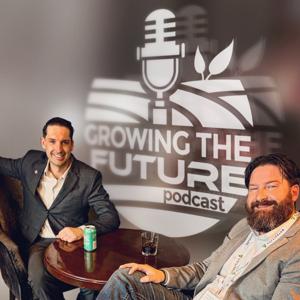


Shane Thomas writes Upstream Ag Insights, a weekly newsletter read by more than 2,700 people in agriculture, built from a simple habit: read everything, write down what it means, and see if he was right later. That discipline is also how he thinks about where farm technology is actually headed.
The conversation moves through see and spray technology that can tell a wild oat from wheat in under 400 milliseconds, the biological side of soil science that's still poorly understood compared to its chemistry, and the retail relationships that are quietly being reshaped by all of it.
What's Inside
- See and spray technology: how a sprayer identifies a weed from a crop plant in real time, and what that changes about herbicide cost
- Why most farm data today only explains the past instead of predicting what's coming
- The biological side of soil science, and why it's understood far less than the chemistry most farmers already know
- How Shane built a product playbook with Aberhart Ag Solutions, and what that process actually looks like
- Why a farm needs a small R&D budget, the same way any other business does
- The habit behind a 2,700-reader newsletter, and what it reveals about staying ahead of a fast-moving industry
Learn more about Shane's weekly newsletter here:
https://upstreamaginsights.substack.com/
Connect with Shane on:
Twitter @shaneAgronomy
Instagram @upstreamaginsights
Connect with Growing the Future
Website: growingthefuture.ca
YouTube: Growing the Future
Instagram: @growingthefuturepodcast
LinkedIn: Growing the Future
Register for the Convergence Conference at convergence.ag and stay updated by subscribing to the Growing the Future Podcast at growingthefuturepodcast.ca.
Twenty one percent of Canadian farms have a written business plan. Of the ones that do not, forty percent say they do not need one because they are doing fine without it.
Heather Watson, executive director of Farm Management Canada, brings that research to a table of four producers who have just finished one of the strangest years any of them can remember. Kent Erickson farms east central Alberta. Marcel Van Staveren farms twenty two thousand acres in southeast Saskatchewan with his brothers. Ron farms in western Manitoba. Franck moved his family from Saskatchewan to Montana and crossed the border the day it closed.
Between them they had a drought, a flood, a border closure and a rally that saved the year. What they do with that is the episode.
What's Inside
- The research linking a written plan to financial performance and to peace of mind, and why so many operators say they do not need one
- What each of the four would not do again, including a fertility strategy that swung too far toward soil health and cost yield
- The Manitoba field that took twenty inches of rain in five days, and how hard it was to walk away from it
- What twenty to thirty dollars an acre of input savings actually came from in a year when prices moved
- Why one of them buys iron that is five to twelve years old, and what he found out about that the day before this was recorded
- The standard operating procedures one of them wrote so the farm keeps running if something happens to him
Kent Erickson
A farmer in Irma Alberta with a 4,000- acre green family farm and a former political lobbyist in Canadian agriculture issues.
https://twitter.com/tek2541?lang=en
https://weeklyreview.ca/erickson-family-of-irma-win-2016-farm-family-award/
Ron Krahn
A farmer from Rivers Manitoba, a province on the Northwest of Brandon. Ron farms at Rivers, MB with his brother and their families. He grows wheat, canola, yellow peas, sunflowers, soybeans and is learning how to grow corn.
Franck Groeneweg
Originally from Regina, Saskatchewan, Franck owns a farm in Three Forks, Montana. Proud farmer, father of four and a husband, he is proud to be a steward of the land, feeding the world with the best technology available so the food that farmers produce, and that my family eats, can be nutritious, abundant, affordable, and sustainable.
https://www.linkedin.com/in/franck-groeneweg-a9657717/?originalSubdomain=ca
https://www.greenatlantic.com
Marcel Van Staveren
Born and raised in Saskatchewan, 2nd generation of Dutch immigrants-1960. Owns a 23,000 -acres farm with his two brothers, two sons, and nephews.
https://twitter.com/marcelvanst?lang=en
Connect with Growing the Future
Website: growingthefuture.ca
YouTube: Growing the Future
Instagram: @growingthefuturepodcast
LinkedIn: Growing the Future
Subscribe to the Growing the Future Podcast wherever you listen, and register for Convergence Conference 2027 at convergence.ag.
Register for the Convergence Conference at convergence.ag and stay updated by subscribing to the Growing the Future Podcast at growingthefuturepodcast.ca.
Jasmine Laverne produced this show from Washington DC. Before that, farming was an abstraction to her, the kind of thing that came up in a documentary about food systems and not much else.
She is a PR and marketing consultant who spent a stretch of episodes listening closely to Western Canadian producers describe their operations, and this conversation is about what that changed.
What's Inside
Connect with Jasmine here: https://instagram.com/jasmine__laverne
And if you want to be part of the Growing the Future community make sure to say hi on social at:
LinkedIn: https://www.linkedin.com/in/dan-aberhart-b36203b6/
Instagram: https://www.instagram.com/growingthefuturepodcast/
Say hi to Dan: https://www.instagram.com/aberhartdan/
Connect with Growing the Future
Website: growingthefuture.ca
YouTube: Growing the Future
Instagram: @growingthefuturepodcast
LinkedIn: Growing the Future
Subscribe to the Growing the Future Podcast wherever you listen, and register for Convergence Conference 2027 at convergence.ag.
Register for the Convergence Conference at convergence.ag and stay updated by subscribing to the Growing the Future Podcast at growingthefuturepodcast.ca.
Saskatchewan grew one of the largest crops in its history in a year drier than 1988. Alanna Koch's point is that the science was never the constraint.
Alanna joins Dan to walk through three careers that overlap far more than they should: building a grain farm near Edenwold from a single quarter section bought in 1994, serving more than a decade as Saskatchewan's Deputy Minister of Agriculture, and chairing the board of the Global Institute for Food Security.
What's Inside
- Why she and her husband describe themselves as late bloomers, and what the last ten years of buying land, taking on rented acres and building a line of equipment actually required
- What a decade inside government teaches you about how slowly the machine turns, and why the real win is often getting government out of the way rather than adding a program
- The practical lens a working farmer brings to a table full of scientists and academics, and why strategy that is not grounded in the field does not survive contact with it
- What GIFS is, how the public-private partnership behind it works, and the precision spraying research she points to as a template for commercialized innovation
- Why the gap between Ottawa and Western Canada keeps widening, and what agriculture and energy need in order to be treated as part of the environmental solution instead of the problem
- Why Saskatchewan used to export its young people, and what changed
- The one thing that actually keeps her up at night, which is not a scientific question
Connect with Alanna on LinkedIn here: https://www.linkedin.com/in/alanna-koch/
Interested to know what The Global Institute for Food Security "GIFS" is all about?! Here is the link: https://www.gifs.ca/
Connect with Growing the Future
Website: growingthefuture.ca
YouTube: Growing the Future
Instagram: @growingthefuturepodcast
LinkedIn: Growing the Future
Subscribe to the Growing the Future Podcast wherever you listen, and register for Convergence Conference 2027 at convergence.ag.
Register for the Convergence Conference at convergence.ag and stay updated by subscribing to the Growing the Future Podcast at growingthefuturepodcast.ca.
Anyone can buy the same equipment you bought. Management is the part nobody can copy.
Farm Management Canada joins the show to make the case that the business side of the farm, not the production side, is what separates the top performers. Their Dollars and Cents research found that the best farms outperform regardless of what they grow or how big they are, and that the difference comes down to a set of management practices any operation can adopt.
What's Inside
- Why the word "producer" quietly tells you where the industry puts its attention, and what gets neglected as a result
- The seven practices the research identified, from ongoing skills development to making decisions off accurate financial data to actually reviewing a written business plan once a year
- What a business plan covers when it is done properly: financial, strategic, operational and human resources, not just a cash flow projection
- Why written goals change behaviour, and how accountability partners and peer groups keep a plan from becoming a document nobody opens
- The connection FMC keeps returning to between farm business management and the things that are harder to measure: family harmony, risk and mental well-being
- What personal freedom actually looks like as an outcome of good management rather than a reward for surviving
Find more information about FMC here: https://fmc-gac.com/
Connect with Growing the Future
Website: growingthefuture.ca
YouTube: Growing the Future
Instagram: @growingthefuturepodcast
LinkedIn: Growing the Future
Subscribe to the Growing the Future Podcast wherever you listen, and register for Convergence Conference 2027 at convergence.ag.
Register for the Convergence Conference at convergence.ag and stay updated by subscribing to the Growing the Future Podcast at growingthefuturepodcast.ca.
In 1998 Joe Dales moved to London, Ontario with no customers, no product, and a plan to sell the internet to farmers who did not yet own computers.
In the years since he has co-founded Farms.com, AgCareers.com and CareersInFood.com, and now runs ag and food innovation at the Roundhouse Accelerator, backing early-stage ag-tech founders with capital, mentorship and business development.
What's Inside
- What growing up on the farm taught him about finishing the job, keeping your word and community generosity, and how those show up in the way he builds companies
- Why he paired a science degree with an MBA, and his blunt assessment of the odds any given startup is facing
- The 1998 decision itself: leaving a crop protection career at the exact moment the commercial internet appeared, and what the first years actually looked like with no customers and no product
- How the Y Combinator playbook translates to agriculture, and what an accelerator can and cannot do for a founder
- The advice he gives farmers, which is not about any single technology: adopt one new practice or tool every year and let two decades of small gains compound into something a competitor cannot catch
- Where he is watching hardest right now, including soil health, carbon measurement and automation
Connect with Growing the Future
Website: growingthefuture.ca
YouTube: Growing the Future
Instagram: @growingthefuturepodcast
LinkedIn: Growing the Future
Subscribe to the Growing the Future Podcast wherever you listen, and register for Convergence Conference 2027 at convergence.ag.
Register for the Convergence Conference at convergence.ag and stay updated by subscribing to the Growing the Future Podcast at growingthefuturepodcast.ca.
Em Sparrow runs digital marketing for agricultural businesses. She found the niche by accident -- a path from a purebred Charolais farm in Saskatchewan to teaching in Ghana to corporate finance in Sydney -- and discovered that the more specific the audience, the more scalable the model.
That is the professional story. The other story is what happened to her health along the way, and what she built to address it.
What's Inside
- The "Narrow Niche, Wide Audience" principle: why serving only rural businesses produced a global reach, not a ceiling
- How a digital sales funnel maps the path from awareness to trust to action for agricultural clients
- The pivot from corporate finance in Sydney to specialized agricultural web design -- and why specificity was the lever, not the limitation
- What stress-induced vertigo taught Sparrow about recovery: belly breathing, specialized physiotherapy, and the cost of staying silent
- Why she broke the agricultural culture of silence around mental health -- and what changed for her practice after she did
- The Saskatchewan-to-Ghana-to-Sydney career path, and what a non-linear trajectory produces that a straight one does not
Related Episodes
Marcia Cripps, "Who Gets to Influence What Farmers Think?" -- same cluster: how agricultural marketing and digital presence actually work
Andy Junkin, Caygeon Connections -- same cluster: the personal cost of running something that matters in agriculture
Connect with Growing the Future
Website: growingthefuture.ca
YouTube: Growing the Future
Instagram: @growingthefuturepodcast
LinkedIn: Growing the Future
Register for the Convergence Conference at convergence.ag and stay updated by subscribing to the Growing the Future Podcast at growingthefuturepodcast.ca.
A thousand acres is small by today's standards, and Ben Voss built his operation around that fact instead of fighting it. An agricultural engineer, former CEO of Morris Industries, and now inventor of a swath aerator called The Arrow, Voss runs his farm on margin, not scale, with no hired labor and a full career happening at the same time.
What's Inside
- How a 1,000 acre farm stays profitable without chasing more land or more iron
- Why intercropping sweet clover with canola cuts disease pressure and fertilizer cost at the same time
- The story behind The Arrow, a swath aerator built from a frustrated hay producer's welding shop fix
- How lifting tough barley swaths let three combines start three hours earlier in the same harvest
- What running a public company as CEO taught him about risk that farming alone never could
Resources Mentioned:
The Aerow
Morris Industries
Connect with Ben Voss:
Ben Voss:
Connect with Growing the Future
Website: growingthefuture.ca
YouTube: Growing the Future
Instagram: @growingthefuturepodcast
LinkedIn: Growing the Future
Register for the Convergence Conference at convergence.ag and stay updated by subscribing to the Growing the Future Podcast at growingthefuturepodcast.ca.
Les Henry took one of his first soil fertility jobs working out how a farmer might sample forty or eighty acres and do something useful with what came back. That was six decades before anyone called it precision agriculture.
This conversation was recorded the week before his eightieth birthday. Henry was a University of Saskatchewan extension specialist and researcher, the author of Henry's Handbook of Soil and Water, and the man behind the Prairie stubble soil moisture map that ran every year from 1979 onward. He spent a career turning complicated science into something a producer could pick up and use, and he is unusually direct here about the concepts he had to simplify because he could not follow them himself.
Les Henry died in 2024 at eighty three. This episode is one of the fuller records of how he thought.
What's Inside
- Why his earliest fertility work was precision agriculture under another name, and why he never believed most fields needed fifteen zones
- What the first zero till adopters were told by everyone watching them, and how long it took before that looked like the right call
- The 1988 drive across the Prairies that sat behind the annual stubble soil moisture map
- His case that carbon dioxide is the most under-discussed plant nutrient in agriculture, and the pea trial numbers he points to
- Why he says the ideas he is best known for explaining are the ones he struggled with first
- What he said about the piece of ground he would not sell at any price
Connect with Growing the Future
Website: growingthefuture.ca
YouTube: Growing the Future
Instagram: @growingthefuturepodcast
LinkedIn: Growing the Future
Subscribe to the Growing the Future Podcast wherever you listen, and register for Convergence Conference 2027 at convergence.ag.
Register for the Convergence Conference at convergence.ag and stay updated by subscribing to the Growing the Future Podcast at growingthefuturepodcast.ca.
Jake Ayer's family has farmed since the 1400s, first in Devonshire, England, now near Minto, Manitoba. As Vice President of Keystone Agricultural Producers, he took the industry's frustration with business risk management programs straight to the House of Commons, and made the case that the backstop farmers pay into isn't backing them up when disaster actually hits.
What's Inside
- Why a university carbon tax debate turned into a career representing farmers on national policy
- What testifying to the House of Commons Standing Committee on Agriculture, mid internet outage, actually looks like
- The real cost breakdown behind 2019's "harvest from hell," and why AgriStability didn't cover most of it
- Why he isn't asking for a handout, just insurance that actually pays what it promises
- How Manitoba's highest-in-Canada share of young farmers is reshaping who sits at the policy table
Connect with Growing the Future
Website: growingthefuture.ca
YouTube: Growing the Future
Instagram: @growingthefuturepodcast
LinkedIn: Growing the Future
Subscribe to the Growing the Future Podcast wherever you listen, and register for Convergence Conference 2027 at convergence.ag.
Register for the Convergence Conference at convergence.ag and stay updated by subscribing to the Growing the Future Podcast at growingthefuturepodcast.ca.
From the publisher's feed
Ranked by our users in the last 21 days

227,479 Listeners
147 Listeners
126 Listeners
14 Listeners
737 Listeners
257 Listeners
129 Listeners

385 Listeners

46,079 Listeners

353 Listeners

39,409 Listeners
407 Listeners

15,926 Listeners
2 Listeners