
Sign up to save your podcasts
Or

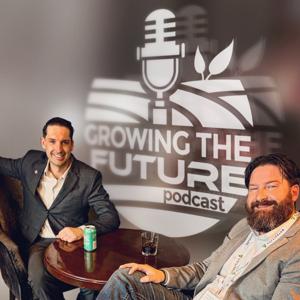


Every farm already has the data. Almost none of them are using it. Evan Shout, CFO of Hebert Grain Ventures and Maverick Ag, joins the show live from Farm Forum to make the case that agriculture is sitting where Blockbuster sat in 2003, comfortable with the old model, right before it stopped working. He breaks down how one operation turned tax returns, sprayer logs, and combine hours into real financial decisions.
What's Inside
- The Blockbuster and Netflix comparison he uses to explain where agriculture actually sits on the technology adoption curve
- How tracking sprayer working percentage and auto-steer engagement uncovered thousands of dollars in lost efficiency
- The top-dress story where trusting the data over gut instinct returned seven dollars for every one spent
- Why replacing a key employee costs roughly twice their annual wage once hiring, training, and lost productivity are counted
- His case for stress-testing a farm's finances before a bad year forces the question
Resources Mentioned
Maverick Ag
Hebert Grain Ventures
Connect with Evan Shout:
Maverick Ag
Connect with Growing the Future
Website: growingthefuture.ca
YouTube: Growing the Future
Instagram: @growingthefuturepodcast
LinkedIn: Growing the Future
Subscribe to the GTF Podcast so you don't miss what's next, and register for the Convergence Conference at convergence.ag
Register for the Convergence Conference at convergence.ag and stay updated by subscribing to the Growing the Future Podcast at growingthefuturepodcast.ca.
Agronomists were trained to kill something, a weed, a bug, a disease. Craig Davidson, president of Taurus Ag, argues that same instinct is exactly what's kept agriculture disconnected from the people who eat what it grows. Recorded live at Farm Forum in Saskatoon, this talk looks at what an agronomist's job actually becomes once sensors take over scouting, and why nutrition, not just yield, is about to become the job.
What's Inside
- Why sensor technology may remove agronomists from scouting fields for weeds and disease within the next decade
- His case for treating a crop like a high performance athlete, managed for nutrient density, not just bushels
- The Wheatsheaf partnership working to change food taste using pure nutrition data, no flavor additives involved
- Why the industry accepted new technology fast but let emotion drain out of the business in the process
- What it means for a grower when consumers can scan their food and trace it straight back to the field it came from
Connect with Growing the Future
Website: growingthefuture.ca
YouTube: Growing the Future
Instagram: @growingthefuturepodcast
LinkedIn: Growing the Future
Subscribe to the Growing the Future Podcast wherever you listen, and register for Convergence Conference 2027 at convergence.ag.
Register for the Convergence Conference at convergence.ag and stay updated by subscribing to the Growing the Future Podcast at growingthefuturepodcast.ca.
Precision agriculture is not new. Soil testing labs were mapping variability across eroded knolls and low ground in the 1960s. What changed is that the equipment finally caught up to the idea, and a lot of operations bought the equipment without revisiting the idea.
Recorded live at Farm Forum, this is a working presentation from an operator who took a family grain farm from roughly 1,500 acres to 15,000 and spent more than a decade running variable rate trials across Saskatchewan's most variable ground.
What's Inside
- What seven years of trial data across hundreds of farms actually returned per acre, and how much of that came from input savings versus yield
- The first variable rate field, and the result that made the case before any of the data existed
- Why pushing nitrogen to the top rate produced lower yields, more disease and more lodging than a balanced program
- Applying the same thinking to fungicide, spraying by canopy density rather than by field, and what that returned
- A rented field with saline seeps that was losing money, and the decision to stop farming part of it
- The eighty twenty rule as it applies here: stop trying to get it perfect, get it better than last year
- Where he sees it going next, from soil moisture probes and real time sensors to autonomy
- The line about poor agronomy, and why the technology makes it worse rather than better
Related Episodes
- Les Henry, on the soil science this was built on
Connect with Growing the Future
Website: growingthefuture.ca
YouTube: Growing the Future
Instagram: @growingthefuturepodcast
LinkedIn: Growing the Future
Subscribe to the Growing the Future Podcast wherever you listen, and register for Convergence Conference 2027 at convergence.ag.
Register for the Convergence Conference at convergence.ag and stay updated by subscribing to the Growing the Future Podcast at growingthefuturepodcast.ca.
Water drives everything in dryland agriculture, and Elston Solberg opens this Farm Forum session by asking the room how many pounds of it a single bushel actually takes. The answer reframes every fertility decision that follows.
Solberg, co-founder of EarthDirtSoil and part of the Crop Intelligence team, spends this session connecting nutrient chemistry to what a producer can see standing in a field. His argument is that recipes do not work, that balance between nutrients matters more than the rate of any one of them, and that most of what limits a crop was decided by water long before anyone opened a fertilizer bin.
What's Inside
- Why fertilizer use has been flat since the mid eighties while yields kept climbing, and what that has quietly done to the phosphorus, potassium and sulphur left in your soil
- The difference between soil mobile and plant mobile nutrients, and why that distinction changes where and when you place them rather than how much you buy
- What boron actually does to a root system, including the potassium uptake multiplier and the few degrees of heat tolerance it buys
- Why 13.5 percent protein is the number that tells you whether you optimized for the water you actually had
- What a single percent of organic matter holds, in pounds of water and in pounds of nitrogen, phosphorus, sulphur and boron
- Why a cold Western Canadian spring makes phosphorus placement more consequential than phosphorus rate
Connect with Growing the Future
Website: growingthefuture.ca
YouTube: Growing the Future
Instagram: @growingthefuturepodcast
LinkedIn: Growing the Future
Register for the Convergence Conference at convergence.ag and stay updated by subscribing to the Growing the Future Podcast at growingthefuturepodcast.ca.
Ryan Watt is a fourth generation grain farmer who spent the last several months completing one of the hardest personal discipline programs there is. This conversation isn't really about the workouts. It's about what got him there: some real struggle, some real loss, and a farm family history he's still finding his own place inside of.
What's Inside
- What the program actually demands day to day, and why the daily progress photo turned out to be the hardest part
- Why he believes fitness and discipline became the thing that pulled him out of a genuinely difficult period
- The farm's history, from his great grandfather's purchase in 1925 through being one of the first operations in the area to run auto-steer
- How he's approaching the succession conversation with his father differently than his own father experienced it with his grandfather
- Why he sees this kind of discipline as something that changes how he leads people, not just how he looks
Connect with Growing the Future
Website: growingthefuture.ca
YouTube: Growing the Future
Instagram: @growingthefuturepodcast
LinkedIn: Growing the Future
Subscribe to the Growing the Future Podcast wherever you listen, and register for Convergence Conference 2027 at convergence.ag.
Register for the Convergence Conference at convergence.ag and stay updated by subscribing to the Growing the Future Podcast at growingthefuturepodcast.ca.
Katelyn Duncan sprays, writes a column for the Western Producer, holds a graduate degree in policy analysis, and is working through a farm transition with her sister. Ask her which of those she identifies with most and her answer is none of them. All of it is external validation, she says. The real question is who you are underneath the roles.
That question runs through everything else in this conversation: how she and her sister navigate taking over the family farm, why she won't use the word sustainability without a way to measure it, and what she tells young producers texting her at midnight wondering what their purpose is.
What's Inside
- Why Katelyn refuses to use the word sustainability without a way to verify and measure it
- How she and her sister built the honesty that's carrying them through a farm transition, including the hard days neither wanted to have alone
- The Four Agreements framework she leans on, and how it changed a conversation that could have ended in conflict
- Why she thinks most farm transition struggles come down to one unanswered question: who are you besides a farmer
- What she tells producers who ask, half joking, if pesticides are actually safe
- Why she volunteers with White Pony Lodge in North Central Regina, and what it taught her about a completely different way of life
Connect with Growing the Future
Website: growingthefuture.ca
YouTube: Growing the Future
Instagram: @growingthefuturepodcast
LinkedIn: Growing the Future
Register for the Convergence Conference at convergence.ag and stay updated by subscribing to the Growing the Future Podcast at growingthefuturepodcast.ca.
Rob Saik built Agri-Trend from a spreadsheet-and-fax operation in the mid-1990s into a network of independent agronomy coaches across North America, then sold it to Trimble in 2015. Since then he's taken on two new ventures: commercializing Dot, a 175-horsepower autonomous seeding and spraying platform out of Regina, and launching AG Advisor Pro, an on-demand platform connecting farmers with agronomists, business coaches, and mental health professionals in real time.
The conversation, recorded with Terry and his son Holden, moves through what convergence actually means on a modern farm, the discipline behind Rob's 100-year life plan, and why he still thinks the most scarce resource on any farm isn't land or money, it's an answer to a question when you need it.
What's Inside
- Why Rob believes autonomy is coming to broadacre farming faster than most people expect, and why it won't come from the biggest manufacturers first
- Inside Dot: the 175-horsepower, four-wheel independently driven autonomous platform designed to clip and unclip between a seeder, sprayer, and fertilizer spreader
- AG Advisor Pro: the "uberization" of agricultural knowledge, built to connect farmers instantly with independent experts, industry reps, and mental health professionals
- The origin story of Agri-Trend, from a Palm Pilot sketched on paper to a network sold to Trimble in 2015
- Why Rob mapped out a 100-year life plan at age 40, and what a strategic 90-day review actually looks like
- What six hours with Bill Gates taught Rob about designing for a billion people, not just a farm
Connect with Growing the Future
Website: growingthefuture.ca
YouTube: Growing the Future
Instagram: @growingthefuturepodcast
LinkedIn: Growing the Future
Register for the Convergence Conference at convergence.ag and stay updated by subscribing to the Growing the Future Podcast at growingthefuturepodcast.ca.
Most business owners wait until they're at the end of their rope before they ask for help. Kathy Snelgrove and Jeff Rousey, founders of Siere, have spent eleven years watching that pattern up close, including with Dan himself during a real crisis in his own business. Their core belief: a business is a reflection of the beliefs its leader is carrying, and most of those beliefs were never true to begin with.
What's Inside
- Why an entrepreneur's goals feel sold the moment they're achieved, and what that does to a business
- The Boeing story where a team cut a 24 day manufacturing cycle down to just over three
- A gut check exercise for owners who believe their business can't run without them for a week
- Why behavior, not stated belief, is the real signal of what an owner actually wants
- What separates owners who ask for help early from the ones who wait for a crisis to force it
Resources Mentioned
SIERE
Connect with Kathy Snelgrove and Jeff Rousey:
Kathy Snelgrove
Jeff Rousey
Connect with Growing the Future
Website: growingthefuture.ca
YouTube: Growing the Future
Instagram: @growingthefuturepodcast
LinkedIn: Growing the Future
Register for the Convergence Conference at convergence.ag and stay updated by subscribing to the Growing the Future Podcast at growingthefuturepodcast.ca.
Brennan Turner played junior hockey at Notre Dame in Wilcox, got drafted by the Chicago Blackhawks, studied economics at Yale, traded commodities on Wall Street, and then came home to Saskatchewan to build FarmLead, North America's largest online grain marketplace, right as the Canadian Wheat Board monopoly was dismantled.
The conversation is really about one distinction: are you a yield farmer or an ROI farmer? Brennan makes the case that Canada is a high cost grain producer compared to Western Australia or the Black Sea region, which means bragging about a 100 bushel wheat crop means nothing without knowing the actual profit per bushel behind it. He also breaks down the psychology of loss aversion in grain marketing, why farmers often feel worse about selling early into a rising market than watching prices fall on unsold grain, and why so few producers actually know their own cost of production.
What's Inside
Website: growingthefuture.ca
YouTube: Growing the Future
Instagram: @growingthefuturepodcast
LinkedIn: Growing the Future
Register for the Convergence Conference at convergence.ag and stay updated by subscribing to the Growing the Future Podcast at growingthefuturepodcast.ca.
Mike Witkowicz built a digital grain marketing platform in the years after the Canadian Wheat Board dissolved, when farmers suddenly had to find their own buyers in a market most of them had never had to navigate. His argument is simple: a grower can realistically manage four or five buyer relationships, but there are more than 250 licensed grain buyers actually out there.
The platform connects growers directly to that wider buyer pool, but the real story is in what it turns away. Mike's team rejects nearly half the international buyers who come looking for grain, because every buyer on the platform has to be licensed by the Canadian Grain Commission or carry full payment insurance. He also makes the case for what he calls "progressive agriculture" over marketing terms like "regenerative," which he argues can quietly tell consumers that conventional growers have been doing something wrong.
What's Inside
Website: growingthefuture.ca
YouTube: Growing the Future
Instagram: @growingthefuturepodcast
LinkedIn: Growing the Future
Register for the Convergence Conference at convergence.ag and stay updated by subscribing to the Growing the Future Podcast at growingthefuturepodcast.ca.
From the publisher's feed
Ranked by our users in the last 21 days

227,479 Listeners
147 Listeners
126 Listeners
14 Listeners
737 Listeners
257 Listeners
129 Listeners

385 Listeners

46,079 Listeners
353 Listeners

39,409 Listeners
407 Listeners

15,926 Listeners
2 Listeners