
Sign up to save your podcasts
Or

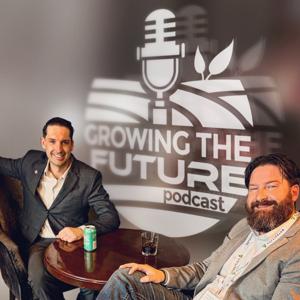


There is no Consumer Reports for farm software. No star rating, no independent read on which platform does what it claims. Brent Nicol calls the state of agricultural technology the Wild West, and he means it as a description rather than a complaint.
Nicol went from installing guidance boxes onto steering wheels to running a scouting app that identifies a weed from a photograph, inside ten years. Recorded live at the first AgSmart at Olds College, he argues the pace itself is the story, and that the way through it is not to buy whatever the neighbours bought.
What's Inside
- The ten year arc from bolt-on autosteer to a phone app that identifies a weed from a photo, and why he calls himself the case study for it
- What it actually takes to make a green tractor talk to a Bourgault drill, or pull yield data off a European monitor
- Why he tells producers to be selfish about what fits their own operation and ignore what is running down the road
- Three things software developers keep missing about farming: the short season, controllers whose interfaces have not moved since 2007, and the handshake culture behind every purchase
- Where variable rate fungicide goes when it lifts off the ground and into the air
- Why he thinks the quiet story of the next few years is whoever trains the people who tie the equipment together
Connect with Growing the Future
Website: growingthefuture.ca
YouTube: Growing the Future
Instagram: @growingthefuturepodcast
LinkedIn: Growing the Future
Subscribe to the Growing the Future Podcast wherever you listen, and register for Convergence Conference 2027 at convergence.ag.
Register for the Convergence Conference at convergence.ag and stay updated by subscribing to the Growing the Future Podcast at growingthefuturepodcast.ca.
Cherilyn Nagel never planned to be a farmer, let alone a national voice for one. She grew up in Moss Bank, Saskatchewan, left for a career in travel and tourism, and found her way back to agriculture through her husband David. Today she sits on the board of the Global Farmer Network, representing farmers in trade and technology discussions most producers never get a seat at.
What's Inside
- Why she believes the industry can't win the public trust argument on science alone
- How the Global Farmer Network grew from five Iowa farmers into a voice representing 50 nations across six continents
- The story of addressing a member of the British royal family at a Commonwealth agriculture event, and the line about tractors that landed
- Why she sees emotional connection, not more data, as the real lever for changing how the public sees agriculture
- What it took to go from someone with no farming background to a full time advocate for the industry
Connect with Growing the Future
Website: growingthefuture.ca
YouTube: Growing the Future
Instagram: @growingthefuturepodcast
LinkedIn: Growing the Future
Register for the Convergence Conference at convergence.ag and stay updated by subscribing to the Growing the Future Podcast at growingthefuturepodcast.ca.
A farm can map yield. A farm can map profit. Brennan Turner's question in this conversation is why there is no map for the thing agriculture keeps being asked to defend.
Recorded at AgSmart, this is a wide ranging conversation about what agriculture says about itself and whether anyone believes it. Turner is candid that ag technology has a marketing problem, that every platform claims to be the one that works, and that producers are right to be suspicious about who is getting paid when a tool gets recommended. He is equally direct about the crop reporting that markets are supposed to trade against, and the gap between what a private crop tour found and what the official number said.
What's Inside
- The case for a carbon map alongside the yield and profit maps a farm already produces
- Why he thinks ag technology talks about itself dishonestly, including his own corner of it
- What producers are actually asking when they want to know who benefits from a recommendation
- The acreage data problem that had markets trading off numbers the agency itself later called bad
- Why he expects the next wave of farm technology to be about platforms talking to each other rather than new tools
- Why agriculture has the tightest overlap of personal and professional relationships of any industry, and why outside investors cannot read it
Connect with Growing the Future
Website: growingthefuture.ca
YouTube: Growing the Future
Instagram: @growingthefuturepodcast
LinkedIn: Growing the Future
Subscribe to the Growing the Future Podcast wherever you listen, and register for Convergence Conference 2027 at convergence.ag.
Register for the Convergence Conference at convergence.ag and stay updated by subscribing to the Growing the Future Podcast at growingthefuturepodcast.ca.
Dean Klippenstine farmed his own operation in southern Saskatchewan until 2006 before becoming an agricultural accounting partner at MNP. His argument is that Western Canadian agriculture treats land on a one-year, five-year, sometimes ten-year horizon, when the countries that manage land best think in centuries.
The clearest example he offers is Germany, where some rental agreements require nutrient measurements at the start and end of the lease, giving both landlord and tenant an objective reason to protect the soil's long-term fertility rather than mining it for one good year. Dean also talks through what it actually looks like to be the outside advisor a family brings in during a farm transition, buying out mom and dad, bringing in a sibling, or managing an estate after someone passes away.
What's Inside
Website: growingthefuture.ca
YouTube: Growing the Future
Instagram: @growingthefuturepodcast
LinkedIn: Growing the Future
Register for the Convergence Conference at convergence.ag and stay updated by subscribing to the Growing the Future Podcast at growingthefuturepodcast.ca.
Recorded live at AgSmart 2019, this conversation draws on 35 years of farm management consulting with someone who has watched almost every kind of succession plan unfold, and fall apart. Jonathon Small, a farm management consultant with Global Ag Risk Solutions, argues that the plans that fail rarely fail on paper. They fail because the conversation never happened.
What's Inside
- Why "treat every kid equally" is often the exact decision that tears a farm family apart
- The real difference between a business plan and the communication work succession actually requires
- How he originated the idea behind production cost insurance, later built into Global Ag Risk Solutions' products
- Why benchmarking against other producers is one of the most underused tools in farm management
- What changes when a producer can finally see where they actually stand against their peers
Connect with Growing the Future
Website: growingthefuture.ca
YouTube: Growing the Future
Instagram: @growingthefuturepodcast
LinkedIn: Growing the Future
Register for the Convergence Conference at convergence.ag and stay updated by subscribing to the Growing the Future Podcast at growingthefuturepodcast.ca.
Most producers who say variable rate doesn't pay never actually mapped what's under their own dirt. Cory Willness, president of CropPro Consulting, built SWAT maps (Soil, Water, and Topography) after five years of research showed satellite imagery was never a reliable base layer for fertility decisions. Water, not satellite color, is what actually drives yield variability everywhere in North America.
What's Inside
- Why the same field can flip from your best acres to your worst depending on whether the year is wet or dry
- How reallocating an existing fertilizer budget, not spending more, is the easiest money in pothole country
- Why elemental sulfur outperforms sulfate sulfur on sandy hills that get regular rain
- What a nitrogen rate trial across 13 sites found when the highest paying rate turned out to be zero
- Why Western Canada has zero university precision ag programs, and what that gap actually costs producers
Resources Mentioned:
CropPro Consulting
Connect with Cory Willness:
CropProConsulting.com
Connect with Growing the Future
Website: growingthefuture.ca
YouTube: Growing the Future
Instagram: @growingthefuturepodcast
LinkedIn: Growing the Future
Register for the Convergence Conference at convergence.ag and stay updated by subscribing to the Growing the Future Podcast at growingthefuturepodcast.ca.
Jeff Bennett farms 4,500 acres north of Kinnersley, Saskatchewan, with his wife Shiloh and his father, in what turned out to be his dad's last year on the operation. He has a clear, often contrarian view on where a farmer's energy should go: not toward winning over a grocery store customer who will never see the dozen steps between seed and shelf, but toward running the business in front of him.
This conversation moves from the Ag Twitter meetup Jeff and Shiloh built at their farm, to precision agriculture and variable rate fertility, to a genuine back-and-forth with Dan over whether data benchmarking actually tells a producer anything useful. Jeff does not soften his answers, and the conversation is better for it.
What's Inside
Topics and Timestamps
0:00 -- Cold open: how Dan and Jeff connected through the Ag Twitter meetup
7:30 -- Eventbrite ticketing and tiered sponsorship for the meetup
11:00 -- Why Twitter is "reverse isolation" for a farmer who works mostly alone
15:00 -- 13,000 followers, and why accountability changes once a conversation could be said to someone's face
19:45 -- Generational gap: co-host Alyssa on why her generation barely touches Twitter
23:00 -- Tangent into the Bud Light Super Bowl ad and "virtue signaling" marketing
28:00 -- Why boycotts do not work and what going positive looks like instead
42:00 -- "I don't trust the customer to make the right decision anyway" -- Jeff's case against consumer-facing advocacy
51:00 -- What separates top producers, and why Jeff checks his cash flow spreadsheet almost daily
59:00 -- Farm structure: Shiloh's VP of Operations role, and dad's last year farming
1:05:00 -- Cash management, the family accountant, and why cash is "my number one precious resource"
1:09:00 -- 4,500 acres, half owned and half rented -- equipment strategy: lease-to-buy and buying used
1:14:00 -- Precision ag: Farmers Edge and Crop Pro variable rate, plus a side project using soil moisture probes
1:24:00 -- The benchmarking debate with Dan: does aggregated yield data actually tell a producer anything?
1:56:00 -- Wrap and sign-off
Related Episodes
Register for the Convergence Conference at convergence.ag and stay updated by subscribing to the Growing the Future Podcast at growingthefuturepodcast.ca.
Terry Aberhart farms 15,000 acres, runs a scaled agronomy business, and was raising six kids at the time of this conversation. The question people actually want answered isn't how he does it all. It's why his farm doesn't fall apart when he leaves for training four times a year.
The answer he gives isn't about working harder. It's about building a team that doesn't need him in the room, an idea one of his own agronomists brought to him that later became a product BASF would commercialize a decade later, and a habit of taking a cold shower every morning that he credits with more clarity than anything else he does.
What's Inside
- Why building a business that only works when you're there means you don't have a business, you have a job
- The variable rate fungicide idea an agronomist brought to the farm, and how it became xarvio a decade later
- Why "stupidly busy" became a badge of honour in agriculture, and why that's actually a warning sign
- The morning routine, cold showers included, that Terry credits with sharper decisions and more energy
- What changed after a trip to Ethiopia with the Canadian Foodgrains Bank, and how it reframed his relationship with stress
- Why regenerative agriculture and soil health are the next North Star, and what history's collapsed civilizations have to do with it
Connect with Growing the Future
Website: growingthefuture.ca
YouTube: Growing the Future
Instagram: @growingthefuturepodcast
LinkedIn: Growing the Future
Register for the Convergence Conference at convergence.ag and stay updated by subscribing to the Growing the Future Podcast at growingthefuturepodcast.ca.
Most podcasts begin with a guest. This one begins with the host explaining why he is bothering at all.
In this short introduction, recorded as season one, episode zero, Dan Aberhart lays out what the Growing the Future podcast is for and who it is for. He gives three reasons to listen: useful information and motivation from people building businesses in agriculture, a nudge to think harder about how you think, and a promise to keep it entertaining. He also explains where to watch, listen and find the clips.
What's Inside
- The three reasons Dan gives for listening
- The range of topics the show plans to cover, from agronomy and precision agriculture to HR, finance, marketing and sales
- Why he thinks entrepreneurship in agriculture can be lonely
- Where to watch the full video, listen to the audio and find short clips
- The line the show closes with: one good conversation can shift the tides of tomorrow
Connect with Growing the Future
Website: growingthefuture.ca
YouTube: Growing the Future
Instagram: @growingthefuturepodcast
LinkedIn: Growing the Future
Subscribe to the Growing the Future Podcast wherever you listen, and register for Convergence Conference 2027 at convergence.ag.
Register for the Convergence Conference at convergence.ag and stay updated by subscribing to the Growing the Future Podcast at growingthefuturepodcast.ca.
From the publisher's feed
Ranked by our users in the last 21 days

227,479 Listeners
147 Listeners
126 Listeners
14 Listeners
737 Listeners
257 Listeners
129 Listeners
385 Listeners

46,079 Listeners
353 Listeners

39,409 Listeners
407 Listeners

15,926 Listeners
2 Listeners