
Sign up to save your podcasts
Or

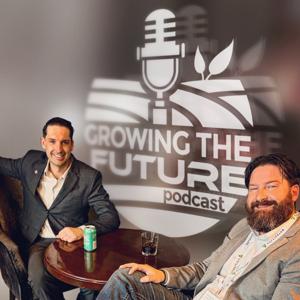


Tom Wolf, known across the industry as "the Nozzle Guy," spent his career answering the questions other agronomists couldn't: what nozzle, what pressure, what rate, for exactly this field and this product. He built that expertise into a public research career and later an independent consulting practice, after growing up on a small farm in Germany and later Manitoba.
Beyond the technical detail, this conversation is about communication. Tom talks through why nozzles get picked last at the sprayer counter even though they're often the most cost-effective fix available, what he thinks is missing from modern sprayer design, and why he believes good public service, and good agronomy advice, starts with genuine curiosity about the person asking the question.
What's Inside
- Why nozzles are consistently the last, most overlooked decision in a sprayer purchase, and what that costs a farm in lost efficiency
- What Tom sees as the real gap in modern sprayer design: booms that can't stay low and level at field speed, and plumbing systems built for engineers, not operators
- How low-drift nozzle technology becomes an agronomic tool by buying growers extra spray hours before weather shuts a field down
- Why Tom believes real communication starts with curiosity, not with trying to convince someone you're right
- The data-sharing philosophy behind his public spray drift research, and why he gives away work that could have stayed proprietary
- What it meant to leave the family farm for good, and how growing up between rural Germany, small-town Manitoba, and inner-city Saskatoon shaped how he sees agriculture today
Connect with Growing the Future
Website: growingthefuture.ca
YouTube: Growing the Future
Instagram: @growingthefuturepodcast
LinkedIn: Growing the Future
Register for the Convergence Conference at convergence.ag and stay updated by subscribing to the Growing the Future Podcast at growingthefuturepodcast.ca.
Brunel and Jen Sabourin started Antara Agronomy because they were tired of telling growers "it depends." Farming heavy Red River Valley clay themselves, they built an independent agronomy practice around one rule: no recommendation without a real, local, replicated trial behind it.
Their on-farm research network runs 15 to 20 producers a year, each hosting two field-scale trials, pooled into results from 40 trials across a 20 mile radius. What comes out of that data cuts against a lot of default habits. In dry years, a higher seeding rate can actually shrink the crop because of plant to plant competition for limited moisture. Fungicide only earns its cost when there's actual disease pressure in the field, not because the calendar says spray season is here.
What's Inside
Website: growingthefuture.ca
YouTube: Growing the Future
Instagram: @growingthefuturepodcast
LinkedIn: Growing the Future
Register for the Convergence Conference at convergence.ag and stay updated by subscribing to the Growing the Future Podcast at growingthefuturepodcast.ca.
Tiffany Martinka spent ten years building a career in agriculture before her plans changed. After her daughter Natalie was diagnosed with a rare, medically complex condition, Tiffany left her job to become a full-time caregiver, a role she never expected and, by her own account, never wanted.
This conversation is about what came after: learning to find happiness in small, ordinary moments instead of the milestones she'd once planned around, and using her online presence to advocate for families navigating similar circumstances and for agriculture more broadly.
What's Inside
- How Tiffany's career plans changed after her daughter's diagnosis, and the adjustment that followed
- Why she says happiness had to be rebuilt around small, daily moments rather than long-term plans
- What living on the farm meant for her family during a period that required fast access to medical care
- How a supportive online community of other parents helped her navigate decisions no one around her had faced before
- Why she shares her family's story publicly through Instagram and a dedicated page for her daughter
- Her perspective on the disconnect between rural and urban life, and why she wanted to show a fuller picture of what farm life looks like
Connect with Growing the Future
Website: growingthefuture.ca
YouTube: Growing the Future
Instagram: @growingthefuturepodcast
LinkedIn: Growing the Future
Register for the Convergence Conference at convergence.ag and stay updated by subscribing to the Growing the Future Podcast at growingthefuturepodcast.ca.
Dan and Jocelyn talk about the big picture in farming
Her argument is that most of what a farm tries to correct downstream starts with something it has never actually looked at closely, and that the conversation between a producer and their agronomist is where that either gets found or gets missed.
What's Inside
- The move from environmental consulting into agronomy, and what that background changes about how she reads a field
- Why she believes an agronomist's job is to coach the decision rather than sell the input
- What a decade of changed practice did to soil on an operation that had visibly eroded
- Why fertility moves year over year, and what a single season's test can and cannot tell you
- The reason she took a seat on provincial boards, and what she thinks the industry gets wrong about talking to the people who eat what it growsm and sustainable ag
- Conversations Jocelyn has with farmers to advise on the future of their farms
- Will Millennials start to care about where their food comes from down to the soil?
Connect with Growing the Future
Website: growingthefuture.ca
YouTube: Growing the Future
Instagram: @growingthefuturepodcast
LinkedIn: Growing the Future
Register for the Convergence Conference at convergence.ag and stay updated by subscribing to the Growing the Future Podcast at growingthefuturepodcast.ca.
Stuart McMillan farm manages Legend Organic Farms near Kamsack, Saskatchewan, with a background in entomology and molecular ecology from the University of Manitoba and the Swedish University of Agricultural Sciences. He pushes back hard on the idea that organic farming means rejecting modern science.
The conversation covers what a data-driven organic operation actually tracks, from nutrient budgets across a full rotation to the collaborative culture in the organic sector, where growers share both successes and failures openly. Stuart also walks through the real economics of organic production, including the yield gap with conventional neighbours and what's actually driving it.
What's Inside
- Why Stuart says he's never seen a poor farmer become a good one by taking tools out of the toolbox, organic or conventional
- How organic producers run full-rotation nutrient budgets, and why that challenges the assumption that organic means "no inputs"
- The three types of organic farmers Stuart has met in the field, and which one actually drives long-term success
- What's really behind the yield gap between organic and conventional grain in Western Canada, and where that gap is starting to close
- Why the organic sector's regulatory standards are driven by producers themselves rather than government or industry
- What a University of Manitoba long-term trial revealed when an organic rotation started losing phosphorus, and how it was corrected
Referenced Articles
Connect with Growing the Future
Website: growingthefuture.ca
YouTube: Growing the Future
Instagram: @growingthefuturepodcast
LinkedIn: Growing the Future
Register for the Convergence Conference at convergence.ag and stay updated by subscribing to the Growing the Future Podcast at growingthefuturepodcast.ca.
A shopper can tell you where the strawberries came from. Ask them about the wheat in the bread they bought the same morning and there is nothing. It is a line in an ingredient list, and the farm behind it has no name.
Warren Bills has spent his career in agricultural technology and has spent a good deal of it thinking about that gap. This conversation, recorded in the spring of 2020, works outward from a season when families were suddenly cooking every meal at home and paying attention to what was in it.
What's Inside
- What a forced slowdown did to household spending, cooking and routine, and what some of it was worth keeping
- Home economics as it used to mean something wider than cooking, covering money, nutrition and self-reliance
- Why broadacre crops are invisible at the grocery store while fresh produce carries an identity, and what that costs producers
- Reading sugar content on a label with a child standing beside you, and what that changes about how you buy
- Where plant-based protein actually comes from, and which Western Canadian crops are in it
- The case for transparency and options rather than fear-based marketing on either side of the argument
- What an executive program in Silicon Valley showed him about personalized nutrition, wearable sensors and where food technology is going
- His own stated purpose, which is closing three gaps at once between agriculture, food and health
Connect with Growing the Future
Website: growingthefuture.ca
YouTube: Growing the Future
Instagram: @growingthefuturepodcast
LinkedIn: Growing the Future
Subscribe to the Growing the Future Podcast wherever you listen, and register for Convergence Conference 2027 at convergence.ag.
Register for the Convergence Conference at convergence.ag and stay updated by subscribing to the Growing the Future Podcast at growingthefuturepodcast.ca.
Cassandra and Stephanie farm several thousand acres of malt barley, canola, and soybeans in Manitoba alongside their father, and they built an online platform, The Tulepps, that blends farming, fashion, and family life for a following that reaches well beyond agriculture.
Both sisters hold professional degrees, business and graphic design, and both chose to come back to the land and run the equipment themselves. This conversation covers the operational reality of a brutal 2019 harvest, finishing soybeans in the snow in late November, and the choices that make their operation work: who runs the sprayer, who handles seeding, and why they took over all their own equipment maintenance the year they had no hired help.
What's Inside
Website: growingthefuture.ca
YouTube: Growing the Future
Instagram: @growingthefuturepodcast
LinkedIn: Growing the Future
Register for the Convergence Conference at convergence.ag and stay updated by subscribing to the Growing the Future Podcast at growingthefuturepodcast.ca.
Wes Anderson of Crop Pro Consulting spends this Farm Forum session making one argument: yield maps and NDVI imagery show you where a field performed, not why, and building fertilizer plans off yield alone gets the response backwards more often than growers expect.
His alternative is SWAT maps, a patented method that layers topography, electrical conductivity, and elevation data to delineate management zones based on stable soil properties, the ones that don't shift year to year the way yield does. From there, the real work starts: matching fertilizer response, not yield potential, to each zone.
What's Inside
- Why yield maps and NDVI change every year, and why fertilizer decisions built on stable soil properties hold up better over time
- The difference between low yield potential and low fertilizer response, and why they're not the same thing
- A real field example where correcting a single sandy ridge for copper deficiency changed the outcome
- Why eroded knolls are often starved for phosphorus while depressions are already overloaded, and what that means for reallocating inputs
- What it actually costs to map a field with a SWAT box, and why the map holds up for years once it's built
- The line Wes borrows from a colleague that sums up the whole philosophy: good agronomy applied precisely, not poor agronomy applied precisely
Connect with Growing the Future
Website: growingthefuture.ca
YouTube: Growing the Future
Instagram: @growingthefuturepodcast
LinkedIn: Growing the Future
Register for the Convergence Conference at convergence.ag and stay updated by subscribing to the Growing the Future Podcast at growingthefuturepodcast.ca.
A 2015 survey found that 60 percent of farmers were experiencing anxiety, 35 percent depression, and 45 percent high stress. After the 2019 harvest, calls to the farm stress line went up again. Katelyn Duncan opened this Farm Forum session with those numbers and then made an argument the room was not expecting: that working on yourself belongs in the same category as any other farm management decision, and deserves the same seriousness the industry already gives the physical side of the job.
She is a producer, a Western Producer columnist, and a graduate student in policy analysis, and she is direct about her own start. At twenty, with her whole identity wrapped up in the farm, she gave two weeks notice and went to work on a friend's operation two hours away. What she learned on the way back is the frame for the rest of the session.
What's Inside
- The Four Agreements, Don Miguel Ruiz's framework, applied to a farm rather than to a general self-help audience
- Why unspoken assumptions do more damage in a multi-generational transition than open disagreement does
- What she means by learning to master the fire rather than avoid it, and why that distinction matters most during seeding
- The research on self awareness among high performing business leaders, and the case that it transfers to the farm gate
- The conference habit she names directly: comparing your own operation to everyone else's and calling it motivation
Connect with Kately Duncan:
Website: growingthefuture.ca
YouTube: Growing the Future
Instagram: @growingthefuturepodcast
LinkedIn: Growing the Future
Register for the Convergence Conference at convergence.ag and stay updated by subscribing to the Growing the Future Podcast at growingthefuturepodcast.ca.
Every acre a farm operates generates data now, and most operators have no idea what that data is actually worth, or who might eventually want to buy it. Warren Bills, who built his career in digital agriculture after watching a custom applicator erase two years of spray records just to keep working, sat down with a Western Canadian grain and pulse operator to work through what farm data monetization actually looks like today, and what it might look like in five years.
What's Inside
- Why one operator calculated over half a million dollars in lifetime data acquisition costs, and still couldn't find a buyer
- The three things any company asking for your data owes you back: transparency, reciprocity, and accountability
- Why no single farm management platform is going to win, and what a "hub and spoke" future actually means for your software stack
- How reduced tillage, sense and spray technology, and even pulse crop premiums are already turning data into real dollars
- Why a profit map tells you something a yield map never will
Resources Mentioned:
Trimble Ag Software
Xarvio (Bayer)
Open Ag Data Alliance
Connect With Warren Bills:
Warren Bills
Connect with Growing the Future
Website: growingthefuture.ca
YouTube: Growing the Future
Instagram: @growingthefuturepodcast
LinkedIn: Growing the Future
Register for the Convergence Conference at convergence.ag and stay updated by subscribing to the Growing the Future Podcast at growingthefuturepodcast.ca.
From the publisher's feed
Ranked by our users in the last 21 days
227,479 Listeners
147 Listeners
126 Listeners
14 Listeners
737 Listeners
257 Listeners
129 Listeners
385 Listeners
46,079 Listeners
353 Listeners
39,409 Listeners
407 Listeners
15,926 Listeners
2 Listeners