
Sign up to save your podcasts
Or

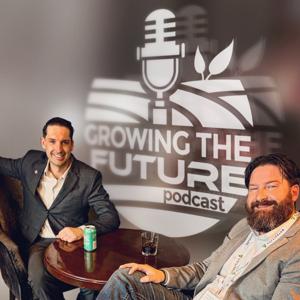


Elston Solberg has been in every room where agricultural transformation actually happens -- on stages, in orphanages in Lao and Vietnam, in fields that broke world threshing records. He sits down with Dan to talk about what the scarcity-to-abundance shift looks like in practice, and why the answer almost never starts with money.
His argument is grounded in three examples: a $25 micro-loan, a farm that grew from 5,000 to 15,000 acres, and a project in Ethiopia that raised over $142,000 for hunger relief. The move from scarcity to abundance is a mindset before it is a strategy.
What's Inside
- The "Learn, Unlearn, Relearn" philosophy and why holding onto an old truth is as dangerous as not knowing a new one
- How Kiva micro-loans of $25 have created more self-sufficiency in impoverished regions than grants ten times larger
- The expansion of Aberhart Farms from 5,000 to 15,000 acres, and the mindset that made it possible before the additional acres did
- The Give a Shirt Foundation: what Solberg's daughter started at age six, and what 7 sea-cans of clothing have done for approximately 4,000 children per shipment in Lao and Vietnam
- Harvest for Hunger: a Canadian Foodgrains Bank project in Ethiopia that broke a world record for simultaneous threshing and raised over $142,000
- The legacy of Dr. Lorraine Bailey as the clearest case study for what an abundance mindset produces over time
Related Episodes
Lance Lindbloom, "What Separates an Agronomy Advisor From an Agronomy Coach?" -- same cluster: the coaching philosophy and mindset the advisor relationship requires
Andy Junkin, "Caygeon Connections" -- same cluster: what it costs to show up differently in the agricultural industry
Connect with Growing the Future
Website: growingthefuture.ca
YouTube: Growing the Future
Instagram: @growingthefuturepodcast
LinkedIn: Growing the Future
Register for the Convergence Conference at convergence.ag and stay updated by subscribing to the Growing the Future Podcast at growingthefuturepodcast.ca.
Look at almost any farm balance sheet and the shape is the same. Somewhere between seventy and ninety percent of the capital sits in land, another ten to fifteen in equipment, and the smallest slice of all sits in working capital.
Then look at what each one returns. Land appreciates around five percent a year. Equipment loses value every year it is owned. Working capital, the smallest slice, is the one that returns fifty percent on average and sometimes several hundred on crop inputs.
Jonathan Small, an agricultural management consultant who came to Saskatchewan from Britain, spends this conversation asking what a farm looks like if you flip that. Not as a thought experiment. He has watched people do it.
What's Inside
- The arithmetic that puts the highest returning asset in the smallest position on nearly every farm balance sheet
- Why a young operator with a million dollars can farm four or five times the acres by renting, and which of the two gets to a land payment first
- The producer who went to five thousand acres in three years owning one quarter section and a sprayer, and what he offered landlords to get first call on their ground
- What happened to that same operation when the frost came, and why he walked away from farming afterward
- Why working capital is doing two jobs at once, and what happens the year a farm needs it for the second one
- How thirty years of that model changes the conversation at the succession table when there are three children and one farm
Connect with Growing the Future
Website: growingthefuture.ca
YouTube: Growing the Future
Instagram: @growingthefuturepodcast
LinkedIn: Growing the Future
Subscribe to the Growing the Future Podcast wherever you listen, and register for Convergence Conference 2027 at convergence.ag.
Register for the Convergence Conference at convergence.ag and stay updated by subscribing to the Growing the Future Podcast at growingthefuturepodcast.ca.
Bill Zimmer spent his career on the heavy chemistry side of agriculture, from BASF to biostimulant startups in California and Tennessee, before landing on what he now calls the real frontier: soil biology. His explanation of how it actually works is unusually direct. A plant produces carbon through photosynthesis and offers it to soil microbes as food. The microbes, in exchange, go get whatever nutrient the plant is asking for, phosphorus, zinc, whatever it takes, even drilling into rock to get it. It is a literal bartering system underground.
The conversation covers what Canada's bacteria-dominated, fungi-depleted soils are missing, why companies like General Mills are locking up a million acres under regenerative practices, and why Bill believes the future of agriculture is not organic versus conventional, but the two systems coexisting through biology.
What's Inside
Website: growingthefuture.ca
YouTube: Growing the Future
Instagram: @growingthefuturepodcast
LinkedIn: Growing the Future
Register for the Convergence Conference at convergence.ag and stay updated by subscribing to the Growing the Future Podcast at growingthefuturepodcast.ca.
Evan Shout advises farm operations on financial structure, business planning, and succession at MNP -- one of Canada's largest professional services firms with an agriculture practice built specifically for farm families.
The question most farm operators delay is not whether to plan. It is whether the structure they have built is actually designed for what they want to happen next. Transferring to the next generation, bringing in capital, or eventually selling -- each one requires a different foundation.
This is the conversation about getting that foundation right before the decision arrives.
What's Inside
- Why the farm's business structure is as important as the farm's physical assets
- What buyers, bankers, and successors look for when they evaluate an agricultural operation
- The financial moves most farm operations miss before succession
- How to separate personal income from farm income in a way that protects both
- What proactive planning looks like at different stages of a farm's lifecycle
Related Episodes
- Why Can't Your Farm Operate Without You? -- John Warrillow on enterprise value and the cost of owner-dependence
- Driving the Transition Train: The Farmland Exit (May 2026) -- exit planning for ag, what the conversation actually looks like
Connect with Growing the Future
Website: growingthefuture.ca
YouTube: Growing the Future
Instagram: @growingthefuturepodcast
LinkedIn: Growing the Future
Register for the Convergence Conference at convergence.ag and stay updated by subscribing to the Growing the Future Podcast at growingthefuturepodcast.ca.
Luke Silinski built his first autonomous demo at age 13. Now he is making the case that the farmers and agronomists who will define the next decade of precision agriculture are already in the field -- they just are not being trained for what is coming.
Modern producers are running multi-million dollar enterprises that require coding, hardware, and engineering literacy to compete. The question is who builds that pipeline, and how soon.
What's Inside
- Why today's farmer is closer to a CEO of a high-tech company than a laborer, and what that means for how we recruit and train the next generation
- The AgTech STEAM Box initiative: bringing technical literacy to rural youth to prevent the "forgetting curve" that comes from traveling to urban centers for training
- The Mini Dot 2.0: a fully functional autonomous model built from Lego components, built to prove that autonomous logic can be mastered at any age
- 2030 ag-tech career predictions: software programming, microchip development, drone operations, and robotics management
- Why rural technical training is not a nice-to-have -- it is a labor supply strategy for the next wave of precision agriculture
Related Episodes
Colin Rush, "The Future of Seeding Technology" -- same cluster: precision technology and who builds it
Dan McCann, "Artificial Intelligence in Agriculture" -- same cluster: what ag-tech actually requires at the farm level
Connect with Growing the Future
Website: growingthefuture.ca
YouTube: Growing the Future
Instagram: @growingthefuturepodcast
LinkedIn: Growing the Future
Register for the Convergence Conference at convergence.ag and stay updated by subscribing to the Growing the Future Podcast at growingthefuturepodcast.ca.
There is a great deal of knowledge sitting in a farmer's head that researchers never capture, and a great deal of research that never makes it back to the farm.
Patrick Walther came to Canada from Switzerland to study at the University of Manitoba and ended up doing on-farm research, which is where he saw how wide that gap is. He is now a co-founder of AGvisorPRO, a service built to connect a farmer with an expert, by video, from the field. Dan talks with him about moving to a new country to push past his comfort zone, what the gap between academia and practice looks like up close, and what it takes to start a business from scratch.
What's Inside
- Why Patrick left Switzerland for the University of Manitoba, and what he learned from it
- What "applied" research means and why it matters to a producer
- The gap he sees between academia and the farm, and who is responsible for closing it
- What AGvisorPRO does and the problem it was built to solve
- How a conversation at a trade show turned into a company
Connect with Growing the Future
Website: growingthefuture.ca
YouTube: Growing the Future
Instagram: @growingthefuturepodcast
LinkedIn: Growing the Future
Subscribe to the Growing the Future Podcast wherever you listen, and register for Convergence Conference 2027 at convergence.ag.
Register for the Convergence Conference at convergence.ag and stay updated by subscribing to the Growing the Future Podcast at growingthefuturepodcast.ca.
Cory Willness put it to Stuart Cullum plainly: nobody in Western Canada is training the next generation of agronomists. Cullum, two years into the presidency of Olds College, agreed with him. Most of this conversation is about what he decided to do about it.
Recorded at the first AgSmart, Cullum lays out a seven year plan built on growing enrolment by half, doubling applied research and launching a School of Agriculture Technology. He came to the job by an unusual route, from high school teacher to commercial farmer to an investment company to an airline to applied research, and it shows in how he talks about what a graduate actually needs to walk out with.
What's Inside
- Why he argues the technical skills a student trains on can be obsolete before they graduate, and what a college should teach instead
- The seven year plan: fifty percent enrolment growth, doubled applied research, and a new School of Agriculture Technology
- What industry keeps telling him about soft skills, and why creativity and communication rank above the technical task
- How a two thousand acre working farm changes what a graduate can do on their first day in a job
- Why networking is being written into the academic programs rather than left as an extracurricular
- Where AgSmart came from, and the deliberate decision not to make it big out of the gate
Connect with Growing the Future
Website: growingthefuture.ca
YouTube: Growing the Future
Instagram: @growingthefuturepodcast
LinkedIn: Growing the Future
Subscribe to the Growing the Future Podcast wherever you listen, and register for Convergence Conference 2027 at convergence.ag.
Register for the Convergence Conference at convergence.ag and stay updated by subscribing to the Growing the Future Podcast at growingthefuturepodcast.ca.
Greg Johnson chases tornadoes for a living, and he opens this conversation with a claim that sounds backwards until he explains it: risk is the lifeblood of humanity, and farming makes no sense at all unless you actually understand and accept that. He should know. He built a storm-chasing career, a Netflix show, and a photography business entirely on serendipity after moving to Saskatchewan from Ontario and falling in love with prairie weather.
The conversation moves through what storm chasing actually teaches about risk, why the data on severe weather does not match the panic people feel about it, and why Greg, who drives straight at tornadoes for a living, is genuinely afraid of lightning and afraid of driving.
What's Inside
Connect with Growing the Future
Website: growingthefuture.ca
YouTube: Growing the Future
Instagram: @growingthefuturepodcast
LinkedIn: Growing the Future
Register for the Convergence Conference at convergence.ag and stay updated by subscribing to the Growing the Future Podcast at growingthefuturepodcast.ca.
Rob O'Connor started wearing the cowboy hat because he overslept. Forty five minutes before an end of show media scrum, no time to shave, so the hat covered it. Twenty years later it is how ten thousand people find him on a show ground.
That is the opening. The substance is cattle. O'Connor is a third generation purebred Hereford breeder running a hundred cows alongside managing Ag in Motion, and this conversation, recorded after three dry years across Western Canada, is him working through what a shrinking breeding herd does to price. He also has a view on plant based protein that is not the one you would expect from a cattle producer.
What's Inside
- The herd reduction arithmetic behind his expectation for where cattle prices were heading
- What feed efficiency has done in a generation, from ten pounds of feed per pound of gain down toward three and a half
- His argument that plant based protein is good for agriculture either way, and where he thinks the product ends up in the store
- What Maple Leaf Foods did the day after a food safety crisis, and why he points to their market share afterward
- How Saskatchewan shifted from roughly three quarters grain to eighty five percent, and why it has not moved back
- The week he ran out of water on pasture for the first time in fifteen years, the Friday before this was recorded
Connect with Growing the Future
Website: growingthefuture.ca
YouTube: Growing the Future
Instagram: @growingthefuturepodcast
LinkedIn: Growing the Future
Subscribe to the Growing the Future Podcast wherever you listen, and register for Convergence Conference 2027 at convergence.ag.
Register for the Convergence Conference at convergence.ag and stay updated by subscribing to the Growing the Future Podcast at growingthefuturepodcast.ca.
When Brianna Elliot took the job, nobody had held the title before. Smart Ag Techronomist, a word Olds College was still deciding whether it had invented, describing a role that sits between the agronomist who reads a field and the technician who keeps the equipment talking to itself.
Recorded live at the first AgSmart, Elliot manages the applied research projects on the college Smart Farm and works as the college agronomist, with a small cattle operation of her own west of town. Her explanation for why farm technology disappoints people is unsentimental, and it is usually not the technology.
What's Inside
- What a techronomist actually does, from the first person to carry the title
- Inside the Smart Farm: soil sensor validation, a regenerative project on pasture, and correlating corn samples against NDVI with students doing the sampling
- Why she says time and connectivity break more farm technology than the technology does
- What happens when a product ships before it is ready and lands in a producer's busiest fortnight
- The one place she tells growers to start, which is not a piece of equipment
- Why startups keep bringing unproven kit to a two thousand acre college farm
Connect with Growing the Future
Website: growingthefuture.ca
YouTube: Growing the Future
Instagram: @growingthefuturepodcast
LinkedIn: Growing the Future
Subscribe to the Growing the Future Podcast wherever you listen, and register for Convergence Conference 2027 at convergence.ag.
Register for the Convergence Conference at convergence.ag and stay updated by subscribing to the Growing the Future Podcast at growingthefuturepodcast.ca.
From the publisher's feed
Ranked by our users in the last 21 days

227,479 Listeners
147 Listeners
126 Listeners
14 Listeners
737 Listeners
257 Listeners
129 Listeners
385 Listeners

46,079 Listeners
353 Listeners

39,409 Listeners
407 Listeners

15,926 Listeners
2 Listeners