
Sign up to save your podcasts
Or

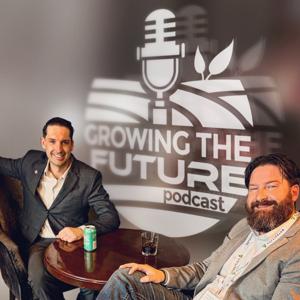


Jordan McFarlen taught high school business before becoming the Business Incubator Manager at Cultivator, the accelerator behind a 60 million dollar, Canada-wide ag-tech venture capital fund. He's watched more than 80 companies go through the program, and he's learned exactly what separates the ones that make it from the ones that don't.
It usually isn't the idea. It's timing, self-awareness about what the founder doesn't know yet, and whether they're willing to actually listen to the person who'd be paying for it.
What's Inside
- What actually separates a founder who succeeds from one who doesn't, after watching 80-plus companies go through the program
- Why the most successful ag-tech founders tend to be in their 40s and 50s, not fresh out of school
- Inside the 60 million dollar Emertech fund, and who is actually putting money behind Canadian ag-tech
- The Million Acres Project: how producers get a direct seat at the table before a product ever reaches the market
- Why timing can kill a good idea two years before it would have worked
- What a "24 hour startup" event looks like when farmers, developers, and designers build something from scratch overnight
Connect with Jordan:
Twitter: https://twitter.com/mcfarljo
Linkedin: https://www.linkedin.com/in/jordan-mcfarlen/
Instagram: https://www.instagram.com/mcfarljo/
Find Cultivator at:
Instagram: https://www.instagram.com/cultivatorsk/
Twitter: https://twitter.com/cultivatorsk
Facebook: https://www.facebook.com/cultivatorsk
Website: https://www.cultivator.ca
Connect with Growing the Future
Website: growingthefuture.ca
YouTube: Growing the Future
Instagram: @growingthefuturepodcast
LinkedIn: Growing the Future
Register for the Convergence Conference at convergence.ag and stay updated by subscribing to the Growing the Future Podcast at growingthefuturepodcast.ca.
The air-seeder has not fundamentally changed in 50 years. Colin Rush spent his career asking why. From military officer training to leading Clean Seed Capital, he built the case that 100 percent of yield potential is determined at the moment of seeding -- and that the industry's biggest original equipment manufacturers have been ignoring the problem in favor of high-margin tractors and combines.
That gap is what Clean Seed was built to close.
What's Inside
- Why Rush calls seeding and spraying the "ugly cousins" of major agricultural equipment -- and why the gap is also the opportunity
- The Smart Seeder MAX-S: what row-level, high-resolution control changes about how seed and fertility products go into the ground
- Why 100 percent of yield potential is locked in before the first pass is finished, and what that means for the equipment decision
- The innovation gap: why dominant OEMs have invested little in seeding technology while focusing on tractors and combines
- From military logistics to mechanized agriculture: the career path that gave Rush a different lens on a 50-year-old problem
- Single-pass precision -- applying seed and multiple fertility products simultaneously without compromise on placement or timing
Related Episodes
Lance Lindbloom, "What Separates an Agronomy Advisor From an Agronomy Coach?" -- same cluster: the gap between current ag practice and where precision is going
Luke Silinski, "Who Is Building the Next Generation of Precision Agriculture?" -- same cluster: the people and technology shaping the 2030 farm
Connect with Growing the Future
Website: growingthefuture.ca
YouTube: Growing the Future
Instagram: @growingthefuturepodcast
LinkedIn: Growing the Future
Register for the Convergence Conference at convergence.ag and stay updated by subscribing to the Growing the Future Podcast at growingthefuturepodcast.ca.
A harvester's engine shuts down mid-run in a California vineyard. Nobody is standing there to see it happen. The vineyard manager and the winery both get a text before the crew does.
Cole Powers and his co-founders met on an alternative fuels design team at university, where they were given full control to rebuild a car as a hybrid from scratch, then went on to automotive internships at two major manufacturers. They chose agriculture anyway, and built a company around a simple bet: strap a small, cheap device to any machine, from a brand new combine to a 1950s tractor, and tell the farmer what it is actually doing.
What's Inside
- Why the team walked away from automotive despite the internships, and what agriculture had that the corporate track did not
- The real difference between automating a commute and automating a field, and why farmers do not want the first thing automotive assumed they would
- What the device actually pulls off a machine in real time, and the fault codes most operators never see until something breaks
- Three simplified views built for three different people on an operation, from the shop to the cab
- Where the financial case is strongest, and what a missed spray pass costs before anyone notices it was missed
- His estimate of how much of the Prairies has basic digital tech versus real operational sophistication, and the gap between those two numbers
- A specific year for when he expects automated equipment to hit broad adoption, and why equipment cycles are the real constraint
- Running out of money before the first sale, and the mentor who helped get the company through it
Related Episodes
He Built Farms.com Before Farmers Had PCs
Learn more about IntelliCulture and Cole: https://www.intelliculture.ca
Connect with Growing the Future
Website: growingthefuture.ca
YouTube: Growing the Future
Instagram: @growingthefuturepodcast
LinkedIn: Growing the Future
Subscribe to the Growing the Future Podcast wherever you listen, and register for Convergence Conference 2027 at convergence.ag.
Register for the Convergence Conference at convergence.ag and stay updated by subscribing to the Growing the Future Podcast at growingthefuturepodcast.ca.
Marcia Cripps funded her agronomy degrees with Miss America pageant scholarships, then spent years as a sales agronomist in California before leaving the role over personal safety concerns. She's since built two careers at once: in-house potato agronomist for a large Michigan operation, and co-founder of an ag marketing agency built to explain agriculture to people who've never set foot on a farm.
The gap she's working on isn't inside agriculture. It's the space between the industry and everyone who isn't in it.
What's Inside
- Why Marcia left retail input sales, and what she'd tell a young woman considering that same path today
- What it actually means to run product trials, manage soil health, and adjust seed spacing for a large Michigan potato operation
- Why chip processors demanding smaller, more circular potatoes changes an agronomist's spacing decisions in the field
- How AgFluence uses platforms like TikTok to reach people who've never farmed, not just people already in the industry
- What her grandfather's 1942 photo, a team of horses instead of a tractor, tells her about how fast agriculture actually changes
- Why she's now teaching herself software development to become a digital agronomist
Connect with Growing the Future
Website: growingthefuture.ca
YouTube: Growing the Future
Instagram: @growingthefuturepodcast
LinkedIn: Growing the Future
Register for the Convergence Conference at convergence.ag and stay updated by subscribing to the Growing the Future Podcast at growingthefuturepodcast.ca.
Most in-crop spraying still works the same way it did decades ago: load the sprayer, cover the whole field, hope the chemical lands where it's needed. Dan McCann's estimate is that roughly 80 percent of it doesn't. It hits bare dirt or a plant that was never a threat.
Precision AI's answer is computer vision built for the field: drones flying up to 70 km/h with sub-millimeter resolution, trained to tell a wild oat from a wheat plant at the 2-leaf stage. What a farm does with that data is where the real shift happens.
What's Inside
- Why traditional high-clearance spraying wastes an estimated 80 percent of applied chemical on bare dirt or non-target plants
- How sub-millimeter computer vision tells weed species apart from crop at flight speeds up to 70 km/h
- The two-part system: survey drones that build precision weed maps for ground sprayers with individual nozzle control, and spraying drones that spot-dose weeds directly from the air
- Why drone spraying avoids soil compaction and can work wet fields that would get a ground rig stuck
- The cost gap between $150,000 to $200,000 sprayer retrofits and a per-acre drone survey fee, and what that means for smaller operations
- How an app built to catalog garage items led to a company solving crop protection
Connect with Growing the Future
Website: growingthefuture.ca
YouTube: Growing the Future
Instagram: @growingthefuturepodcast
LinkedIn: Growing the Future
Register for the Convergence Conference at convergence.ag and stay updated by subscribing to the Growing the Future Podcast at growingthefuturepodcast.ca.
Mandyy Thomas managed her money well from the time she was a teenager. She had no debt, she was saving, she was investing, and by twenty six she had a quarter of a million dollars put away on a power engineer's salary.
She also got sick. Badly enough that at twenty five she thought she had early onset Alzheimer's, and was carrying notebooks in her coveralls to remember how to do a safety sensitive job she used to find easy. The cause was not a disease. It was the money stress she had been carrying since childhood and had never told anyone about, because doing well financially made it feel unspeakable.
That is where her work comes from. Thomas is a financial coach and farms with her husband's family, and her argument is that the numbers are only half of it.
What's Inside
- Why most of what you believe about money was set before you turned seven, and how to tell which beliefs are yours
- The difference between savings buckets and an emergency fund, and why most people only have the one that keeps getting drained
- Why the standard advice to save ten percent of your income is the wrong instruction
- What happens to earnings when someone is quietly afraid of out earning their parents
- Why she works on the numbers first and the beliefs second, after starting the other way round
- The lightning round from ag Twitter, where much of the audience assumed she must have been given land
Want to connect with Mandyy ?
Intentionally Wealthy Podcast
Website
Talk One-on-One with Mandyy for Free About Your Specific Financial Situation here
Episode 23:How’s your family money paradigm affecting you?
Episode 3: My one big tip for 2021 to get ahead financially
Episode 2: How I saved $250,000 by 26
Connect with Growing the Future
Website: growingthefuture.ca
YouTube: Growing the Future
Instagram: @growingthefuturepodcast
LinkedIn: Growing the Future
Subscribe to the Growing the Future Podcast wherever you listen, and register for Convergence Conference 2027 at convergence.ag.
Register for the Convergence Conference at convergence.ag and stay updated by subscribing to the Growing the Future Podcast at growingthefuturepodcast.ca.
Lana Shaw went through a crop science degree and a master's with a soils minor and never took a class on soil biology. She learned soil chemistry and soil physics, and what she knew about biology was that some bacteria convert fertilizer into something a plant can use and others make it disappear.
What changed since is the understanding of where organic matter actually comes from. Not straw breaking down, as most of us were taught, but microbial biomass. The carcasses of the soil life, fed on sugars the plant releases through its own roots.
Shaw manages the Southeast Research Farm at Redvers, a non-profit, farmer-directed research operation in the far southeast corner of Saskatchewan. She has spent twenty years running replicated trials, and she is straightforward about what research can tell a producer that their own field cannot.
What's Inside
Why replicated trials across multiple sites and years answer questions a single on-farm trial cannot, and what her intercrop trials actually measure
How much of an operation she thinks belongs in the experiment column, and why the field you pick should be close to home
What happened to southeast Saskatchewan soils through the wet years, and why she says soil sitting bare is starving rather than resting
Why the culture treats a second species in a field as a weed problem, and what that costs
The simplest test a producer can run themselves to know whether their soil is getting more functional, using a pipe and a bucket of water
Why she thinks the old extension model, research to agronomist to farmer, is broken, and what her Nuffield work found instead
The second half is an Ag Twitter round where producers push back on intercropping, covering storage, separation, marketability, disease pressure and whether any of it works in a dry year.
Want to learn more about regenerative agriculture? Go here
Connect with Growing the Future
Website: growingthefuture.ca
YouTube: Growing the Future
Instagram: @growingthefuturepodcast
LinkedIn: Growing the Future
Subscribe to the Growing the Future Podcast wherever you listen, and register for Convergence Conference 2027 at convergence.ag.
Register for the Convergence Conference at convergence.ag and stay updated by subscribing to the Growing the Future Podcast at growingthefuturepodcast.ca.
A market coach's job is not predicting where grain prices go. Derek Squair, who has coached Terry Aberhart's grain marketing since 2006, lays out what the job actually is: setting budgets, managing cash flow, and making sure a farm never gets so exposed to one contract that a bad year turns into a lost farm.
Recorded during the 2021 drought, with forward contracts turning into the single biggest risk on the table, Derek walks through what separates a farm that survives a brutal year from one that doesn't, then takes real, unfiltered questions from producers on Twitter.
What's Inside
- Why the job is optimizing, not maximizing, and what that distinction actually protects
- What separates a farm that survives a drought year from one that gets buried by its own forward contracts
- How act of god contracts and futures buybacks cover a farm when production falls short
- The sustainability premium already showing up in producers' pockets, and where Derek sees it going
- Carbon credits: what the regulatory and voluntary markets were paying, and where he expected that number to go
- A live Twitter Q&A where producers ask Derek to defend his own value, directly
Connect with Growing the Future
Website: growingthefuture.ca
YouTube: Growing the Future
Instagram: @growingthefuturepodcast
LinkedIn: Growing the Future
Register for the Convergence Conference at convergence.ag and stay updated by subscribing to the Growing the Future Podcast at growingthefuturepodcast.ca.
Dave Wall has been putting up grain bins on the Prairies since 1984, and he has a standing offer at his own seminars. Name the most economical and effective way to dry grain and he will pay you. Almost nobody says blending.
Wall built the largest independent grain bin and dryer business in Western Canada on a mission statement about service, and this conversation covers what he has learned about the thirty days after harvest that decide what a crop weighs when it sells. His team now coaches upwards of thirty million bushels a year, and the most common thing they tell a producer is to turn the fans off.
What's Inside
- Why blending beats every other drying method on cost, and where a continuous flow bin dryer actually ranks
- The counterintuitive finding from coaching thirty million bushels: most producers run their fans far longer than the grain needs
- What two points of moisture disappearing in cooling costs you, whether the grain comes off the field hot or out of a dryer hot
- Why he says a bin returns a dollar to a dollar fifty a bushel a year, and what that does to payback on the whole system
- Why the dryer is the cheap part, and how a full dry bin stops three combines
- The Sunday morning he wrote down fifteen reasons producers would buy, then ordered ten million pounds of steel
Learn more about Wall Grain https://www.wallgrain.com
Connect with Dave on LinkedIn here
Wall Grain Instagram
Wall Grain Twitter
Connect with Growing the Future
Website: growingthefuture.ca
YouTube: Growing the Future
Instagram: @growingthefuturepodcast
LinkedIn: Growing the Future
Subscribe to the Growing the Future Podcast wherever you listen, and register for Convergence Conference 2027 at convergence.ag.
Register for the Convergence Conference at convergence.ag and stay updated by subscribing to the Growing the Future Podcast at growingthefuturepodcast.ca.
Jason McNamee spent his early career in geotechnical consulting and deep-sea ocean research before bringing an unlikely insight back to agriculture: the same chemistry that limits plankton blooms in the open ocean also limits what a farm's soil microbiome can do with a standard fertilizer program.
Traditional salt-based fertilizers, sulfates and chlorides, work against the soil's own biology. They can leach into groundwater or tie up in soil chemistry before a plant ever uses them, and they select against the microbes that would otherwise be feeding the crop. Lucent BioSciences built Soileos to work with that biology instead of around it.
What's Inside
- How Soileos binds micronutrients like zinc, iron, and manganese to pea and lentil cellulose fiber so soil microbes deliver them to plant roots on a schedule that matches crop demand
- The deep-sea plankton research that led to the discovery, and why free micronutrients behave differently in salt water than farmers might expect
- Why traditional salt-based fertilizers can work against the soil microbiome instead of feeding it
- Field trial results: 50 to 75 trials showing 5 to 12 percent yield gains on broadacre crops, with double-digit gains on vegetables
- What tissue testing across more than 5,000 samples showed about nutrient density and uptake of nutrients the farm never applied
- Where the research goes next: mesonutrients and a carbon-based carrier for nitrogen
Connect with Growing the Future
Website: growingthefuture.ca
YouTube: Growing the Future
Instagram: @growingthefuturepodcast
LinkedIn: Growing the Future
Register for the Convergence Conference at convergence.ag and stay updated by subscribing to the Growing the Future Podcast at growingthefuturepodcast.ca.
From the publisher's feed
Ranked by our users in the last 21 days

227,479 Listeners
147 Listeners
126 Listeners
14 Listeners

737 Listeners
257 Listeners
129 Listeners

385 Listeners

46,079 Listeners

353 Listeners

39,409 Listeners

407 Listeners

15,926 Listeners
2 Listeners