
Sign up to save your podcasts
Or

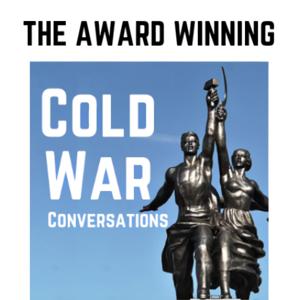


Based on Podcast App listening data
In 1978, Ieva Lesinska was a university student in Soviet Latvia with dreams of becoming a writer. She had just spent a heady month in New York visiting her father, Imants Lesinskis, a Soviet translator working at the United Nations. However, he was an employee of the KGB and a member of the Communist Party.
During her trip to the US, Ieva’s father informed her that he and his wife Rasma were about to defect. He offered her a blunt choice: take a taxi to the Soviet Embassy and denounce him as a traitor, or stay with him and never see her mother or her homeland of Latvia again. She chose to stay.
The new family officially became East German immigrants with new identities: Peter and Linda Dorn, and their daughter Evelyn. They were citizens of nowhere who possessed re-entry permits but no passports. In 1985, soon after Mr Lesinskis publicly disclosed confidential items on various KGB operations in Latvia, he died under mysterious circumstances.
Watch the film about Ieva story here:
UK https://amzn.to/3In12Ra US https://amzn.to/3xRZsBX
This podcast relies on listener support to enable me to continue to capture these incredible stories and make them available for free. You can support my work and help to preserve Cold War history via one-off or monthly donations
Just go to https://coldwarconversations.com/donate/ for more details.
Do join our Facebook discussion group where the cold war conversation continues between episodes. Just search Cold War Conversations on Facebook.
I am delighted to welcome Ieva Lesinska to our Cold War conversation…
There’s further information here. https://coldwarconversations.com/episode225/
0:00 Introduction and story of Ieva Lesinska's parents as sleeper agents
2:26 Ieva Lesinska on her childhood and family history in Soviet Latvia
17:03 Revelation of Ieva's father's KGB affiliation and defection plans
23:02 Ieva Lesinska's journey to the United States and her decision to stay
39:13 Ieva Lesinska's adjustment to new life and identity in the US
50:13 Ieva's academic journey in the US, from Ohio State University to University of Colorado
57:42 Maintaining contact with her mother and dealing with homesickness
1:00:39 Ieva's father's mysterious death and his double life as a CIA and KGB agent
1:08:17 Reunion with her mother and her life after liberation in Latvia
1:14:04 Her story being adapted into a film and rejection of the victim narrative
1:17:41 Ieva Lesinska's current life as a journalist and translator
1:19:13 Acknowledging and thanking patrons
Table of contents powered by PodcastAI✨
Support the project! https://coldwarconversations.com/donate/
Follow us on Twitter https://twitter.com/ColdWarPod
Facebook https://www.facebook.com/groups/coldwarpod/
Instagram https://www.instagram.com/coldwarconversations/
Youtube https://youtube.com/@ColdWarConversations
Learn more about your ad choices. Visit podcastchoices.com/adchoices
The British Nuclear Test Veterans Association (BNTVA) is the Charity for UK Nuclear Veterans and last year they very kindly invited me to the annual conference. I met many veterans including Peter Lambourne and this is his story.
Peter joined the Royal Navy aged 15. He describes those early days including serving on HMS Wizard during the Cod War with Iceland in 1961.
In 1962 Peter was then posted to HMS Resolution which was the codename for the nuclear bomb testing base on Christmas Island.
Peter’s base was less than 20 miles away from where hydrogen bombs were being detonated and he shares his experiences of those detonations.
Many servicemen and islanders who were present at Christmas Island from 1957 to 1962 later reported severe health problems, which they attributed to the nuclear bomb tests – from cancers to organ failure. Whilst Peter’s health has appeared unaffected, his children and grandchildren have suffered from cancers.
In 2023 the UK finally awarded a medal to the nuclear test veterans.
Now if you think there is a vast army of research assistants, audio engineers and producers putting together this podcast you’d be wrong. This podcast relies on your support to enable me to continue to capture these incredible stories and make them available to everyone for free.
If you’d like to help to preserve Cold War history and enable me to continue to produce this podcast you can via one off or monthly donations.
Just go to https://coldwarconversations.com/donate/ for more details.
Do join our Facebook discussion group where the cold war conversation continues between episodes. Just search Cold War Conversations on Facebook.
0:00 Introduction and Peter Lambourne's background
1:06 Peter's posting to HMS Resolution and nuclear bomb testing on Christmas Island
2:29 Call for podcast support and donations
3:33 Peter's experience in the Cod War with Iceland and posting to Christmas Island
12:10 Witnessing hydrogen bomb detonations on Christmas Island
17:06 The terrifying contingency plans and impracticality of their landing crafts
21:01 Lack of protective clothing and radiation tracking
24:33 Recreational activities and dynamics of the Navy group on Christmas Island
29:47 The mystery of the "big black line" in Peter's service record and the classified nature of the mission
34:05 The health effects of radiation exposure and the government's avoidance of liability
38:09 Reflections on Christmas Island as part of Peter's naval career
42:57 Closing remarks and thanks to patrons
Table of contents powered by PodcastAI✨
The British Nuclear Test Veterans Association (BNTVA) is the Charity for UK Nuclear Veterans https://www.bntva.com/
There’s further information including videos and photos on this episode here. https://coldwarconversations.com/episode224
Thank you very much for listening. It is really appreciated – goodbye.
Support the project! https://coldwarconversations.com/donate/
Follow us on Twitter https://twitter.com/ColdWarPod
Facebook https://www.facebook.com/groups/coldwarpod/
Instagram https://www.instagram.com/coldwarconversations/
Youtube https://youtube.com/@ColdWarConversations
Learn more about your ad choices. Visit podcastchoices.com/adchoices
In 1982 the East German Ministry for State Security is hunting for creative new weapons in the war against the class enemy – and their solution is stranger than fiction. Rather than guns, tanks, or bombs, the Stasi develop a programme to fight capitalism through rhyme and verse, winning the culture war through poetry – and the result is the most bizarre book club in history.
I speak with Philip Oltermann the author of The Stasi Poetry Circle. Philip has used unseen archival material and exclusive interviews with surviving members to tell the incredible hidden story of a unique experiment: weaponising poetry for politics.
Now if you think there is a vast army of research assistants, audio engineers and producers putting together this podcast you’d be wrong. This podcast relies on your support to enable me to continue to capture these incredible stories and make them available to everyone for free.
If you’d like to help to preserve Cold War history and enable me to continue to produce this podcast you can via one off or monthly donations.
Just go to https://coldwarconversations.com/donate/ for more details.
Do join our facebook discussion group where the cold war conversation continues between episodes. Just search Cold War Conversations in Facebook.
I am delighted to welcome Philip Oltermann to our Cold War conversation…
Book giveaway and further information here. https://coldwarconversations.com/episode223/
0:00 Introduction with Philip Oltermann
6:09 Discussion on GDR's policies towards arts and culture
13:22 The Stasi's involvement with writing circles and their shift in approach
21:01 Role of poetry and culture as a weapon in the Cold War
28:37 The story of Annegret Gollin and Stasi's fear of subversive literature
34:57 Stasi's recruitment process and the impact on Annegret Gollin.
39:03 Introduction to Alexander Ruika, a talented poet and spy
44:27 Discussion on the fear of nuclear war in the 1980s
49:39 Introduction to Uwe Berger, the teacher of the Stasi poetry circle
57:43 The decline of the GDR and impact on the writing circle
1:02:13 Book giveaway announcement
1:03:12 Acknowledgement of the podcast's patrons and promotion of the Facebook group
1:06:03 Closing remarks and promotion of the podcast's store
Table of contents powered by PodcastAI✨
Radio GDR
If you are interested in East Germany we can highly recommend our friends over at Radio GDR.
Support the project! https://coldwarconversations.com/donate/
Follow us on Twitter https://twitter.com/ColdWarPod
Facebook https://www.facebook.com/groups/coldwarpod/
Instagram https://www.instagram.com/coldwarconversations/
Youtube https://youtube.com/@ColdWarConversations
Learn more about your ad choices. Visit podcastchoices.com/adchoices
The phrase “history is human” was coined by two-time Pulitzer Prize-winning author and historian David McCullough. He says “History is about life. It isn't just about dates and quotations from obscure treaties and the like; it's about people", which is exactly what Cold War Conversations is about.
I discovered this phrase listening to the History Daily podcast presented and narrated by Lindsay Graham. This podcast takes you back in time to explore a momentous moment that happened "on this day" in history using fully immersive, sound design, original music and a compelling narrative style.
I really enjoy it and I'm sure you will too. I am sharing two short Cold War episodes on this bonus episode. If think you'd enjoy the History Daily podcast follow or subscribe by searching “History Daily Podcast”. or click on this link https://pod.link/1591095413
Support the project! https://coldwarconversations.com/donate/
Follow us on Twitter https://twitter.com/ColdWarPod
Facebook https://www.facebook.com/groups/coldwarpod/
Instagram https://www.instagram.com/coldwarconversations/
Youtube https://youtube.com/@ColdWarConversations
Learn more about your ad choices. Visit podcastchoices.com/adchoices
Frank Baldwin was commissioned into the Royal Artillery in 1979 and served for ten years, rising to the rank of Major. The first battlefield study he planned was in 1989 for HQ 4th Armoured Division. Since then, he has been a guide or historian for over 200 realities of war tours, battlefield studies and staff rides.
Frank reels off lots of great anecdotes as he takes us through the initial years of the BAOR and the British Army’s plans for the defence of West Germany.
He talks about the evolution of doctrines, on both the Soviet and NATO sides including their nuclear war-fighting techniques.
Frank also describes working with Warsaw Pact observers of NATO military exercises and the British view of the effectiveness of other NATO armies as well as the armies of the Warsaw Pact.
Maps and material to accompany this episode are here https://www.staffrideservices.com/?p=461
Now if you are enjoying these podcasts I’m asking for you to support my work with a small monthly donation. Your donations enable me to continue to capture these incredible stories and make them available for free to others.
Just go to https://coldwarconversations.com/donate/ for more details.
Do join our Facebook discussion group where the cold war conversation continues between episodes. Just search Cold War Conversations on Facebook.
I am delighted to welcome Frank Baldwin to our Cold War conversation…
Battlefield tour website
Story of a BAOR Cold war tour
Maps and material on BAOR and the Cold war. Cold war background material
Frank Baldwin's blog The Observation Post
0:00 Introduction and overview of the episode
2:37 Discussion on the planning and strategy during the Cold War
8:50 The concept of flexible response and the shift in NATO's planning
19:39 Tactics and maneuvers in the face of Russian forces
27:14 The Battle Group trainer and war simulation
33:04 Introduction of CSC and Stockholm agreement, and experiences during Iron Hammer exercise
37:07 Interaction with officers from the Warsaw pact and insights into Russian training methods
46:23 Perception of East Germans and experiences in East Germany
53:00 Post-cold war British army engagements and core values
56:31 Civilian evacuation during the Cold War and the role of German transport
1:00:34 Supporter acknowledgement and episode closing
Table of contents powered by PodcastAI✨
Support the project! https://coldwarconversations.com/donate/
Follow us on Twitter https://twitter.com/ColdWarPod
Facebook https://www.facebook.com/groups/coldwarpod/
Instagram https://www.instagram.com/coldwarconversations/
Youtube https://youtube.com/@ColdWarConversations
Learn more about your ad choices. Visit podcastchoices.com/adchoices
When the Cold War split Berlin in half, between East and West, one neighbourhood was trapped in the middle and became a symbol of Cold War tensions.
For more than twenty years, the hamlet of Steinstücken was caught in a tug-of-war between the Americans, the Soviets and the East Germans.
Steinstücken officially belonged to the U.S. Occupation Sector of Berlin. But, it was located outside the city boundaries, completely surrounded by East German territory. No West Berlin-owned roads or trails connected it to the city. It was a de facto Western island in a Communist sea.
We speak with Cold War veteran Don Smith the author of Steinstuecken: A Little Pocket of Freedom, a photo and fact-packed book which describes the challenges America faced in occupied Berlin and the personal stories of the citizens of Steinstücken who faced East German soldiers on a daily basis.
Buy the book here and support the podcast
UK listeners https://amzn.to/3Aux9dW
US listeners https://amzn.to/3r47PZi
Don’s web site http://steinpocket.com/
Now if you think there is a vast army of research assistants, audio engineers and producers putting together this podcast you’d be wrong. This podcast relies on your support to enable me to continue to capture these incredible stories and make them available to everyone for free.
If you’d like to help to preserve Cold War history and enable me to continue to produce this podcast you can via one-off or monthly donations.
Just go to https://coldwarconversations.com/donate/ for more details.
Do join our Facebook discussion group where the cold war conversation continues between episodes. Just search Cold War Conversations on Facebook.
I am delighted to welcome Don Smith to our Cold War conversation…
There’s further information including videos here. https://coldwarconversations.com/episode220/
0:00 Introduction and background of Steinstücken
5:21 History and life in Steinstücken during the Cold War
14:03 The unique nature of German farming and how Steinstücken got its name
16:10 East Germany's attempt to annex Steinstücken and America's response
20:47 The political dynamics in Steinstücken during the Cold War
30:25 Impact of the Berlin Wall on Steinstücken
38:17 The refugee situation and U.S. military operations in Steinstücken
45:37 Economic and societal implications in Steinstücken and the 4 power agreement
1:01:15 Post Cold War integration of Steinstücken into West Berlin
1:07:04 Podcast patrons and invitation to join the Facebook group
Table of contents powered by PodcastAI✨
Support the project! https://coldwarconversations.com/donate/
Follow us on Twitter https://twitter.com/ColdWarPod
Facebook https://www.facebook.com/groups/coldwarpod/
Instagram https://www.instagram.com/coldwarconversations/
Youtube https://youtube.com/@ColdWarConversations
Learn more about your ad choices. Visit podcastchoices.com/adchoices
You will remember Karl-Heinz from our episode 218 where he talked about being a signaller on the West German destroyer "Hamburg" in the late 70s.
Today we follow his post navy life as a travelling supporter of football club HSV Hamburg where he followed them all over the Soviet bloc talks about watching them play Dynamo Berlin the Stasi side and drinking with Liverpool, Newcastle and Hamburg legend Kevin Keegan in a hotel bar in Tiblisi.
And his Cold War encounters don’t stop there. While working in Chile he met General Pinochet, the military dictator of Chile from 1973 to 1990 and living across the street from Margot Honecker the wife of East German leader Erich Honecker who was also an influential member of that country's Communist regime until 1989.
If you have listened this far, I know you are enjoying the podcasts so I’m asking for one-off or monthly donations to support my work and enable me to continue producing the podcast. If you become a monthly supporter via Patreon, you will get the sought after CWC coaster as a thank you, audio and other extras as well as basking in the warm glow of knowing you are helping to preserve Cold War history.
Just go to https://coldwarconversations.com/donate/
If a financial contribution is not your cup of tea, then you can still help us by leaving written reviews wherever you listen to us as well as sharing us on social media. It really helps us get new guests on the show.
If you can’t wait for next week’s episode do visit our Facebook discussion group where guests and listeners continue the Cold War Conversation. Just search Cold War Conversations in Facebook.
I am delighted to welcome Karl-Heinz to our Cold War conversation…
There’s further information on this episode here including videos here . https://coldwarconversations.com/episode219/
0:00 Introduction to the episode and Karl Heinz's experiences with the KGB
2:02 Request for donations and support for the podcast
4:01 Karl Heinz's recollections of visits to East Berlin and encounters with fans
9:44 Karl Heinz's trip to Tbilisi, Georgia for a football match and interactions with locals
17:32 Encounter with potential KGB agents and misunderstandings with locals
20:38 Karl Heinz's football game experiences in East Berlin
24:57 Karl Heinz's experience in Chile during the time of Pinochet and meeting with Pinochet
30:16 Meeting with Margaret Honecker and her continued belief in the communist cause
32:04 Acknowledgement of patrons and their contributions
Table of contents powered by PodcastAI✨
Support the project! https://coldwarconversations.com/donate/
Follow us on Twitter https://twitter.com/ColdWarPod
Facebook https://www.facebook.com/groups/coldwarpod/
Instagram https://www.instagram.com/coldwarconversations/
Youtube https://youtube.com/@ColdWarConversations
Learn more about your ad choices. Visit podcastchoices.com/adchoices
Karl-Heinz served in the Bundesmarine as a Signalman on the West German destroyer "Hamburg" in the late 70s.
He talks of his training, his role and shares details of manoeuvres in the North Sea and Baltics involving East German and Soviet ships.
He also speaks about a cruise to West Africa where the sailors were briefed to stay away from any East German merchant marine sailors and not to engage with them in any form – he and his mates didn’t keep to the rules…
If you have listened this far, I know you are enjoying the podcasts so I’m asking for one-off or monthly donations to support my work and enable me to continue producing the podcast. If you become a monthly supporter via Patreon, you will get the sought after CWC coaster as a thank you, audio and other extras as well as basking in the warm glow of knowing you are helping to preserve Cold War history.
Just go to https://coldwarconversations.com/donate/
If a financial contribution is not your cup of tea, then you can still help us by leaving written reviews wherever you listen to us as well as sharing us on social media. It really helps us get new guests on the show.
I am delighted to welcome Karl-Heinz to our Cold War conversation…
There’s further information on this episode in our show notes here. https://coldwarconversations.com/episode218/
If you can’t wait for next week’s episode do visit our Facebook discussion group where guests and listeners continue the Cold War Conversation. Just search Cold War Conversations in Facebook.
0:00 Introduction and Overview of the Episode
2:29 Sponsor: Request for Donations and Support
3:15 Karl Heinz's Entry and Role in the West German Navy
10:56 Karl Heinz's Posting to the Destroyer Hamburg and West Africa Tour
18:03 Interaction with East German Sailors
22:27 Military Drills and Exercises in the North Sea and the Baltic
28:00 Anti Submarine Warfare Practice and Duration of Service
30:41 Cold War Travel Restrictions
30:49 Acknowledgments to Patreon Supporters
32:01 Engaging with the Podcast and Closing Remarks
Table of contents powered by PodcastAI✨
Support the project! https://coldwarconversations.com/donate/
Follow us on Twitter https://twitter.com/ColdWarPod
Facebook https://www.facebook.com/groups/coldwarpod/
Instagram https://www.instagram.com/coldwarconversations/
Youtube https://youtube.com/@ColdWarConversations
Learn more about your ad choices. Visit podcastchoices.com/adchoices
After service in the US Army during the Vietnam War Bob Wallace was recruited into the CIA.
In the CIA his initial assignments were as a field case officer. He rose through the ranks at the agency and was Chief of Station in three locations where he directed the full range of CIA activities.
In 1995 Bob became deputy director of the Office of Technical Service and in 1998 was appointed its director responsible for creating spy devices and capabilities necessary to conduct clandestine operations with safety and security. In other words, Bob was the "Q" of the CIA.
Buy Bob's book here
UK listeners https://amzn.to/3pBDrF4
US listeners https://amzn.to/3qvX0xD
This podcast relies on listener support to enable me to continue to capture these incredible stories and make them available for free. You can support my work and help to preserve Cold War history via one-off or monthly donations
Just go to https://coldwarconversations.com/donate/for for more details.
Do join our Facebook discussion group where the cold war conversation continues between episodes. Just search Cold War Conversations on Facebook.
I am delighted to welcome Bob Wallace to our Cold War conversation…
There’s further information here. https://coldwarconversations.com/episode217/
0:00 Introduction and Bob's journey to the CIA
7:00 The professional career training program at the CIA
14:21 Use of technology in clandestine operations in the 1970s
20:07 Development of devices for espionage operations
42:04 Role as Director of The CIA's Office of Technical Service
48:41 The science of disguise and examples of successful disguises
54:31 The role of Hollywood in disguise techniques
58:31 Reflections on the Cold War era and thoughts on the future of espionage
1:00:24 Inspiration from James Bond movies and spy fiction
1:02:31 Closing remarks and appreciation
Table of contents powered by PodcastAI✨
Support the project! https://coldwarconversations.com/donate/
Follow us on Twitter https://twitter.com/ColdWarPod
Facebook https://www.facebook.com/groups/coldwarpod/
Instagram https://www.instagram.com/coldwarconversations/
Youtube https://youtube.com/@ColdWarConversations
Learn more about your ad choices. Visit podcastchoices.com/adchoices
Bob Wallace joined the US Army in 1968 as a reluctant conscript. He describes the draft process, and his attempts to avoid conscription.
After basic training, Bob is assigned to a long range reconnaissance unit and ambush unit in five or six man teams in the Mekong delta.
We hear of the reconnaissance and ambush tactics as well as some poignant memories of those that didn’t make it back.
This podcast relies on listener support to enable me to continue to capture these incredible stories and make them available for free. You can support my work and help to preserve Cold War history via one off or monthly donations
Just go to https://coldwarconversations.com/donate/ for more details.
Do join our Facebook discussion group where the cold war conversation continues between episodes. Just search Cold War Conversations on Facebook.
I am delighted to welcome Bob Wallace to our Cold War conversation…
There’s further information on this episode here. https://coldwarconversations.com/episode216/
0:00 Introduction and request for donations
1:03 Introduction to guest, Bob Wallace, Vietnam War Veteran
3:21 Bob Wallace's early life and journey to the US Army
13:25 Bob's arrival in Vietnam and military training experiences
21:21 Bob's leadership experiences and decision to turn down promotions
24:54 Discussion on Bob's deployment to Vietnam and role in a Ranger reconnaissance team
35:43 Bob's experiences in identifying hostile targets and ambush operations
40:51 Bob's first time under fire and personal reflections on combat
42:38 Bob's visit to the Vietnam War Memorial and remembering fallen comrades
46:02 Introduction of Bob's book, "9 from the 9th", and discussion on shared experiences
49:18 Acknowledgment of patrons and call to donate
50:54 Closing remarks and promotion of the Cold War Conversations store
Table of contents powered by PodcastAI✨
Support the project! https://coldwarconversations.com/donate/
Follow us on Twitter https://twitter.com/ColdWarPod
Facebook https://www.facebook.com/groups/coldwarpod/
Instagram https://www.instagram.com/coldwarconversations/
Youtube https://youtube.com/@ColdWarConversations
Learn more about your ad choices. Visit podcastchoices.com/adchoices
From the publisher's feed
Ranked by our users in the last 21 days

1,241 Listeners

1,533 Listeners

4,754 Listeners
276 Listeners

1,390 Listeners
1,938 Listeners

363 Listeners
5,243 Listeners
531 Listeners
352 Listeners

338 Listeners
141 Listeners
612 Listeners
97 Listeners

1,076 Listeners