
Sign up to save your podcasts
Or



Can beautiful places welcome mass tourism without environmental destruction? Tom Heap reports.
There's been a summer of discontent in some of Europe's most popular tourist destinations. In Venice and Barcelona there have been a series of protests over their inundation by visitors. In the capital of the Basque country, San Sebastian, 'tourists go home' graffiti has appeared.
Dubrovnik is capping the number of visitors allowed in the old city. Even the Isle of Skye told people not to come unless they had accommodation already booked.
So how can the most popular places find a way to continue attracting visitors and their cash without destroying the beauty that was so appealing in the first place? Tom travels to Orkney which has become the most popular cruise destination in the UK and to Amsterdam which is trialling innovative ways to spread its millions of visitors beyond the Rijksmuseum, the coffee shops and the Red Light District.
Producer: Sarah Swadling.
Between 20 and 33% of the world's plant species are currently at risk of global extinction. That's the estimation of recently published studies. So how much will climate change impact on the variety, availability and price of the food on our plates? Botanist James Wong investigates the links between global warming and the rate at which crops are able to adapt and evolve to rapidly changing conditions.
Speaking to farmers, plant breeders and scientists at the Royal Botanic Gardens, Kew and elsewhere he hears about the plant world's likely 'winners' and 'losers'. Having deeper roots and more efficient water-use strategies is a clear bonus, and one that's being addressed by British plant scientists who are developing more drought-resistant wheat varieties by breeding them with ancient antecedents of one of the world's most important crops. That's in the UK, but elsewhere around the world, James Wong learns that many plants are facing extinction before they have been recognised as being at risk, and perhaps in some cases even before they have been discovered.
Producer: Mark Smalley.
Can Britain revive its forests and grow the wood we need for a greener economy? Tom Heap investigates as we approach the 800th anniversary of the 1217 Charter of The Forest. Tree planting in England has hit a forty five year low which is alarming both the timber industry and environmentalists. Tom visits a new woodland in Central Scotland combining conifers with native tree species to offer wildlife habitats, flood prevention, and public access as well as timber. Foresters hope this new generation of mixed woodland will overcome resistance to tree planting, from those who fear a dark monoculture of conifers. Meanwhile, Ella McSweeney reports on a conifer planting boom in Ireland which, it's claimed, could damage the environment and price small farmers off the land. Back in the UK, Tom discusses how producing hardwood timber from broadleaved woodlands might give them a more secure future.
Producer: Sarah Swadling.
New dams threaten life on South-East Asia's most vital river, a river that provides food and water to 70 million people. The government of Laos is determined to develop the nation by building hydroelectric dams for electricity. Many people in the downstream countries of Cambodia and Vietnam are worried that the flow of the life-giving waters of the Mekong will be much reduced and fish life devastated. Peter Hadfield reports from the banks of the Mekong.
Producer: Alasdair Cross.
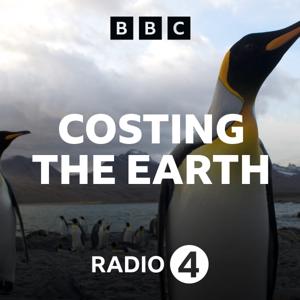
The penguins of the Falkland Islands have thrived since the war of 1982, protected from human interference by Argentine landmines. Peter Gibbs finds out what happens when the mines are cleared.
Producer: Matthew Teller.
How long do you reasonably expect your electronic gadgets and clothes to last? Has the cheapening of products meant we're too ready to let them go when they break and buy new? Jheni Osman is sick of things breaking and the energy and resources that went to making them going to waste. She meets those who are fighting back and lengthening the lifecycle of their goods. Around the country those who lack the skills or know-how to fix things are learning how in community parties and online. But some products are now being built so they're difficult or costly to repair. She meets the campaigners who are calling for companies to be upfront about the life expectation of a product alongside the price tag and learns how some companies are offering a 'lifetime product' with repairs and replacements offered if the items break. Is this the way more companies will go or is it commercial suicide?
Our homes are responsible for 25% of our carbon emissions in the UK. Tom Heap asks if we can retrofit our homes to fight climate change.
An Englishman's home is his castle, but most homes are not well defended against cold air and high fuel bills and if we are going to hit our 2050 carbon dioxide emissions targets we need to start a retrofit revolution from our front doors.
Tom visits the house of his producer, Martin, to take stock of his 'typical' Edwardian terrace. Pre-1920s housing makes up a big proportion of UK homes and what Tom and a team of eco-house experts discover in Martin's house is not uncommon: draughty doorways, patches of damp, hot-spots and cold spots.
Martin's home has room for improvement and so Tom then makes a whistle-stop tour of homes that are part of the SuperHomes network. SuperHomes is an organisation of determined householders who have made big changes to their dwellings to improve energy efficiency, cut bills and reduce emissions. They show that small changes can make a big difference.
However, in order to tackle our ageing housing stock, a lot of skilled workers are needed. Energy consultant Peter Rickaby, and Gavin Killip from the Environmental Change Institute at Oxford University explain that we simply do not have the skilled workforce to carry out the necessary retrofit renovations. The problem will be, according to Professor Linda Clarke from the Westminster Business School, exacerbated by Brexit.
Meanwhile, at his 'power station' in Notting Hill, Michael Liebreich, director of New Energy Finance at Bloomberg thinks we should think big: renovating all our homes could mean that we don't need big new power stations like Hinkley.
Presenter: Tom Heap
Five of the Solomon Islands have already been lost to sea level rise and many more are being rendered uninhabitable. For wildlife film-maker and marine biologist, Ellen Husain that's not just a disturbing quirk of climate change, it's a family concern.
At the beginning of the 20th century her great uncle, Stanley Knibbs was the Chief Engineer and Surveyor of the Solomon Islands, drawing up some of the first maps of the region for the British Empire. He fell in love with this Pacific paradise and wrote a warm and witty memoir of his time with the islanders.
One hundred years on Ellen is anxious to find out how the islands have changed. How is sea level rise at three times the global average disturbing the ancient rhythms of life? Can crops continue to be grown in land that grows saltier by the day? Can ancient traditions like shark-calling and megapode egg-collecting survive as tribal communities are broken up and moved to higher ground.? And what lessons can the rest of the world learn from the people on the frontline of sea level rise that we're all likely to endure over the next century.
Producer: Alasdair Cross
Stanley Knibbs played by Mark Meadows
All photos by Ellen Husain.
The Skoll World Forum was set up by eBay founder, Jeff Skoll to pursue his optimistic vision of a sustainable world of peace and prosperity. But can the world's most pressing problems be solved by investing in, connecting, and celebrating social entrepreneurs and innovators?
This year the forum will be attended by key speakers such as Bono, Atul Gawunde, Michael Porter and Don Henley. Tom Heap will be reporting from Oxford to ask whether there are reasons for optimism in poverty, health and conservation as we face fresh challenges from climate change and political uncertainty.
Producer: Helen Lennard.
The British fishing industry suffered decades of sharp decline during our membership of the European Union. The European Common Fisheries Policy has long been regarded by many as a disaster, both for fishermen and for fish stocks. So will Brexit bring a bright new dawn? Will fishing boats from other nations be forced from our waters, could new 200 mile limits provide our fleet with copious fish to catch? Or will our Brexit negotiators focus on maintaining markets for big businesses like finance and the car industry, offering our fish stocks as sacrificial prawns?
Tom Heap visits fishing communities in Peterhead, Hastings and Brixham to gauge the mood and meets the conservationists hoping that new measures could revive our fish stocks.
Producer: Sarah Swadling.
From the publisher's feed
Fresh ideas from the sharpest minds working toward a cleaner, greener planet

7,618 Listeners

1,050 Listeners

5,485 Listeners

1,795 Listeners

1,825 Listeners

1,037 Listeners

1,907 Listeners

753 Listeners
107 Listeners

3,219 Listeners

1,004 Listeners
179 Listeners
2,024 Listeners