
Sign up to save your podcasts
Or

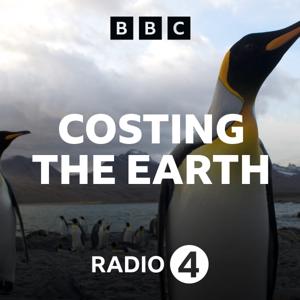


Life can be pretty tough for the pangolin. This scaly-skinned ant-eater is the most heavily trafficked mammal in the world. Followers of some branches of Chinese medicine believe pangolin parts can cure anything from blood clots to cancer and they're willing to pay big money for poached animals.
As a boy growing up in rural Vietnam Thai Van Nguyen watched his neighbours capture and kill a mother and baby pangolin. His disgust inspired an intense urge to help the pangolin and the threatened habitats in which it lives. Founding an independent conservation organisation in Communist Vietnam isn't easy, nor is facing down heavily armed poaching gangs engaged in the trade with China. Despite the challenges Thai has set up the country's first effective anti-poaching unit, disrupting the trade and catching hundreds of smugglers red-handed.
Peter Hadfield travels to Vietnam to see Thai and his team in action and gauge the impact of his work on local communities and the country's attitudes to its native wildlife.
Producer: Alasdair Cross
Photo courtesy of Suzy Eszterhas
Early humans adapted and survived in the face of a changing climate. Eleanor Rosamund-Barraclough joins an archaeological dig in Malta to learn the lessons for our own time.
A team led by Dr Eleanor Scerri of the Max Planck Institute for the Science of Human History is making remarkable discoveries about waves of human and animal habitation of the Mediterranean islands, but what can the fate of giant dormice, pygmy elephants and the hunters who may have relied on them for survival tell us about contemporary island life in a dangerous period of rising sea levels and searing summers?
Producer: Alasdair Cross
For many dog owners, watching your pet race around after a crow or leap joyfully into a stream is a source of great pleasure...but these natural behaviours all have an impact on the environment. Estimates of the UK dog population vary from 10 million all the way up to 13 million and the number has been rising in recent years, so their environmental paw print is growing.
In this programme Tom Heap visits a nature reserve where dogs have been banned from some areas after being blamed for frightening wildlife, damaging rare habitats and adding excess nutrients to the soil via their excrement. He meets a farmer and dung beetle expert, who shows him how the drugs found in flea treatments and worming pills can leach out into nature. And what to do with all that poo - especially when it's wrapped in plastic bags?
Meanwhile, across the world free-roaming dogs are having wide reaching effects. Dr Abi Vanak from the Ashoka Trust for Research in Ecology and the Environment says the 60-80 million free-roaming dogs in India are putting some native species at risk of extinction.
Producer: Heather Simons
In the UK, more than half our electricity is generated without using fossil fuels. Despite that, the rocketing price of gas has lead to matching increases in our electricity bills. Why the disconnect? What could we be doing differently so that consumers benefit from cheap renewable power? And what will the current crisis mean for our long term aims of reducing our use of fossil fuels?
In this programme, Tom Heap asks an expert panel how our energy market can be reshaped to produce smaller bills in a low carbon future.
He's joined by:
Producer: Heather Simons
Running 12500km from the Arctic Circle to the borders of Greece, the European Greenbelt is one of the most ambitious conservation schemes ever devised. The idea was to use the no man's land of the Iron Curtain that divided Communist East from Capitalist West as a wildlife corridor to allow rare and endangered species to travel unimpeded across the continent.
On the 20th anniversary of the Greenbelt, the writer and anthropologist, Mary-Ann Ochota takes to the road, from the industrialised peat bogs of Finland through the Baltic states and Germany's dying forests to the peasant farms of the southern Balkans. The wildlife of these borderlands is rich and varied but the conservationists feel that they're battling forces bigger than those that created the Iron Curtain in the first place.
Producer: Alasdair Cross
Nature and wildlife tourism has surged in recent years. Millions of us seem to want to want to follow in the footsteps of David Attenborough; meeting mountain gorillas, ticking off Africa’s big five mammals or hitting the waves to meet whales and dolphins. But is wildlife tourism good or bad for the world’s most sensitive environments?
The Covid-19 outbreak gave us a sudden, unexpected opportunity to answer that question. Some of the most magnetic natural places on the planet lost their international tourists for two years. Naturalist and broadcaster, Mike Dilger has been to the cloud forests of Ecuador and the Galapagos Islands to gauge the impact. Both of these extraordinary environments depend on tourism to pay for their protection, but should they continue to rely on travellers emitting vast quantities of carbon dioxide to get their fix of hummingbirds and marine iguanas?
Mike is joined in the studio by Fiore Longo of Survival International, travel writer Antonia Bolingbroke-Kent and Vicky Smith from the eco-travel website, Earthchangers.
Producer: Alasdair Cross
Steve Backshall explores whether slowing down and quietening noisy shipping could help protect Canada’s whale population.
A busy shipping lane between Vancouver Island and the Canadian mainland – known as the Inside Passage - is home to a community of Orcas. These are the unmistakable, sleek and distinctive, black and white members of the dolphin family otherwise known as Killer Whales. They’re smart and social and have a sophisticated language of clicks and whistles which helps them hunt and communicate within their family pods.
Paul Spong runs OrcaLab which, for over 50 years, has carried out research into these whales. He and his partner, Helena Symonds, have long suspected that noisy boats impact whales. Their experience of listening to these Orcas and monitoring their behaviour has shown that some family groups, associated with these waters, have left. Others only appear at the end of the cruise-liner season. There are hydrophone recordings which illustrate how propeller noise forces the orcas to ‘shout’ or stop communicating altogether which impacts family-pod relationships and hunting.
Broadening the research is Janie Wray of BC Whales. While Paul and Helena concentrate on Orcas, BC Whales also research Fins and Humpbacks. Janie's team has recently increased the string of hydrophones which now stretches along the entire coast of British Columbia. This development coincided with the pandemic when the oceans became a little quieter: for a while the cruise liners and whale-watching boats disappeared. This phase could provide a breakthrough - if the recordings made during these quieter months can prove that the whales benefitted from the peace, can boats be persuaded to slow down or even change route?
Another vital member of the research team is Dr. Ben Hendricks, he’s a software designer who has written a programme that can analyse vast amounts of recorded whale song very quickly, meaning humans no longer need to listen to everything in real time. All these different threads of research, when pulled together, could be enough to gather the evidence needed to further protect Canada’s resident and transient whale populations.
Also taking part in the programme is Erin Gless of the Pacific Whale Watch Association. She says whale watching vessels have made improvements to ensure they view wildlife in a non-invasive way.
The programme image is of Steve kayaking alongside an Orca.
Presenter: Steve Backshall
It's said that the environment is the silent victim of war. In this programme, Tom Heap finds out how the conflict in Ukraine is affecting environmental work in the country. With so many people forced to flee, what happens to projects which were trying to protect fragile wildlife habitats? He talks to an award-winning Ukrainian environmentalist who has had to temporarily abandon his conservation project around Chernobyl in order to help with the humanitarian aid effort. Meanwhile, with airstrikes taking place in some of the most industrialised areas in the east of the country, the risk of long-term contamination from damaged coal mines and nuclear installations is very real. Tom asks what lessons can be learned from previous wars around the world, and discovers how long-lasting the environmental impacts of military action can be. How can environmental concerns be can be given a voice, instead of remaining the silent victim, at a time when the focus is understandably on saving human lives?
Produced by Emma Campbell
Two of the biggest sports events of the year, the Commonwealth games in Birmingham and the FIFA world cup in Qatar have pledged to be the most sustainable and green sporting events to date. Both have made bold statements 'the first sustainable commonwealth games' and the ‘first carbon-neutral FIFA World Cup'.
The sporting world is starting to rise to the challenge, and it must, already major International tournaments are being adversely affected by a warming climate. At the FIFA World Cup in Qatar teams will be playing in artificially cooled stadiums with games held, controversially, in the cooler month of November and December. Qasa finds out if future world class sports events will require radical solutions in a changing climate, and what sporting events can do to curb their own emissions.
Producers for BBC Audio in Bristol: Perminder Khatkar and Helen Lennard
Making your finances work harder against climate change. Tom Heap speaks to Richard Curtis, British film director and architect of Comic Relief, about his Make My Money Matter campaign. This encourages everyone to find out where their pension money goes. He also speaks to the boss of a UK bank, Bevis Watts, and to the campaign director of switchit.green about how easy it is to move your bank account elsewhere. A special episode for anyone worried about what their money is - or isn't - doing to keep the planet green.
Interviewees:
The presenter is Tom Heap and the producer in Bristol is Miles Warde
From the publisher's feed
Fresh ideas from the sharpest minds working toward a cleaner, greener planet

7,625 Listeners

1,048 Listeners

5,481 Listeners
1,797 Listeners

1,811 Listeners

1,033 Listeners

1,907 Listeners

753 Listeners

107 Listeners
3,225 Listeners
1,004 Listeners
179 Listeners

2,031 Listeners