
Sign up to save your podcasts
Or

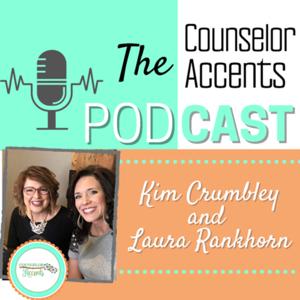


We’ve been doing a LOT of traveling lately, and one of the best parts has been getting to meet school counselors from different states, different districts, and very different school settings.
And while there are definitely some differences across the country, we’ve also noticed something pretty interesting: school counseling has a whole lot in common no matter where you are.
In this episode, we’re sharing 5 (maybe 6!) things we’ve observed through our travels: from differences in 504 caseloads and counselor pay to the increase in student behaviors and the challenges counselors are facing every day.
Some things look very different depending on where you live. Some things are surprisingly similar. And some things have us saying, “Oh, y’all are dealing with that too?!”
But there is one thing that hasn't changed no matter what state we’re in:
We LOVE school counselors.
We love getting to meet counselors who are doing this work in big schools, small schools, rural schools, suburban schools, and everywhere in between. We love hearing what’s working, what’s hard, and what counselors are figuring out as the job continues to change.
So come along with us as we share What We’ve Learned Through Our Travels- the similarities, the differences, the surprises, and a whole lot of love for the counselors doing the work every single day.
In this episode of Everyone Has a Story, we talk with Holly Wilcox about her experience with childhood trauma and the impact those experiences can have long after the moment has passed. Holly shares her story openly and honestly, giving educators an opportunity to think differently about the students sitting in our classrooms and the stories they may be carrying with them.
As school counselors and educators, we know that behavior is often communication, and every student has a story that matters. Holly’s story is a reminder to look beyond what we see on the surface and approach students with compassion, curiosity, and a willingness to listen.
If you’re heading into a new school year, this is a conversation worth revisiting.
Everyone has a story and sometimes we just need someone willing to listen.
It’s one of our favorite episodes to record each year, and we have a feeling it might be one of yours, too!
We’re sharing what we’ve been reading lately, from fiction and historical fiction to nonfiction and everything in between. These aren’t necessarily “school counseling books,” but as school counselors, we can’t help but notice the themes, characters, relationships, struggles, and life lessons woven throughout the stories we read.
So grab your TBR list (and maybe make some room on your bookshelf!) as we talk about the books we’ve loved, the stories that have stuck with us, and the counseling connections we’ve found along the way.
Whether you’re looking for your next great read or just want to hear what two school counselors are talking about when they’re not at school, there’s something here for you!
What happens when we stop looking at challenging behavior as simply a behavior problem and start looking at what’s happening inside the brain?
In this episode, Kim sits down with Anthony “A.B.” Brooks and Joy Winchester for a conversation about the connection between neuroscience, trauma, student behavior, and the way we work with young people.
Anthony is the author of How to Eat an Elephant: Inspiring Youth by Facing the Elephant in the Room, a practical look at building trust, influence, and meaningful relationships with young people. His experience working with and mentoring youth brings an important perspective to the conversation: before we can influence a student, we have to build a relationship with them.
Joy brings her deep knowledge of the brain and trauma-informed practice, helping educators understand what may be happening beneath challenging behavior. She is the author of Hey, You Got a Minute? and When in Doubt, Assume Brain: Stories of Aha Moments from the Front Lines Where the Brain Meets Behavior.
Together, Joy and Anthony explore what happens when we understand the why behind a young person’s behavior—and how that understanding can change the way school counselors and educators respond to students.
If you've heard Joy on Counselor Accents before, you already know she has a way of taking complicated neuroscience and making it make sense in the real world. But this conversation brings something new to the table: what happens when a brain-based perspective meets the practical work of mentoring, building relationships, and connecting with today's youth?
For school counselors, this conversation offers practical insight into student behavior, trauma-informed school counseling, brain-based strategies, and building stronger relationships with students.
Whether you're a school counselor, teacher, administrator, parent, coach, or anyone who works with young people, this is a conversation worth having.
Sometimes the behavior you're seeing isn't the whole story.
Sometimes, you have to understand the brain behind it.
Our first-ever live, completely unedited episode is here! 🎙️ We affectionately call it our "Rawdog" episode because what you hear is exactly what happened- no edits, no second takes, just an honest conversation.
Inspired by the TV show What Would You Do? and John Quiñones' keynote at the ASCA Conference, this isn't a recap of the conference. Instead, it's a conversation about what his message taught us about stepping up when students need someone in their corner.
We explore how the question, "What would you do?" applies to school counseling every day and share some practical ways we're planning to bring those lessons into our counseling programs this school year.
Whether you're a school counselor, educator, or someone who believes one person can make a difference, we hope this episode leaves you asking the same question:
What would you do?
School counselors wear a lot of hats, and we always say one of them is that of an investigator!
In this episode of the Counselor Accents Podcast, we sit down with Barbara Ladd, a school resource specialist whose counseling instincts helped solve a decades-old cold case! As counselors, we're constantly gathering information, noticing patterns, asking thoughtful questions, and building trust. Those same skills proved to be the missing piece in a REAL criminal investigation!
Join us for a fascinating conversation about the power of observation, curiosity, and putting the pieces together. Learn how the skills you use every day can have an impact far beyond the walls of your school.
🎧 Listen wherever you get your podcasts!
Some days as a school counselor, you leave work feeling like you've changed a life. Other days you're wondering if graduate school somehow forgot to mention this part of the job.
In this episode, we're introducing a brand-new segment: Stories from the Trenches. Laugh along with us as we read your submissions, share our own reactions, and invite you to play along with our new "Pick Your Response" moments. Whether you're choosing between staying professional or questioning your life choices, we promise you'll see yourself somewhere in the answers.
So grab your coffee, buckle up for the commute, and remember: you are definitely not the only counselor wondering, "Did that really just happen?"
Have a story from the trenches? We'd love to hear it! Send us your funniest, most unbelievable, "you had to be there" school counseling moments. Your story might just be featured in a future episode (anonymously, of course). Emails us at [email protected]
Talking about suicide can feel overwhelming, but avoiding the conversation isn't the answer.
This week on the Counselor Accents Podcast, we're thrilled to welcome back our longtime friend, Steve Sharp! In fact, Steve officially holds the record for the most appearances on the podcast, and every time he's joins us, we leave challenged, encouraged, and equipped. This time, he's joined by his coauthor, Dr. Perri Rosen, to discuss their book, Lives Worth Living: Applying Zero Suicide as a Prevention Approach for Schools.
Before we jump in, a little behind-the-scenes confession: We recorded this conversation back in November, and during a little summer cleanup of our podcast files, we realized this gem had somehow never made it to you! We couldn't let that happen, because the wisdom in this conversation is just as timely today.
Together, we explore how schools can move beyond simply responding to crises and instead build systems that promote hope, connection, and safety for every student. Steve and Perri share practical strategies for implementing the Zero Suicide framework in schools, discuss the importance of collaboration and early intervention, and offer tangible ways counselors can lead meaningful change on their campuses.
This conversation isn't about fear. It's about hope. It's about creating schools where every student feels seen, supported, and reminded that their life has immeasurable value.
Whether you're a school counselor, administrator, psychologist, or anyone who works with students, you'll walk away with practical ideas, fresh perspective, and renewed confidence to help build a culture of care in your school.
We're so glad we rediscovered this conversation, and we think you'll be glad we did too.
Minute meetings can be one of the most effective tools in school counseling, but only if you understand what actually happens when you try to implement them in a real school setting.
In this episode, we’re sharing the lessons we learned the hard way after rolling out minute meetings with intention, planning, and structure… and still running into challenges we didn’t fully anticipate.
We’ll walk you through the biggest adjustments we had to make, including:
This isn’t about doing it wrong. It’s about refining the process so it actually works in a busy, unpredictable school environment.
If you’re using minute meetings, or thinking about starting, this episode will help you plan smarter, adjust faster, and avoid some of the things we didn’t see coming.
minute meetings school counselingschool counseling strategiesstudent check in systemstier 2 interventions school counselingdata collection school counselingcounseling organization systemsproactive school counseling
Ever had a student completely shut down and refuse to do any work? You’re not alone! And it’s not just about motivation.
In this episode, we’re breaking down student refusal behavior strategies that actually work in real school settings. Whether you’re a school counselor, teacher, or administrator, you’ll walk away with practical tools you can use immediately.
We’ll talk about what’s really behind student refusal behavior, because it’s rarely just “laziness," and how to respond in the moment without escalating the situation.
You’ll hear:
We’ll also share honest insight into what progress actually looks like. Because sometimes success isn’t full engagement right away… it’s just less resistance.
If you’ve ever thought, “I don’t know what else to try,” this episode is for you.
Virginia Small Group Conference
student refusal behavior strategiesstudent refuses to workunmotivated studentsstudent disengagementschool counseling strategiesclassroom behavior managementstudent avoidance behavior
counseling interventions
From the publisher's feed

6,450 Listeners

369,388 Listeners
1,915 Listeners

13,230 Listeners

46,868 Listeners
471 Listeners

3,334 Listeners

101 Listeners

15,409 Listeners

223 Listeners

18,916 Listeners

3,900 Listeners

357 Listeners
65 Listeners

3,171 Listeners