
Sign up to save your podcasts
Or

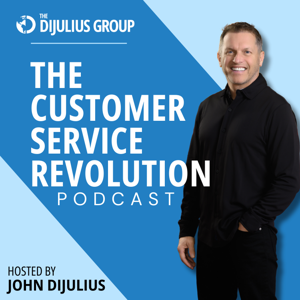


Before dismissing an employee's request, experience the obstacles they face serving your customers.
An employee asks for a new computer. You see an expense. They see another day of apologizing to customers for a system that keeps failing.
In this excerpt from Episode 278 of The Customer Service Revolution Podcast, John DiJulius challenges leaders to experience the work before judging the request.
When employees repeatedly face frustrated customers without the tools to help them, the problem reaches beyond technology. It affects their ability to deliver the experience you expect—and their willingness to keep doing the job.
John's advice: sit beside them. Better yet, do the job yourself.
Key takeaways:
An employee's request may reveal a service obstacle leaders haven't experienced.
Recurring technology problems create frustration for employees and customers.
Understanding frontline work helps leaders evaluate what employees need to succeed.
Empathy becomes actionable when leaders experience the work firsthand.
Show notes and resources:
The DiJulius Group: https://thedijuliusgroup.com/
Explore The Customer Service Revolution Podcast: https://thedijuliusgroup.com/the-customer-service-revolution-podcast/
Can someone feel heard even when the answer is no?
In Episode 277 of the Customer Service Revolution Podcast, John R. DiJulius III welcomes Lisa Duran, author of Strong Enough to Listen: Bridging the Communication Gap Between Our Choices and Our Responses.
They explore how listening skills for leaders shape employee and customer experience, why choosing person over problem builds connection, and how Lisa's CLR model helps leaders respond with care.
Learn what "yes, and" means when you disagree, why John keeps a WAIT reminder on his screen, and how writing down your thoughts can help you interrupt less. The conversation also covers curiosity, customer feedback, AI, and the listening habits that carry from work into home life.
Discover practical ways to help people feel heard while maintaining clear boundaries.
Show-Notes Links
Your board asks, "What's the return on customer experience?"
Do you have an answer beyond happier customers?
In Episode 276, Denise Thompson puts John DiJulius in the boardroom to explain how leaders can defend customer experience investment with a stronger financial case.
They discuss earned sales growth, customer retention, referrals, service recovery costs, and the difference between measuring customer sentiment and customer behavior.
John also explains how a Return on eXperience—or ROX—dashboard helps leaders identify the metrics that matter for their business.
In this episode:
• Connect customer experience improvements to potential revenue. • Understand earned sales growth from repeat business and referrals. • Examine the hidden costs of poor service. • Evaluate automation beyond immediate cost savings. • Identify when a CX investment does not deserve approval. • Prepare a stronger case for your next budget meeting.
Download the ROX Dashboard Template: https://thedijuliusgroup.com/rox-dashboard/
Schedule a conversation with The DiJulius Group: https://tdg.click/call
Find The Customer Service Revolution Podcast wherever you listen: https://thedijuliusgroup.com/the-customer-service-revolution-podcast/
What gives a customer a reason to return—and bring someone else with them?
John DiJulius welcomes Tai Anderson, a founding member of Grammy-winning band Third Day and author of Market Like a Rockstar, for a conversation about customer loyalty, brand trust, and earning referrals.
Tai shares his ROCKSTAR framework and explains why the experience after the sale deserves as much attention as the effort to win a new customer. Together, they explore how to ask for referrals at the right time, stay connected with existing customers, and make appreciation personal for customers and employees.
In this episode:
Connect with Tai: https://taianderson.live/
Explore the book: https://taianderson.live/book
Find The Customer Service Revolution Podcast wherever you listen.
https://thedijuliusgroup.com/the-customer-service-revolution-podcast/
AI can help your team clear the busywork. Which customer moments still need a human?
John DiJulius welcomes Jess Pischel, founder of Human First AI Consulting and former senior customer experience consultant and Customer Experience Executive Academy dean at The DiJulius Group.
Together, they explore AI and customer experience through practical examples: turning workshop notes into usable information, challenging an employee onboarding process, and improving handoffs between chatbots and employees.
Jess shares three questions leaders can ask before exploring an AI use case and explains why employee involvement matters. John and Jess also discuss the conversations that should retain human empathy, accountability, and judgment—from service recovery to employee recognition.
In this episode, you'll learn:
Connect with Jess and explore the resources discussed:
Human First AI Consulting: https://www.humanfirstaiconsulting.com/
AI Readiness Assessment: https://www.humanfirstaiconsulting.com/ai-readiness/
Human First AI Collective: https://hfaicollective.com/
AI training and TechCred information: https://www.humanfirstaiconsulting.com/techcred-reimbursement/
Listen and explore more episodes:
Find the Customer Service Revolution podcast wherever you listen.
https://thedijuliusgroup.com/the-customer-service-revolution-podcast/
Know a leader deciding where AI belongs in the customer experience? Share this episode with them.
What happens to your customer experience when your best employee calls off? In Episode 273 of the Customer Service Revolution Podcast, Denise Thompson and John DiJulius explore how to eliminate employee roulette and create a consistent customer experience across people, locations, and channels. John breaks down the Customer Experience Cycle: service defects to avoid, nonnegotiable standards to deliver, and opportunities to go above and beyond. Learn why being brilliant at the basics builds trust, how to turn your best employees' habits into teachable standards, and why everboarding and leadership accountability keep training alive. The conversation also explores service aptitude, the risks of rapid growth, and the Zero Risk approach to preparing for predictable problems. Discover how to make your brand promise repeatable while preserving the personal connection customers value.
Explore customer experience consulting and the Customer Experience Executive Academy: https://thedijuliusgroup.com/
Schedule a conversation: https://tdg.click/call
As mentioned in the episode: Cal DiJulius's wedding tuxedo story in Vogue
Your employees don't experience your organization through its mission statement. They experience it through their leaders.
In Episode 272 of the Customer Service Revolution, Denise Thompson talks with Dave Murray, Vice President of Consulting at The DiJulius Group, about the connection between employee experience, leadership and customer experience.
Dave shares lessons from his work with PSECU, including why managers must reinforce CX standards after training, how better one-on-ones can change employee relationships, why organizations should examine turnover by department and how recognition from frontline leaders influences engagement.
The bigger message: customer experience and employee experience cannot operate independently. The employee experience your company creates eventually becomes the customer experience your customers receive.
When does innovation stop being customer-centric and start becoming corporate strategy for strategy's sake? In Episode 271 of the Customer Service Revolution, Denise Thompson and John DiJulius examine Nike, Apple, Starbucks, Gap, Peloton and other major brands to explore what happens when companies chase new channels, customers and efficiencies while losing sight of the people who made them successful. They discuss why removing friction isn't always the same as improving customer experience, how Apple creates extraordinary ecosystem loyalty, why Starbucks is returning to its roots, and the question every leadership team should ask before approving its next major innovation.
EY is investing $100 million in employee rewards for future-focused skills such as judgment, adaptability, collaboration, leadership, innovation, and exceptional client service. What does that reveal about the future of work?
Denise Thompson and John DiJulius discuss why human skills become more valuable—not less—as AI takes over routine tasks. Technology can increase speed and efficiency, but customer loyalty is still built through empathy, trust, judgment, curiosity, listening, and service recovery. John explains why organizations should stop treating these capabilities as "soft skills," how misaligned incentives undermine company values, and how leaders can make service aptitude observable, teachable, measurable, and rewardable.
You'll also hear the ten service aptitude skills, how a Day in the Life exercise builds customer empathy, and a practical 30-day plan to audit what your company hires for, trains, measures, and rewards.
Resources MentionedEY's announcement about its $100 million employee rewards investment
Interview Questions Designed to Gauge Service Aptitude Potential
Customer Experience Executive Academy
Experience Revolution Membership and workshop library
The Employee Experience Revolution
Experience Revolution Membership: https://thedijuliusgroup.com/membership/
The DiJulius Group Methdology: https://thedijuliusgroup.com/x-commandment-methodology/
Company Service Aptitude Test: https://thedijuliusgroup.com/c-sat-forms/individual-c-sat/
Schedule a Complimentary Call with one of our advisors: tdg.click/claudia
Ask John! Submit your questions for John, to be aired on future episode: tdg.click/ask
Customer Experience Executive Academy: https://thedijuliusgroup.com/project/cx-executive-academy/
Books: https://thedijuliusgroup.com/shop/
Contacts: [email protected] , [email protected]
If you want to learn how world-class organizations build cultures customers cannot live without, explore The Experience Revolution Membership.
Inside the membership you'll gain access to livestream workshops, practical frameworks, and proven strategies used by organizations around the world.
Learn more at https://thedijuliusgroup.com/membership/
Learn MoreIf your organization is working to improve customer experience but struggling to connect it to measurable business outcomes, The DiJulius Group can help.
Visit: https://thedijuliusgroup.com
Listen to more episodes: https://thedijuliusgroup.com/the-customer-service-revolution-podcast/
SubscribeWe talk about topics like this each week; be sure to subscribe wherever you listen to podcasts so you don't miss an episode.
Companies are moving quickly to implement artificial intelligence, automation and new digital tools. But speed without alignment can create a more efficient version of the wrong customer experience.
Before an organization decides what AI should do, its leaders and employees must agree on the experience they are trying to create. A Customer Experience Action Statement, or CXAS, provides that direction. It translates an organization's broad mission, purpose and values into a clear standard employees can intentionally deliver during every customer interaction.
In a newly recorded opening to this encore episode, Denise Thompson explains why the topic is especially important now: Before companies implement AI, their employees, departments and leaders must be aligned around the experience the technology is supposed to help deliver.
Then, in the original conversation, Denise and customer service authority John DiJulius explain how to create a Customer Experience Action Statement, the three pillars that support it and the systems required to keep it alive long after the launch.
What Is a Customer Experience Action Statement?A Customer Experience Action Statement defines what every employee should intentionally achieve whenever they interact with a customer, client, patient, guest or colleague. Unlike a mission statement, it must be actionable, observable and relevant during even the smallest interaction.
John explains why a CXAS is not another slogan for the breakroom wall. It is the behavioral North Star that helps employees make consistent decisions, creates organizational alignment and turns a desired customer experience into something leaders can teach, coach and reinforce.
The Three Pillars of a Strong CXASEvery effective Customer Experience Action Statement is supported by three memorable pillars:
1. ExpertiseEmployees must be brilliant at the basics. They should have the knowledge, consistency and operational excellence required to help the customer confidently.
2. Human InteractionCustomers want to feel seen, heard and cared about—not processed as the next transaction. This pillar defines how employees should intentionally make people feel.
3. Above and BeyondWhen an opportunity presents itself, employees should be empowered to own the experience, solve a problem or create a memorable moment.
John shares examples from The DiJulius Group, KeyBank, Starbucks, Superior Glove, Domino's and John Roberts Spa to demonstrate how organizations turn these pillars into clear, repeatable behaviors.
Why a CXAS Must Come Before AIAI can accelerate decisions, communications and service delivery, but it cannot decide what your brand should stand for. Without a shared Customer Experience Action Statement, departments may automate different priorities and customers may receive a faster—but increasingly inconsistent—experience.
A CXAS gives leaders a standard against which every AI use case can be evaluated: Does this technology help us deliver the experience we have promised, or does it merely make an internal process more efficient?
Creating a Statement Is Only the BeginningThe episode also explores why successful customer experience strategies require more than a launch. Organizations must certify employees, measure execution, recognize examples, refresh the language through microlearning and keep the CXAS visible long after the initial excitement disappears.
As John explains, world-class customer experience is not a ribbon-cutting ceremony. The statement becomes transformational only when it remains top of mind and influences daily behavior.
Work Directly With John DiJulius and Dave Murray on September 14On September 14 from noon to 2:00 p.m. Eastern, John DiJulius and Dave Murray will lead a live, interactive Experience Revolution Membership session focused on creating and implementing a Customer Experience Action Statement that is actionable, observable and capable of driving consistent results.
Participants will have the opportunity to work directly with John and Dave to develop or strengthen their organization's CXAS.
Register or join the Experience Revolution Membership: https://thedijuliusgroup.com/membership/
Key TakeawaysAI will accelerate whatever direction an organization is already heading, including the wrong one.
A Customer Experience Action Statement should guide how every employee approaches every interaction.
A CXAS must be actionable, observable, memorable and relevant to daily work.
Mission statements and purpose statements are important, but they do not tell frontline employees exactly how to behave.
A strong CXAS is supported by three pillars: expertise, human interaction and above-and-beyond service.
Operational excellence and human connection must happen consistently; above-and-beyond moments happen when the opportunity presents itself.
Three pillars are easier for employees to remember, apply and reinforce.
A CXAS should guide employees internally rather than operate as an external advertising slogan.
Launching the CXAS is the easy part; certification, accountability, measurement and reinforcement make it sustainable.
Every proposed AI application should be evaluated against the experience the organization has committed to delivering.
"The Customer Experience Action Statement is what each and every employee should intentionally be doing every time they interact with someone else." —John DiJulius
"This changes the culture. This is transformational." —John DiJulius
"The only thing my employees better know verbatim is the Customer Experience Action Statement." —John DiJulius
"I want someone that makes me feel like a human being—not next, not a transaction. I feel seen and heard." —John DiJulius
"The first two have to happen every time: Be brilliant at the basics, and make me feel like a human being." —John DiJulius
"There's magic in three." —John DiJulius
"Achieving world-class status is not a ribbon-cutting ceremony." —John DiJulius
"The Customer Experience Action Statement and pillars are a game changer. They ignite your revolution." —John DiJulius
00:00 Introduction to The Customer Service Revolution
03:30 Denise and John Reconnect
03:58 Creating Sandals' Customer Experience Action Statement
04:16 What Is a Customer Experience Action Statement?
05:51 Why Mission Statements and Core Values Are Not Enough
09:05 The Structure of a CXAS
12:28 Why Every CXAS Needs Three Pillars
13:15 Examples From TDG, Superior Glove and KeyBank
18:18 How to Start Creating Your CXAS
20:40 The Six Steps Required to Sustain It
22:45 Keeping the CXAS Visible and Top of Mind
26:07 Drawing a Line in the Sand for Customer Experience
26:31 Kindness, Human Connection and Final Thoughts
Links:
Experience Revolution Membership: https://thedijuliusgroup.com/membership/
The DiJulius Group Methdology: https://thedijuliusgroup.com/x-commandment-methodology/
Company Service Aptitude Test: https://thedijuliusgroup.com/c-sat-forms/individual-c-sat/
Schedule a Complimentary Call with one of our advisors: tdg.click/claudia
Ask John! Submit your questions for John, to be aired on future episode: tdg.click/ask
Customer Experience Executive Academy: https://thedijuliusgroup.com/project/cx-executive-academy/
Books: https://thedijuliusgroup.com/shop/
Contacts: [email protected] , [email protected]
If you want to learn how world-class organizations build cultures customers cannot live without, explore The Experience Revolution Membership.
Inside the membership you'll gain access to livestream workshops, practical frameworks, and proven strategies used by organizations around the world.
Learn more at https://thedijuliusgroup.com/membership/
Learn MoreIf your organization is working to improve customer experience but struggling to connect it to measurable business outcomes, The DiJulius Group can help.
Visit: https://thedijuliusgroup.com
Listen to more episodes: https://thedijuliusgroup.com/the-customer-service-revolution-podcast/
SubscribeWe talk about topics like this each week; be sure to subscribe wherever you listen to podcasts so you don't miss an episode.
From the publisher's feed
2,259 Listeners

4,375 Listeners

4,713 Listeners
91 Listeners

2,116 Listeners
2,425 Listeners

734 Listeners
2,187 Listeners
57,735 Listeners

28,971 Listeners

556 Listeners

714 Listeners