
Sign up to save your podcasts
Or

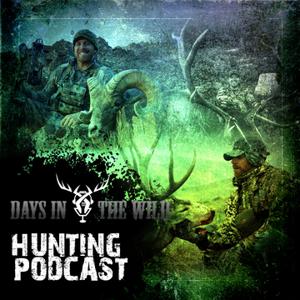


We sit down with Robert Cowan and Michael Cardinal
John sits down with Michael Cardinal to unpack the hunt behind his latest bull—how he scouted, read sign, and made decisions when the plan fell apart.
“Missing in the High Country: An Elk Hunter’s Story in Colorado”
Guest Dac Collins
In this episode, John unpacks the developing story of an elk hunter who went missing in Colorado—what’s known so far, how search-and-rescue operations unfold in the Rockies, and the practical steps backcountry hunters can take to reduce risk and help responders if something goes wrong. The conversation balances empathy for the family with actionable fieldcraft and preparedness.
Note: Facts are evolving. We stick to verified information and avoid speculation.
Timeline & terrain: What’s known about the incident and the landscape factors at play (elevation, weather, access).
SAR reality check: How mountain Search and Rescue is mobilized, what slows missions, and what information helps the most.
Preparation that matters: Comms plans, weather/nowcasting, navigation backups, and “don’t split the party” rules.
If you get turned around: Immediate steps that improve survival and make you easier to find.
For hunting partners at home: How to structure check-in windows, map shares, and who to call if a teammate is overdue.
Respect & responsibility: Keeping the focus on the missing hunter and supporting family and responders.
Tell two people your plan (route, camp, bail-out options, check-in times).
Carry redundant comms: phone + battery, offline maps, PLB or satellite messenger (preset check-ins & SOS).
Weather drives risk—nowcast every 30–60 minutes in the mountains.
If lost: STOP (Stop, Think, Observe, Plan), make yourself findable (bright panel, whistle, signal mirror), and stay put when it’s safer than wandering.
Trip plan shared (route, alt routes, check-in times, who to call)
Phone with offline maps + spare battery
PLB or sat messenger with preset messages to a contact
Paper map + compass (know a bearing to camp/trailhead)
Weather layers (puffy, rain shell, hat/gloves) + headlamp
Signal gear: whistle, bright panel, small mirror
Fire kit, basic med kit, calories & water treatment
“Solo vs. Social: The Psychology of the Hunt with Beau Martonik”
In this compelling episode of Days in the Wild, I sit down with hunter, writer, and East Meets West podcast host Beau Martonik to dig into the mental side of hunting—specifically the contrast between solo and social hunting experiences. Beau opens up about how hunting alone in remote terrain builds resilience, sharpens instincts, and forces you to confront your inner world. We also explore the camaraderie of camp, the challenges of balancing solo ambition with shared experiences, and how both play a vital role in shaping today’s hunter.
If you've ever questioned whether you're more effective—or more fulfilled—hunting alone or with others, this episode will speak directly to you.
The mindset differences between solo and group hunts
Why solo hunting builds personal growth and mental toughness
How social hunting cultivates community and tradition
Making space for solitude while still honoring shared camp culture
Gear choices that support both independence and team hunting
Learning to embrace discomfort and silence in the backcountry
Lessons Beau’s learned through years of chasing whitetails and mountain bucks
“Solo hunts strip away the noise and reveal what kind of hunter—and person—you really are.”
“There’s power in both solitude and community; the key is knowing what you need in each season.”
Solo hunting demands higher levels of self-reliance, decision-making, and mental stamina
Group hunting offers emotional support, shared knowledge, and deeper traditions
The choice between the two is often less about success and more about personal evolution
Understanding your psychological needs in the field can elevate your overall hunting experience
🎧 Listen to his podcast: East Meets West
Enjoyed the episode? Make sure to subscribe, rate the show, and share with fellow hunters—whether they ride solo or run with a crew. Stay tuned for more deep dives into hunting, mindset, and the wild places we chase.
n this episode of Days in the Wild, I sit down with backcountry hunter and elite outdoor photographer Steven Drake to unpack his approach to gear, preparation, and the mental edge needed to thrive deep in the wilderness. We dive into his minimalist yet functional backcountry pack system, how he balances photography and hunting in extreme terrain, and the hard-earned lessons that shape his mountain mindset.
Whether you’re dialing in your gear list or just looking for inspiration from someone who truly lives the wild, this episode is loaded with insight, authenticity, and practical takeaways.
Steven’s exact backcountry gear loadout—what makes the cut and why
The philosophy behind “gear with purpose”
How to prioritize weight vs. comfort for extended hunts
Balancing camera gear with hunting efficiency
Mindset shifts that separate successful backcountry hunters
Why Steven believes in failing forward as a way to grow
Lessons learned from grueling hunts in Alaska, the Rockies, and beyond
“If everything in your pack doesn’t serve a purpose, it doesn’t belong there.”
“The most valuable skill in the backcountry isn’t shooting—it’s adapting.”
Intentional gear selection makes you more efficient, not just lighter.
Simplicity in systems leads to mental clarity in high-stress situations.
Physical preparation is essential, but mental resilience is the real game-changer.
Photography and hunting don’t have to compete—they can fuel each other.
📸 Instagram: @stevendrakephoto
Enjoyed this episode? Be sure to subscribe, leave a review, and share with your hunting crew. And don’t forget to check out previous episodes of Days in the Wild for more insight from the field.
I'm proud of Braxton he has been carrying the torch for public lands and has helped it to enter in to the mainstream conversation. I heard him recently on Tucker Carlson Made me think back to our podcast back in 2018
In this powerful and deeply personal episode of Days in the Wild, John Stallone sits down with combat veteran, author, and elk hunting guide Braxton McCoy. Braxton shares the harrowing story of surviving a suicide bombing in Iraq, enduring dozens of surgeries, and ultimately forging a new path in the wilderness as a guide and advocate for healing through the outdoors.
From the battlefield to the backcountry, Braxton opens up about trauma, resilience, and the role hunting played in reclaiming his identity. This episode is a must-listen for anyone who believes in the restorative power of nature and the strength of the human spirit.
Braxton’s story of survival and recovery after his near-fatal injury in Iraq
The physical and emotional toll of trauma—and how the outdoors became his refuge
Why elk hunting helped him reconnect with his purpose and identity
The value of mentorship, grit, and persistence in both life and the hunt
His philosophy on what it means to truly live a wild and meaningful life
“I wasn’t looking for healing when I started hunting again—I was looking for purpose. The healing came anyway.”
“The backcountry doesn’t care about your excuses. It’s honest—and that’s why it saves people.”
📘 Author of The Glass Factory
Throwback
Title: Mule Deer Hunting on the Wasatch Front with Kip Fowler
Show Notes:
A Southern Utah native, Kip now lives and hunts in Northern Utah, along the Wasatch Front. Backpacking bow hunting in the high country is one of his specialties, and he shares some of his advice for how to improve your hunting game.
Kip was always worried about becoming too reliant on technology, but there came a point when he realized that it was actually holding him back and it cost him a prize deer. That’s when he started to look for tools that would make the hunt easier, and he shares some of his adaptations.
It’s so easy in bowhunting to get discouraged, especially when you have moments where you get so close, but then something goes wrong. “Really successful bowhunters are constantly trying to eliminate the things that could go wrong”, says Kip. And they stick with it.
A lot of bowhunters will spend tons of time practicing their shot, testing their equipment, and planning their hunt. But they’ll forget to try out the food they’re going to eat ahead of time, and that can lead to some seriously unpleasant surprises out in the backcountry. Don’t forget to test your food, and your body’s reaction, before you head out.
Pictures can help you remember a hunt, but they don’t tell everything. Kip and I both have journaled some about our hunts, and the details we recorded are so much different and more helpful than just looking at pictures.
If you loved this podcast, don’t keep us a secret. Like us, share us, and leave us a review so that we can keep bringing you hunting stories from some of the greatest experts in the backcountry.
What’s Inside:
Mentioned in this Episode:
Days in the Wild on itunes
Days in the Wild on Podbean
Phoenix Shooting Bags
Short Description:
As a lifelong bowhunter, Kip Fowler has some tips to take your bowhunting to the next level. In addition to telling some great hunting stories, Kip focuses on some of the smaller details today that can add up and make your bowhunting experience more successful and enjoyable.
Tags:
Utah hunting, mule deer hunting, hunting on the Wasatch Front, improve your bowhunting, bowhunting technology, bowhunting tips and tricks, bowhunting hacks
Description:
In This Episode:
Key Quotes:
“Every day you show up, you’re building a version of yourself you’ll meet down the road—make sure it’s someone you’re proud of.” – Eric McCormick
About Eric McCormick:
Resources & Links:
Listen & Subscribe:
From the publisher's feed
2,789 Listeners
1,145 Listeners
2,921 Listeners

1,493 Listeners

574 Listeners

657 Listeners
642 Listeners
1,653 Listeners
255 Listeners
1,885 Listeners
449 Listeners
121 Listeners
217 Listeners
97 Listeners
128 Listeners