
Sign up to save your podcasts
Or

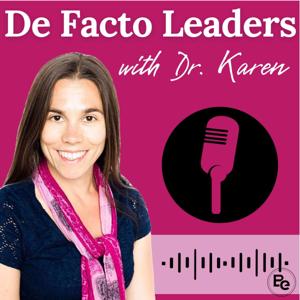


High-impact tutoring has a wide body of evidence to support its efficacy, but how do you know what is and isn’t “high-impact”?
Is it better to brand yourself as an academic coach or an executive functioning coach?
Should “executive functioning” be a class in school, or should it be embedded into all the classes?
I invited my colleague David Schipper to episode 191 of De Facto Leaders to ponder some of these questions.
David Schipper is the director of Strategic Learning Clinic, a position he has held since 2013. David obtained a B.A. in English Literature from Concordia University in 1998 as well as a B.Ed. in Secondary Education (English and History) from McGill University in 2002. After some work as a local teacher in Montreal, David founded 2Torial Educational Centre in 2007. Aside from his ability to put both parents and students at ease, David uses his clinic's fairly unique approach to help get to the root of students' learning challenges and propose the most suitable remediation to resolve these weaknesses. As a father of two children, David knows how to relate to the concerns of parents and as an experienced educator, thoroughly understands the struggles of students. His passion and dedication to teaching and learning is second to none.
In this conversation, we discuss:
✅The features of high-impact tutoring vs. traditional tutoring.
✅How are “COVID high schoolers” doing now that they’re in college?
✅Strategies are important, but can you use a strategy without content knowledge?
✅Executive functioning in the schools: How should it look across Tiers 1, 2, and 3?
You can connect with David on LinkedIn here: https://www.linkedin.com/in/david-schipper-1537972a/
You can learn more about Strategic Learning Clinic on their website here: https://strategiclearning.ca/
on their Facebook page here: https://www.facebook.com/SLCStrategicLearningClinic
or on Instagram @strategiclearningclinic (https://www.instagram.com/strategiclearningclinic/)
You can find the National Education Association article on High-Impact Tutoring here: https://www.nea.org/nea-today/all-news-articles/high-impact-tutoring, and can find additional research on the impact of High-Impact Tutoring and COVID learning loss here: https://educationlab.uchicago.edu/2024/03/national-study-finds-in-school-tutoring-programs-are-successfully-accelerating-student-learning-reversing-pandemic-era-learning-loss/
We also mentioned Natalie Wexler’s work in this episode. You can learn more about her work on her website here: https://nataliewexler.com/
Listen to David’s previous interview on De Facto Leaders here: https://drkarendudekbrannan.com/ep-162-the-summer-slide-real-phenomenon-or-invented-by-tutoring-companies-with-david-schipper/
In this episode, I mention the School of Clinical Leadership, my program that helps related service providers develop a strategic plan for putting executive functioning support in place in collaboration with their school teams. You can learn more about that program here: https://drkarendudekbrannan.com/clinicalleadership
Learn more about today's sponsors, Playworks and IXL:
We’re proud to be sponsored by Playworks, a 501(c)3 nonprofit organization with evidence-based practices that help schools improve the health and well-being of children by increasing opportunities for physical activity and safe, meaningful play.
If you’re a school or district leader struggling with the challenge of chronic absenteeism, as so many are across the U.S., you may not realize that structured recess is a research-backed approach to keep kids in school. In fact, a UC Berkeley study of Title I schools found that those partnering with Playworks had significantly lower chronic absenteeism rates. Further, Mathematica research demonstrated that Playworks schools spent 27% less time transitioning from recess back to learning, saving teachers valuable instructional time.
These results are possible for your students, too. Learn how Playworks can help you improve student-educator relationships, belonging, and attendance by signing up for a quick no-obligation conversation.
We’re also thrilled to be sponsored by IXL.
IXL’s comprehensive teaching and learning platform for math, language arts, science, and social studies is accelerating achievement in 95 of the top 100 U.S. school districts. Loved by teachers and backed by independent research from Johns Hopkins University, IXL can help you do the following and more:
🚀 Ready to see why leading districts trust IXL for their educational needs? Visit IXL.com/BE today to learn more about how IXL can elevate your school or district.
Many of my colleagues working in the public sector are skeptical of companies selling products to school districts.
I’ve felt some of this skepticism myself as I’ve seen certain approaches gain traction because they’re well-marketed (yet not evidence-based).
So it’s understandable to me that people would question the motives of companies selling products; especially in the for-profit space.
The elephant in the room, of course, is that Dr. Karen, LLC is a for-profit EdTech company.
I’ve also spent a fair amount of time interacting with people who either work for larger EdTech or curriculum companies, or who have started one themselves.
Most of them are therapists, administrators, or teachers who felt inspired to create something who are trying to make a living doing something that matters.
This would describe many of the hosts on the Be Podcast Network, which is why I wanted to invite one of the network co-founders, Ross Romano, to De Facto Leaders to talk about his experiences coaching EdTech and education-related start-up founders.
Ross Romano has worked with over 100 companies and nonprofit organizations in the education space and collaborated with countless schools, districts, and educators. Ross is founder and CEO of September Strategies, an award-winning consulting firm helping leaders and organizations connect vision to decision through coaching, strategic advisement, and marketing consulting. Ross is also co-founder of the BE Podcast Network, a media company producing 40+ series reaching more than 50,000 educators and parents every month. He is also Strategic Advisor for the American Consortium for Equity in Education and the Founding Program Chair of the Consortium’s Excellence in Equity Awards.
Prior to starting September Strategies, Ross was Managing Director of MindRocket Media Group, a K-12 marketing firm. Previously, he was head of communications for ASCD, working closely with the organization’s authors, product developers, administrator members, constituent leaders, and advocacy teams on a diverse array of initiatives. Ross has created and/or hosted dozens of podcast series, written a number of white papers and ebooks, is a contributing editor to Educate AI Magazine, and has been a contributor to Entrepreneur, The Learning Counsel, edCircuit, Access & Equity PreK-12, and more.
Ross serves on the advisory boards for Shenandoah University’s Transformative Leadership program and Morning Brew Learning. In 2023, he was listed as a Top 10 leadership coach of the year and was profiled by CIO Views as one of the visionary leaders transforming education.
In this conversation, we discuss:
✅Business advice that creates ethical dilemmas for companies selling products to school districts.
✅Can companies stand for equity without sacrificing product quality and customer service?
✅Who is the true end-user when products are sold to schools?
✅When a product isn’t resulting in increased student outcomes, is it really just about the quality of the product?
✅Who is making purchasing decisions for schools, and what matters to them?
Learn more about the BE Podcast Network here: https://bepodcast.network/
Listen to Ross on The Sideline Sessions Podcast here: https://ss.bepodcast.network/people/ross-romano
Listen to Ross on The Authority Podcast here: https://authoritypodcast.net/
Learn more about Ross’s coaching and media services for education-related companies here: https://www.septemberstrat.com/
In this episode, I mention the School of Clinical Leadership, my program that helps related service providers develop a strategic plan for putting executive functioning support in place in collaboration with their school teams. You can learn more about that program here: https://drkarendudekbrannan.com/clinicalleadership
Learn more about today's sponsors, Playworks and IXL:
We’re proud to be sponsored by Playworks, a 501(c)3 nonprofit organization with evidence-based practices that help schools improve the health and well-being of children by increasing opportunities for physical activity and safe, meaningful play.
If you’re a school or district leader struggling with the challenge of chronic absenteeism, as so many are across the U.S., you may not realize that structured recess is a research-backed approach to keep kids in school. In fact, a UC Berkeley study of Title I schools found that those partnering with Playworks had significantly lower chronic absenteeism rates. Further, Mathematica research demonstrated that Playworks schools spent 27% less time transitioning from recess back to learning, saving teachers valuable instructional time.
These results are possible for your students, too. Learn how Playworks can help you improve student-educator relationships, belonging, and attendance by signing up for a quick no-obligation conversation.
We’re also thrilled to be sponsored by IXL.
IXL’s comprehensive teaching and learning platform for math, language arts, science, and social studies is accelerating achievement in 95 of the top 100 U.S. school districts. Loved by teachers and backed by independent research from Johns Hopkins University, IXL can help you do the following and more:
🚀 Ready to see why leading districts trust IXL for their educational needs? Visit IXL.com/BE today to learn more about how IXL can elevate your school or district.
Many people treat social skills groups as if they’re the complete package, when in fact they’re just one part of a bigger service plan.
When we “lesson plan” we can’t think of our intervention as something that starts and ends with a 20-minute therapy session. Instead, we should think of it as a “planning” or a “priming” session.
That’s why one of the very first things I teach clinicians in the School of Clinical Leadership is how to utilize multiple service delivery models when supporting executive functioning because social skills should fall under this umbrella.
In this episode, I wanted to share two sneak peaks from the program. I’ll share the audio from two video clips from the School of Clinical Leadership that will set the stage for effective social skills intervention.
You’ll learn:
✅How to use social skill-building sessions in a way that builds resilience, situational awareness, and considers a student’s neurodevelopmental differences.
✅Why many premade social narratives don’t result in good generalization, and how to be a good consumer of commercially available products.
✅The three components of effective social skills intervention and where the “social skills group” fits.
✅The components of good social narratives, and how to create them “on the fly”.
*In the video modeling tutorial, I mention that a lot of people write goals for eye contact-and I wanted to clarify that I do not recommend writing eye contact goals. Instead, I recommend focusing on helping kids with the underlying communicative function, such as showing others you're paying attention or gaining attention of others, which can be achieved through other ways besides eye contact.
In this episode, I mention the School of Clinical Leadership, my program that helps related service providers develop a strategic plan for putting executive functioning support in place in collaboration with their school teams. You can learn more about that program here: https://drkarendudekbrannan.com/clinicalleadership
If you’re already a member of either program and you refer a friend, tell them to email me at [email protected] if they join and let me know you referred them and I’ll send you a $100 referral bonus.
Learn more about today's sponsors, Playworks and IXL:
We’re proud to be sponsored by Playworks, a 501(c)3 nonprofit organization with evidence-based practices that help schools improve the health and well-being of children by increasing opportunities for physical activity and safe, meaningful play.
If you’re a school or district leader struggling with the challenge of chronic absenteeism, as so many are across the U.S., you may not realize that structured recess is a research-backed approach to keep kids in school. In fact, a UC Berkeley study of Title I schools found that those partnering with Playworks had significantly lower chronic absenteeism rates. Further, Mathematica research demonstrated that Playworks schools spent 27% less time transitioning from recess back to learning, saving teachers valuable instructional time.
These results are possible for your students, too. Learn how Playworks can help you improve student-educator relationships, belonging, and attendance by signing up for a quick no-obligation conversation.
We’re also thrilled to be sponsored by IXL.
IXL’s comprehensive teaching and learning platform for math, language arts, science, and social studies is accelerating achievement in 95 of the top 100 U.S. school districts. Loved by teachers and backed by independent research from Johns Hopkins University, IXL can help you do the following and more:
🚀 Ready to see why leading districts trust IXL for their educational needs? Visit IXL.com/BE today to learn more about how IXL can elevate your school or district.
Syntactic use is considered an “academic” skill that’s useful for reading comprehension and writing, but the impact of sentence comprehension goes way beyond school.
Our ability to comprehend messages at the word and sentence level in oral and written language has a huge impact on our ability to function.
So when clinicians ask me, “Should I focus on syntax, or should I focus on life skills?”, my response is that syntax IS a life skill.
The same is true about semantic knowledge because of the significant impact background knowledge has in our ability to navigate in functional situations.
Yet scaffolding for students who are not yet able to read and write can be challenging; which is why I wanted to share two questions on this topic from a session done with my Language Therapy Advance Foundation’s members’ group.
In this session, I share:
✅Examples of complex syntax that may occur during functional tasks, like signing up for medical appointments, applying for a job, or grocery shopping.
✅Why effective vocabulary instruction in content areas, such as science and social studies, is essential for positive life outcomes.
✅Scaffolding syntactic study for nonreaders or emergent readers.
✅Does it make sense to do semantic feature analysis with a student who has an intellectual disability?
✅Following directions, topic maintenance, and self-advocacy: What language skills do we need to meet these type of goals, and should even we be writing IEP goals for these skills?
In this episode, I mentioned the following episodes of De Facto Leaders:
EP 102: The science of reading: A team approach (with Brett Stevens) Link here: https://drkarendudekbrannan.com/ep-102-the-science-of-reading-a-team-approach-with-brett-stevens/
EP 180: The relationship of language and literacy and involvement with the justice system (with Dr. Shameka Stewart) Link here: https://drkarendudekbrannan.com/ep-180-the-relationship-of-literacy-and-language-skills-and-involvement-with-the-justice-system-with-dr-shameka-stewart/
EP 181: Developmental language disorder: Impacts on literacy and life outcomes beyond school (with Dr. Karla McGregor) Link here: https://drkarendudekbrannan.com/ep-181-developmental-language-disorder-impacts-on-literacy-and-life-beyond-school-with-dr-karla-mcgregor/
In this episode I mention Language Therapy Advance Foundations, my program that helps SLPs create a system for language therapy. You can learn more about Language Therapy Advance Foundations here: https://drkarenspeech.com/languagetherapy/
If you’re already a member of either program and you refer a friend, tell them to email me at [email protected] if they join and let me know you referred them and
I’ll send you a $100 referral bonus.
Learn more about today's sponsors, Playworks and IXL:
We’re proud to be sponsored by Playworks, a 501(c)3 nonprofit organization with evidence-based practices that help schools improve the health and well-being of children by increasing opportunities for physical activity and safe, meaningful play.
If you’re a school or district leader struggling with the challenge of chronic absenteeism, as so many are across the U.S., you may not realize that structured recess is a research-backed approach to keep kids in school. In fact, a UC Berkeley study of Title I schools found that those partnering with Playworks had significantly lower chronic absenteeism rates. Further, Mathematica research demonstrated that Playworks schools spent 27% less time transitioning from recess back to learning, saving teachers valuable instructional time.
These results are possible for your students, too. Learn how Playworks can help you improve student-educator relationships, belonging, and attendance by signing up for a quick no-obligation conversation.
We’re also thrilled to be sponsored by IXL.
IXL’s comprehensive teaching and learning platform for math, language arts, science, and social studies is accelerating achievement in 95 of the top 100 U.S. school districts. Loved by teachers and backed by independent research from Johns Hopkins University, IXL can help you do the following and more:
🚀 Ready to see why leading districts trust IXL for their educational needs? Visit IXL.com/BE today to learn more about how IXL can elevate your school or district.
I regularly hear from therapists who ask me questions about how to evaluate language in a way that gives detailed, meaningful, and accurate information.
Most people know standardized tests only show a small fraction of what we need to know when it comes to language and cognition, yet many clinicians still don’t consistently utilize a complete portfolio evaluation.
A lot barriers get in the way, including:
👉Lack of clarity on what “dynamic assessment” means.
👉Misconceptions about how a robust protocol looks (hint: “robust” doesn’t always mean “standardized”).
👉Pressure from leadership who want to see standard scores.
👉Confusing or outdated guidelines that don’t enable clinicians to effectively evaluate diverse populations.
That’s why I invited Destiny Johnson to episode 187 of De Facto Leaders to talk about dynamic assessment for monolingual and multilingual learners.
Destiny Johnson, M.S., CCC-SLP, is a bilingual speech-language pathologist (English/Spanish) with a deep passion for culturally responsive assessment and treatment practices, as well as advocating for policy change. She has presented on dynamic assessment at the CSHA Convergence 2024, focusing on the importance of dynamic assessment in bilingual children. Destiny has experience working as a school-based SLP, in private practice, and in early intervention. She is also the founder and CEO of Multimodal Communication Speech Clinic P.C.
In this conversation, Destiny shares key concepts relating to dynamic assessments, including:
✅Modifiability and assessing learner potential.
✅Using graduated prompting and test/retest to make treatment recommendations.
✅The Mediated Learning Observation Sheet and other tools that make dynamic assessment robust, without relying solely on standard scores.
✅What is examiner effort, and how do we use this concept to put explicit supports in place?
✅Do school leaders really want standard scores, or is it something else they need?
You can connect with Destiny on LinkedIn here: https://www.linkedin.com/in/destinybrookjohnson/
On Instagram @destinyjohnsonslp
On her private practice website here: https://www.multimodalcommunication.org/
The following resources were mentioned in this episode:
Dr. Elizabeth Pena’s resources and research on Dynamic Assessment:
https://learningcenter.asha.org/diweb/catalog/item/eid/PD102345
https://www.youtube.com/watch?v=saHMtIz7IgA
https://products.brookespublishing.com/cw_contributorinfo.aspx?ContribID=1557&Name=Elizabeth+D.+Pe%C3%B1a%2C+Ph.D.%2C+CCC-SLP
Dr. Janet Patterson’s research:
https://pubmed.ncbi.nlm.nih.gov/32750281/
Information on the Mediated Learning Observation Scale;
https://pubs.asha.org/doi/10.1044/0161-1461(2001/019)
https://pubmed.ncbi.nlm.nih.gov/38758673/
This previous episode on De Facto Leaders: https://drkarendudekbrannan.com/ep-108-how-to-do-multilingual-evaluations-as-a-monolingual-therapist-with-meg-morgan/
In this episode, I mention the School of Clinical Leadership, my program that helps related service providers develop a strategic plan for putting executive functioning support in place in collaboration with their school teams. You can learn more about that program here: https://drkarendudekbrannan.com/clinicalleadership
In this episode, I mention Language Therapy Advance Foundations, my program that helps SLPs create a system for language therapy. You can learn more about Language Therapy Advance Foundations here: https://drkarenspeech.com/languagetherapy/
You can get 25% off either program when you join between September 15-October 31. Just enter coupon code RIF25 on the checkout page to get this special rate.
*If you’re already a member of either program and you refer a friend, tell them to email me at [email protected] if they join and let me know you referred them and I’ll send you a $100 referral bonus.
Learn more about today's sponsors, Playworks and IXL:
We’re proud to be sponsored by Playworks, a 501(c)3 nonprofit organization with evidence-based practices that help schools improve the health and well-being of children by increasing opportunities for physical activity and safe, meaningful play.
If you’re a school or district leader struggling with the challenge of chronic absenteeism, as so many are across the U.S., you may not realize that structured recess is a research-backed approach to keep kids in school. In fact, a UC Berkeley study of Title I schools found that those partnering with Playworks had significantly lower chronic absenteeism rates. Further, Mathematica research demonstrated that Playworks schools spent 27% less time transitioning from recess back to learning, saving teachers valuable instructional time.
These results are possible for your students, too. Learn how Playworks can help you improve student-educator relationships, belonging, and attendance by signing up for a quick no-obligation conversation.
We’re also thrilled to be sponsored by IXL.
IXL’s comprehensive teaching and learning platform for math, language arts, science, and social studies is accelerating achievement in 95 of the top 100 U.S. school districts. Loved by teachers and backed by independent research from Johns Hopkins University, IXL can help you do the following and more:
🚀 Ready to see why leading districts trust IXL for their educational needs? Visit IXL.com/BE today to learn more about how IXL can elevate your school or district.
Language evaluations are challenging enough; but when we’re evaluating multilingual and bilingual students, they become even more complex.
When clinicians ask me about language evaluations, the questions are typically:
What tools/protocols can I use?
Who can I go to for help?
How can I advocate for change if current policies don’t support best practices?
That’s why I invited Prabhu Eswaran and Puja Goel to episode 186 of De Facto Leaders to help answer some of these questions as they relate to multilingual learners.
Prabhu Eswaran is an ASHA certified school-based speech-language pathologist in Los Angeles, California. His areas of interests include child language disorders, communication disorders in culturally and linguistically diverse populations and technology in special education. He is now serving in the advisory board of MCCG SAC-ASHA’s Executive Board.
Puja Goel, MA, CCC-SLP, PNAP, (she/her/hers) is a multilingual school-based speech language pathologist (SLP) who has worked for the Chicago Public Schools and currently works in New Mexico as a supervising SLP. Puja recently completed her administrative licensure in the state of NM which allows her to work as an administrator in schools. Puja is a member of ASHA, CASE and appointed to NAP. She completed the American Speech-Language-Hearing Association’s Leadership Development Program and Minority Student Leadership Program and served on the Multicultural Issues Board.
Puja is a first-generation South Asian born in the United States. Puja can be contacted via email: [email protected].
In this episode, we discuss:
✅What to do when standardized assessments aren’t normed in a student’s language.
✅Making a case for non-standardized data when standard scores don’t provide quality information.
✅Service planning for multilingual students and recommended resources
✅Getting started with advocacy at the state and national level.
Learn more about today's sponsors, Playworks and IXL:
We’re proud to be sponsored by Playworks, a 501(c)3 nonprofit organization with evidence-based practices that help schools improve the health and well-being of children by increasing opportunities for physical activity and safe, meaningful play.
If you’re a school or district leader struggling with the challenge of chronic absenteeism, as so many are across the U.S., you may not realize that structured recess is a research-backed approach to keep kids in school. In fact, a UC Berkeley study of Title I schools found that those partnering with Playworks had significantly lower chronic absenteeism rates. Further, Mathematica research demonstrated that Playworks schools spent 27% less time transitioning from recess back to learning, saving teachers valuable instructional time.
These results are possible for your students, too. Learn how Playworks can help you improve student-educator relationships, belonging, and attendance by signing up for a quick no-obligation conversation.
We’re also thrilled to be sponsored by IXL.
IXL’s comprehensive teaching and learning platform for math, language arts, science, and social studies is accelerating achievement in 95 of the top 100 U.S. school districts. Loved by teachers and backed by independent research from Johns Hopkins University, IXL can help you do the following and more:
🚀 Ready to see why leading districts trust IXL for their educational needs? Visit IXL.com/BE today to learn more about how IXL can elevate your school or district.
In this interview, I revisit conversations surrounding the school-to-confinement pipeline, giving students’ the language skills to understand their rights, the link between language, literacy and “behavior problems”, and how to get started with policy work.
I share my commentary on the following:
✅ Why students who’ve received repeated detentions or suspensions should be screened or evaluated to rule out language and literacy issues.
✅ Saying “developmental language disorder” is ALLOWED in the schools. But what does that mean in practice and why is it important?
✅ Language therapy, read-alouds, and explicit reading instruction: These things aren’t just for younger students; they’re for any student who needs them.
✅ Want to address those chronic “behavior issues” at the secondary level? Then give your related service providers the time to provide services.
✅ Policy briefs: A tool to help you get started with advocacy work
I revisit my conversations with Dr. Shameka Stewart (Episode 180), Dr. Karla McGregor (Episode 181), and Dr. Molly Ness (Episode 182) in this episode and share my thoughts on these topics.
This episode is a follow-up commentary on the National Literacy Month series the BE podcast (https://bepodcast.network/) network did as a partnership with Reading Is Fundamental (https://www.rif.org/).
You can listen to the two interviews I discussed in this episode here:
EP 180: The relationship of literacy and language skills and involvement with the justice system (with Dr. Shameka Stewart) Link here: https://drkarendudekbrannan.com/ep-180-the-relationship-of-literacy-and-language-skills-and-involvement-with-the-justice-system-with-dr-shameka-stewart/
EP 181: Developmental language disorder: Impacts on literacy and life beyond school (with Dr. Karla McGregor) Link here: https://drkarendudekbrannan.com/ep-181-developmental-language-disorder-impacts-on-literacy-and-life-beyond-school-with-dr-karla-mcgregor/
EP 182: Leveraging read-alouds to build language and getting started with advocacy work (with Dr. Molly Ness) Link here: https://drkarendudekbrannan.com/ep-182-leveraging-read-alouds-to-build-language-and-getting-started-with-advocacy-work-with-dr-molly-ness/
Additional Resources mentioned in this episode:
You can listen to all the episodes in the National Literacy Month series at defactoleaders.com.
In this episode, I mention the School of Clinical Leadership, my program that helps related service providers develop a strategic plan for putting executive functioning support in place in collaboration with their school teams. You can learn more about that program here: https://drkarendudekbrannan.com/clinicalleadership
In this episode, I mention Language Therapy Advance Foundations, my program that helps SLPs create a system for language therapy. You can learn more about Language Therapy Advance Foundations here: https://drkarenspeech.com/languagetherapy/
You can get 25% off either program when you join between September 15-October 31. Just enter coupon code RIF25 on the checkout page to get this special rate.
*If you’re already a member of either program and you refer a friend, tell them to email me at [email protected] if they join and let me know you referred them and I’ll send you a $100 referral bonus.
Here’s what you can do right now to support this campaign and ensure you don’t miss any of these amazing interviews/commentary.
Go to Apple, Spotify, or any other directory you use for podcasts and subscribe to the De Facto Leaders podcast.
Once you listen to an episode or two, leave me a rating and review. This helps get my show into the hands of people who need the information.
Do you have a colleague or friend who needs to learn more about the research surrounding language and literacy? Do you want to spread the word about practices and ideas you’d like to see in your school, community, or state? If so, tell them about the De Facto Leaders podcast so they can listen to all the episodes in this special campaign.
Reading Is Fundamental is a nonprofit that focuses on connecting educators and families with materials and training aligned with evidence-based literacy instruction. Not only is their model aligned with the science of reading; they also offer unique book ownership solutions for professionals and families to address book equity issues. You can learn more about Reading Is Fundamental here: https://www.rif.org/
You can also learn more about the other BE Podcast Network shows at https://bepodcast.network
Learn more about today's sponsors, Playworks and IXL:
We’re proud to be sponsored by Playworks, a 501(c)3 nonprofit organization with evidence-based practices that help schools improve the health and well-being of children by increasing opportunities for physical activity and safe, meaningful play.
If you’re a school or district leader struggling with the challenge of chronic absenteeism, as so many are across the U.S., you may not realize that structured recess is a research-backed approach to keep kids in school. In fact, a UC Berkeley study of Title I schools found that those partnering with Playworks had significantly lower chronic absenteeism rates. Further, Mathematica research demonstrated that Playworks schools spent 27% less time transitioning from recess back to learning, saving teachers valuable instructional time.
These results are possible for your students, too. Learn how Playworks can help you improve student-educator relationships, belonging, and attendance by signing up for a quick no-obligation conversation.
We’re also thrilled to be sponsored by IXL.
IXL’s comprehensive teaching and learning platform for math, language arts, science, and social studies is accelerating achievement in 95 of the top 100 U.S. school districts. Loved by teachers and backed by independent research from Johns Hopkins University, IXL can help you do the following and more:
🚀 Ready to see why leading districts trust IXL for their educational needs? Visit IXL.com/BE today to learn more about how IXL can elevate your school or district.
In this interview, I revisit conversations surrounding the use of the term “dyslexia” in the schools, the use of technology, and equitable access to books.
I share my commentary on the following:
✅Saying “dyslexia” in the schools: Both the positive and negative consequences
✅Educational technology definitions: What “counts” as technology? What’s the difference between instructional and assistive technology?
✅The tech tools are not the strategy: What’s happening when kids don’t use technology effectively?
✅Asking the right questions: School leaders should ask a different question than parents when they’re contemplating the value of “homework”.
✅Equity issues that come with homework requirements.
✅Educators can’t control everything that happens when students leave campus; but they can help increase access to books.
I revisit my conversations with Tom Parton (Episode 178) and Susan Brady (Episode 179) in this episode and share my thoughts on these questions.
This episode is a follow-up commentary on the National Literacy Month series the BE podcast network (https://bepodcast.network/) did as a partnership with Reading Is Fundamental (https://www.rif.org/)
You can listen to the two interviews I discussed in this episode here:
EP 178: Are we allowed to say “dyslexia” in the schools? (with Tom Parton)
Link here: https://drkarendudekbrannan.com/ep-178-are-we-allowed-to-say-dyslexia-in-the-schools-with-tom-parton/
EP 179: Increasing book equity and fostering a love of reading (with Susan Brady)
Link here: https://drkarendudekbrannan.com/ep-179-increasing-book-equity-and-fostering-a-love-of-reading-with-susan-brady/
Additional Resources mentioned in this episode:
Literacy and background knowledge: Essential skills for life (with Dr. Pamela Snow)
Link here: https://drkarendudekbrannan.com/ep-158-literacy-and-background-knowledge-essential-skills-for-life-with-dr-pamela-snow/
School leaders and reading instruction: Time to demand LESS rather than more autonomy
Link here: http://pamelasnow.blogspot.com/2023/10/school-leaders-and-science-of-reading.html
In this episode, I mention the School of Clinical Leadership, my program that helps related service providers develop a strategic plan for putting executive functioning support in place in collaboration with their school teams. You can learn more about that program here: https://drkarendudekbrannan.com/clinicalleadership
In this episode I mention Language Therapy Advance Foundations, my program that helps SLPs create a system for language therapy. You can learn more about Language Therapy Advance Foundations here: https://drkarenspeech.com/languagetherapy/
You can get 25% off either program when you join between September 15-October 15. Just enter coupon code RIF25 on the checkout page to get this special rate.
*If you’re already a member of either program and you refer a friend, tell them to email me at [email protected] if they join and let me know you referred them and I’ll send you a $100 referral bonus.
Here’s what you can do right now to support this campaign and ensure you don’t miss any of these amazing interviews/commentary.
Go to Apple, Spotify, or any other directory you use for podcasts and subscribe to the De Facto Leaders podcast.
Once you listen to an episode or two, leave me a rating and review. This helps get my show into the hands of people who need the information.
Do you have a colleague or friend who needs to learn more about the research surrounding language and literacy? Do you want to spread the word about practices and ideas you’d like to see in your school, community, or state? If so, tell them about the De Facto Leaders podcast so they can listen to all the episodes in this special campaign.
Reading Is Fundamental is a nonprofit that focuses on connecting educators and families with materials and training aligned with evidence-based literacy instruction. Not only is their model aligned with the science of reading; they also offer unique book ownership solutions for professionals and families to address book equity issues. You can learn more about Reading Is Fundamental here: https://www.rif.org/
You can also learn more about the other BE Podcast Network shows at https://bepodcast.network
Learn more about today's sponsors, Playworks and IXL:
We’re proud to be sponsored by Playworks, a 501(c)3 nonprofit organization with evidence-based practices that help schools improve the health and well-being of children by increasing opportunities for physical activity and safe, meaningful play.
If you’re a school or district leader struggling with the challenge of chronic absenteeism, as so many are across the U.S., you may not realize that structured recess is a research-backed approach to keep kids in school. In fact, a UC Berkeley study of Title I schools found that those partnering with Playworks had significantly lower chronic absenteeism rates. Further, Mathematica research demonstrated that Playworks schools spent 27% less time transitioning from recess back to learning, saving teachers valuable instructional time.
These results are possible for your students, too. Learn how Playworks can help you improve student-educator relationships, belonging, and attendance by signing up for a quick no-obligation conversation.
We’re also thrilled to be sponsored by IXL.
IXL’s comprehensive teaching and learning platform for math, language arts, science, and social studies is accelerating achievement in 95 of the top 100 U.S. school districts. Loved by teachers and backed by independent research from Johns Hopkins University, IXL can help you do the following and more:
🚀 Ready to see why leading districts trust IXL for their educational needs? Visit IXL.com/BE today to learn more about how IXL can elevate your school or district.
How much do we need to know about morphology and etymology to effectively help students? Is etymology an essential component to spelling and reading instruction?
Will phonics instruction bore students?
Is exposure to interesting books enough to foster a love of reading for people who don’t have solid word decoding skills?
This episode is a follow-up commentary on the National Literacy Month series the BE podcast network (https://bepodcast.network/) did as a partnership with Reading Is Fundamental (https://www.rif.org/).
EP 176: Building the language skills for reading, writing, and spelling (with Dr. Jan Wasowicz)
(https://drkarendudekbrannan.com/ep-176-building-the-language-skills-for-reading-writing-and-spelling-with-dr-jan-wasowicz/)
EP 177: Debunking reading myths and defining literacy buzzwords (with Anna Geiger)
(https://drkarendudekbrannan.com/ep-177-debunking-reading-myths-and-defining-literacy-buzzwords-with-anna-geiger/)
In this episode, I mention the School of Clinical Leadership, my program that helps related service providers develop a strategic plan for putting executive functioning support in place in collaboration with their school teams. You can learn more about that program here: https://drkarendudekbrannan.com/clinicalleadership
In this episode, I mention Language Therapy Advance Foundations, my program that helps SLPs create a system for language therapy. You can learn more about Language Therapy Advance Foundations here: https://drkarenspeech.com/languagetherapy/
You can get 25% off either program when you join between September 15-October 15. Just enter coupon code RIF25 on the checkout page to get this special rate.
*If you’re already a member of either program and you refer a friend, tell them to email me at [email protected] if they join and let me know you referred them and I’ll send you a $100 referral bonus.
Here’s what you can do right now to support this campaign and ensure you don’t miss any of these amazing interviews/commentary.
Go to Apple, Spotify, or any other directory you use for podcasts and subscribe to the De Facto Leaders podcast.
Once you listen to an episode or two, leave me a rating and review. This helps get my show into the hands of people who need the information.
Do you have a colleague or friend who needs to learn more about the research surrounding language and literacy? Do you want to spread the word about practices and ideas you’d like to see in your school, community, or state? If so, tell them about the De Facto Leaders podcast so they can listen to all the episodes in this special campaign.
Reading Is Fundamental is a nonprofit that focuses on connecting educators and families with materials and training aligned with evidence-based literacy instruction. Not only is their model aligned with the science of reading; they also offer unique book ownership solutions for professionals and families to address book equity issues. You can learn more about Reading Is Fundamental here: https://www.rif.org/
You can also learn more about the other BE Podcast Network shows at https://bepodcast.network
Learn more about today's sponsors, Playworks and IXL:
We’re proud to be sponsored by Playworks, a 501(c)3 nonprofit organization with evidence-based practices that help schools improve the health and well-being of children by increasing opportunities for physical activity and safe, meaningful play.
If you’re a school or district leader struggling with the challenge of chronic absenteeism, as so many are across the U.S., you may not realize that structured recess is a research-backed approach to keep kids in school. In fact, a UC Berkeley study of Title I schools found that those partnering with Playworks had significantly lower chronic absenteeism rates. Further, Mathematica research demonstrated that Playworks schools spent 27% less time transitioning from recess back to learning, saving teachers valuable instructional time.
These results are possible for your students, too. Learn how Playworks can help you improve student-educator relationships, belonging, and attendance by signing up for a quick no-obligation conversation.
We’re also thrilled to be sponsored by IXL.
IXL’s comprehensive teaching and learning platform for math, language arts, science, and social studies is accelerating achievement in 95 of the top 100 U.S. school districts. Loved by teachers and backed by independent research from Johns Hopkins University, IXL can help you do the following and more:
🚀 Ready to see why leading districts trust IXL for their educational needs? Visit IXL.com/BE today to learn more about how IXL can elevate your school or district.
Many skeptics of the science of reading are concerned that structured approaches will bore kids and make it less likely they’ll enjoy reading.
These concerns are unfounded for a number of reasons.
First, structured approaches help reach students who don’t learn through implicit learning (which is a lot of kids).
It’s hard to develop a love of something when you’ve failed repeatedly and no one has given you the tools to do it. Enjoyment comes with competence and confidence.
Second, many people assume that the science of reading is all about drilling phonics worksheets. But it’s not!
Good teachers know how to make structured approaches engaging and interesting. Even if they’re challenging. Good phonics instruction is not about drill and kill.
And finally, the science of reading is WAY more than just phonics. It includes many other linguistic skills that help students decode, comprehend sentences, understand what they’re reading, spell words, or communicate through writing.
Read-alouds and think-alouds are a powerful, accessible way to build these important language skills.
That’s why I invited Dr. Molly Ness to episode 182 of De Facto Leaders as part of the National Literacy Month RIF series to talk about literacy advocacy work and the power of using read-alouds and think-alouds to build vocabulary.
Dr. Molly Ness is a former classroom teacher, a reading researcher, and a teacher educator. She earned a doctorate in reading education at the University of Virginia, and spent 16 years as an associate professor at Fordham University in New York City. The author of five books, Molly served on the Board of Directors for the International Literacy Association and is a New York state chapter founder of the Reading League. Dr. Ness has extensive experience in reading clinics, consulting with school districts, leading professional development, and advising school systems on research-based reading instruction.
She provided literacy leadership for nationally recognized literacy non-profits, as well as major educational publishers. In 2024, Molly was invited to serve on the New York State Dyslexia Task Force. A frequent speaker and presenter, her happy place is translating the science of reading to schools and teachers. As a tireless literacy advocate, Molly created the End Book Deserts podcast, which brings awareness to the 32 million American children who lack access to books. She is currently writing a forthcoming Scholastic book, helping teachers understand orthographic mapping. In 2024, she founded Dirigo Literacy, a literacy consulting firm supporting schools, districts, and states align with and implement the science of reading.
This episode is part of the National Literacy Month series of podcasts, presented in partnership between the Be Podcast Network and Reading Is Fundamental (RIF).
In this conversation, we discuss:
✅The impact of vocabulary on comprehension
✅The science of reading as an evolving body of work instead of a trend or curriculum
✅Book deserts: Concerning statistics and how to help
✅Getting started with policy briefs and advocacy work
✅Think-alouds and read-alouds: Why they’re not just for younger kids
In this episode, I mention the School of Clinical Leadership, my program that helps related service providers develop a strategic plan for putting executive functioning support in place in collaboration with their school teams. You can learn more about that program here.
In this episode I mention Language Therapy Advance Foundations, my program that helps SLPs create a system for language therapy. You can learn more about Language Therapy Advance Foundations here.
You can get 25% off either program when you join between September 15-October 15. Just enter coupon code RIF25 on the checkout page to get this special rate.
*If you’re already a member of either program and you refer a friend, tell them to email me at [email protected] if they join and let me know you referred them and I’ll send you a $100 referral bonus.
Here’s what you can do right now to support this campaign and ensure you don’t miss any of these amazing interviews/commentary.
Reading Is Fundamental is a nonprofit that focuses on connecting educators and families with materials and training aligned with evidence-based literacy instruction. Not only is their model aligned with the science of reading; they also offer unique book ownership solutions for professionals and families to address book equity issues. You can learn more about Reading Is Fundamental here.
You can also learn more about the other BE Podcast Network shows at https://bepodcast.network
Learn more about today's sponsors, Playworks and IXL:
We’re proud to be sponsored by Playworks, a 501(c)3 nonprofit organization with evidence-based practices that help schools improve the health and well-being of children by increasing opportunities for physical activity and safe, meaningful play.
If you’re a school or district leader struggling with the challenge of chronic absenteeism, as so many are across the U.S., you may not realize that structured recess is a research-backed approach to keep kids in school. In fact, a UC Berkeley study of Title I schools found that those partnering with Playworks had significantly lower chronic absenteeism rates. Further, Mathematica research demonstrated that Playworks schools spent 27% less time transitioning from recess back to learning, saving teachers valuable instructional time.
These results are possible for your students, too. Learn how Playworks ...
From the publisher's feed

25,869 Listeners

56,407 Listeners
173 Listeners
6,439 Listeners
441 Listeners

46,891 Listeners

14,325 Listeners

8,131 Listeners
60 Listeners