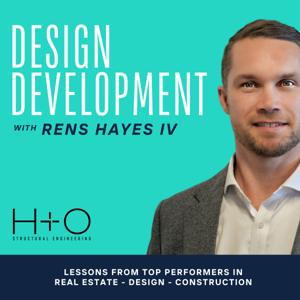
Design Development

Design Development

Download on the App Store

Design Development episodes

  • 139: Navigating NYC and Miami: Winning Strategies in Top-Tier Real Estate Markets with Matthew Baron, President/Founder of Baron Property Group

    Matthew Baron is a renowned real estate developer with over 25 years of experience, currently leading Baron Property Group. He co-founded Simon Baron Development where he specialized in multifamily developments, particularly in New York City. Under his leadership at Baron Property Group, Matt oversees ambitious projects in NYC and Miami, with a pipeline of 3,600 units and over $2 billion in project value.

    Matt shares how he got his start in New York City, working his way from a commercial mortgage broker to a top-tier developer with significant projects in both NYC and Miami—two of the most challenging real estate markets in the U.S. His journey from humble beginnings, through strategic partnerships, to leading a company with a multibillion-dollar portfolio captures the core narrative of success against the odds.

    As the conversation unfolds, he discusses the complexities introduced by local land use regulations, market demand, materials sourcing, and other logistical concerns that can make or break a development project. Matt emphasizes the significance of strategic partnerships, as seen in Miami, where local knowledge supplemented by his operational acumen led to successful expansions. 

    Key Takeaways:

    • Partnerships and Local Insights: Success in new markets often hinges on strong local partnerships that can navigate local land use and cultural nuances effectively.
    • Development Strategy: Developing large-scale multifamily properties in high-demand areas like NYC and Miami requires significant capital, strategic site acquisition, and meticulous planning.
    • Supply Constraints and Market Dynamics: Understanding market dynamics such as supply-demand imbalances can provide competitive advantages and instruct strategic planning.
    • Operational Efficiencies: Leveraging third-party property management and construction firms allows developers to focus on scaling and managing risk.
    • Growth and Expansion: Evaluating new markets requires comprehensive local knowledge and a commitment to mitigating risks through strategic alliances and extensive planning.

    Notable Quotes:

    1. "You show me any deal, any site, any block [in New York], I know what can be built."
    2. "In New York, if you show me a site and I know that site can't be developed... I'll know because I just know because I'm in that world."
    3. "It's easy to get into a partnership. It's very challenging to get out of."
    4. "Developing large-scale projects is all about your basis."
    5. "You don't want to be the schmuck that bought the one site everybody knows you shouldn't buy."

    Resources:

    • Baron Property Group

    Thanks for being part of the Design Development community.

    New episodes drop every Wednesday, featuring leaders across real estate, design, and construction.

    The goal is simple: learn from how great people think, lead, make decisions, navigate setbacks, and create opportunity.

    There is no single path to success.
    Careers are not linear.
    The lessons are in the story.

    Subscribe so you don’t miss the next conversation.

    Follow us on LinkedIn, Instagram & YouTube

    Find out more at
    https://h-o.engineering/podcasts/

    Let’s go.

    50 min
  • 138: Capital Markets with Bryan Koop, Senior Vice President @ CBRE

    Bryan Koop is a distinguished expert in capital markets, currently representing CBRE, a global leader in commercial real estate services and investments. With a robust background spanning roles at Deutsche Bank and JP Morgan, his expertise lies in commercial real estate finance, particularly in multifamily, industrial, office, and retail sectors. As the industry faces unprecedented challenges due to high interest rates and evolving market dynamics, Bryan highlights the current trends and shifts in capital allocation, noting a significant movement away from urban cores to more suburban locations for certain projects, particularly in the multifamily sector. The conversation unveils the crucial metrics and hurdles that define economic viability in commercial real estate projects, such as untrended return on cost and investment return thresholds. 

    Key Takeaways:

    • Suburban Shift: Investors are increasingly favoring suburban locations over urban cores for multifamily projects due to better cost basis and strong renter demand, despite challenges in suburban office markets.
    • Economic Viability Metrics: Understanding untrended return on cost and levered IRR is essential for developers to ensure projects meet investor expectations.
    • Capital Market Dynamics: The capital stack for commercial real estate deals is shifting with current market conditions, affecting when and how LP equity engages in projects.
    • Role of Relationships: Building strong relationships and being a lifelong learner are key to navigating and succeeding in the real estate and finance industries.
    • Future of Real Estate: Advances in technology and AI present promising new revenue streams and operational efficiencies for commercial real estate.

    Notable Quotes:

    1. "Tell me why we should do a deal and we can talk about the risks and mitigate the risks associated with it, but tell me why we need to do this deal." — Bryan Koop
    2. "For multifamily, it's definitely a more interest in the projects that are more viable today than the urban ones." — Bryan Koop
    3. "The value of these buildings can be very different than what is today just by efficiencies that are untapped by technology." — Bryan Koop
    4. "The entrepreneurial component of capital markets brokerage always enticed me. You're building your own business." — Bryan Koop
    5. "Invest in some relationships that make it. It'll change your life. People, things you read, and the people you meet." — Bryan Koop

    Resources:

    • CBRE Capital Markets - Explore more about the services provided by CBRE at CBRE.
    • Book Recommendation: "Margin of Sa

    Thanks for being part of the Design Development community.

    New episodes drop every Wednesday, featuring leaders across real estate, design, and construction.

    The goal is simple: learn from how great people think, lead, make decisions, navigate setbacks, and create opportunity.

    There is no single path to success.
    Careers are not linear.
    The lessons are in the story.

    Subscribe so you don’t miss the next conversation.

    Follow us on LinkedIn, Instagram & YouTube

    Find out more at
    https://h-o.engineering/podcasts/

    Let’s go.

    47 min
  • 137: Gensler's Jared Krieger, Co-Managing Director Boston

    Jared Krieger is the Co-Managing Director of Boston for Gensler, the largest architecture firm in the world. He has a longstanding career in architecture, having been with Gensler since 2007. Jared's expertise spans multiple high-profile projects, from tall office buildings to mixed-use complexes worldwide, including airports and convention centers. 

    Jared shares how the firm is steering toward experience-based design, which prioritizes interactive, collaborative spaces in response to post-pandemic shifts in workplace needs. The conversation also unravels how Gensler maintains its competitive edge by fostering a culture of collaboration across its 57 offices worldwide.

    The episode highlights Gensler's adaptive organizational structure, which encourages innovation through its cost-center model, allowing seamless integration across diverse project teams. The discussion wraps up with insights into the thriving business model at Gensler, which fuels growth and retains top talent, fostering innovation through collaborative and flexible practices.

    Key Takeaways:

    • Gensler is the world's largest architecture firm, driven by a collaborative and innovative culture that embraces experience-based design.
    • The firm hosts weekly global leadership calls, promoting insights and trends sharing across its worldwide offices to adapt rapidly to market demands.
    • Jared emphasizes the importance of creating collaborative work environments that attract talent and fuel innovation, especially post-pandemic.
    • Gensler's organizational structure as a cost-center model rather than a profit-center fosters collaboration, enabling seamless integration across projects and offices.
    • The integration of advanced technologies, including AI, in Gensler's design processes enhances ideation, conceptualization, and client engagement, positioning the firm at the industry's cutting edge.

    Notable Quotes:

    1. "It's really experience-based design is what we are seeing in everything."
    2. "If it's better for the client and the firm, don't worry about where the profit is hosted."
    3. "Communication is always the hardest thing on a project. So I'm actually saying we should step back from technology sometimes and let the communication happen how it should face to face."
    4. "Our client's point of view defines the success of a project."
    5. "I've always felt comfortable at Gensler that you've got space to try something different."

    Resources:

    • Gensler Website
    • Drexel University's Architecture Program
    • Book: "The Anxious Generation"
    • For more insights from Jared Krieger, follow him on LinkedIn and check out Gensler's projects in your local area to see innovation in architecture firsthand.

    Thanks for being part of the Design Development community.

    New episodes drop every Wednesday, featuring leaders across real estate, design, and construction.

    The goal is simple: learn from how great people think, lead, make decisions, navigate setbacks, and create opportunity.

    There is no single path to success.
    Careers are not linear.
    The lessons are in the story.

    Subscribe so you don’t miss the next conversation.

    Follow us on LinkedIn, Instagram & YouTube

    Find out more at
    https://h-o.engineering/podcasts/

    Let’s go.

    58 min
  • 136: Repeatable Growth with Greg Karelitz, GTM Expert, Startup Advisor, Ex-HubSpot

    Greg Karelitz is a go-to-market expert known for his 12-year tenure at HubSpot, during which he helped launch the HubSpot for Startups program and led the global partnerships for WordPress and other products. The discussion revolves around the intricacies of building an effective go-to-market strategy, especially for small businesses and how AI plays a pivotal role in transforming traditional business operations. Rens Hayes IV, who co-founded H&O Structural Engineering, shares his perspectives as a business leader seeking to leverage AI for boosting customer relations and operational efficiencies.

    Greg Karelitz delves into his wealth of experience, providing listeners with actionable insights on developing comprehensive go-to-market strategies that drive both customer acquisition and retention. He underscores the importance of integrating sales, marketing, and customer service teams to deliver cohesive and compelling value propositions. By emphasizing the role of AI and technology in streamlining business operations, Greg and Rens highlight the potential for businesses to achieve exponential growth. With a focus on empowering small businesses to leverage AI tools for enhanced marketing and sales strategies, this episode offers valuable guidance for entrepreneurs aiming to scale their ventures effectively.

    Key Takeaways:

    • Importance of Integration: Aligning sales, marketing, and customer service teams is crucial for a cohesive go-to-market strategy.
    • AI as a Catalyst: AI technology simplifies research and execution, providing unprecedented opportunities for small businesses to scale.
    • Understanding Customer Value: Businesses need to dig deep to identify the true value they offer customers, enabling better pricing and service models.
    • Learning from Failures: Embracing and learning from failures is essential for personal and professional growth.
    • Continuous Improvement: Regularly update processes and systems to sustain business growth and leverage new technological tools.

    Notable Quotes:

    1. "A business is successful when it adds value to customers and, in return, gets value from them."
    2. "To be excellent, you now have to connect people, process, and systems."
    3. "Curiosity gets you in the door. Learning makes you valuable."
    4. "Add more value than you extract."
    5. "Trust is the currency of a team."

    Resources:

    • HubSpot: HubSpot for Startups
    • Books Mentioned:
      • "The Five Types of Wealth" by Sahil Bloom

    Thanks for being part of the Design Development community.

    New episodes drop every Wednesday, featuring leaders across real estate, design, and construction.

    The goal is simple: learn from how great people think, lead, make decisions, navigate setbacks, and create opportunity.

    There is no single path to success.
    Careers are not linear.
    The lessons are in the story.

    Subscribe so you don’t miss the next conversation.

    Follow us on LinkedIn, Instagram & YouTube

    Find out more at
    https://h-o.engineering/podcasts/

    Let’s go.

    1 hr 7 min
  • 135: Liz Hart - President of Leasing, North America at Newmark

    Liz Hart is the President of Leasing in North America at Newmark, one of the leading commercial real estate advisory firms in the United States. With 20 years in the industry, Liz is recognized as one of the highest-ranking women in U.S. commercial real estate. Her career has been marked by significant influence in Silicon Valley, where she played a pivotal role in various dealings with Fortune 50 companies. 

    As a respected leader in the industry, Liz shares her insights into the changing dynamics of the market, particularly against the backdrop of technological advancements such as artificial intelligence and the evolving needs of modern office spaces. She reflects on her career journey, celebrating her 20th anniversary in the field, and the influences that shaped her path, including figures like Marianne Tighe.

    Throughout the conversation, Liz emphasizes the importance of adapting to current trends, like the increasing demand for flexible office spaces and the rise of data centers due to the AI boom. Liz also touches on the significance of surrounding oneself with top talent and using data-driven insights to navigate market complexities. 

    Key Takeaways:

    • Commercial real estate demand is witnessing growth, with a more significant proportion of companies seeking to increase their office space, particularly in technology and financial services sectors.
    • The role of data centers is expanding due to advancements in artificial intelligence, influencing the location and development needs of such infrastructures.
    • Flexible office solutions are becoming a preferred model for businesses, empowering them to focus on core activities while outsourcing operational logistics.
    • Liz identifies leadership and adaptability as essential qualities for success in real estate, aiming to inspire women and emerging professionals to pursue industry and leadership roles.

    Notable Quotes:

    • "One woman that I really looked up even from San Francisco is Marianne Tighe at CBRE… she's someone whose career I've always watched and admired."
    • "Power drives the show. Right. So where can you get power and how can you get it there?"
    • "Once it's in your blood, you want a cold call… CEO and senior executives still cold calling people."
    • "If I can do this, that I probably would be able to be a different inspiration and role models for more people across the industry."

    Resources:

    • Newmark
    • "Never Eat Alone" by Keith Ferrazzi
    • "The Hard Thing About Hard Things" by Ben Horowitz
    • "CEO Excellence" by Carolyn Dewar
    • "Trillion Dollar Coach" by Eric Schmidt, Jonathan Rosenberg, and Alan Eagle

    Thanks for being part of the Design Development community.

    New episodes drop every Wednesday, featuring leaders across real estate, design, and construction.

    The goal is simple: learn from how great people think, lead, make decisions, navigate setbacks, and create opportunity.

    There is no single path to success.
    Careers are not linear.
    The lessons are in the story.

    Subscribe so you don’t miss the next conversation.

    Follow us on LinkedIn, Instagram & YouTube

    Find out more at
    https://h-o.engineering/podcasts/

    Let’s go.

    53 min
  • 134: Nationwide Leader of Real Estate Development - Jennifer Schultz, Partner, Nixon Peabody

    Jennifer Schultz is a partner and the leader of nationwide commercial real estate development at Nixon Peabody. Her impressive legal career includes over a dozen years at Goodwin Procter representing equity investors in real estate, followed by serving in leadership roles at Sullivan and Nixon Peabody. Her expertise lies in comprehensive real estate development processes, all while acting as a trusted advisor to her clients, embodying the role of a modern "consigliere."

    The discussion begins by shedding light on a prevalent misconception in real estate—that legal counsel is merely a cost to be managed rather than a vital resource to be exploited. Jennifer outlines how engaging legal advisors early can avert potential pitfalls and enhance project value. Her approach champions legal counsel as indispensable partners throughout a development project’s lifecycle, providing strategic insights and safeguarding future value.

    The conversation pivots to explore the firm’s extensive capabilities in real estate development, emphasizing nuanced aspects like permitting, risk management, and innovative collaborations that Nixon Peabody offers. Through Jennifer’s insights, the episode provides a treasure trove of knowledge for those immersed in the nuances of real estate development.

    Key Takeaways:

    • Legal counsel should be viewed as a strategic resource, not just a cost, especially in preemptively managing potential challenges in real estate development.
    • Developing a comprehensive understanding of a client's goals and the full spectrum of a project can significantly mitigate risks and enhance long-term value.
    • Nixon Peabody stands out with its commitment to providing holistic legal guidance, integrating nationwide reach with specialized expertise in areas like affordable housing.
    • Jennifer Schultz emphasizes the value of pairing legal expertise with industry knowledge, offering clients optimal solutions from entitlement processes to development execution.
    • Real estate development is portrayed as an interwoven process where understanding client psychology and building personal relations can stand at par with technical proficiency.

    Notable Quotes:

    • "I would say the biggest misconception is that we are a cost to be managed as opposed to a resource to be tapped."
    • "Think about the last day on the first day. You have to be doing that."
    • "In real estate development, you are constantly going in seven different directions, and you have to think like a human in order to manage it."
    • "To be a valuable consigliere, you need to study your clients and their businesses."
    • "When things aren't going right, go left."

    Resources:

    • Nixon Peabody LLP Website: Nixon Peabody

    Thanks for being part of the Design Development community.

    New episodes drop every Wednesday, featuring leaders across real estate, design, and construction.

    The goal is simple: learn from how great people think, lead, make decisions, navigate setbacks, and create opportunity.

    There is no single path to success.
    Careers are not linear.
    The lessons are in the story.

    Subscribe so you don’t miss the next conversation.

    Follow us on LinkedIn, Instagram & YouTube

    Find out more at
    https://h-o.engineering/podcasts/

    Let’s go.

    1 hr 10 min
  • 133: OZ Architecture with Rick Petersen, Principal at OZ Architecture

    Rick Petersen is a principal and partner at OZ Architecture, a renowned firm with international reach based in Denver. During his illustrious career spanning over 35 years, Rick has made significant contributions to various high-profile projects, including the redesign of McMurdo Station in Antarctica and several U.S. national parks projects. His expertise lies in sustainable design and master planning, making a mark in sectors such as resort and hospitality, multifamily housing, and cold climate architecture.

    As they delve into OZ's diverse portfolio, Rick touches on the firm's growth from 30 to 125 employees, driven by projects like national parks and resort master planning. Rick emphasizes the importance of continuous learning, leveraging technology like virtual reality for client communication, and maintaining independence in a merger-heavy industry. With strategic leadership development, OZ ensures a strong future pipeline of talent to continue innovating in its field.

    Key Takeaways:

    • Antarctic Architecture: OZ Architecture was chosen to redesign McMurdo Station by bringing a fresh perspective, despite having no prior cold climate experience, highlighting the firm's innovative and adaptive approach.
    • Diverse Expertise: With a comprehensive portfolio, OZ Architecture excels in areas such as resort and hospitality development, multifamily housing, national parks, and international projects like those in Rwanda.
    • Organizational Growth: From a team of 30 in 1990 to 125 today, OZ's strategic focus on mentorship and leadership development has been pivotal for its sustained growth and ability to remain independent.
    • Balancing Design and Productivity: The firm thrives on marrying creative design with efficiency, ensuring that projects are well-coordinated, meeting client expectations without compromising on quality.
    • Technological Advancements: Investing in a VR theater illustrates OZ’s commitment to enhance client engagement and decision-making processes, reflecting their forward-thinking adoption of new technologies.

    Notable Quotes:

    • "We were hired not for what we know, but what we don't know." – Rick Peterson
    • "The continent is the coldest, windiest, driest place on Earth." – Rick Peterson
    • "We're always trying to do something today that is a little better and different than we did last week." – Rick Peterson
    • "Everyone's looking for a place in the office in their career where it's meaningful and that they're valued and that they make a difference." – Rick Peterson
    • "If you want them to stay and grow, otherwise they’re going to go somewhere else." – Rick Peterson

    Resources:

    • OZ Architecture Website

    Thanks for being part of the Design Development community.

    New episodes drop every Wednesday, featuring leaders across real estate, design, and construction.

    The goal is simple: learn from how great people think, lead, make decisions, navigate setbacks, and create opportunity.

    There is no single path to success.
    Careers are not linear.
    The lessons are in the story.

    Subscribe so you don’t miss the next conversation.

    Follow us on LinkedIn, Instagram & YouTube

    Find out more at
    https://h-o.engineering/podcasts/

    Let’s go.

    46 min
  • 132: Family Business & The Road to CEO with Kayla Nassar, CEO of AMCON

    Kayla Nassar is the CEO of AMCON, a prominent construction company in New England. Under her leadership, AMCONhas achieved considerable growth, notably implementing a leadership team predominantly composed of women, innovating within the industry, and adopting emerging technologies like AI.

    Today, AMCON boasts a leadership team with over 50% women, showcasing Kayla's commitment to diversity. Kayla's conversation with Rens also uncovers insights about navigating family business dynamics, especially during ownership transitions. She shares the importance of clear communication and the flexibility required in shifting leadership roles. The episode further highlights AMCON strategic focus on key sectors, such as retail and hospitality, while expanding geographically within New England. Through this dialogue, listeners gain insight into leadership strategies, embracing change, and how to effectively harness technological advancements to future-proof businesses.

    Key Takeaways:

    • Diversity in Leadership: Kayla emphasizes the importance of female representation in leadership roles, contributing to different decision-making perspectives at AMCON.
    • Leveraging AI: The integration of AI technologies is seen as crucial for future-proofing the company, improving efficiencies and safety on job sites.
    • Family Business Transition: Honest and open communication is critical when navigating ownership transitions in family-owned businesses.
    • EOS Implementation: AMCON utilizes the Entrepreneurial Operating System (EOS) to enhance accountability and maintain focus on large-scale goals through structured processes.
    • Continuous Learning: Kayla advocates for relentless growth through reading, peer learning, and actively seeking mentorship to drive personal and professional success.

    Notable Quotes:

    1. "The cost of under-communicating is far greater than the cost of over-communicating."
    2. "We realized pretty quickly that we just didn't have the tools in our toolbox, so we had to bring in other smart, talented people to help us."
    3. "Rocks are the big things that need to happen for you to achieve the goal."
    4. "True success is when you serve others... that comes tenfold."
    5. "If you're not using ChatGPT or something of that sort as a Google search, you probably should get on board."

    Resources:

    • AMCON’s Website: AMCON
    • Entrepreneurial Operating System (EOS)
    • Books: "Traction" and "Rocket Fuel" by Gino Wickman

    Thanks for being part of the Design Development community.

    New episodes drop every Wednesday, featuring leaders across real estate, design, and construction.

    The goal is simple: learn from how great people think, lead, make decisions, navigate setbacks, and create opportunity.

    There is no single path to success.
    Careers are not linear.
    The lessons are in the story.

    Subscribe so you don’t miss the next conversation.

    Follow us on LinkedIn, Instagram & YouTube

    Find out more at
    https://h-o.engineering/podcasts/

    Let’s go.

    56 min
  • 131: 1031 Specialists with VP of Growth, Mike Auerbach

    Mike Auerbach is the Vice President of Growth at 1031 Specialists, a company dedicated to revolutionizing the 1031 exchange industry with tech-forward solutions. With a background as a multifamily broker and experience on both the brokerage and principal sides, Mike has developed deep expertise in real estate investment and the intricacies of 1031 exchanges. 

    The discussion highlights various applications of the 1031 exchange, including its use among family offices and large investment funds, aiming to simplify and promote this advantageous strategy. 

    By leveraging technology to automate repetitive tasks, Mike's team focuses on improving the client service experience, fostering stronger relationships, and providing trusted advice. The conversation touches on the widespread misunderstandings about the 1031 exchange, the application of AI in their business, and the importance of creating a recognizable and respected brand in the real estate industry. 

    Key Takeaways:

    • Underutilized Advantage: 85% of real estate professionals do not utilize 1031 exchanges despite their benefits in deferring taxes and compounding wealth.
    • Tech and Service Integration: 1031 Specialist uses technology to automate 137 of 144 process steps, optimizing client service and efficiency.
    • Reverse 1031 Exchange: Investors can purchase replacement properties before selling current ones, providing flexibility in competitive markets.
    • Market Education: There's a pressing need to educate brokers, CPAs, and investors on the advantages and processes of 1031 exchanges.
    • Transparency and Trust: Being clear about revenue models and the benefits of 1031 exchanges builds trust with clients and propels industry change.

    Notable Quotes:

    1. "It's a gift given to us by the government for free. In my view, this should be the default option." — Mike Auerbach
    2. "Attention really is the new currency today, so how do you capture it and at least get someone to spend five minutes to talk to you?" — Mike Auerbach
    3. "We automate all those 144 steps besides seven steps that focus on the client service experience." — Mike Auerbach
    4. "Most CPAs and tax attorneys are not specialized in 1031 exchanges, so investors really need dedicated professionals." — Mike Auerbach
    5. "AI is something for us. We hired an AI engineer to build our own custom solution which now smarter than me and every 1031 professional combined." — Mike Auerbach

    Resources:

    • 1031 Specialist Website
    • Mike Auerbach on LinkedIn
    • Articles on 1031 Exchange: Basic Guides for Real Estate Professionals

    Thanks for being part of the Design Development community.

    New episodes drop every Wednesday, featuring leaders across real estate, design, and construction.

    The goal is simple: learn from how great people think, lead, make decisions, navigate setbacks, and create opportunity.

    There is no single path to success.
    Careers are not linear.
    The lessons are in the story.

    Subscribe so you don’t miss the next conversation.

    Follow us on LinkedIn, Instagram & YouTube

    Find out more at
    https://h-o.engineering/podcasts/

    Let’s go.

    51 min
  • 130: Navigating Volatile Markets: How GCs and Developers Can Thrive Together with Mike Hartnett, VP of Plumb House Inc.

    Mike Hartnett is a prominent figure in the construction and real estate sector, currently serving as a vice president and partner at Plumb House. With a rich history in multifamily construction, Mike has extensive experience in various roles, from his beginnings as a project engineer to becoming a senior superintendent. 

     Mike offers invaluable insights into the importance of maintaining strong relationships with design partners familiar with wood frame construction to ensure project design aligns with realistic pricing methods.

    Throughout the conversation, Mike and Rens explore the strategic advantages of Plumb House's niche focus on multifamily construction and self-performing subcontractor roles. Their discussion reveals how a company's geographical reach and in-depth specialization contributes to its success in limited market segments, enabling better data collection and faster learnings across projects. The importance of cultivating long-term customer relationships, investing in the labor force, and adapting to market fluctuations like the recent tariff uncertainties are also pivotal topics explored in the session.

    Key Takeaways:

    • Early collaboration between design teams and general contractors is crucial for ensuring project success and minimizing costs.
    • Specializing in a niche market allows for better data collection, fostering faster learnings and more predictable project outcomes.
    • Self-performing subcontractor roles can enhance control over schedules and costs, but strong external trade relations remain essential.
    • Investing in skilled labor is more critical than ever to address industry challenges and ensure future project quality and efficiency.
    • Addressing the uncertainty caused by tariffs and fluctuating market conditions requires clear communication and strategic adjustments.

    Notable Quotes:

    1. "If you can do those things, you don't have to sweat every small mistake. You create the systems to get the big things right."
    2. "The most important thing is the investment in labor, skilled trades, and getting kids focused more on the benefits and opportunities within the trades."
    3. "We're not chasing the region; we're chasing what our clients need and where they need us to go."
    4. "It's important that our budgeting is paired with design partners like you to keep the thing on the rails."
    5. "The merit shop philosophy is putting in your time, effort, and the rewards will follow."

    Resources:

    • Plumb House Website

    Thanks for being part of the Design Development community.

    New episodes drop every Wednesday, featuring leaders across real estate, design, and construction.

    The goal is simple: learn from how great people think, lead, make decisions, navigate setbacks, and create opportunity.

    There is no single path to success.
    Careers are not linear.
    The lessons are in the story.

    Subscribe so you don’t miss the next conversation.

    Follow us on LinkedIn, Instagram & YouTube

    Find out more at
    https://h-o.engineering/podcasts/

    Let’s go.

    38 min

About Design Development

From the publisher's feed

Design Development is your hub to learn direct from top professionals in real estate, development, design, and construction!
More shows like Design Development

The Joe Rogan Experience by Joe Rogan

The Joe Rogan Experience

227,497 Listeners

Pardon My Take by Barstool Sports

Pardon My Take

82,353 Listeners

Spittin Chiclets by Barstool Sports

Spittin Chiclets

20,166 Listeners

Fore Play by Barstool Sports

Fore Play

10,438 Listeners

The Daily by The New York Times

The Daily

111,865 Listeners

Front Row Seat with Ken Coleman by Ramsey Network

Front Row Seat with Ken Coleman

2,580 Listeners

Mass Construction Show by Joe Kelly

Mass Construction Show

130 Listeners

Interesting Times by New York Times Opinion

Interesting Times

7,122 Listeners

Real Estate Addicts by Marc Savatsky, Ray Hurteau, Dan Rubin

Real Estate Addicts

147 Listeners

The Journal. by The Wall Street Journal & Spotify Studios

The Journal.

6,066 Listeners

The Weekly Take from CBRE by CBRE

The Weekly Take from CBRE

159 Listeners

The Yak by Barstool Sports

The Yak

2,850 Listeners

The Ezra Klein Show by New York Times Opinion

The Ezra Klein Show

15,904 Listeners

The Weekly Show with Jon Stewart by Comedy Central

The Weekly Show with Jon Stewart

10,763 Listeners

The Mel Robbins Podcast by Mel Robbins

The Mel Robbins Podcast

19,273 Listeners