
Sign up to save your podcasts
Or




Based on Podcast App listening data
Last year Distillations talked to people who have special insight into the coronavirus crisis—biomedical researchers, physicians, public health experts, and historians. In this episode we talk to Stéphane Bancel, CEO of Moderna, a biotech company that developed one of the three emergency-approved COVID-19 vaccines in the United States. The Moderna vaccine is unique in that it uses a new technology that has been decades in the making called messenger RNA, or mRNA. Bancel reflects on the development timeline of the vaccine: from learning about the virus while reading the Wall Street Journal in 2019 to the moment he finally got his own shot at a Moderna facility. He talks about the promise of mRNA and what's ahead for Moderna.
CreditsHost: Alexis Pedrick Senior Producer: Mariel Carr Producer: Rigoberto Hernandez Researcher: Jessica Wade Audio Engineer: Jonathan Pfeffer
In the 1700s human dissection was a big taboo—people feared that it would leave their bodies mangled on Judgment Day, when God would raise the dead. As a result, government officials banned most dissections. This led to some unintended consequences, most notably a shortage of bodies for anatomists to dissect. To meet the heightened demand, a new profession emerged: grave-robbers. These so-called resurrectionists dug up the bodies of poor people to sell to anatomists, which led to riots in the streets.
CreditsHost: Sam Kean Senior Producer: Mariel Carr Producer: Rigoberto Hernandez Audio Engineer: Jonathan Pfeffer
Host: Sam Kean Senior Producer: Mariel Carr Producer: Rigoberto Hernandez Audio Engineer: Jonathan Pfeffer
Music:
"Trois Gnossiennes 3," "Stately Shadows," "Darklit Carpet," "Vernouillet," and "Tossed" by Blue Dot Sessions.
"Conjunto Sol del Peru," by Pockra (Vol. 2: Musica de los Andes Peruanos).
"Conjunto Sol del Peru," by Wuaylias Tusy (Vol. 2: Musica de los Andes Peruanos).
"Conjunto Sol del Peru," by Ckashampa (Vol. 2: Musica de los Andes Peruanos)
Image courtesy of the Wellcome Collection.
How an early 20th century doctor pitted one scourge (malaria) against another (syphilis).
CreditsHost: Sam Kean Senior Producer: Mariel Carr Producer: Rigoberto Hernandez Audio Engineer: Jonathan Pfeffer
Music:
"Delamine" by Blue Dot Sessions. All other music composed by Jonathan Pfeffer.
The ivory-billed woodpecker is sometimes called the Lord God bird, a nickname it earned because that's what people cried out the first time they ever saw one: "Lord God, what a bird." Even though the last confirmed sighting was in the 1930s, birders have been claiming they have seen the Lord God bird throughout the years, turning it into a myth. The sad part is it didn't need to be this way. And it's all Hitler's fault. As crazy as it sounds, the ivory-billed woodpecker was one of last victims of the Nazi war machine. Host: Sam Kean Senior Producer: Mariel Carr Producer: Rigoberto Hernandez Audio Engineer: Jonathan Pfeffer
If Ted Talks were around in the early 1990s, Horace Fletcher would have given his fair share of them. Fletcher was a health reformer who thought people didn't chew their food nearly enough. He believed that most swallowed food way too quickly. This had all sorts of detrimental health consequences, he said, including nasty bowel movements. So he over-chewed his food. He once chewed a green onion 722 times before he let himself swallow it. His idea became such a sensation that it became a movement known as "Fletcherism." His ideas made it to the White House and could have even changed the tide of World War I.
CreditsHost: Sam Kean Senior Producer: Mariel Carr Producer: Rigoberto Hernandez Audio Engineer: Jonathan Pfeffer
Music:
Photo: Science History Institute.
Shakespeare had a go at at the longest word in the English language with "honorific-abilitude-in-i-tat-i-bus." If you play the game of stacking suffixes and prefixes together, you can get "antidisestablishmentarianism," one letter longer for a total of 28 letters. But the longest word by far appeared in 1964 in Chemical Abstracts, a dictionary-like reference for chemists. The word describes a protein in what's called the tobacco mosaic virus, and it runs 1,185 letters long. Besides being too long to write here, it tells us a lot about the unusual chemistry of carbon.
CreditsHost: Sam Kean Senior Producer: Mariel Carr Producer: Rigoberto Hernandez Audio Engineer: Jonathan Pfeffer
"Delamine" by Blue Dot Sessions. All other music composed by Jonathan Pfeffer.
The debut of the female birth control pill in 1960 was revolutionary. The combination of progesterone and estrogen allowed women to control their reproductive lives much more easily and effectively. But the pill had many unpleasant and even dangerous side effects. In fact, some doctors argue that it wouldn't win government approval today. So why haven't scientists tried to create a birth control pill for men? It turns out they have. In the 1950s scientists created a really good one. But it had one problem—you can't drink alcohol when you take it.
CreditsHost: Sam Kean Senior Producer: Mariel Carr Producer: Rigoberto Hernandez Audio Engineer: Jonathan Pfeffer
Music:
Jean-Claude Risset - Mutations Peter B - The Growling Dog Hit Perry & Kingsley - Cosmic Ballad Charlie Hoistman - Ptpar(({|i|[i*8,Pbind(\scale,[0,2,4,7,9],\degree,Pseq(32.fib.fold(0,10),4)+(2*i+i)-10,\dur,1+2**i%2/6)]}!4).flat).play // #supercollider Régis Renouard Larivière - Contrée Raymond Scott - Lightworks Deerhoof - Despareceré Juk Suk Reet Meate - B3 (excerpt from Solo 1978/79) Ben Vida - Ssseeeeiiiiii Marmots - Sheath and Knife Tim Walters - play{({|k|({|i|y=SinOsc;y.ar(i*k*k,y.ar(i*k**i/[4,5])*Decay.kr(Dust.kr(1/4**i),y.ar(0.1)+1*k+i,k*999))}!8).product}!16).sum}//#supercollider Eva-Maria Houben - quatuor iv Young Marble Giants - Zebra Trucks All other music composed by Jonathan Pfeffer.
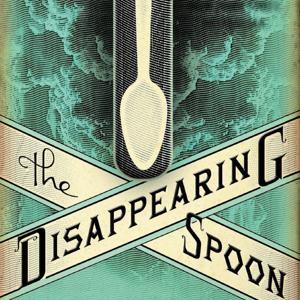
From the Disappearing Spoon, our new podcast!
Radium was once the trendiest element in the world. It glowed alluringly in the dark and was hailed it as a medical panacea. It was also the basis of Marie Curie's research—for which she won her second Nobel Prize in 1911. But by 1920 radium was scarce and its cost was eye-popping: one hundred thousand dollars per gram. When Curie's research ground to a halt because of the expense, thousands of American women stepped in to raise money for the precious chemical element.
From our new podcast, the Disappearing Spoon:
The so-called "Peking Man" fossils are some of the first ancient human remains discovered in mainland Asia. So when they disappeared during World War II, it was called one of the worst disasters in the history of archaeology. Now some archeologists claim to have tracked them down. The only problem is they're underneath a parking lot.
CreditsHost: Sam Kean Senior Producer: Mariel Carr Producer: Rigoberto Hernandez Audio Engineer: Jonathan Pfeffer Original Music by Jonathan Pfeffer
Wang Fan - Zero (from An Anthology of Chinese Experimental Music 1992-2008) Listening to the Pine-trees (from Chine / Musique Classique) Sarah Hennies – Fleas Wang Changcun - Through the Tide of Faces (from An Anthology of Chinese Experimental Music 1992-2008) Zhegu Fei (The Partridge) (from Chine / Musique Classique) All other music composed by Jonathan Pfeffer.
From the publisher's feed
Ranked by our users in the last 21 days

90,869 Listeners

78,338 Listeners

43,815 Listeners

31,909 Listeners

43,314 Listeners

38,653 Listeners

26,178 Listeners

539 Listeners

12,178 Listeners

6,435 Listeners

16,322 Listeners

297 Listeners
1,324 Listeners

2,318 Listeners

1,622 Listeners