
Sign up to save your podcasts
Or



Based on Podcast App listening data
The Science History Institute has launched a second podcast! We've teamed up with New York Times best-selling author Sam Kean to bring you even more stories from our scientific past. Don't worry, Distillations podcast isn't going anywhere; we're still producing the in-depth narrative-style episodes you know and love! We've just doubled your history of science listening pleasure.
For the next 10 weeks we'll bring you stories from the footnotes of the history of science, from the saga of the male birth control pill to this inaugural episode: how the smallpox vaccine made its way around the world before refrigeration.
Amid all the logistical headaches of the COVID-19 vaccine rollout, one huge challenge involves the cold chain. The cold chain is a network of freezers and refrigerators that keep vaccine doses at the consistently cold temperatures they need to stay viable. Though complicated, this is all doable in the 21st century. But how did the world's very first vaccine, created for smallpox in 1796, make it around the world? Live carriers—specifically, orphan boys.
CreditsHost: Sam Kean Senior Producer: Mariel Carr Producer: Rigoberto Hernandez Audio Engineer: Jonathan Pfeffer
"Delamine" by Blue Dot Sessions "La Flecha Incaia" by El Conjunto Sol Del Peru. All other music composed by Jonathan Pfeffer.
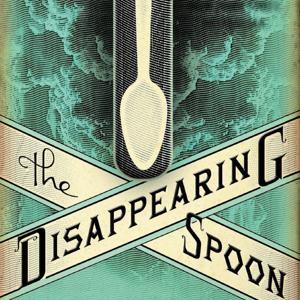
Did you know that Gandhi hated iodine? Or that Silicon Valley was almost called Germanium Valley? Our producer Rigoberto Hernandez talked about these stories and more with Sam Kean, author of The Disappearing Spoon, a book about the stories behind the periodic table. The New York Times best-selling author and regular Distillations magazine contributor described how Dmitri Mendeleev's publisher accidentally shaped the periodic table, why gallium is a popular element for pranksters, and what inspired the title of his book.
Kean, Sam. The Disappearing Spoon. New York: Little, Brown & Company, 2010.
CreditsHost: Elisabeth Berry Drago & Alexis Pedrick Senior Producer: Mariel Carr Producer: Rigoberto Hernandez Audio Engineer: Jonathan Pfeffer Original music by Jonathan Pfeffer
Distillations is hard at work on our next season. It's not quite ready, but we have a treat for you in the meantime. We interviewed Wendy Zukerman, the host and executive producer of one of our favorite podcasts, Science Vs. In normal times the show pits facts against fads—they talk about everything from detox diets to the supposed benefits of Cannabidiol, or CBD. Since early 2020, however, they've been reporting about the Coronavirus pandemic. But they actually started even earlier than that—in the fall of 2019 they coincidentally produced an episode all about global pandemics. We talked with Wendy about whether or not she's psychic, the challenges of pivoting to news reporting, and why it's so important for Science Vs. to tell history of science stories. The latest season of Science Vs. (which is not about COVID-19) just launched on March 4!
CreditsHost: Elisabeth Berry Drago Senior Producer: Mariel Carr Producer: Rigoberto Hernandez Audio Engineer: Jonathan Pfeffer Original music by Jonathan Pfeffer
As the pandemic began raging again this fall we talked with nurse Linda Ruggiero about what it's like to be on the front lines for a second wave. She talks about how treatment has changed, what we still don't know about the disease, and how every nurse she knows is suffering from PTSD.
Host: Elisabeth Berry Drago Senior Producer: Mariel Carr Producer: Rigoberto Hernandez
Music by Blue Dot Sessions. Photograph of Linda Ruggiero by Kyle Cassidy.
We've collaborated with Philadelphia photographer Kyle Cassidy to tell the stories of our city's essential workers. This fall his large-scale portraits of nurses, sanitation workers, Instacart shoppers, mask-makers, and delivery drivers will be on display on the exterior of the Science History Institute, in Old City Philadelphia. Find out more at sciencehistory.org/pandemic.
Hosts: Alexis Pedrick and Elisabeth Berry Drago Senior Producer: Mariel Carr Producer: Rigoberto Hernandez
Music by Blue Dot Sessions: "Arlan Vale," "Alum Drum," "Setting Pace," "Kalstead," "Drone Pine," and "Raskt Landsby."
Outer space is crowded. Satellites, pieces of rocket, and stuff that astronauts left behind, such as cameras and poop, are just floating around. This space junk can pose a threat to our communication systems.
In this episode we talk with Lisa Ruth Rand, a fellow at the Science History Institute, about her upcoming book on space junk. She tells us how space weather—that's right, there's space weather—can have an effect on what falls on Earth. She also talks about how our views on space debris reveal our attitudes back on Earth and how space junk truly made the space age global.
CreditsHosts: Alexis Pedrick and Elisabeth Berry Drago Senior Producer: Mariel Carr Producer: Rigoberto Hernandez Audio Engineer: James Morrison
Resource ListInterview with Marie Ruman. Canadian Broadcasting Corporation, January 24, 1978.
Judd, Bridget. "NASA's Skylab met its demise in Australia more than 40 years ago—but was it really an accident?" Australian Broadcasting Corporation, May 30, 2020.
The MacNeil/Lehrer Report, "Cosmos 954." January 25, 1978, American Archive of Public Broadcasting.
Rand, Lisa Ruth. "Orbital Decay: Space Junk and the Environmental History of Earth's Planetary Borderlands." PhD diss., University of Pennsylvania, 2016.
Rand, Lisa Ruth. "Wasted Space: The History of Orbiting Junk." Science History Institute, December 5, 2019.
Trudeau, Pierre Elliott. Speech at the House of Commons of Canada, January 24, 1978.
Outer space belongs to everyone and no one, at least that's what the Outer Space Treaty of 1967 says. On its face, this seems like an uncontroversial statement. But in the 1970s a group of equatorial countries challenged this idea. Only the richest and most powerful countries can afford to reach outer space in the first place, they argued, so in principle these nations controlled it. The protesting countries were ignored at the time, but to some their warnings seem more urgent now that it isn't just wealthy nations with space programs, but also individual billionaires.
Hosts: Alexis Pedrick and Elisabeth Berry Drago Senior Producer: Mariel Carr Producer: Rigoberto Hernandez Audio Engineer: James Morrison Music by Blue Dot Sessions
Worldwide nearly 3 million workers die on the job each year. U.S. workers experience roughly that same number of injuries and illnesses each year. Work is hard and dangerous, and we have the data to prove it. But who started collecting that data? The answer takes us back to Paracelsus, an early modern physician and alchemist who noticed that the miners he lived among often became very ill or died. His inquiries laid the foundation for occupational health and the workplace safety standards we have today.
Hosts: Alexis Pedrick and Elisabeth Berry Drago Senior Producer: Mariel Carr Producer: Rigoberto Hernandez Audio Engineer: James Morrison
Earning a PhD can be grueling for the healthiest student. But what is it like for a student with widespread pain and fatigue? Is it even possible? Marine geologist and geophysicist Gabriela Serrato Marks tells us that academia was not set up for people like her, and she wants to change that.
Hosts: Alexis Pedrick and Elisabeth Berry Drago Senior Producer: Mariel Carr Producer: Rigoberto Hernandez Audio Engineer: Jonathan Pfeffer Original Music by Zach Young
There's a common assumption that to be a scientist you must also be a genius, someone who excelled at school and learns easily and quickly. But are these really the qualities necessary to produce new scientific knowledge? Collin Diedrich is a research scientist with a doctorate in molecular virology and microbiology. On paper he might seem to be the archetypal smart scientist, but the reality is more complicated. Collin has multiple learning disabilities, and he has struggled to overcome the stigma that comes with them for his entire life.
In this episode we explore how our narrow definition of intelligence not only holds back people such as Collin, but also prevents the creation of new scientific knowledge that benefits us all. This is the second of two episodes about science and disability and was produced in collaboration with the Science and Disability oral history project at the Science History Institute.
CreditsHosts: Alexis Pedrick and Elisabeth Berry Drago Senior Producer: Mariel Carr Producer: Rigoberto Hernandez Audio Engineer: James Morrison
Resource ListMartucci, Jessica. "History Lab: Through the Lens of Disability." Science History Institute, June 22, 2019.
Martucci, Jessica. "Through the Lens of Disability." Distillations, November 8, 2018.
Martucci, Jessica. "Science and Disability." Distillations, August 18, 2017.
Diedrich, Collin. Oral history conducted on 19 and 22 June 2017 by Jessica Martucci and Gregory S. Waters, Science and Disability project, Science History Institute.
From the publisher's feed
Ranked by our users in the last 21 days

90,869 Listeners

78,338 Listeners

43,815 Listeners

31,909 Listeners

43,314 Listeners

38,653 Listeners

26,178 Listeners

539 Listeners

12,178 Listeners

6,435 Listeners

16,322 Listeners
297 Listeners
1,324 Listeners

2,318 Listeners

1,622 Listeners