
Sign up to save your podcasts
Or

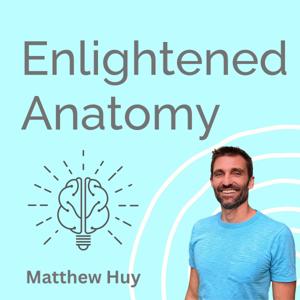


Do yoga twists really detox your body? Should you keep your hips square, lengthen your spine before rotating or avoid twisting your lower back?
In this solo episode, recorded during his yoga retreat in Portugal, Matt explores the anatomy of spinal rotation, common misconceptions about twisting poses and practical ways to bring more variety into your yoga teaching.
In this episode:
Explore more
September's focus inside the Enlightened Yoga Collective is twists, including a practical class exploring different ways to rotate.
Join the Enlightened Yoga Collective and start your 7-day free trial.
Matt's website · More podcast episodes
Support the show
Download my free e-book 5 Truth Bombs to Make You a More Confident Yoga Teacher.
For yoga teaching tips, follow me on Instagram or on Facebook.
Learn more from Daniel
Website & The Path of Knowledge course: truthofyoga.com
Instagram: @truthofyoga
Get The Truth of Yoga on Amazon
Join the Enlightened Yoga Collective
Want to explore yoga through anatomy, physiology, pain science, critical thinking and evidence-informed education?
Join Matt inside the Enlightened Yoga Collective, with access to courses, weekly office hours and a community of curious yoga teachers.
7-day free trial: enlightenedyogacollective.com
Episode 20: Daniel C. Simpson on What We Get Wrong About Yoga
What is yoga really—and how much of what we practise today actually comes from ancient tradition?
In this episode, Matt Huy talks with Daniel C. Simpson, author of The Truth of Yoga and teacher at the Oxford Centre for Hindu Studies, about the history and philosophy of yoga, how yoga has evolved, and why there may never have been one single “true” yoga.
Simpson challenges some common assumptions about yoga’s past while exploring how we can engage with ancient teachings without treating them as unquestionable truths.
In this episode, we explore:
About Daniel
Daniel C. Simpson is the author of The Truth of Yoga and teaches at the Oxford Centre for Hindu Studies. He holds a Master’s degree in Yoga Studies from SOAS University of London and hosts the Ancient Futures podcast.
His work explores yoga’s history and philosophy while asking how ancient ideas can meaningfully—and honestly—inform modern practice.
Support the show
Download my free e-book 5 Truth Bombs to Make You a More Confident Yoga Teacher.
For yoga teaching tips, follow me on Instagram or on Facebook.
Balance is the monthly inspiration at the Enlightened Yoga Collective, the go-to learning community for yoga teachers: https://enlightenedyogacollective.com/.
Episode 19 of the Enlightened Anatomy Podcast examines what balance is, how it changes with age, whether yoga improves it, and whether better balance reduces falls. The host discusses a 2025 randomized controlled trial of 700 people comparing online Iyengar yoga to seated meditation that found a 33% higher fall rate in the yoga group, noting this doesn’t prove yoga causes falls and must be weighed against broader evidence.
Balance is defined as keeping the center of mass over the base of support and is influenced by sensory systems (vision, vestibular, proprioception, skin), motor output, cognition, and environment, with multiple types (static, dynamic, proactive, reactive, functional). Reviews show balance training improves balance, while a 2019 Cochrane review found exercise reduces falls about 23% and balance/functional exercise about 24%; yoga shows small balance and medium mobility improvements but unclear fall reduction.
The episode suggests adding dynamic transitions, reaching, stepping, turning, progressive challenges, and embracing “the wobble.”
00:00 Welcome and Topic
00:21 Why Study Balance
02:09 Iyengar Study Surprise
04:39 What Balance Means
07:33 Sensory Systems Explained
10:58 Muscles and Focus
15:06 Types of Balance
16:42 Aging and Balance
20:38 Does Training Work
23:12 Balance vs Falls
25:28 Evidence on Fall Prevention
29:16 Does Yoga Help
31:06 Teaching Balance Better
33:59 Summary and Outro
Support the show
Download my free e-book 5 Truth Bombs to Make You a More Confident Yoga Teacher.
For yoga teaching tips, follow me on Instagram or on Facebook.
Leslie Kaminoff on Yoga Anatomy, AI Book Fraud, and What Yoga Is
Matt interviews longtime yoga educator and Yoga Anatomy co-author Leslie Kaminoff. They cover Kaminoff’s at New York’s Sivananda, a brief period as a Swami, and his perspective shaped by over 20,000 hours of bodywork focused on breathing. They discuss AI-generated fraud flooding Amazon’s chair yoga rankings, ethical uses of AI as well as the need for critical thinking around “fantasy physiology,” fascia claims, and pain science (including asymptomatic MRI findings and biopsychosocial factors). They explore alignment as person-specific, long-term hip health, and Kaminoff defines yoga practice via Patanjali’s Kriya Yoga (tapas, svadhyaya, ishvara pranidhana) and the breath’s voluntary/involuntary nature.
00:00 Welcome and Guest Intro
00:52 How Yoga Anatomy Began
02:02 Making the Illustrations
04:01 Why Amy Joined
05:06 Leslie Yoga Origin Story
07:09 Sivananda Training Talk
09:26 Debunking Yoga Myths
10:29 AI Fake Yoga Books
18:57 Ethical AI Use Cases
24:00 Fascia Hype and Labs
27:03 Yin Yoga Debate
30:00 Mystery of Mind and Pain
31:58 Pain Without Damage
32:22 MRI Findings Explained
33:50 Fibromyalgia and Labels
35:15 Yoga Teachers Helping Pain
38:08 Fear of Spinal Flexion
41:00 Neutral Spine and Hip Wear
44:05 Feet First Alignment
47:00 Do Poses Have Alignment
52:33 Yoga Competitions Debate
54:38 Technique Versus Inquiry
58:39 What Yoga Really Is
01:02:47 Wrap Up and Where to Find
Support the show
Download my free e-book 5 Truth Bombs to Make You a More Confident Yoga Teacher.
For yoga teaching tips, follow me on Instagram or on Facebook.
What Is Prana? Bernie Clark on Breath, Yoga, Science, and the Evolving Story of “Life Energy”
Resources mentioned:
Buy Bernie Clark’s new book Prana
The Galaxy Song with Eric Idle & Monty Python
Matthew Huy welcomes back yoga author Bernie Clark to discuss Clark’s book Prana: One Breath, Many Worlds and what prana and kundalini might mean in historical, yogic, and scientific contexts. Clark explains that “life energy” is a modern framing and traces prana’s roots in breath and ancient attempts to explain life before modern anatomy and experimentation, comparing Eastern and Western ideas and highlighting outdated beliefs like spontaneous generation and Greek theories of reproduction. They explore how science tests hypotheses, the risks of rejecting modern medicine for ancient claims, and how unexplained experiences can still be valid data. Clark proposes prana as “communication energy” or cellular signaling, discusses fascia research and meridian correlations as speculation, and shares personal stories about overdoing pranayama and pushing through pain in practice.
00:00 Welcome Back Bernie Clark
02:37 Why Write Prana
03:23 What Prana Meant Then
05:35 Teaching The Energy Body
06:30 Memoir And Pranayama
10:05 Ancient Body Myths
13:21 Modern Skepticism And Risk
19:51 Science Explains Experience
30:50 Prana As Cell Communication
34:57 Meridians As Watersheds
37:30 Fascia Comes Alive
38:02 Meridians and Fascial Boundaries
39:21 Energy Flow Speculation
40:53 Keep Practice Simple
42:14 Yoga Healing Anecdotes
44:12 Pranayama Gone Too Far
46:02 Everyday Enlightenment
49:10 Cold Stretching Experiment
52:12 What Studies Miss
59:03 Best Guesses and Beliefs
01:01:02 Wrapping Up and What's Next
01:02:41 Final Thanks and Outro
Support the show
Download my free e-book 5 Truth Bombs to Make You a More Confident Yoga Teacher.
For yoga teaching tips, follow me on Instagram or on Facebook.
June 3rd Workshop: Alignment Doesn’t Prevent Injury — So What Should We Do Instead?
Use code POD20 for 20% off!
“Yoga butt” is often blamed on poor alignment in yoga poses. But is the science really that simple?
In this episode of the Enlightened Anatomy Podcast, Matthew Huy explores the research behind proximal hamstring tendinopathy (PHT), why alignment probably doesn’t predict injury as much as social media suggests, and why modern tendon science is more about load, recovery, and capacity than “perfect posture.”
Topics include:
• What PHT actually is
• Why “yoga butt” is a misleading term
• Tendon adaptation and the Cook & Purdam model
• Why pain ≠ tissue damage
• The limits of alignment-based explanations
• Load vs capacity in yoga practice
• Why fear-based cueing can backfire
Reference:
Cook & Purdam (2009) PMID: 18812414
Support the show
Download my free e-book 5 Truth Bombs to Make You a More Confident Yoga Teacher.
For yoga teaching tips, follow me on Instagram or on Facebook.
In Defense of Vinyasa Flow: Modern Yoga History and the Science of Exercise Benefits
In episode 15 of the Enlightened Anatomy Podcast, host Matthew Huy defends strong vinyasa flow against claims that it’s “just gymnastics” or not “real yoga,” arguing that modern postural yoga itself is a recent synthesis rather than an unchanged ancient tradition. Drawing on Mark Singleton’s 2010 book Yoga Body, he explains how modern yoga developed through cross-pollination of Indian traditions and Western physical culture, with many iconic poses absent from classical texts like Patanjali’s Yoga Sutras. He then shifts to physiology, presenting strong vinyasa as intermittent bodyweight resistance work plus low-to-moderate aerobic stimulus that can improve cardiorespiratory fitness, mitochondrial function, metabolic flexibility, insulin sensitivity, and glucose regulation. He highlights benefits for muscle preservation against sarcopenia, bone and connective-tissue health via mechanical loading, and nervous system skills such as coordination, balance, motor control, breath regulation, attention, and interoceptive awareness, concluding that usefulness matters more than purity.
00:00 Vinyasa Flow Intro
01:19 Is Vinyasa Real Yoga
02:03 Modern Yoga Origins
05:40 Myth of Ancient Purity
06:36 Yoga as Exercise
07:57 Cardio and Metabolism
10:46 Muscle and Longevity
12:30 Bones and Tissues
13:51 Nervous System Focus
15:45 Final Defense of Flow
16:39 Wrap Up and Farewell
Support the show
Download my free e-book 5 Truth Bombs to Make You a More Confident Yoga Teacher.
For yoga teaching tips, follow me on Instagram or on Facebook.
In this episode, Why Your Heart Loves Yoga with Dr. Sarah Samaan - Matthew Huy welcomes Dr. Sarah Samaan, a board-certified cardiologist with nearly 30 years of clinical experience, author of Best Practices for a Healthy Heart and co-author of Diet for Dummies, now a physician development coach blending medical expertise with mindfulness and yoga.
She shares how a 1997 horseback riding accident led her to yoga and how mindfulness practices improved her personal wellbeing and medical work, later informing coaching for physician burnout and stress resilience.
They discuss the limits of medical specialization, the value of team-based support, and the rise of patient distrust fueled by online misinformation. Dr. Samaan emphasizes that 75%+ of heart disease is preventable through exercise, not smoking, Mediterranean-style eating, healthy weight, sleep, and stress reduction, and highlights yoga’s physical, mindfulness, and community benefits. For yoga teachers, she advises deferring to medical clearance, offering general modifications, and letting students be experts in their own bodies.
00:00 Episode Setup
00:59 Meet Dr Sarah Samaan
02:35 How They Connected
04:53 Cardiology To Yoga
07:53 Why Yoga Works
12:08 Prevention And Lifestyle
16:23 Healthcare Team Approach
19:08 Misinformation And Trust
22:00 Bullshit Paradox Explained
23:28 Spotting Supplement Scams
24:01 Heart Disease Prevention Basics
26:13 Yoga for Heart Health
27:54 Community and Purpose Benefits
29:52 Leaving Medicine for Coaching
34:49 Teaching Students with Conditions
38:06 Exercise Guidelines and Safety
40:09 Follow Your Bliss Closing
41:13 Where to Find Sarah
42:35 Podcast Wrap Up
Support the show
Download my free e-book 5 Truth Bombs to Make You a More Confident Yoga Teacher.
For yoga teaching tips, follow me on Instagram or on Facebook.
Join the free workshop: subscribepage.io/yoga-money.
In this episode of the Enlightened Anatomy Podcast, Matthew Huy explores the myth of the “pure yogi” — the unspoken belief that spiritual integrity and financial success are somehow incompatible. This episode steps slightly outside anatomy and physiology to look at how yoga shows up in our everyday lives as teachers, particularly in how we relate to money, pricing, and worth. The conversation is still research-informed, drawing on yoga history, sociology, and psychology to unpack where these ideas come from and why they persist in modern yoga culture.
Matt discusses how colonial reinterpretations of yoga, Western romanticisation of asceticism, and modern wellness culture have collectively stripped yoga of its social and economic context, leaving many teachers feeling guilt or shame around charging for their work. This episode also connects to a free workshop Matt is hosting on Thursday, February 12th, Why Making Money Feels Weird. You can learn more at matthewhuy.com or via the show notes. If you’re listening after that date, the workshop is available as an evergreen resource at matthewhuy.com.
References & Further Reading
Bunderson, J. S., & Thompson, J. A. (2009). The call of the wild: Zookeepers, callings, and the double-edged sword of deeply meaningful work.
Brown, B. (2012). Daring greatly.
De Michelis, E. (2004). A history of modern yoga.
Flood, G. (1996). An introduction to Hinduism.
Singleton, M. (2010). Yoga body: The origins of modern posture practice.
White, D. G. (2014). The yoga sutra of Patañjali: A biography.
Support the show
Download my free e-book 5 Truth Bombs to Make You a More Confident Yoga Teacher.
For yoga teaching tips, follow me on Instagram or on Facebook.
This episode, extracted from a recent webinar, focuses on whether twists detoxify the liver and whether shoulder stands stimulate the thyroid gland. Matt explores liver functions, the science behind detox diets, and the role of the thyroid gland in the body's endocrine system. The episode also highlights the significant health benefits of exercise, including yoga, in reducing systemic inflammation and supporting overall health.
Learn about future webinars by joining Matt’s newsletter: https://www.matthewhuy.com/5-truth-bombs.
00:00 Introduction to the Enlightened Anatomy Podcast
00:05 Repurposed Webinar Overview
01:31 Twists and Detoxification Claims
02:22 Understanding the Liver's Role in Detoxification
06:09 Debunking Detox Diets
09:38 Yoga and Detoxification: The Evidence
15:46 Shoulder Stand and the Thyroid Gland
23:52 Conclusion and Final Thoughts
Support the show
Download my free e-book 5 Truth Bombs to Make You a More Confident Yoga Teacher.
For yoga teaching tips, follow me on Instagram or on Facebook.
From the publisher's feed
Enlightened Anatomy is a deep-dive into the worlds of anatomy, physiology, and science to inspire yoga teachers, yoga practitioners, and general movement nerds who want the latest…
Hosted by long-time yoga teacher and co-author of the popular book The Physiology of Yoga, Matthew Huy is on a mission to help yoga teachers feel more confident by truly understanding anatomy and physiology.
Tune in to hear scientists, authors, and top-level movement teachers discuss topics such as fascia science, lower back pain, hypermobility, posture, breathwork, and pain science! Every week, through solo and interview episodes,
This podcast is all about you, dear listener, going through the transformation of being confused by all of the different views and opinions out there to becoming a flourishing teacher or practitioner with the latest science-based information. Whether you’re an experienced teacher or a novice yogi with a curiosity about the wonders of the human body, you’ll enjoy learning from this podcast.
571 Listeners
1,259 Listeners

454 Listeners

3,017 Listeners

936 Listeners
38 Listeners