
Sign up to save your podcasts
Or

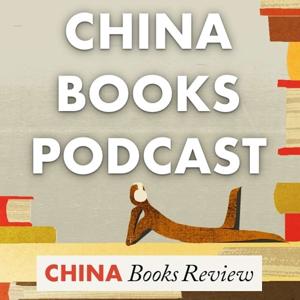

China’s edgy contemporary art exploded into global view over decades of China’s meteoric economic growth. Gone were the days of Mao Zedong insisting that art had to “serve the people", by which he meant, the Communist Party, with socialist realist propaganda. Freed from those contraints with Mao's death and the end of the Cultural Revolution in 1976, successive generations of contemporary artists in China worked through political trauma, explored Chinese identity, experimented with the styles of modern masters in other parts of the world, and found their own voices, in ways that drew global attention, and drove a hot art market in the early 2000s and 2010s. How did that all happen, and what’s happened to it now, under Xi Jinping’s reassertion of the idea that art – and journalism, and film, and pretty much everything – should serve the Party’s interests? In this episode, Barbara Pollack, an art critic, curator, and author who has focused on contemporary Chinese art since the late 1990s, shares her thinking and experience.
Barbara Pollack, author of The Wild, Wild East: An American Art Critic's Adventures in China (2010) and Brand New Art from China: A Generation on the Rise (2018), is an award-winning writer, art critic, and curator, and a respected voice on contemporary Chinese art for a quarter century. As a curator, she created My Generation: Young Chinese Artists (Tampa Museum of Art and Orange County Museum of Art, 2014-2015); Mirror Image: A Transformation of Chinese Identity (Asia Society Museum New York, 2022), and Multiply: Strength in Numbers (Modern Art Museum Shanghai, 2024). She is cofounder of Art at a Time Like This, a nonprofit organization that provides platforms for artists and curators to respond to current events and social crises.
The China Books Podcast is a companion of China Books Review, a project of Asia Society’s Center on U.S.-China Relations and The Wire China. For any queries or comments, please write to [email protected].
 View all episodes
 By China Books Review

4.8
1818 ratings
China’s edgy contemporary art exploded into global view over decades of China’s meteoric economic growth. Gone were the days of Mao Zedong insisting that art had to “serve the people", by which he meant, the Communist Party, with socialist realist propaganda. Freed from those contraints with Mao's death and the end of the Cultural Revolution in 1976, successive generations of contemporary artists in China worked through political trauma, explored Chinese identity, experimented with the styles of modern masters in other parts of the world, and found their own voices, in ways that drew global attention, and drove a hot art market in the early 2000s and 2010s. How did that all happen, and what’s happened to it now, under Xi Jinping’s reassertion of the idea that art – and journalism, and film, and pretty much everything – should serve the Party’s interests? In this episode, Barbara Pollack, an art critic, curator, and author who has focused on contemporary Chinese art since the late 1990s, shares her thinking and experience.
Barbara Pollack, author of The Wild, Wild East: An American Art Critic's Adventures in China (2010) and Brand New Art from China: A Generation on the Rise (2018), is an award-winning writer, art critic, and curator, and a respected voice on contemporary Chinese art for a quarter century. As a curator, she created My Generation: Young Chinese Artists (Tampa Museum of Art and Orange County Museum of Art, 2014-2015); Mirror Image: A Transformation of Chinese Identity (Asia Society Museum New York, 2022), and Multiply: Strength in Numbers (Modern Art Museum Shanghai, 2024). She is cofounder of Art at a Time Like This, a nonprofit organization that provides platforms for artists and curators to respond to current events and social crises.
The China Books Podcast is a companion of China Books Review, a project of Asia Society’s Center on U.S.-China Relations and The Wire China. For any queries or comments, please write to [email protected].
159 Listeners

1,808 Listeners
603 Listeners
209 Listeners

96 Listeners
291 Listeners
232 Listeners

153 Listeners
143 Listeners

366 Listeners

347 Listeners
394 Listeners

166 Listeners
194 Listeners
146 Listeners