
Sign up to save your podcasts
Or

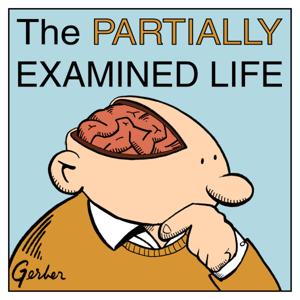

Concluding on "Culture and its Realm of Actuality," in Hegel's Phenomenology via sections 519-526.
We get into some of the ironic psychology here: In giving loyalty to the king, the nobles actually boost themselves qua givers. They should be grateful to the king to get wealth back from him, but being dependent on the king makes them resentful. The result is duplicitous people resenting those they claim to esteem, and moral language that is thus used inconsistently (the king is "good" when praised by "bad" when resented), which encourages jaded moral nihilism.
Sponsor: Get a $1/month e-commerce trial at shopify.com/pel.
Get more at partiallyexaminedlife.com. Visit partiallyexaminedlife.com/support to get ad-free episodes and tons of bonus discussion.
 View all episodes
 By Mark Linsenmayer, Wes Alwan, Seth Paskin, Dylan Casey

4.6
20912,091 ratings
Concluding on "Culture and its Realm of Actuality," in Hegel's Phenomenology via sections 519-526.
We get into some of the ironic psychology here: In giving loyalty to the king, the nobles actually boost themselves qua givers. They should be grateful to the king to get wealth back from him, but being dependent on the king makes them resentful. The result is duplicitous people resenting those they claim to esteem, and moral language that is thus used inconsistently (the king is "good" when praised by "bad" when resented), which encourages jaded moral nihilism.
Sponsor: Get a $1/month e-commerce trial at shopify.com/pel.
Get more at partiallyexaminedlife.com. Visit partiallyexaminedlife.com/support to get ad-free episodes and tons of bonus discussion.
15,229 Listeners
201 Listeners

2,680 Listeners

5,576 Listeners
870 Listeners

1,605 Listeners
1,532 Listeners
316 Listeners
512 Listeners
584 Listeners
357 Listeners

205 Listeners

465 Listeners
290 Listeners
231 Listeners