
Sign up to save your podcasts
Or

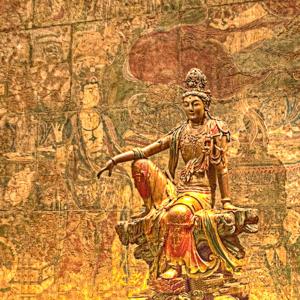


We return to mindfulness of breathing, with a gradual and persistent cultivation of stability, which is really getting the mind to calm down. Maintian a continuity of attention, a flow of mindfulness but without the habitual contraction which is almost always associated with ego, stress, a goal. Yogis that come out of hours of samadhi come out feeling fresh and revived. How? By the concentration coming out of a sense of release.
Post meditation: The second of the four preliminaries, reflecting on impermanence and death. This is a way for us to develop conative intelligence, that is, having wise or intelligent desires. There are so many dumb desires, the meditation on impermanence and our own mortality is like taking smart pills.
Meditation starts at: 7.15
Normally sustained focus comes at the cost of relaxation, we concentrate by contraction. This is exactly what is not done here. The balance is to increase the stability of attention, which entails some effort, but without losing the relaxation. Earlier we enhanced relaxation without losing clarity.
In a larger framework, again we come back to issue of balance. We are engaging in retreat, in mindfulness of breathing we are withdrawing our attention from the entire environment and then attending to the flow of sensation of the breath in the body and in the meantime monitoring the mind with introspection. As in warfare, we are retreating to recoup, re-strategise how we go back again.
Post meditation, Alan speaks on sustaining the ongoing flow of mindful presence off the cushion, so that when we return to the cushion it is an enhancement of what we are already doing, rather than something new.
Meditation starts at: 16.18
Balance of learning how to unwind the body and mind so they are at ease, allowing yourself this freedom, whilst still maintaining the clarity. That's a skill! Recognising that we are free for the next 24 minutes, we have leisure and no obligations. Additionally we have the opportunity to know how to make this leisure time most meaningful.
First line of the text 'First train in the preliminaries'. This refers to four, the first of which is covered in this session. Each of the preliminaries, shift our very perspective, a revolution. First of the four thoughts that turn the mind, inner revolution - all about a life of leisure and opportunity, the precious human rebirth. This life of leisure and opportunity is more precious than a wish fulfilling jewel.
Alan, also spoke on the Alia (spp?) project. He discussed a scientific methodology that could test the validity of Shamatha realisation, based on the recollection of previously measured experiences from a persons life, such as meals eaten in the previous years. Based on the results of this experiment, the validity of past lives could be analysed.
Being grateful for that feeling of ill at ease. If the mind feels just fine, the is no incentive for pursuing anything other than hedonic well-being. There would be no incentive for pursuing a spiritual path. For that sense of dukha, that subtle existential underlying sense of unease, of dissatisfaction of malaise, of restlessness, of feeling of lack of fulfilment, that is actually one of our most precious commodities.
Meditation starts at: 07:00
Guided meditation to take stock of each person’s specific and unique reasons for coming here. Four fold vision quest to answer these four questions:
After the mediation Alan provides a brief overview of the Seven-Point Mind Training by Atisha. He provides the lineage of the text and a moving story of the individual from whom he received these teachings.
Meditation starts at: 17:53
Moving right into the foundational practice of settling the body, speech and mind in its natural state. Learning how to breathe – to let the respiration flow naturally without being forced or restricted.
Meditation starts at: 06:04
Alan welcomes the participants at the Thanyapura MindCenter and explains some of the groundrules for the 8-week Fall 2013 retreat. Alan begins by presenting some logistics followed by the content - the framework for his cycle of teachings. Alan elaborates on general recommendations: How to get most out of the retreat.
Alan also welcomes everybody who is following this retreat by listening to the podcast.
Note: Several sections containing personal introduction of the retreatants have been removed.
From the publisher's feed

326 Listeners