
Sign up to save your podcasts
Or

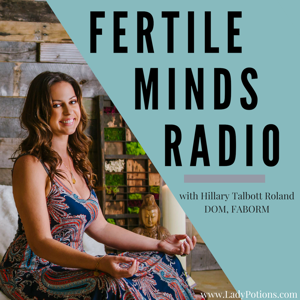


Today's episode is a re-release of episode three. Missed it the first time around? Well we're back with a remastered version. Loved it back in the day? Re-listen and re-love it (and maybe pick up on some gems you didn't hear when it first aired). This episode is meant to give you a glimpse at how herbs can be safely used in treating infertility. I could do an entire show just on herbs alone, so this is meant to give you the basics so you have a better understanding of how herbs might help and why exactly we are prescribing what we are. Herbs can seem scary for a gal that's used to prescriptions and my hope is that this episode can shed a little light on not only how helpful they can be, but to help you feel more secure about how and why to use them. And if you are one of those that wants to do it all yourself, I'll point you to some resources to find more information on your journey of self-discovery. For those of you that want to know why, but prefer to let a board-certified practitioner diagnose and prescribe, I'm going to tell you how to find one of those too. So let's dive in.
Takeaways:
[4:20] Herbs are amazing tools to treat infertility and have been used by most cultures on the planet to enhance fertility for thousands of years. There is historical evidence that the Egyptians, Greeks, Chinese, and Indian cultures all used them in this fashion.
[5:57] The 8 Pillars and the philosophy behind enhancing fertility when using TCM is this. Balance the body out and it will get pregnant on its own. Truly it's that simple.
If there is heat, cool it.
If there is cold, warm it up.
If there is dryness somewhere in the body, find it, find the herb that moistens that part of the body and use it.
If there is dampness, dry it.
If there is deficiency, supplement it.
If there are signs of excess, drain it.
[6:59] Western Herbalists like an "eye for an eye" treatment; western herbalists tend to get into the makeup of the herb and many of the herbs contain flavonoids, glycosides, and terpenoids. Eclectic medicine was a branch of American medicine which made use of botanical remedies along with other substances and physical therapy practices, popular in the latter half of the 19th and the first half of the 20th centuries.
[9:22] TCM, or Traditional Chinese Medicine, is incorporated more into their everyday life and cooking. TCM can treat the unexplained and confusing occurrences in the body that sometimes Western medicine can't.
[11:41] Aryuvedic uses the doshas.
The three doshas — Vata, Pitta, and Kapha — are derived from the five elements. Also known as mind-body types, the doshas express unique blends of physical, emotional, and mental characteristics. In Ayurveda, health is defined as the dynamic state of balance between mind, body, and environment. You can achieve and maintain a vibrant and joyful state of health by identifying your mind-body type and creating a lifestyle that supports your unique nature.
Continue Your Journey:
Deepak Chopra
Dosha Quiz
Adrenal Thyroid Revolution
Find an Acupuncturist
American Herbalists Guild
National Certification Commission for Acupuncture and Oriental Medicine
American Board of Oriental Reproductive Medicine
Herbalism on Wikipedia
Website
Ladypotions.com
So much of how we feel and the reality we create relate back to our thoughts. Up to 75% of our thoughts are repetitive ones, and they end up shaping our emotions and eventually much of our physiological state. In today's episode, Hillary provides a visualization and meditation practice to connect with our future selves and to help us become aware of how our thoughts affect our emotions. This is especially important in fertility, where we often must believe in something that hasn't happened yet, such as becoming a parent.
Takeaways:
[1:35] With more than one thought a second and 60,000 of them a day, it is completely normal for us to believe that our thoughts are the true reality.
[2:55] Most of our thoughts that continue to cycle throughout our adult life begin in the ages of 5-15 years old. This is when we are most trying to figure out and navigate the world around us, with our brain trying to create connections and realities to keep us safe.
[3:15] Your thoughts and beliefs create a vibration, a feeling, and emotion. They ultimately inform our nervous system and tell us if we are in a threatening situation or one where there are hope and safety.
[8:25] Hillary defines stress as an experience of an unmet need or expectation.
[9:42] A woman's brain can make fertility issues just as bad as a chronic health condition. It is common in infertility issues for our brains to get stuck on a loop questioning if it will ever happen or why it hasn't happened yet.
[10:43] By changing your thoughts you will change your outlook, emotions, and nervous system.
[11:01] The brain is always looking for confirmation of our thoughts.
[11:54] The exercise begins. This gives us the opportunity to see how fast you can change your stress response to a relaxation response and turn on our parasympathetic nervous system or what is known as breed and feed. This state not only enhances fertility but can also help hold a pregnancy, even if it is high risk.
References:
Fertile Minds on LibSyn
Fertile Minds on iTunes
@ladypotions4u
Lady Potions Meditations
Continue Your Journey:
Link to sign up for free 29-day meditation challenge
@ladypotions4u on Twitter
@ladypotions4u on Instagram
My Website: Ladypotions.com
Special Thanks to Christopher Lloyd Clarke for music
Disclaimer *
You must not rely on the information in this podcast as an alternative to medical advice from your doctor or another professional healthcare provider. If you have any specific questions about any medical matter you should consult your doctor or another professional healthcare provider. If you think you may be suffering from any medical condition you should seek immediate medical attention. You should never delay seeking medical advice, disregard medical advice, or discontinue medical treatment because of information on this website or in this podcast.
Lisa Hendrickson-Jack is a certified Fertility Awareness Educator, Holistic Reproductive Health Practitioner, and author of The Fifth Vital Sign. She joins the show today to speak with Hillary about using Fertility Awareness as a primary method of birth control, ovulation as a health marker, important things to know about hormone birth control, and an evidence-based approach as to how to set ourselves up for success when it comes to our menstrual cycle and fertility tracking. They discuss the realities of the public education system regarding this topic, hear more about her Fertility Friday Podcast, and ways in which women can connect more with their cycle and fertility.
Takeaways:
[7:11] Lisa herself didn't discover fertility awareness until about age 18 or 19, and even after that, there has been very little that has progressed in terms of teaching about menstruation and fertility in the public education system.
[9:12] Woman are often made to feel as though the menstrual cycle is something dirty or a nuisance that must be stopped or contained. Their concerns are dismissed and side effects which can be very serious and painful are diminished.
[12:26] Our ovulation is a marker of our health. In the same way that we have come to learn more about men's health and their fertility being intertwined, Lisa and Hillary hope the same for the near future regarding ovulation and women's health.
[15:58] Menstruation is a vital sign of what our body needs, how it is doing and is connected to many layers of health.
[24:54] The hormonal birth control pill stops ovulation to some degree, which dramatically reduces the natural production of our bodies estrogen and progesterone, and affects our free testosterone.
[27:02] Although how it plays out is different in everyone, all women who take hormonal birth control do experience effects in their hormones and organs.
[28:54] It is important for women to be upfront and aware of the side effects of the hormone birth control pill. Depression is a big one, along with mood swings.
[29:41] Research shows that hormonal birth control is associated with a temporary delay in the return of normal fertility. The shot is the worst offender, with other methods falling in after.
[33:56] Some women may hear about the side effects of hormonal birth control and decide it's not for them, while others decide they will still use it but modify the use. Whatever choice that works best for you is the right one, but it's important to be informed and aware.
[37:16] Birth control stops your normal cycle and replaces it with a fake one, but it doesn't address or fix the real root of irregular menstrual cycles.
[45:12] Since birth control shrinks the ovaries, there is an established delay between when we come off birth control and when our body is normalized and fertile.
[52:35] There are many options for tracking our menstrual cycle and fertility. Because there is only about one week out of the month we can get pregnant, knowing this fact alone can be a total game changer.
[60:30] Devices such as wearable thermometers can be very helpful, but nothing trumps fertility awareness and training from a professional instructor. Much like learning to drive a car, it is a one-time investment that can lead to years of knowledge and empowerment.
References:
Fertile Minds on LibSyn
Fertile Minds on iTunes
@ladypotions4u
The Fifth Vital Sign: Master Your Cycles & Optimize Your Fertility, by Lisa Hendrickson-Jack
Fertility Friday Podcast
Continue Your Journey:
Link to sign up for free 29-day meditation challenge
@ladypotions4u on Twitter
@ladypotions4u on Instagram
My Website: Ladypotions.com
Special Thanks to Christopher Lloyd Clarke for music
Disclaimer *
You must not rely on the information in this podcast as an alternative to medical advice from your doctor or another professional healthcare provider. If you have any specific questions about any medical matter you should consult your doctor or another professional healthcare provider. If you think you may be suffering from any medical condition you should seek immediate medical attention. You should never delay seeking medical advice, disregard medical advice, or discontinue medical treatment because of information on this website or in this podcast.
Today's episode is a re-release of episode two. Missed it the first time around? Well, we're back with a remastered version. Loved it back in the day? Re-listen and re-love it (and maybe pick up on some gems you didn't hear when it first aired). Today's guests are Marc Sherman and Dr. Kate Webster, creators of the revolutionary online course Organic Conceptions. This course began with Erin and Marc Sherman's personal struggle in trying to conceive for a decade. In partnership with Dr. Webster, they created a roadmap for themselves and others to chart a course that engages and empowers couples on their path to parenthood. They share the primary goals of Organic Conceptions, the main three chapters and primary expectations that arise and the importance of surrender. Marc and Dr. Webster are really doing some amazing work with helping others achieve emotional health and insight during their process and I thank them for digging deep in their own experience to provide a ton of hope, guidance, and information for others.
Takeaways:
[7:48] I share the impressive backgrounds and bios of Dr. Kate Webster and Erin and Marc Sherman.
[12:15] Dr. Webster covers the primary goals of Organic Conceptions, stemming out of predictable problems and patterns with infertility. She also shares what the program is not so people have appropriate expectations.
[13:08] Depending on the statistics, between 1-in-6 and 1-in-8 couples struggles with infertility.
[21:07] They combine influences from biological, emotional, psychological, and sociological models.
[27:11] The program provides the opportunity for couples to go through the steps at their own time in their own home rather than rushing to appointments.
[31:37] Every story culminated into three chapters and nine transitions: The conception of doubt, couples losing patience, and surrender into life.
[24:31] Dr. Webster lists the five primary expectations that arise: age, sequencing of life events, gender roles, images of success, and trust in the medical model.
[39:38] The stages in the surrender into life chapter: rawness, reaching forward and uniting together, renewal.
[41:48] More than one third of women have pre-conceived doubt about their reproductive abilities before they even try get pregnant.
[49:48] It's difficult for young women today to try and fit in a career, marriage, and family goals all in one decade.
[60:56] We hear the difference of mal-adaptive vs adaptive coping.
[61:57] Surrendering does not mean just relaxing or giving up on a dream for parenthood. Dr. Webster and Marc share stories of couples that accept the things they cannot change, let go of past disappointment and control over the future to end up finding life again and new interests and passions. A lot of times people have success even after they are significantly older than when they first started on their journey.
[74:23] Every listener gets a free PDF and a monetary discount. They are coming out with a workbook shortly as well.
References:
Organic Conceptions
Dr. Kate Webster
You are the Placebo
Link to free PDF and discount rate on Organic Conceptions: Ladypotions.com
Continue Your Journey:
Link to sign up for free 29-day meditation challenge
@ladypotions4u on Twitter
@ladypotions4u on Instagram
My Website: Ladypotions.com
Special Thanks to Christopher Lloyd Clarke for music
Disclaimer *
You must not rely on the information in this podcast as an alternative to medical advice from your doctor or other professional healthcare provider. If you have any specific questions about any medical matter you should consult your doctor or other professional healthcare provider. If you think you may be suffering from any medical condition you should seek immediate medical attention. You should never delay seeking medical advice, disregard medical advice, or discontinue medical treatment because of information on this website or in this podcast.
Quotes
"Sometimes the struggle is the gift and the door closing is just leading you somewhere else."
"Couples are living to try, rather than trying to live."
"We have a tendency to … leap to conclusions rather than trying to reframe it."
"When we have a problem, we tend to check in with the experts first before we check in with ourselves."
"So often we are held hostage by our beliefs but we can change our minds. What we think may not always be true."
About Organic Conceptions:
Organic Conceptions began with founders Erin and Marc Sherman's personal struggle in trying to conceive for nearly a decade. In partnership with Ph.D Kate Webster they used proven scientific practices to dig deep into stories from couples like them who unexpectedly overcame infertility naturally (i.e Adopted then conceived, and other such stories). Each individual story offers insight, but when woven together, they provide a road map that can guide others on their journey. Organic Conceptions' goal is to chart a course that educates, engages, and empowers couples on their personal path to parenthood.
Jennifer Summerfeldt, MACP, joins the show to talk about how our bodies protect us through trauma, and her wisdom from working in the field of maternal health and psychology for over two decades. Along with being a counselor, childbirth advocate, doula, and maternal educator, Jennifer is the founder and creator of the Healing After Birth Program. She and Hillary talk about the brain and how it works in trauma, what led Jennifer to be a birth crusader, the different lenses of healing, and many of the indicators that may be pointing at trauma in birth that most people aren't aware of.
To share your own fertility story, please email me at [email protected]. I look forward to connecting with you, as you are what this podcast is all about.
Takeaways:
[8:17] Jennifer was a college-level athlete and has always had a passion for peak performance and a deep determination to excel in both mindset and physical achievement. She used some of the skills such as mental rehearsal and self-talk for her own birthing experience. Her intimate relationship with her own physiology in performance led to her self-directed choice in her eighth month to switch caregivers to hire a midwife to attend her first birth. The incredible empowerment she felt gave her a new mission to spread the word that there is much behind the veil of birth many women are not informed of.
[14:48] In her second childbirth, she endured a rough time emotionally, but stayed curious in her education, and the consumption of information and stories. This led her to discover just how many births are traumatic and violent for both the mothers and the babies, and it blew open her passion even more deeply.
[19:51] A conscious conception looks at all facets of birth and pregnancy. Jennifer believes we are initiated throughout an entire energetic continuum of bearing life which may include losses, conception issues, complicated childbirth and labor, or postpartum challenges. In our society, we are not often prepared or comfortable with the struggles these bring and in the tendency to suppress or move quickly through it, we miss out on the healing that surrendering to our wisdom and knowledge within brings.
[29:21] The last few years have shown an increase in care and languaging, but Jennifer feels there is a long way to go. She defines trauma as what we experience as the result of having an experience that activated our stress response, leaving us feeling trapped in our survival stress response. There is a physical reaction that instinctively happens, all intended for our safety and protection. However, the psychological component traps us in the stress response, in which we have a hard time discharging suffering and the feeling of threat to our survival.
[33:45] When we understand a disorganized system through the lens of a system, we can start to see how to use our innate intelligence to bring us back into balance and take the information and store it in an appropriate manner.
[40:03] The stress response not only affects digestion but also shuts down our reproductive system. Our bodies know that it is not time to reproduce if we need to protect ourselves from what we perceive as a threat.
[42:25] For those of us that have lived with unresolved trauma, we know that it has a deep and profound impact on our entire mind, body, and soul.
[44:17] Mammals in the wild know how to literally discharge and shake off energy, rage through and eventually restore the somatic repercussion of trauma.
[49:51] If we can cultivate the practice of mindfulness and activate the observer within us, it brings our pre-frontal cortex more back into balance.
[52:40] It's the meaning behind the feelings that we are actually afraid of. We fear if I feel too much, I may die or hurt someone or myself.
[57:02] We get to a point where the distractions and diversions don't work, and we are forced to do the work and create a new story in what Jennifer describes as the "collective womb."
[61:34] Women tend to feel that their story is not important enough and yet storytelling is what makes us feel human and connected.
[66:20] Our unresolved birth experience has a profound impact on our relationships and the story we carry that impacts and ripples out in our life. Jennifer reminds us that the more we can cultivate the practice of "being with" and the less we label or create a biased attachment of meaning, the more we can be in true awe of our physiology and the amazing being that we are.
[69:44] Our biology is in favor of us wanting to thrive and is constantly giving us feedback and rich information.
References:
Fertile Minds on LibSyn
Fertile Minds on iTunes
@ladypotions4u
Healing After Birth: Navigating Your Emotions After A Difficult Childbirth, by Jennifer Summerfeldt MACP
Spiritual Midwifery, by Ina May Gaskin
Birth Without Violence
Immaculate Deception: A New Look at Women and Childbirth in America, by Suzanne Arms
Jennifer Summerfeldt
Iain McGilchrist
Dan Siegel: "Flipping the Lid"
Healing After Birth Podcast
FREE 4 part video series - What Your Doctor Is Likely NOT Telling You About PPD/A CLICK HERE
Are you a soulfully inspired woman looking for next level counseling and coaching programs? CLICK HERE
Continue Your Journey:
Link to sign up for free 29-day meditation challenge
@ladypotions4u on Twitter
@ladypotions4u on Instagram
My Website: Ladypotions.com
Special Thanks to Christopher Lloyd Clarke for music
Disclaimer *
You must not rely on the information in this podcast as an alternative to medical advice from your doctor or another professional healthcare provider. If you have any specific questions about any medical matter you should consult your doctor or another professional healthcare provider. If you think you may be suffering from any medical condition you should seek immediate medical attention. You should never delay seeking medical advice, disregard medical advice, or discontinue medical treatment because of information on this website or in this podcast.
Shauna Wetenkamp joins the show to share her immense knowledge on essential oils and examples of ways she has used them in ways many people may not have thought possible. She talks about her own personal journey in using them to help heal after a severe accident, how essential oils can enhance our life and our fertility, the ways the "nose knows" when it comes to sniffing out great quality oils, which oils are great for specific emotions, and how to choose them intuitively.
To share your own fertility story, please email me at [email protected]. I look forward to connecting with you, as you are what this podcast is all about.
Takeaways:
[6:43] A very severe accident that Shauna endured, led her to appreciate the gift of being able to learn firsthand the healing properties of essential oils both physically and emotionally.
[9:39] A different oil can be applied for both almost every emotional and physical pain.
[12:38] When it comes to essential oils and medicine perfumes, a little goes a long way. The quality also matters, along with making sure it's the appropriate oil and any emotions that need to be addressed along with the oil usage.
[16:22] Shauna loves to partner with doTerra because of their dedication to community, high quality, and purity, and work to uplift countries with indigenous peoples.
[19:42] For pain, a few that Shauna recommends are: Clary Sage (great for cramps), Frankincense, Lemongrass, Pink Pepper, Thyme, and Marjoram.
[28:12] Essential oils are a great tool for working with your mind and body as you observe emotions that are coming up, and that may have been stuck or pushed down for years.
[29:37] Shauna did her own physical therapy, and was completely committed to the only option of healing and regaining her health.
[33:16] Marjoram and Cedarwood are the oils of community, and the ability to allow true connection with others and to notice the good things present in your life.
[37:22] Geranium (love and trust) and Ylang Ylang (inner child) are great in a bath with Epsom salts to soak away the anger and sadness.
[40:23] Most often the oils we tend to stay away from and resist the most are the ones we could benefit from. Shauna advises bringing it in slowly and working in the emotion that it addresses.
[49:37] Shauna loves to put Sandalwood on her third eye for extra help in her intuition, and Rose to connect more with divine love. For fear, Bergamot is about loving yourself and having the courage to put ourselves first. Ginger, Lavender (clear communication), and Cypress (motion and flow) are also used to summon courage and help alleviate the physical symptoms of fear and anxiety.
[58:29] Journaling is a great way to record where you are at and put out emotions that are stuck.
References:
Fertile Minds on LibSyn
Fertile Minds on iTunes
@ladypotions4u
Botanical Medicine for Women's Health, by Aviva Romm
Encyclopedia of Essential Oils, by Julia Lawless
Essential Oils for Pregnancy, Birth & Babies, by Stephanie Fritz
Emotions and Essential Oils, by Enlighten
Ep 47: "Bach Flower Remedies for Emotions that Come Along with Fertility Challenges"
Shauna On Instagram
Shauna Wetenkamp Facebook
Continue Your Journey:
Link to sign up for free 29-day meditation challenge
@ladypotions4u on Twitter
@ladypotions4u on Instagram
My Website: Ladypotions.com
Special Thanks to Christopher Lloyd Clarke for music
Disclaimer *
You must not rely on the information in this podcast as an alternative to medical advice from your doctor or another professional healthcare provider. If you have any specific questions about any medical matter you should consult your doctor or another professional healthcare provider. If you think you may be suffering from any medical condition you should seek immediate medical attention. You should never delay seeking medical advice, disregard medical advice, or discontinue medical treatment because of information on this website or in this podcast.
This week's episode is all about innovation in IVF. The highly esteemed reproductive endocrinologists, Drs. Kathy and Kevin Doody came on to talk about their process of what they call "effortless IVF" and how it helps couples conceive. The Doodys talk about their clinic in Bedford, TX, the specifics of their process, and the changes they have witnessed in over 30 years in the field of assisted reproductive medicine. In my opinion, their use of the INVOcell™ helps to make IVF as close to natural as possible. If you are someone that has hit a wall in terms of the all-natural route or is over the age of 35 and looking to check out your options, I highly recommend you have a listen.
To share your own fertility story, please email me at [email protected]. I look forward to connecting with you, as you are what this podcast is all about.
Takeaways:
[2:06] Dr. Kathy is board certified in Obstetrics and Gynecology and subspecialty board certified in Reproductive Endocrinology/Infertility. She has received multiple recognitions as one of Fort Worth's Top Docs, as well as one of Texas' Super doctors. Dr. Kevin is is board certified in Obstetrics and Gynecology and sub-specialty board certified in Reproductive Endocrinology/Infertility. Dr. Kevin has received multiple honors as one of Fort Worth's Top Docs, one of Texas' Super Doctors and one of the Best Doctors in America for the last several years. In 2017, Dr. Kevin was recognized with the Resolve National Infertility Association's Hope Award for Achievement in recognition for his contributions. While Dr. Kevin was serving as president of the Society of Assisted Reproductive Technology (SART), he was instrumental in updating the SART National Summary Data to assist patients in making informed decisions about medical care. Dr. Kevin was also recognized as Microsoft Physician of the Year 2004. And they are married! Which is super cool.
[7:04] Their Center for Assisted Reproduction, CARE Fertility, in Bedford, Texas has an outstanding number of firsts in their location: the first ICSI pregnancy in the geographical area, they were first to successfully implement a blastocyst culture system, first in the world to use the INVOcell™ device in a blastocyst embryo transfer, and even trained the doctor in Virginia who helped the first same-sex couple both carry their baby.
[9:22] IVF, or In Vitro Fertilization, means that the egg is fertilized outside the body. ICSI, or Intracytoplasmic sperm injection, is the placement of a single sperm into the egg. It was invented in Brussels, and the Doodys were at the forefront of its discovery and implementation.
[10:36] A personal happy story! The Doodys had a hand in creating their nephew through ICSI.
[11:11] The INVOcell™ is a plastic capsule shaped like a champagne cork. It is an incubator and allows for the woman to provide the right environment and atmosphere for embryo development. It enters the uterus at the blastocyst stage.
[13:41] Dr. Kathy says it's important for patients to understand why it makes sense to put the embryo into the body because it reflects what happens naturally in the different stages of ovulation.
[15:30] Part of the quality control is being able to make sure that the egg has normally fertilized, and it does take the place of IUI.
[17:47] The Doodys believe it is better to allow the natural competitive process when you can.
[18:20] Effortless IVF decreases the cost by about 50% and the amount of medication and monitoring that usually come with traditional IVF. The two main factors that are taken into account in a woman are her egg count, which is determined by her Anti-Müllerian Hormone (AMH) levels, and her body weight. The appropriate candidates need to have an AMH higher than 0.8, a body weight less than 190 lbs, and a BMI less than 35.
[23:40] There is a 59% success rate with frozen embryo transfers with no monitoring and transferring only one embryo in patients.
[26:41] The approach is closer to mother nature, as they are able to discern which embryo will transfer successfully.
[30:01] Dr. Kevin explains why the process is so streamlined from a laboratory standpoint, and the minimal interventions that take place in the process.
[33:21] Complex organic systems like variance and the human body is certainly an example of that.
[34:54] The INVOcell™ was founded by Dr. Claude Ranoux, a fertility specialist.
[36:47] This discovery has been a huge win for same-sex couples, as it is opening up new avenues and options for fertilization.
[41:02] Dr. Kathy's advice for couples looking to conceive, is to realize you aren't alone, and it is important to be proactive and seek out the options in your area. Dr. Kevin reminds us to not get discouraged, and not to let fear of failure hold you back. It is hard to give up control, and effortless IVF makes the appointments more convenient and less daunting.
References:
Fertile Minds on LibSyn
Fertile Minds on iTunes
@ladypotions4u
Center for Assisted Reproductive Care
American Society of Reproductive Medicine
Ep #30: "Male Infertility with Dr. Paul Turek"
Effortless IVF
"Comparing blastocyst quality and live birth rates of intravaginal culture using INVOcell™ to traditional in vitro incubation in a randomized open-label prospective controlled trial"
INVO Bioscience
@CareFertilityUS
Continue Your Journey:
Link to sign up for free 29-day meditation challenge
@ladypotions4u on Twitter
@ladypotions4u on Instagram
My Website: Ladypotions.com
Special Thanks to Christopher Lloyd Clarke for music
Disclaimer *
You must not rely on the information in this podcast as an alternative to medical advice from your doctor or another professional healthcare provider. If you have any specific questions about any medical matter you should consult your doctor or another professional healthcare provider. If you think you may be suffering from any medical condition you should seek immediate medical attention. You should never delay seeking medical advice, disregard medical advice, or discontinue medical treatment because of information on this website or in this podcast.
In this week's episode, we welcome back the highly credentialed Reiki master and Meditation Facilitator Sharna Langlais, what moon cycles have to do with fertility, how you can work with the moon when it comes to your emotions and energy levels, and what exactly it means to cycle with the moon. We give you a brief history of how we have connected with La Luna over the years, ways to practice that honor and respect tradition of connecting with the moon's deep energy, and a view of how to navigate the moon's cycle with grace and ease.
To share your own fertility story, please email me at [email protected]. I look forward to connecting with you, as you are what this podcast is all about.
Takeaways:
[5:51] When Sharna talks about the moon with her clients, she also talks about the larger cycles of nature and the solstice energy that comes with releasing and shedding the old to welcome the new.
[7:15] Mercury Retrograde usually happens 3 times a year and is typically a 3-week cycle where Mercury appears to be going backward in the night sky. From an astrological standpoint, Mercury rules communication, travels and thought, and is thought to affect decisions, conversations, technology, etc. Sharna sees it as an opportunity to slow down and get more intentional to reevaluate and repurpose our life.
[13:54] As we cycle more with the seasons and look for the opportunities to connect to spiritual traditions, it even goes further back to times in history where we experienced cultural appropriation for our beliefs and traditions. Sharna would like to reframe "paganism," not as a demonic and satanic term, but as a way to show that we are aligning ourselves with the elements of nature.
[19:28] Moving ourselves out of fear and into research is a huge element of growth and reclaiming information that was lost and taken away from women, from the structures of power and control.
[23:45] To Sharna, cycling with the moon is about being connected to nature, physical bodies and everything that feminine is about: mystery, chaos, observation, openness. Hillary thinks of it as a time when we are most fertile.
[26:35] White moon is the idea that you bleed at the new or the waning moon, and the period is a time and rest and recovery. The red moon means your cycle follows the full moon, and you are most fertile during the new or waning moon. In ancient times, the red moon cycle was said to demonstrate their creativeness outward, and they are focused on self-growth, mentorship, and creativity. The feminine energy allows us to observe and accept what our body is doing on any different day.
[33:40] One of the first things Sharna recommends to get aligned with the moon is just to observe what it is that is happening with their body for three cycles.
[36:11] In olden times they used to offer menstrual blood to the land and fertilize their plants with it. Sharna finds that the "messiness" itself is a feminine energy and our creative energy at our core. She also recommends charting our cycle, moon gazing and spending time with nature and trees.
[44:54] Sharna says all releases are good releases, no matter how society has told us to be shameful of them.
[48:59] The new moon symbolizes new beginnings, and it begins to wax or become fuller leading to when it's at its fullest at the full moon. We are usually intention-setting around a new moon, and looking at what we would like to create over the next period. Traditionally, full moon cycles honor fertility and celebrate releasing what is no longer necessary.
[56:02] When you start to observe how the moon cycles affect your energy and period, it becomes fascinating to watch and plan life changes and interactions accordingly.
[58:53] The more Sharna does energy work, the less she finds herself affected by her menstrual cycle.
[63:07] Moon energy is feminine, and sun energy is masculine. Sharna compares it to a dance of two lovers.
References:
Fertile Minds on LibSyn
Fertile Minds on iTunes
@ladypotions4u
Sharna Langlais
Seek Spark Shine
Ep #055: "Could Your Fertility Challenges Be An Unexpected Spiritual Awakening?"
Kissing the Hag, by Emma Restall Orr
Miranda Gray
Ep #035 "Mastering Mindfulness During a High Risk Pregnancy"
Ep #037 "TCM Wants to Help You Conceive"
Sharna's Full Moon Gathering
Written Full Moon Release — Hillary will add
Leah Whitehorse
Continue Your Journey:
Link to sign up for free 29-day meditation challenge
@ladypotions4u on Twitter
@ladypotions4u on Instagram
My Website: Ladypotions.com
Special Thanks to Christopher Lloyd Clarke for music
Disclaimer *
You must not rely on the information in this podcast as an alternative to medical advice from your doctor or another professional healthcare provider. If you have any specific questions about any medical matter you should consult your doctor or another professional healthcare provider. If you think you may be suffering from any medical condition you should seek immediate medical attention. You should never delay seeking medical advice, disregard medical advice, or discontinue medical treatment because of information on this website or in this podcast.
From the publisher's feed

589 Listeners
450 Listeners

80 Listeners
250 Listeners
91 Listeners

37 Listeners
62 Listeners

5 Listeners
57 Listeners

46,938 Listeners
555 Listeners
136 Listeners