
Sign up to save your podcasts
Or



Based on Podcast App listening data
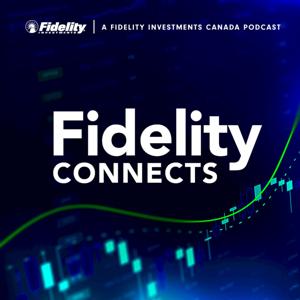
As Canada and the U.S. anticipate a return to pre-COVID business activity, Darren Lekkerkerker, portfolio manager, shares his perspectives on valuations, what the markets may have priced in and where he is seeing opportunities and strong fundamentals. Darren manages Fidelity North American Equity Class, and focuses solely on high-quality businesses. There’s been much discussion centred around the market’s rotation to value lately. Darren adds that cyclical and commodities provide opportunity since they are relatively inexpensive but still have a lot of earnings growth. Two commodities that he finds particularly attractive are agriculture stocks and copper producers. Darren believes that copper is a “green metal” as it is less cyclical and more secular. Darren also notes that he is bullish on Canada and the U.S. since they have a lot of built-up savings from the pandemic. Additionally, he shares his views on data and technology, as well as labour and wages.
Recorded on June 9, 2021.
Inflation continues to ripple through the economy, and many investors wonder how they should position portfolios for income and capital appreciation. We welcome Don Newman, portfolio manager of Fidelity Dividend Plus Fund to discuss the outlook for dividend-paying companies and dividend yields as the environment begins to change. Don says fundamentals currently look good, valuations started relatively low, and the economy is doing well; because of this, dividends are an attractive place to be. He also shares his thought on inflation, noting that he believes there are two sides. On one side, there is going to be inflation, and on the other side, it is secular because you can't have long-term inflation when you have demographics trending older. Don has three different buckets he likes: secular growers, good stable dividend companies, and beaten-up deep cyclicals. Additionally, he believes that Canada will benefit from reopening and discusses positioning for a rise in interest rates.
Recorded on June 8, 2021.
Dave Bushnell, SVP of Advisor Distribution, Andrew Clee, VP of Product, and Michelle Munro, Director of Tax and Research, discuss how working with a financial advisor over time can create up to 2.3x more wealth*, and strategies that have strong return on potential investment. Advice from an advisor adds value: personalized investment strategy for the long term, guidance on major financial decisions, the encouraging of good financial habits, finding tax-efficient solutions, and offering support in times of market volatility.
Recorded on June 3, 2021.
*Source: More on the Value of Financial Advisors, by Claude Montmarquette and Alexandre Prud’Homme, CIRANO, 2020. The average household with a financial advisor for 15 years or more had asset values 2.3x higher than an average “comparable” household without a financial advisor.
Recent employment numbers have fallen short of expectations for two straight months, and many investors wonder what this means for markets. In today's episode, we are joined by Director of Global Macro, Jurrien Timmer, to provide insights on what's moving the markets around the world as we transition from early to mid-business cycle. Jurrien explains that the Fed and market know that the conversation for rising interest rates is inevitable. He says that from the March low in 2020, the S&P is up 95%. However, from April 2021 to now, it has not moved nearly as much. There is already a transition in the market as growth goes to value and as the high momentum stocks go toward more energy and financials. Jurrien discusses the structure of rates, noting that the market correctly anticipates that the Fed will raise rates very slowly and gradually. Jurrien also speaks about commodities and currencies. He says that it is hard to see commodities do better than they already have and that he remains structurally bearish on the U.S. dollar. Follow along with Jurrien's charts on Twitter: @TimmerFidelity
Recorded on June 7, 2021.
Sector Strategist, Denise Chisholm, shares her unique insights and perspectives on the sectors to watch in global markets. Denise explains she has seen a much tighter labour market recently compared to the past two cycles. The most intriguing data that Denise is watching right now is Unit Labour Costs; the difference in this cycle is that we need more job growth, and we need more wage growth. Consumers have been very price sensitive over the last 10 years because they have not had that discretionary income. Denise says that we are not just looking at a different recovery; we also face a different type of consumer. Denise discusses value rotation stating that value stocks have gotten cheaper as they have rallied, and that cheapness is good. Denise also adds that healthcare is on the cheap side while real estate is costly.
Recorded on June 3, 2021.
Institutional Portfolio Manager Ilan Kolet and SVP of Asset Allocation Research Dirk Hofschire discuss what rising inflation means for investment portfolios and asset allocation. Ilan talks about the dangers of inflation shock, noting that we should be more concerned with the medium-term, underlying inflation that could change things. Dirk also adds that we are currently in an environment where it is difficult to tell whether the growth is real or it is inflation since inflation is difficult to measure. Additionally, they discuss the degree to which equitable policies are sustainable and offer insight into how real assets may play a part in asset allocation with respect to inflation protection. Dirk comments on the economic reopening saying he believes there are many potential tailwinds as consumers are ready to spend and release their pent-up demand impulses.
From the publisher's feed
Ranked by our users in the last 21 days

966 Listeners

1,172 Listeners

2,168 Listeners
194 Listeners

946 Listeners

793 Listeners

2,021 Listeners
475 Listeners

2,140 Listeners
931 Listeners
1,297 Listeners
83 Listeners
211 Listeners

348 Listeners

80 Listeners