
Sign up to save your podcasts
Or

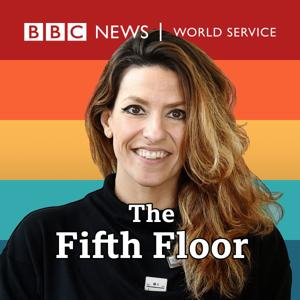


It's more than two weeks since a deadly earthquake struck south east Afghanistan, killing more than a thousand people and leaving tens of thousands homeless. Auliya Atrafi from BBC Media Action in Kabul and Aamir Peerzada from BBC Delhi both travelled to the epicentre in Paktika province, and Ali Hamedani tracked down survivors from his base in London.
Bolsonaro and Brazil's black women voters
Cairo houseboats
(Photo: Auliya Atrafi of BBC Media Action interviewing an earthquake survivor. Credit: Courtesy BBC Media Action Afghanistan)
Since February, thousands of international volunteers have travelled to Ukraine to help in the fight against Russia. We hear about some foreign combatants whose stories have been reported by our language services, with Sunyoung Jeong of BBC Korean, Benny Lu of BBC Chinese and Beverly Ochieng of BBC Monitoring in Nairobi.
Lend me a saying
A new king for Cameroon's Mankon people
(Photo: Taiwanese volunteer fighter Mr Lee in Kyiv. Credit: Daniel Ceng)
In more than 200 years as a republic, Colombia has never elected a left-wing leader - until now. Gustavo Petro, a former member of the M-19 rebel group, narrowly won in a very polarised election. He said Colombia “voted for change.” BBC Mundo’s Daniel Pardo, who's from Bogota, witnessed the celebrations.
North Korean trash
Russia's lost generals
The imprisonment of Aung San Suu Kyi
Vietnamese brides
(Photo: Gustavo Petro and Francia Marquez. Credit: Juan Barreto/AFP via Getty Images)
BBC reporter Runako Celina tells us about her long search for the origins of a shocking video circulating on Chinese social media in 2020. It showed a group of African children being instructed to chant racist phrases in Chinese. The answers Runako found are in her BBC Africa Eye documentary Racism for Sale.
For the love of mangoes!
New words and a culture shift in Ukraine
Bangladesh container depot blast
Ventriloquist queen
(Photo: A Chinese greeting from African children. Credit: BBC)
The numbers of people living in the most populated country in the world is expected to start falling this year, for the first time since the great famine more than six decades ago. There's concern about what that means for the global economy, but what do people in China think? BBC Chinese editor Howard Zhang explains why the 3-child policy hasn’t worked.
Afrocentrism
Fortune-telling in Thailand
A visit to Delhi's Lodi Gardens
(Photo: Chinese babies in cots. Credit: Gong Bo/VCG via Getty Images)
Natalya is a Russian journalist working for BBC Monitoring, and her husband and colleague, Yuriy, is Ukrainian. They have been evacuated from their home in Kyiv to Lviv. Natalya tells us about the challenges of family life during war, and how she’s given up trying to convince some friends in Russia about what’s really happening.
Changing attitudes in India
Why Germans are migrating to Paraguay
Goodbye to South Korea's Blue House
Uganda's Batwa people
Presenter: David Amanor
(Photo: Wedding rings. Credit: BBC)
How have the lives of the thousands of Russians living in Ukraine changed since the invasion? BBC Arabic's Heba Bitar met three Russian nationals who told her about their conflicted sense of identity and the practical challenges they are facing.
The latest from Bollywood
Why battery-powered rickshaws are taking over in Bangladesh
LGBTQ+ rights in Qatar
Ukraine’s lost animals
(Photo: Russian man by a memorial in Kyiv for Ukrainian soldiers. Credit: BBC)
How do you arrange a wedding in a warzone? According to Ukrainian authorities nearly 4,000 couples tied the knot in the first 10 days after the invasion. BBC Ukrainian's Zhanna Bezpiatchuk has recently come back from Ukraine – where she met a couple who exchanged their vows as twin rockets hit the city of Lviv, in western Ukraine.
Meet the Nigerian Spiderman
Afghan women lawyers
Presenter: Faranak Amidi
(Photo: Newly-weds Aliona and Boghdan. Credit: Marek Polaszewski)
The Ukrainian port city of Mariupol has been under attack by the Russians since the first day of the invasion on 24 February. It now lies in ruins, but still Ukrainian fighters are resisting in the Azovstal steelworks. Vitaliy Shevchenko, Russia editor of BBC Monitoring, tells us about the complex history and identity of Mariupol.
Reporting Sri Lanka
South Korea's hijabi influencer
My Childhood, My Country
Presenter: Faranak Amidi
(Photo: Theatre building destroyed in the Ukraine-Russia conflict in Mariupol, April 25, 2022. Credit: Reuters/Alexander Ermochenko)
Tattoo parlours have switched from hearts and roses to Cossacks and flags as Ukrainians ink their bodies with patriotic tattoos to permanently record what their country is going through. BBC Ukrainian's Anastasiya Gribanova visited a Lviv tattoo parlour to find out the most popular images, and what they mean to citizens and soldiers.
Miami's F1 vices
A 30 year battle for sewage services
Real Housewives of Lagos
Why not... dance?
(Photo: Ukrainian patriotic tattoo. Credit: BBC)
From the publisher's feed
Faranak Amidi takes a fresh look at the stories of the week with journalists from our 40 language sections.

7,604 Listeners
1,083 Listeners
1,044 Listeners

5,485 Listeners
1,791 Listeners
1,817 Listeners
1,032 Listeners

1,901 Listeners
575 Listeners
3,216 Listeners
1,004 Listeners