
Sign up to save your podcasts
Or

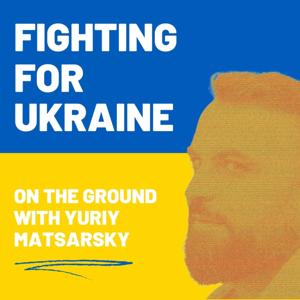


Send Yuriy your letter of support [email protected]
Yuriy’s Podbean Patron sign-up to give once or regularly: https://patron.podbean.com/yuriy
Buy Yuriy a coffee here: https://bmc.link/yuriymat
Subscribe to his substack: https://yuriymatsarsky.substack.com/
----more----
TRANSCRIPT
It is September 29. Air raid alerts in many Ukrainian cities now last for something like 20 to 22 hours. People have stopped paying attention to them. Even for every day, dozens of people are killed or wounded by missiles. But if you reacted to every single alert, your life would simply come to a standstill. It reminds me a little of life on the African savanna. The zebras understand perfectly well the danger posed by lions. They may even understand that some of them will be killed by lion claws in the near future, and yet they carry on living their ordinary lives. To reduce the accuracy of drones and missiles even slightly, GPS signals are being jammed in Ukraine. Some of the weapons flying toward us rely on GPS guidance. Jammers do not shut the signal down completely. Instead, they make GPS devices believe they are somewhere on the other side of the world. My phone, for example, most often tells me that we are in Peru. My first association with that country is Paddington Bear, whose cartoons my daughter loved when she was little. By the way, do you know who voiced Paddington in the Ukrainian dub? Volodymyr Zelensky. Check it if you don't believe me. I travel between cities a lot these days, and without GPS, it's quite difficult, especially since there are almost no road signs either. They were taken down in the first days of a full-scale invasion so that the occupiers would not know how best to get to different cities. And they still haven't been put back, just in case. But I always know when I'm approaching a city. Above almost any Ukrainian city from Kharkiv to Kyiv, there are now enormous clouds of smoke hanging in the sky, the aftermath of fires caused by Russian strikes on supermarkets, office buildings, food warehouses, and residential buildings. There is a particular bitter irony in the fact that a huge number of these fires are caused by anti-ship missiles that Moscow originally designed to sink American aircraft carriers. And now, while the American administration is desperately trying to convince itself that it can see a desire for peace in Putin's bloodshot eyes, the Russians understand that TACO will always be TACO, that no aircraft carrier is ever going to try to stop them from committing genocide, and that these missiles can therefore be used to destroy homes and hospitals instead. We live in a strange world, Paddington Bear, and I'm not talking about your Peru. I'm talking about everything else. A strange world and a very frightening one.
September 7th 2026
Yuriy says a long-suppressed fear now haunts him daily: what happens if Ukraine loses. As a soldier, he believes Ukraine’s disappearance would mean his death on the battlefield or execution for what he has written and said. He remembers being invited to work in London years ago but realizing he could not leave; Ukraine is his home, and he will stay, hoping the country endures.
Send Yuriy your letter of support [email protected]
Yuriy’s Podbean Patron sign-up to give once or regularly: https://patron.podbean.com/yuriy
Buy Yuriy a coffee here: https://bmc.link/yuriymat
Subscribe to his substack: https://yuriymatsarsky.substack.com/
----more----
TRANSCRIPT
It is September 7. I pushed this thought away for years, but it never really went anywhere. It has become something that troubles me every single day: I can no longer force myself not to think about what will happen if we lose. At the beginning of the war, I was certain that we would win, even if I personally ended up dying. I knew, literally knew, that we would win, that we would not simply liberate all the occupied territories, but would make it all the way to Moscow to burn that ugly dump to the ground once and for all. I even talked about it on this podcast. More than once. But over time, that confidence in our success began to disappear. I don't believe we will suddenly lose. I don't believe in that. There won't be some massive new Russian offensive that destroys us. There won't be some super weapon that wipes us all out. We have enough strength to hold on for another three to five years, maybe 10. But what happens after that is impossible to say. For the Russians, the destruction of Ukraine is the main goal of their lives, at least for those Russians who make political decisions. They have been preparing for our destruction for decades. For them, waiting for another 10 or even 20 years is nothing. I understand that if Ukraine disappears, I will have no chance of surviving. I'm in the military, so either I will die on the battlefield or the enemy will execute me for everything I have written and said about them, including what I've said on this podcast. And frankly, I don't even understand how I would live in a world that allowed Ukraine to disappear. You know, about seven years ago, I was invited to work for a large international newsroom in London. It was my first time in the city. I walked the streets where the Rolling Stones played some of their first concerts, where Jimi Hendrix used to walk, recognizing bridges and buildings I had read about in books when I was a child. And yet, I simply couldn't imagine moving there and living there. I actually got sick, so of course I never went. It feels almost funny to remember that now, but I wouldn't leave even today. This is my home, so this is where I will stay. And I really hope we manage to hold on, even if Moscow remains unburned for now.
August 24th 2026
On Ukraine’s Independence Day, Yuriy calls the celebration “nice but strange” as the country keeps fighting for freedom from the enemy in the north. He admits that he mostly says “Russians” only on the podcast; in real life and even on Ukrainian media he uses two older Ukrainian slur names - words that don’t mock appearance, but preserve lived history.
Send Yuriy your letter of support [email protected]
Yuriy’s Podbean Patron sign-up to give once or regularly: https://patron.podbean.com/yuriy
Buy Yuriy a coffee here: https://bmc.link/yuriymat
Subscribe to his substack: https://yuriymatsarsky.substack.com/
----more----
TRANSCRIPT
Today is August 24, Ukraine's Independence Day. It is a nice but strange holiday. This year it is already 35 years old. And yet we are still fighting for our independence from a terrifying bloodthirsty enemy from the north. By the way, I recently realized that I use the enemy's usual name "Russians" only here on this podcast. In everyday life when talking to our military personnel or even when appearing on Ukrainian media, which happens to me from time to time, I use a completely different name. Or rather, names. I call Russians by one of two slur words that exist in the Ukrainian language for describing them. We share one of these words with Belarusians, while the other comes from the Crimean Tatars, and both of them tell you a great deal about Russians. Russians themselves have a great many slur words for describing different nations, races, and peoples. They are usually based on stereotypical ideas about appearance- offensive words referring to skin color, eye size, typical hairstyles, and all sorts of other things. But the Ukrainians slurs for Russians have absolutely nothing to do with their appearance. One of these two words is the same word that was once used to refer to soldiers. You have to understand that despite Ukraine's long military history, even in the early 18th century, there were no soldiers in Ukraine, people whose entire lives were subordinated to their commanders, who could not simply go home, who were tied to barracks, and who were deprived of many other rights. There were no soldiers in Ukraine. Again, there were Cossacks who choose their own commanders, gathered into military forces only during campaigns or to repel enemy attacks, always received their share of the military spoils, and spent most of their lives at home working in agriculture or practicing a trade. Ukrainians encountered a soldier in the conventional sense of the word after the Russian occupation of Ukraine in the 17th and 18th centuries, and one of the two main slurs used to describe Russians dates back to that period. The word was used to refer to soldiers of the occupying army, powerless men, often beggars, who did not shy away from theft and robbery and were essentially slaves to their commanders. Incidentally, Belarusians, who were also occupied at roughly the same time, have the very same word for Russians. The second word came from the Crimean Tatars. Today, the Crimean Tatars are part of a larger Ukrainian nation. For centuries, they were neighbors of the Cossacks, with whom they had a very complicated relationship. Sometimes they were allies and would go together to burn Moscow. At other times, they'd fall out spectacularly and start fighting each other. The Crimean Tatars had several words for the Russians who had spent years destroying and humiliating them. One of those words made its way into the Ukrainian language as well. Translated from Crimean Tatar, it means butcher or reaper. I'm not a great fan of slurs, but I have to admit that these two have stood the test of time and proven themself to be remarkably accurate.
August 13th 2026
Yuriy describes the fact that Russians are erasing entire Ukrainian cities—first with mass artillery and then with heavy KAB bombs—reducing them to ash and rubble while calling it “liberation.” He describes Kharkiv being bombed daily, with deaths, ruined infrastructure, and familiar streets and parks scarred but still standing, unlike towns that now exist only as piles of debris visible on Google Maps. He calls the attackers a death cult and thanks people abroad whose support has helped Ukraine hold them back.
Send Yuriy your letter of support [email protected]
Yuriy’s Podbean Patron sign-up to give once or regularly: https://patron.podbean.com/yuriy
Buy Yuriy a coffee here: https://bmc.link/yuriymat
Subscribe to his substack: https://yuriymatsarsky.substack.com/
----more----
TRANSCRIPT
It is August 13. In my circle, there are more and more people who literally no longer have a hometown. It simply does not exist anymore. This is a Russian tactic to destroy entire cities and then plant their flags on the ruins. At first, they did it with artillery. Hundreds of guns, like in the First World War, pounded built-up areas, turning them to dust, along with their residents, their pets, their belongings, their dreams, and their hopes. Then, when artillery shells started running out, the Russians began dropping bombs on cities. Do you know what these bombs are called? The KAB 500, the KAB 1000, the KAB 3000. The number in the name is the weight of the bomb: 500 kilograms, one ton, three tons. Look on YouTube at what three tons of explosives looks like when it goes off, and imagine what happens to a city that is hit by bombs like that day after day. It is ruins upon ruins mixed with the bones of people and animals. It is ash that has burned for so long that it has become almost colorless. A lunar landscape looks more alive and more vivid than the landscapes of the cities the Russians have reached. And they call this "liberation." They are completely serious about it. Destroying an entire city, killing civilians, leaving not a single building intact, forcing thousands of people to flee and abandon everything they have, this is what the Russians call "liberation." I sincerely wish this kind of liberation on every one of their cities, every single one. My hometown, Kharkiv, is bombed every day. People die there every day. Buildings are destroyed. Infrastructure is being wrecked, and yet the city still exists. The streets where my grandfather and I used to walk when I was a child is full of bomb craters, but it is still there. The park where my daughter used to run around as a little girl took several bombs that burned its trees and killed squirrels and birds, but it is still exist. I can walk down that street. I can go to that park. And thousands of people can see their hometowns only on Google Maps because there is nothing left of them, only mountains of rubble and smell of explosives and death. And this has been going on for years. Just imagine, for years no one has been able to stop these maniacs, these followers of some strange death cult that does not even have a coherent ideology- just death for the sake of death. I am grateful to the people in other countries who still believe in us and continue to help us. Without you, we would not have been able to hold back this death cult. Without your support, it would have been impossible. Thank you
August 4th 2026
Yuriy reflects on a recurring message from a friend who has served since the first days of the war: “It’s a miracle we are still standing.” He recalls his first unit that defended Kyiv in February–March 2022, noting that out of roughly 100 people, by August 2026 only seven or eight would still be serving. About half were killed, many in the first two years; others are missing in action, discharged due to wounds or health, or allowed to leave after losing close family. He recounts a father and 18-year-old son who served together, the son’s death in the first summer, and the father carrying his body out before leaving the army. He describes prisoners in harsh Russian camps, some exchanged, others still held, and concludes that almost none of the early volunteers remain in uniform as he marks four and a half years - 10% of his life - in the army.
Send Yuriy your letter of support [email protected]
Yuriy’s Podbean Patron sign-up to give once or regularly: https://patron.podbean.com/yuriy
Buy Yuriy a coffee here: https://bmc.link/yuriymat
Subscribe to his substack: https://yuriymatsarsky.substack.com/
----more----
TRANSCRIPT: (Apple Podcasts & Podbean app users can enjoy accurate closed captions)
It is 4th of August. One of my friends who, like me, has been in the army since the very first days of the war, sends me the same message from time to time, "It's a miracle we are still standing." And it really is a miracle. If someone had thought to take a group photo of my first unit, the one that defended Kiev in February and March of 2022, when out of the roughly 100 people in that picture by August 2026, no more than seven or eight would still be serving. About half of our guys are dead, most of them killed during the first two years of the war. Many others are missing in action. Most likely, they were killed too. Their bodies were simply never found, and as long as there is no body to bury, a person is officially listed as missing. Some were discharged because of their health or after being wounded. A few were allowed to leave the army after losing close family members in the war. In my first unit, a father and his son served together. The father was about my age. The son was 18. He was killed during first summer of the war. His father carried his body back from the front line himself. He trusted no one else to do it. After that, he left the army. I have no idea where he is now. Some of our people were taken prisoner. A few have been exchanged and managed to return to civilian life. Others are still trapped in the inhuman conditions of Russian prison camps that have hardly changed since the days of Stalin's gulag. I've seen men returning from those places. Several of my friends survived Russian captivity. It is the worst thing I can imagine. Thankfully, those who come back have the right to leave the military and try to build a life again. And this is just one unit- my first company. The picture is much the same everywhere else. Of the hundreds of thousands of the volunteers who joined during the first weeks of the invasion, almost none are still in uniform. We are like dinosaurs that somehow escaped extinction while the rest of our species disappeared. I did the math recently and realized I've reached a strange milestone. Almost exactly 10% of my life has now been spent in the army. Four and a half years out of 45. For someone who never imagined linking his life to military service, that's a very long time. For someone who has spent those four and a half years fighting in the bloodiest war since the Second World War, it's far too long.
July 17th 2026
Yuriy recalls meeting a Kurdish sheikh in Iraq about 10 years earlier, a lifelong warrior who had fought ISIS, Al Qaeda, Saddam Hussein’s army, and rival Kurdish clans, and who said he “shot people because he couldn’t shoot an ideology.” When pressed on how such different enemies shared one ideology, the sheikh explained that the common thread was tyranny—systems that turn people into obedient pawns—while slogans like Arab socialism or an Islamic state were merely appealing “wrapping paper.” Yuriy says he often thinks of this conversation because it helps explain Ukraine’s fight today: Ukrainians are shooting Russians drawn to “senseless, bloody tyranny,” since the only alternative is submission and the spread of that brutality westward; resisting tyranny is the thin line protecting ordinary democratic life.
Send Yuriy your letter of support [email protected]
Yuriy’s Podbean Patron sign-up to give once or regularly: https://patron.podbean.com/yuriy
Buy Yuriy a coffee here: https://bmc.link/yuriymat
Subscribe to his substack: https://yuriymatsarsky.substack.com/
----more----
TRANSCRIPT: (Apple Podcasts & Podbean app users can enjoy accurate closed captions)
It is July 17. About 10 years ago in Iraq, I met a Kurdish sheikh- the head of a large, warlike clan scattered across the northern mountains. The sheikh, who was already in his 70s at the time, looked like a character from an adventure novel or a supporting figure in Lawrence of Arabia: a neatly trimmed white beard, a small turban, loose Middle Eastern robes fluttering in the wind. Even his weapon resembled Lawrence's- a British rifle dating back to the First World War. The sheikh had spent his entire life at war. He had grown up in war. His children had grown up in war. He had outlived two of his sons, both killed by his enemies. His grandchildren were growing up in the war as well. He seemed to make no distinction between his past and present enemies: ISIS, Al Qaeda, Saddam Hussein's army, or the leaders of rival Kurdish clans. To him, they were all the same. "I shoot people because I can't shoot an ideology," he told me. Their ideology is hostile to us, and so everyone who embraces it is our enemy. His explanation surprised me. After all, Saddam Hussein's secular quasi-fascist Ba'ath Party and ISIS stood for entirely different things, and the ideology of rival Kurdish clans had nothing in common with either Saddam's regime or jihadists. So I pressed him, asking what exactly he meant when he spoke about this single ideology shared by all his enemies. The sheikh's men, with whom we were sitting around an enormous table in his house, a table holding nothing but coffee and bottled water, looked at me as though I were a fool, someone who failed to grasp the obvious. The sheikh, however, seemed perfectly happy to explain himself to a foreigner. "Look," the sheikh said, "they all have one ideology, tyranny. They want people to do whatever they're told, to be nothing but dumb pawns. Building Arab socialism like Saddam did or an Islamic state like ISIS, that's just wrapping paper meant to appeal to people. People fall easily for deceptive things behind which tyranny hides. That's why I fought my whole life. Tyranny will always find a way to be appealing." I don't know why, but I find myself recalling this conversation quite often. It seems to me that it explains a lot about us in Ukraine too, and about you as well- those living in a still peaceful West. What I mean is that, like the Kurdish sheikh who shot people because he could not shoot an ideology, we are now shooting Russians to whom their senseless, bloody tyranny seems very appealing. We may like it or not, but the only alternative is to submit to that brutal tyranny, to merge into it, to become part of it. And to move farther west along with it. And so our hatred of tyranny, our refusal to submit to it, that is the main thing defending the democratic world, the thin red line running between the savage mass of murderers and rapists on one side and ordinary, peaceful life on the other.
July 9th 2026
After a long absence, Yuriy returns on July 9 and explains he’s been overwhelmed by depression and insomnia while continuing his military duties amid constant bombings, personal losses, and worry for his seriously ill father far away. With sleepless nights stretching on, he began revisiting and rewriting stories from his years reporting wars and revolutions in the Middle East, shaping them into something new. Friends pushed the manuscript to a major Ukrainian publisher, and it’s now being edited for an October release—if it can survive the reality of a Kharkiv publishing world repeatedly hit by Russian attacks. The result is a book called "The Last Superhero in Gaza," a war book with little shooting and much more friendship, love, despair, fear—and Elvis.
Send Yuriy your letter of support [email protected]
Yuriy’s Podbean Patron sign-up to give once or regularly: https://patron.podbean.com/yuriy
Buy Yuriy a coffee here: https://bmc.link/yuriymat
Subscribe to his substack: https://yuriymatsarsky.substack.com/
March 15th 2026
Yuriy recalls buying an olive military backpack in early 2022 despite friends insisting the Ukraine war would end soon, and now—after wearing through three and needing a fourth—he reflects bitterly on how long the war has lasted. He marks the time by his daughter turning 21 and laments missing key moments of her growing up, wishing her a life with more peace.
Send Yuriy your letter of support [email protected]
Yuriy’s Podbean Patron sign-up to give once or regularly: https://patron.podbean.com/yuriy
Buy Yuriy a coffee here: https://bmc.link/yuriymat
Subscribe to his substack: https://yuriymatsarsky.substack.com/
----more----
TRANSCRIPT: (Apple Podcasts & Podbean app users can enjoy accurate closed captions)
It is 15th of March.
I recently found myself remembering how at the very beginning of my service in the Army, I ordered a backpack from an online store for all my military stuff. Back then, my comrades advised me to buy a black or a blue one, anything but an olive colored backpack. The logic was simple: the war would end soon and you'd be left with an obviously military backpack. Why would you need something like that in civilian life?
But at that time, early spring of 2022, the only backpacks available for sale in Ukraine were olive colored. I had no choice but to buy one, and for a while afterwards I had to listen to people around me explaining what a fool I was. The war would be over any day now, and here you are all decked out in military gear.
It's strange to remember that now. Strange and bitter at the same time. Since the beginning of a full scale war, I've already gone through free olive backpacks. The current one isn't in great shape anymore. I've had to stitch it up, replace the zippers, reinforce the straps. But anyway, it'll clearly soon join. Its two predecessors and I'll go back looking for a new one- my fourth backpack. And I'm not all sure that it'll be the last. Honestly, I'm not sure.
To understand how long ago I bought that first backpack. It's enough to say that my daughter had just turned 17 back then. When the big war began she was 16. And it is her birthday today, she's 21. She's fully grown old, but I was not next to her at some very important moments of her growing up. Not because I didn't want to be, but because I simply couldn't- because the war means I cannot control my own life.
This year, I'm not beside here either. I'm very sorry, but it's turned out this way. But there is nothing I can do to change it. I hope that next year everything will be different, but that's only hope. There is no certainty about it and there it can't be.
21 is a wonderful age. You are already an adult, but your whole life is still ahead of you. On her birthday, I definitely wish my daughter that her life contains more peace. Everything else has long since faded into the background.
February 20th 2026
Yuriy reflects on Ukraine’s Day of Remembrance of the Heroes of the Heavenly Hundred, honoring protesters killed during the February 2014 shootings in Kyiv and describing them as the first victims of the Russian-Ukrainian war, driven by Kremlin pressure on Yanukovych’s regime and propaganda portraying protesters as Nazis and criminals. Recounting what he witnessed during the confrontation, he frames the uprising as a pivotal victory for Ukraine’s freedom—comparable to foundational historical turning points—and vows that despite the ongoing, exhausting war and terror, Ukraine will not return to dictatorship or surrender.
Send Yuriy your letter of support [email protected]
Yuriy’s Podbean Patron sign-up to give once or regularly: https://patron.podbean.com/yuriy
Buy Yuriy a coffee here: https://bmc.link/yuriymat
Subscribe to his substack: https://yuriymatsarsky.substack.com/
----more----
TRANSCRIPT: (Apple Podcasts & Podbean app users can enjoy accurate closed captions)
It is February 20.
Today is one of the most important commemorative days in Ukraine's history- the day of Remembrance of Heroes of Heavenly Hundred. This day owners was who killed 12 years ago in February 2014, during the shooting of protesters who were opposing the corrupt gangster-like regime of President Yanukovych. Many of us did not realize it at that time, but the, the, the first victims of the Russian-Ukrainian war. Even if the bullets that killed dozens of people in central Kyiv were fired by Ukrainian police, it was done in the interest of the Russian authorities under their pressure and above all for their sake. The Kremlin needed not only to keep Ukraine within its sphere of influence, but also to keep Ukrainians in subjugation, denying them the ability to choose their own future.
What is why Russia pushed the dim-witted pitiful Yanukovych to use firearms against peaceful protestors; that is why it urgently sent it advisors to Kyiv who directed the actions of the security forces and what is why it unleashed a frenzied propaganda campaign to discredit the protestors, portraying them all as Nazis and criminals. Incidentally, this is how Russian media now portray all Ukrainians.
I was in central Kyiv throughout all the days of a bloody confrontation. Before my eyes people were being killed, people who walked toward machine guns trying to protect themselves from them with makeshift wooden shields. Wood against a machine gun steel. And we would won. The vast apparatus of killing and coercion, lavishly, greased with Russian money and fueled by hatred of freedom broke against people in hockey helmets whose most dangerous weapons were Molotov of cocktails. The regime of a stupid sadist Yanukovych built on corruption and intimidation on handouts from Moscow and total lies collapsed. It was a great victory. Yes, in many ways it was symbolic, only the beginning of a confrontation, but continues to this day- but it was an immensely important symbol.
For me The Day of Remembrance of The heroes of the Heavenly Hundred stands alongside the signing of a Declaration of Independence or the adoption of Magna Carta. Yes, those events were not unambiguous instant victories; much more blood was shed and much pain endured afterward. But we became turning points after which a return to dictatorship was no longer imaginable. Well, at least until recently.
Back then, 12 years ago, we all changed Ukraine chose freedom, from which our deranged neighbor so desperately refuses to let us go, but we will not return to the Gulag, we will not surrender. It is very hard and cold, now physically and psychologically exhausting. Yet the path to freedom that began in February 2014 will be carried through to the end. We are living in terrible times. More horrifying than one could invent, but freedom will prevail. It must; it simply has to prevail.
January 21st 2026
Yuriy opens up about his prolonged absence and the challenges faced due to personal struggles with depression and caution in communication. He provides an insightful look into the difficulties Ukraine is currently facing, including severe winter conditions, escalating attacks on civilians and infrastructure, and the pervasive impact of the ongoing war on future plans. Yuriy shares a poignant narrative about the harsh realities of living in war-torn Ukraine and the need for global support and understanding.
Send Yuriy your letter of support [email protected]
Yuriy’s Podbean Patron sign-up to give once or regularly: https://patron.podbean.com/yuriy
Buy Yuriy a coffee here: https://bmc.link/yuriymat
Subscribe to his substack: https://yuriymatsarsky.substack.com/
----more----
TRANSCRIPT: (Apple Podcasts & Podbean app users can enjoy accurate closed captions)
This is January 21st.
I've been absent from here for quite a long time. This is connected, first of all with depression, which from time to time catches up with me and turns me into a person who's simply unable to write a conscious, coherent text. And secondly, is connected with caution. I really don't want to say something that could damage relations between Ukraine and the United States, something that officials in America, if they hear it might perceive as an insult and begin to put even more pressure on Ukraine.
These are very hard times right now, probably the hardest of all the years of the full scale war. We don't know what to expect from our, until very recently, main ally, and at the same time, this is very coldest winter in years. It is very cold and Russia is constantly trying to make advantage of it. Every day the occupiers bomb heat and power plants living millions of Ukrainians without heat and electricity. This happened in previous years as well, but now everything is much worse because of a prolonged severe frost and the large number of missiles and drones the Russians have stockpiled. The number of civilians killed by this scum grows every day.
No one hopes for a quick end of the war anymore. All plans for this year are connected only with the war. The son of my friends who will turn 25 in November, the age of conscription into the active army, is already looking for a unit for himself already now, almost a year in advance. He wants to find one where he can be as effective as possible.
As it turns out, it is very difficult to live in a world where for years your future is tied only to war attempts to plan something to dream about something are absolutely futile. You begin to live in short stretches of time to make it to the next week, to wait until it gets warm, even just to make it to evening.
When you live in this mode and at the same time, know exactly who has imposed this mode on you, it is very painful to watch how somewhere in the world this maniac and murderer is still considered a respectable person, is invited places, is consulted about something- damn, I'm about to slip and to things I shouldn't.
So just know this: we are holding on despite everything, and we believe that reasonable people from all over the world are with us and on our side. Thank you.
From the publisher's feed

7,625 Listeners
156 Listeners
110 Listeners

111,799 Listeners
7,155 Listeners
169 Listeners
12,544 Listeners

2,539 Listeners
368 Listeners
1,071 Listeners

367 Listeners

3,018 Listeners
427 Listeners
1,878 Listeners
343 Listeners