
Sign up to save your podcasts
Or

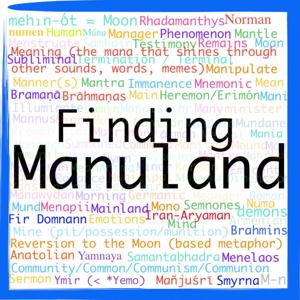


Menua, son of the founder of the Urartian Empire, once lived on the lakeside at Tushpa, whose modern name is Van (Türkiye).
Tushpa / Van is the meeting place of many great empires Kura-Araxes, Hittite (Indo-European), Mitanni (Indo-Europeanish), Babylon/Mesopotamian/Assyrian, Urartu, Armenian (Indo-European), Achmænaid (Indo-European) and now, I guess, mainly Kurd (Indo-European) and Turkish! Today, I’m driving to Van to, well, Find Manuland.
Tushpa, a strategic point in Lake Van basin, was situated in the centre of the historic route from every direction to Van Plain.
The capital, which included the first known written monument of the Kings of Urartu; was one of the most crowded and important Urartian centres with its splendid royal tombs, palaces, governmental storages, sacred sites, vineyards and orchards situated in fertile plains irrigated with dams and channels.
Continued:
Previous Episode:
First Episode:
Poem of Amergin, Celtic Ireland’s first poet-judge, sacrificing first Monarch and brother of self-sacrificing Donn (who features in much in my work) put to music and video by Arnold Hensman. Reading by Daniella Hensman. Filmed at Newgrange, Ireland. Music: Walking on Clouds, by Tea Time, (ShutterStock Music).
This poem by Amergin, preserved in the Book of Leinster and the Book of the Taking of Ireland, is an example in the Indo-European tradition of candid almost proud words put into the mouths of Gods.
I am a wind in the sea (for depth)I am a sea-wave upon the land (for heaviness)I am the sound of the sea (for fearsomeness)I am a stag of seven combats (for strength)I am a hawk upon a cliff (for agility)I am a tear-drop of the sun (for purity)I am fair (i.e. there is no plant fairer than I)I am a boar for valour (for harshness)I am a salmon in a pool (for swiftness)I am a lake in a plain (for size)I am the excellence of arts (for beauty)I am a spear that wages battle with plunder.I am a god who forms subjects for a ruler!Who explains the stones of the mountains?Who invokes the ages of the moon?Where lies the setting of the sun?Who bears cattle from the house of Tethra?Who are the cattle of Tethra who laugh?What man, what god forms weapons?Indeed, then;I invoked a satirist…a satirist of wind.
[John Carey’s translation of Song of Amergin: from The Celtic Heroic Age (2003) (pg. 265)].
My favourite subject, and it all begins in Kherson — whether it’s the UN Commission of Inquiry on War Crimes in Ukraine or the Yamnaya community. A relatively small number of individuals created the language, the linguistic structures, the words we use in almost every sentence, the religions, the soul’s immanence in many Indo-European religions, including what I would characterise as Christianity and Buddhism. Created by this community, which is just amazing in itself, because most of us grow up with a mental model of Greece, Rome, maybe ancient Egypt before Greece, and then our cultures. It turns out this is not true. Greek and Italic culture, Italic and Celtic languages, as far as we know, formed inside a mixture of the Yamnaya community from this area in Kherson, Mykolaiv Oblast, right around the river where Russia and Ukraine — this has been an intersection point, an interaction point for millennia — out of an interaction between migrating Yamnaya from there after 2500 BCE, westwards near Odessa, just east of Odessa, and a community of people already there. Linguists and archaeologists have suspected this for decades.
Jung explains why he believes archetypes are part of the collective unconscious of humanity: he can’t understand where else they could have come from. He talks about the wildest migration theories, which we now know since the 2015 ancient DNA revolution are scientific facts — the genetic content of people from India to Ireland whose ancestry comes from what they call the steppe, what I call ancient Ukrainian.
For me, a lot of my work is about re-archetyping Ukraine inside the mental models of humanity. I realised, as many of us did, that there was a problem — whether it was former German policy or the policy of many of our governments. They were perceiving, and perhaps many of us did this too before becoming aware of Ukraine’s importance, not only in our current moment but over time, that Russia was managing by monopolising the myth of Russia’s superiority over Ukraine, archetyping Ukraine as not a real country. Every time Vladimir Putin speaks, he’s re-archetyping Russia as this great power. Many of us and our friends perhaps still perceive Russia’s culture — Dostoevsky, ballet — as somehow justifying its genocide in Ukraine. I’m a great fan of those writers because they’re very insightful and helpful to us.
But I realised from the very beginning of the full-scale invasion, without understanding it as archetyping at the time, that my mission was to campaign for parity of esteem between Ukraine and other modern nation states which have won the monopoly, by fair means or foul. Certain communities after World War II managed to become UN members, including Ukraine, a founding member of the United Nations, which signed the UN Charter in 1945.
As I dug deeper and followed this path from working in eastern Ukraine, I accidentally discovered the Yamnaya when property developers were destroying this extraordinary structure in a posh suburb of Dnipro. It made the front page of the New York Times. The local people were protesting, so in my capacity as a monitor, I went to discover what was going on. These property developers had destroyed a Yamnaya burial mound in which was buried the local monarch and various other people throughout the millennia, including the last person buried there — the head of the collective farm, believe it or not, around 1932. Delusions of grandeur, and continuity. Underneath the mound, when they destroyed it, was found a stone circle created by one of the major ingredient cultures in the Yamnaya.
Through that, I began, from a position of extreme scepticism, to trace the linguistic journey of certain people carrying not just a language, not just words, vocabulary, sounds and meanings. There are about a thousand sounds and meanings in what we call Proto-Indo-European, or what I call ancient Ukrainian — the language spoken by the Yamnaya between 4100 BCE and 2500 BCE. I recognise these dates are uncharted territory for most people. Our history begins maybe around 1000 BCE with King David in the Bible. Part of my mission is to re-archetype our mental models — our idea of not just Ukraine but humanity, human history, European history, and Ukrainians’ position in it — to create new structures and frameworks. Because that’s how what I call disinfolklore and disinformation works: it creates untruthful frameworks in our minds. People inside MAGA, in the MAGA disinfolklore galaxy, have all these in-jokes, they know things you and I wouldn’t. This is how Russian disinformation is so successful — it’s not about intelligence or education, it’s about how people’s minds are changed.
I’m quite upfront about this when I outline these histories. The ancient DNA studies are published in Nature and Science, the preeminent scientific journals. I stay away from anything not properly backed up. Feel free to follow up on anything to do with the Indo-European connection.
Part of what helped me see this pattern — and this is what I really do, I hunt for patterns in data — is that I assimilate information, as many of us do on X. As we now know from the third report on Foreign Information Manipulation and Interference by the European Union, released recently and which I highly recommend along with the first two reports, X was involved in 86% of over 40,000 FIMI instances collected. This is where we are. Many of us have ethical dilemmas about whether we should be on X, and most of us are also on Bluesky and other places. But the fight is here and the examples are here.
I saw Margarita Simonyan tweeting again in her folksy disinfolklore way — she does this a lot, telling stories, as indeed does Donald. They tell stories of frankly horrifying things. For instance, the way Donald communicated, I think in March 2024, that if the head of a major NATO country said they couldn’t pay for their NATO membership and asked would you protect us, he said he’d tell them to “do whatever the hell they want with you.” This was then reported by CNN as fact, though we’re not clear whether it ever happened. These folksy stories get taken up.
Simonyan tonight is talking about how people in the offices in Moscow are saying that if Germany gives weapons to Ukraine, Ukraine won’t be able to do anything with them without Germany’s help, therefore Germany is complicit and they’ll have to strike Berlin. This is a classic piece of disinfolklore — there’s a distancing in the narrative form, presented as a folksy story. “People in the offices of Moscow” — the image is she’s just heard gossip.
She’s done this before, at the St. Petersburg Economic Forum in June 2022. Many of us will remember this, where she said “people in Moscow are saying all our hope is in the famine.” She was sitting beside Putin himself, dressed in green — which is why I call her Maid Margarita Simonyan, like a reverse Robin Hood. This is an aspect of the disinfolklore analytical method: we can use folklore archetypes to interpret and combat those who are themselves using folksy archetypes.
She said people in Moscow are saying all our hope is in the famine — meaning there will be famine in Africa, migrants will come to Europe, and the EU will release sanctions because “it’s impossible for us not to be friends.” This is the folksy banter of the schoolyard — a seven-year-old speaking to their best friend after an argument: it’s impossible not to be friends. But this isn’t a schoolyard chat. It’s a conversation beside the head of state of a country at war, planning to starve millions in Africa in a madcap attempt — something you’d only see in Don Quixote or a folktale. The plan to win in Ukraine is to starve millions of Africans, provoke Europeans into lifting sanctions, become friends with Europe, and abandon Ukraine. The way she tells it, it sounds like solid Russian strategy told in a folksy way. It’s absolutely horrifying when you parse it, but it passes most people by. It enters their minds.
These are folktale archetypes, folksy stories communicating horrifying things. It’s a pattern they use, and it’s really effective because people like us share them — they provoke something in our emotions. Even if we think we’re harming the former president by characterising him as drunk, we’re still repeating the meme. The horrifyingness is slyly communicated, the energy continues, pinging around the world. Thankfully, today we see great advances in our political leadership over what we’ve experienced since February 2022.
But this method of communication has impacted President Biden’s policy. “Don’t poke the bear” is a disinfolklore meme, probably the most successful one ever. It actually impacts foreign policy — it stopped America properly helping Ukraine. International relations itself, the entire discourse, is full of these metaphors and disinfolklore memes, represented as means of communicating foreign policy and strategy affecting the lives and deaths of millions. Whereas in fact, these strategies are only communicated by and through these means.
What I have spotted, which as far as I’m aware no other writers have really noticed, is this continuity across multiple narrative forms and discourses. It’s obvious in anthropology, folklore studies, or Jungian psychology when they reference myths, archetypes, and storytelling. But the same dynamic is at play inside international relations discourse, inside the speeches of many of our leading politicians until recently, and obviously everything Donald says — he speaks this folklore fluently. The folksy stories, the January 6th anthem of the insurrectionists, the songs used in rallies, the folksy way of speaking about Al Capone, the archetyping of Melania as a character using haute couture clothes made by Ukrainian fashion designers in LA — Dressx — who supply comic book aesthetics for people like Elon Musk and Melania Trump who want to archetype themselves as characters in our information space by referencing superheroes or characters from contemporary folktale.
That’s a sample of the scale. Because I noticed that many of the mythological founders in Indo-European peoples had this MN sound in their monikers: Manu, the first human in Indic culture; Yama, who comes from Aryaman — there it is, Aryaman, which gave its name to Iran — becoming Yama in India, with this MN sound, one of the founders in ancient Iranian culture from pre-Zoroastrian times. In Ireland, Manannán. In Wales, Manawydan. In Germanic culture, Mannus, the first human. In Greece, Minos. In Armenia, Menua. All these MN sounds.
And then this other sound, RT — right, rita, truth in Sanskrit, arta in ancient Iranian, in Darius’s inscriptions. Darius founded the Achaemenid Empire — there’s the MN again — about 700 to 300 BCE, before Alexander the so-called Great. These RT sounds — the claim to monopolise what is right, unified right. These sounds recur again and again, patterns which seem to have some impact on our psyche, our minds — MN in mind as well.
I think it’s these sounds embedded in stories, whether the stories are what we might consider folklore. And now I think we have to consider what folklore is: it’s what’s on TikTok, what we’re reading on X, the war lore that we discuss. These are modern manifestations of folklore. What’s common to them and to the Brothers Grimm and other community-forming tropes and informational units, like Russian propaganda in Russian-occupied Ukraine where I started looking at this in detail — what they have in common is these sounds inside them that recur, these patterns that have been around for thousands of years attached to the same meanings. MN is in meaning as well. They shine through, like different meanings shine through different signifiers.
That’s the level I’m on. I know the Russians are looking at this linguistic level too, connecting symbols, signs, sounds, and images to what Jung called our unconscious — not our collective unconscious, but our individual unconscious. The stories are a means of communicating these and somehow controlling us. I don’t fully understand it, but I see the patterns and they’re empirical — empirical patterns through time, through culture. We see them every day. I collect them all the time.
That’s really my focus, what I bring that’s new. I was shocked to see how Russia was using generative AI to represent Western leaders as cartoonish characters to help brainwash children in Russia. Then I saw at a recent meeting that many of our leaders were shown using generative AI as children — this was applauded and seen as fun. It is fun, but it’s very dangerous, dark stuff.
I’ve tried to come up with a means of parsing any data, and I hope my twelve tools in my disinfolklore algorithm would help us see through nefarious attempts to manipulate our minds — like Russians using generative AI to represent foreign leaders as cartoonishly bad characters and embed those archetypes in minds. I saw early clues in Russian films about Gogol, who’s a Ukrainian writer but went to Russia to try to educate Moscow about Ukraine as a culture. All the Russians could see in his work was folktale, quaint characters. They did the same in a patronising way to Lesya Ukrainka — looking at Ukraine as a place of little, quaint people. A bit like how a previous generation of English people used leprechauns to archetype Irish people as inferior. Thankfully, that’s dead now.
As an Irish person, part of my identity let me see this family resemblance. But it can be a positive power too. What Russia is doing to the minds of Ukrainians inside the occupation and inside Russia — they are on the cutting edge of this, and the tools they’re using, whether generative AI or narrative tools, are very much what I’m trying to combat and give us the tools to see. We’re not really at the races generally in our culture. If we just got to know what the Russians are doing, that gives us a menu of what we shouldn’t be doing by accident, and what we’re up against.
Reading Harry Potter and things like that — I think reading Harry Potter is very innocuous. I know many people get exercised about its author. But as an artist myself, I’m amazed at what she achieved. Magic — it’s really important to understand how magic works, war magic, not to be afraid of it but to become familiar with it, because what the Russians manage to do, what Trump manages to do, is magical. We understand magic and magical tales.
Primarily, this is where we get our archetypes. I understand this from my own experience — from cartoons, from Disney, from Grimm’s fairy tales, from Chitty Chitty Bang Bang’s Child Catcher. Both good and bad archetypes. This is how I perceived reality when I arrived in eastern Ukraine in 2015, in this beautiful, halcyon, Arcadian forested area. From the first moment, I saw something folkloric about it. I didn’t understand what it was. That’s the intuition I’ve been uncovering. And at this point in my work, I can report that since we do take in archetypes as children from folktales, if we want to win the war for the next generation, we need to understand how these archetypes work and use them wisely.
As some of you might remember, I studied law. I worked as a property lawyer in London for a little while. One of the features in English law is this idea that sometimes, for whatever reason, commercial property is let at a peppercorn rent. Generally speaking, in this day and age, no peppercorn passes between the landlord and the person who’s leasing the property. It’s in all the leases. So that was always just a little curiosity to me, as indeed was the fact in contract law, in English and in American contract law, for there to be a contract to take place, there needs to be an agreement. There also needs to be what they call Consideration. If I contract with you, James, to buy 12 widgets, you have to, for the contract to be valid, you have to in some way pay me a deposit. This is the importance of the deposit.
So there’s this reciprocity. I was very interested in this book, which I read a couple of years ago by Marcel Mauss, who is one of the, you know, in every academic discipline, there’s always a few founders who are in every, in the first paragraph in every book. When you look at the laws of Sympathetic Magic, Marcel Mauss is right there.
That’s how I knew I was kind of, this is an interesting area to be in. I noted when I was reading this seminal text that some of you might have read as well called The Gift, by Marcel Mauss is he talked about early Germanic law and early Germanic contract law, which is from... which probably actually then becomes part of English law, even though English law says it’s coming from Roman law, which is a distinct Indo-European tradition from the italic as distinct from from the Germanic but in Germanic law each contract, sale or purchase, loan or deposit entails a pledge.
“One partner is given an object, generally something of little value like a glove or a piece of money, a knife or perhaps as with the French a pin or two. This pledge is in fact imbued,” this is Mauss writing, “this pledge is imbued with the personality of the partner who gave it. And the fact that it’s in the hands of the recipient moves its donor to fill his part of the contract or her part and buy themselves back by buying the thing.”
So when I saw this, I was like, ah, that’s interesting.
What’s going on is if I’m, if James is letting me rent his property, his skyscraper in Manhattan at a peppercorn rent, I give him this peppercorn. Actually in that peppercorn is my energy, it’s my Mana. It’s my personality. I’ve obviously got his because I’m in the I’m in the block itself.
What the whole gift is about and Mauss’s book is about is he’s looking at various different cultures and the exchange that in many different cultures, especially in Ameri-Indian cultures where early examples come from this potlatch, which is this institution of a meal, a communal meal, where you’re being hosted or you’re hosting your child’s getting married. You have to host the whole village. You give them food and drink and stuff like that. That interested me because in a lot of Irish mythological texts are about these big feasts. I always wondered what’s going on here.
It appears as if there is this idea of when you eat, when you partake of the feast, you’re taking something into you. So this is this idea of your energy, your Mana is being affected by what is coming into your body. Just as it is what’s coming into your mind from memes and from disinformation.
Equally, of course, what you’re giving into other people’s minds. So this is a reason. So this is why in my X and Bluesky profiles I say ‘there is Mana,’ ‘Mana is permanent,’ and ‘Communicate positive Mana’ (note the M-N-sound in Communicate, Permanent, and, of course, Mana).
This is this idea that, and what the Russians are doing is communicating just such negative Maa and driving us all to driving us all nuts with it. So this meaning of... And then I discovered this, which I’ve written about in my other project (Finding Manuland/Power of Mana), which isn’t so directly relevant. But that there’s lots, there’s heaps of different names for what I call Mana and this phenomenon which many people have written about from the beginning.
I’m just applying it to Disinformation studies. That’s my contribution to contemporary culture. Why particular memes take hold. Become contagious and how to detect in particular innocuous artefacts of what I call Disinfolklore or stories to detect in them these three archetypes: Russia’s invincible, Russia’s undefeatable and Russia has the right to intervene in its neighbours of political destinies.
So you can see that energy, that Mana in billions of different stories and items of Disinfolklore being voiced by everyone from Biden to Bill to people who aren’t pro-Russian. I have too in the past. We hear it from our friends all the time about Russia as being invincible. Thankfully, what we’re seeing at the moment is this archetype, this transition, this change. I don’t think if Russia does manage to take Pokrovsk, this is not going to disrupt the change in archetypal identity that appears to be taking place in the minds of, if not Donald (because obviously we know he changes with the weather), but in the minds of everyone around Donald. People - someone said to me today - someone who like two years ago We’re always having intense discussions about Ukraine and he was always like, “oh, Russia, basically Russia’s invincible, nothing will happen.” Now today he’s arguing the opposite. That’s a really good indicator for me.
The different words we have for this in different cultures, in Chinese cultures, it’s called Chi. It’s Qi in Japanese culture, in Hindu, it’s called Prana (breath). It interests me. It’s not called Mana in Hindi culture now. In Hebrew culture, it’s called Ruach.
These are all varieties of what I call Mana.
The Police would talk about synchronicity. That’s what that album means, synchronicity. So teleama, libido. Freud talked about libido. Nous. Someone else talked about Nous. Aristotle or someone like that: Vis medicatrix naturae. So kind of a formative cause. Pneuma. Holy Spirit, Woden. Actually, in Germanic culture, interestingly.
So there is this, or X-energy. So there is this, a lot of different people have noticed what I call Mana. But obviously this was before the disinformation age. So they didn’t really apply it to memes. What we’re dealing with in our timelines or what is in the what is in the information space and in the minds of our leaders and our leadership and how they’re affected.
We, as those pro-Ukraine, people in the pro-Ukraine information space, we have such a history, an in-depth history of this up and down since February 24th 2022. Where we’ve watched all the world leaders go through these changes like from “we need to give Putin a climb down” to ‘would you like ketchup with your 250 4th generation Gripen fighter jets Ukraine.”
We’ve seen this evolution of ideas and changes in archetypes in people’s minds. I think that gives us an edge in terms of it gives us a huge data set. A huge learning set for our algorithms, which a lot of other people don’t have.
This idea that when we write something that other people read changes them. Likewise, what they write changes you. When you’re speaking to people.
So this is what I mean by I’m looking at this in a particular segment of how we spend each day or of our consciousness or in human history, in human culture, which is in disinformation and Disinfolklore is what I’m particularly interested in.
Its insights or what I see in it is it applies in all forms of communications. It’s deeply embedded into our language. This M-N- sound in communication, communal, communal feast,… The M-N- sound in there and in meaning.
It makes sense to me that this sound and the meaning and this idea of exchange and energy exchange was known and used by the first Indo-Europeans, the M-N- in Yamna as well, the first Indo-Europeans.
We’ve just kind of lost sight of it. It is embedded in the language. You don’t need to be interested in linguistics and what unites all native Indo-European language speakers between Ireland and India in terms of their mental frameworks to find this is a useful tool for parsing data.
There was a lot of work done in the 19th century when the Polynesians were discovered to have this concept of Mana. It’s important to know now a lot of the genetic… We know there was a lot of trade between India and Polynesia and between traders and Brahmin traders at the time. The people in the late 19th century didn’t really understand this that much. In fact, it’s really only becoming and I see stuff’s coming up in the last few months on looking at ancient DNA to try and work out the migration patterns in the Pacific.
The meaning of Mana in these tribes where, this is classic, 19th century stuff I’ll quote:
“the Melanesian mind is entirely possessed by the belief in a supernatural power or influence almost called almost universally Mana. This is what works to affect everything which is beyond the ordinary power of men. Outside of common processes of nature, it is present in the atmosphere of life.”
What I started today with to talk about magic, what I’m trying to do is decouple the idea of magic from something that is otherworldly to its initial and true meaning in our governance systems - Magistrate. Majesty. Magi. Magus. Magister as distinct from minister. The magister is the master and the minister ministrates to the master. We now have that in our governance discourse. When we talk about ministers this is part of the same semantic field and the same signifying field in Indo-European communities across the world as Magic.
Because of various cultural reasons, we associate magic with something that is otherworldly and that is the opposite of science. In fact, it’s intrinsic to the way we organize ourselves. as societies as Indo-Europeans. It’s quite useful when you then come across this discipline, this aspect to this cultural psychology, and you see the laws of sympathetic magic and you don’t think, oh, this is about, you know, some great, I can’t even think of any of those famous Hollywood illusionists. No, it’s not. It’s about an aspect of being human and exchanging - ‘sympathetic’ in this sense is about exchange. It’s about pathos, pathetic, exchanging feelings.
So when these 19th century, a lot of them were religious, they were missionaries South Seas. They encounter this concept of Mana. They’re amazed by it. They just think this is how the primitive mind works and over the course of thousands of years, we became more advanced than them.
That’s not that interesting to me. What is interesting to me is how fascinated this was the whole industry they were in this concept Mana. No one seemed to notice, even some of the greatest minds, that M-N-, the same sound, is in the language that they were talking about, Common. Men, Human.
They were really fascinated. There were various attempts then to connect this idea with Mana with early Roman religion, for instance, Numenism. Again, the M-N- in Numenism. There’s lots of fights over it. This is this idea that in early Roman religion, italic culture. You have a god. So this is an example I picked up from the deities protecting maternity (M-N-):
“You have the tumulus and sentinus have given him life and feeling. Opus, these are all deities. Opus takes him up from the bosom of the earth. Vaticanus opens his mouth for the first time. Levana lifts him off the ground. Cunina cares for him in the cradle. Potina and Aduca give him drink and food respectively.”
From the 19th century perspective, they’re looking at these pagan Romans having, like, gods for absolutely everything. There’s evidence that everything in the household - there is different household gods for every dimension of their lives. From our perspective, we look at these 19th century missionaries in as bizarre a way as we look at these Romans.
What I think is really the link with Disinformation studies is that when we’re looking at memes and these things which come alive in our minds, which come alive in our culture and then are transmitted, they are contagion. Rhey become the object of contagion. That this is really what we’re talking about. It’s the same thing. It’s the same phenomenon (m-n-) that the Romans (m-n-), the ancient, the early Romans. Then they consolidated everything into a few deities. Underneath them were just hundreds or thousands of deities. As there were with the Hittites and in other early religious cultures.
This is when we see life in memes and in certain things which take fire, which go viral. I think it’s a similar phenomenon. I think it’s the same thing really. What is common about it is Mana. There’s an energy in this rock. Or an energy in this God. Rhis deity that protects us or moves between us. I don’t mean protects us in a religious sense. I mean, actually, I don’t mean protect at all. But just that the energy moves between us.
So I’m trying to connect these old manifestations (m-n-) of ideas of energy running between people with what we’re dealing with in the information space. Equally what we’re dealing with in our normal lives when you’re feeling quite down and you bump into someone who just brightens your life. You bump into a child or it’s a cat or a dog or your friend or your friend who always makes you laugh. What you’re really doing there is exchanging energy.
I talked about it before from the biological sense that the mitochondria in our cells creates the energy. Now we know that they create all the energy which keeps us alive. That they transfer that energy between cells. So this model also has a biological um it’s a biological um uh correlate on it and uh that is really all i wanted to um that’s what i set out all of this now i finished now i set out to talk about four weeks ago.
Please also consider listening to /looking at the following series of podcasts which are part of my Disinfolklore project. There is a lot of complementarity to Power of Mana/Finding Manuland and Disinfolklore, no least in the use of Mana in Disinfolklore as a means of communicating the desirability of parsing memes for their many meanings:
Podcast | Jurisprudence of Sympathetic Magic’s Law of Similarity and Law of Contagion.
An introduction.
Podcast | Touching on Contagion in Disinfolklore
Final part of a series of four podcast applying Cultural Psychology’s cutting-edge work on the jurisprudence of Sympathetic Magic to Disinfolklore.
Magic as Propaganda Disguised in Disinfolklore
Why Mythology keeps popping up in Russian Disinfolklore
Podcast | Touching on Contagion in Disinfolklore
Final part of a series of four podcast applying Cultural Psychology’s cutting-edge work on the jurisprudence of Sympathetic Magic to Disinfolklore.
What Meaning Means
Meaning of identifying the meaning of the M-N sound - Most significant discovery in Indo-European linguistics since de Saussure?
M-N- sound appears to have many of the same meanings in Turkic as well as in Indo-European languages (Manas is the mythological founder of Turkic Kirghiz culture, Zaman signifies time in Turkish, for example).
M-N- might therefore be Turkic rather than of Indo-European origins. Especially where its meanings and immanence’s hover around the same Moon-based metaphorical semantic signalling system of southern Ukraine from ~4,100 BCE as Finding Manuland has so far been elucidating.
(Among the first documents with writing in an Indo-European language is this text I photographed in Ankara. It mentions a “native Anatolian” (an Indo-European as distinct from an Assyrian language speakers) Tarmana (1,900 - 1,800 BCE)
However, since -Uman was ubiquitous in the first attested Indo-European language - Kanisite Hittite (1,900 - 1,800 BCE)
it seems clear M-N- transferred into Turkic as the first Central Asian Turkic language speakers with Ancient Ukrainian so-called Steppe / Scythian ancestry millennia later abandoned their Indo-European tongues.
Then with much later Turkic migrations into, say, Anatolia with Osman, the founder of the Ottoman / Osman dynasty that would dominate Anatolia from 1,200 CE onwards, M-N- returned and just become another source of M-N- immanent toponyms and words / meanings relating to measurement and the Moon-based metaphorical semantic signalling systems in formerly Indo-European occupied areas such as Anatolia.
So my message of unity between apparent Indo-European peoples who are ignorant of our common origins now extends to Turkic language speaking peoples. Were united by our use in almost event sentence of signifiers emanating from the Moon-based semantic signalling system generated in Ancient Ukraine ~4,100 BCE onwards and injected as an immanence into every living Indo-European language, culture and religion from there, and perhaps also into every living Turkic language too.
We truly are All Ukrainian!
Much more on this over the coming years in future episodes, as well as on the meaning of the recent analysis of some of the first Ancient Genomes from early Egypt for Finding Manuland’s quest to understand M-N-‘s ubiquity in its sacred vocabulary (Amon) and names (Tutenkamen).
This Indo-European, ancient Ukrainian ancestry is in us. When coupled with all of these similarities in the mythological record — and particularly, in the context of today’s episode, MN in Manu and Mannus — we can be very sure that these are separate vectors of evidence all pointing to the same conclusion: that we all come from this Yamnaya community in southern Ukraine in some meaningful sense.
If you’re listening to this, you understand an Indo-European language. You probably have ancient Ukrainian ancestry within you if you’re indigenous or relatively indigenous from anywhere in the space between Ireland and India. Unless your ancestors were some of the Turkic or Uralic migrants who founded the Finnish, Estonian, and Hungarian peoples, chances are you have this genetic ancestry in you. But just by virtue of using an Indo-European language as your native tongue, it’s actually structuring your thoughts. You have this MN sound. You’re using it in almost every sentence.
Manu and Mannus coming from a common source — like we do — means that all of these phenomena come from southern Ukraine. That’s the answer to the trick question of which came first, Manu or Mannus. The fact of the matter is the Yamnaya came first. The Yamnaya were so called by Russian archaeologists because they buried their dead in a pit grave. We find these pit graves across Europe, associated with the invasion of a patriarchal society that replaced the Old European society. The word for pit in Russian, which is an Indo-European language, is cognate with the word for womb and yemo and twin. So it’s circumstantially connected that we’ve ended up with an MN sound for the Yamnaya too, from whom this idea of Manu and Mannus travelled, emanated.
We know this because when we come across similar sounds and meanings for the founders of mythological traditions, it’s either borrowing — a German visiting India and convincing them to use Mannus, which evolves into Manu, or an Indian visiting Germany — or it’s a coincidence. But then we find so many other founders of mythological traditions in Indo-European languages — in India, in Greece, in Ireland, in Celtic tradition — who have mythological founders with this MN sound in their name. So we come to the common source. And of course, MN is in “common source.” That expression comes directly from Sir William Jones’s lecture in 1782 to the Kolkata society, in which he announces his discovery of the Indo-European family of languages.
The question we started with — which came first, the Germanic linguistic tradition or the Indic linguistic tradition? — is actually a trick question, because neither did. It was the Yamnaya, the Indo-European community in southeastern Ukraine, which came first and is the common source.
We can use linguistics, ancient genetics, archaeology, comparative mythology, and a whole plethora of different vectors of evidence, all pointing to the same truth: that Indo-European culture and all Indo-European languages we speak today emanate from this same area around Kherson, around where the Russians are conducting their drone warfare at the moment. But we can also use the MN sound, and that’s the significance of what I have discovered and what I am telling you the story of in Finding Manuland.
I’ll leave it at that for today. We’ll come back and talk about more MN, because I have at least 25 other episodes planned, and each of those opens up new episodes and new discoveries. I’m constantly travelling in this area between Ireland and India, and I have many new discoveries I haven’t even reported to you yet. All of that is coming. Thank you very much for your support.
Continued from:
First in series:
The sun god Sūrya — and his mother has an MN sound in her name, which is amazing. Saraṇyū is her name, and she is of Tvaṣṭṛ, which is interesting as well. We’ve got Tuisto in the Germanic and Tvaṣṭṛ in the Indic. She and the sun have three children. There are stories about how she got really hot from being burnt by the sun — a play on words which transmits and transfers between languages and meanings and sounds, which I’m not going to go into today.
She has three children: Manu, Yama, and Yamī. Many scholars think Yamī, who’s female, is a later transposition. But Manu and Yama are the most fundamental and ancient in the Indic tradition. Manu is the first man, the first human. Yama, the twin, is the first monarch, the first self-sacrificing king.
Odin performs the same function in the Germanic tradition. Odin gave himself to himself, according to the ancient Hávamál text, and hung himself on the ash tree by the Royal Mound in Uppsala in Sweden. Woden’s Day commemorates Odin’s self-sacrifice. In the early pre-Christian Irish tradition, Donn is the Lord of Death who performs the same function — note the DN sound in both Odin and Donn. They are the first self-sacrificing monarchs to die, and after them they lead mortals to the afterlife. In the Indic tradition, Yama is the first self-sacrificing monarch, the first to die.
Yama means a lot to me as a Buddhist, because Yama is the lord of death in Buddhism, which is one of the reasons I started paying attention to these monikers, these same sounds — Yama, Yamī, Yima in the Iranian tradition, Emir in the Germanic and Arabic traditions. Emir in the Arabic tradition is a king, and that comes across from the early Iranian, the Indo-European. I paid attention because Yama is quite important in the daily practice of many Mahāyāna — again MN — Buddhists who follow the Mañjuśrī tradition, the Tibetan tradition. But I won’t go into that today.
We’ve got Manu and Mannus, and they have twins. In the Germanic tradition, Mannus is the son of Tuisto, twin. In the Indic tradition, Manu is the brother of the twin. We get this phenomenon — a bit of a muddle, like mixing puzzle pieces up. But the names, the sounds of the names are similar, and the function is the same. They’re mythological founders of a tradition.
Manu in the Indic tradition is the first sacrificer. He is the first to sacrifice an animal, and the Brahmin who recreate this sacrifice through the Soma ritual — a substance some believe comes from the fly agaric mushroom, but I won’t go into that here. All we need to know is that the first sacrificer, Manu, is the brother of Yama and the mythological founder of the tradition. The mythological founder of the Germanic tradition is Mannus.
In Irish tradition, the pre-Christian supreme deity is Manannán. In Wales, Manawydan. In the Iranian tradition, Aryaman — so Arya-Yaman, with MN in there. Yaman becomes Manu in India. The Arya element means something close to “area” in English, the centre. Aryaman was literally the treasurer in the royal household, which then became celestialised, goes up to the sky and becomes the symbolic treasurer, the king — a combination of the Manu and the Yama elements.
Geographically, the Indo-Europeans who populated India and Iran are descendants of the same community I mentioned before, coming from the Sintashta. We have the same sound, same meaning, same mythological founders, same kinds of stories in these different traditions.
It’s Manu in the Indic tradition who makes a deal with sky father — with Indra and Varuṇa, the supreme deities. If Manu sacrifices — first an animal, then substituted with the Soma sacrifice — like in Christianity where wine is supposed to be the blood of Christ, a placeholder for a true sacrifice. So it’s a development and evolution. In the Indic tradition, it’s the Soma sacrifice. They come from the same root. I’ve written before about the Indo-European roots in Christianity, a topic I will return to.
If Manu makes a deal with sky father, Dyaus Pitā, with Indra and Varuṇa, who represent the sovereignty function — if Manu, as the man, the human, makes a sacrifice, then sovereignty, security, and prosperity, the fertility of the community, will be protected. Manu is the first sacrificer. Yama, his brother, his twin — in Germanic, you have a slightly different iteration, which you’d expect in different cultures, but the structure and the nomenclature are the same.
We even have Ymir in Germanic culture, the primordial giant. And the sound of Hymir — a genuine thunder god, killed or perhaps only wounded. He went out in a boat with the giant Hymir on the outer sea and fished for a monster using an ox’s head as bait. Yima is in the Iranian tradition, in the Avesta, the ancient Iranian holy text — an equivalent of the Rigveda but written down much later, though thought to be just as ancient.
Aryaman, as I mentioned, is a functionary in charge of the house, its hospitality, and in charge of the treasury of the nmāna. Mana meaning house, domain in ancient Iranian — mansion in English. We have that MN in all of these monikers meaning quite similar things.
With all these continuities — same sounds, same monikers, same functions — today we’re focusing on Mannus and Manu because they’re so primary, but as I’ve floated around different Indo-European linguistic and religious traditions, all from the same common source, we have the same moniker, same function, same level. By level, I mean mythological founders of entire cultures. These aren’t founders of a village or one particular family. They are the founders of entire cultures which still persist today — in the case of India, comprising the one billion Indians who are Hindu and come from this tradition. I’m leaving out the 400 million other Indians, though many of those from the Muslim tradition are also Indo-Europeans. But there are many bifurcations and roads off, some of which I’ve dealt with and some I will. For now, we stay focused on Manu and Mannus.
We know that Germany and German culture did not have very much or any contact with Indian culture, and vice versa. At the time of Tacitus, yes, Alexander the so-called Great from Greek culture had been to India. He had replaced the Achaemenid Empire, the ancient Iranian empire founded by Darius the Great — again MN in Achaemenid. But Tacitus didn’t necessarily have much command of this. Very few people until Sir William Jones, the Welsh scholar of Sanskrit, ancient Iranian, Celtic, Latin, and Greek, who became a Supreme Court justice in India and learned Sanskrit in order to translate the Laws of Manu — the Manusmriti, which contains this MN sound and the RT sound — which contemporary scholars believe is actually from about 600 CE but is named for Manu, the first human.
In order to exercise jurisdiction over Indians, William Jones, living in Kolkata, decided to learn Sanskrit. Because he had already written the first Persian grammar in the English language and was a very skilled linguist from a young age, speaking many different languages, it was he who spotted that the roots of the grammar and the roots of verbs were so similar in structure that they could not have arisen by coincidence. He said that all of these languages must come from a common source, which perhaps no longer exists.
That began a centuries-long journey to determine which came first. Was it the Indian? The German? The Scandinavian? The Irish? The Iranian? That journey brings us to the present, and one of the big breakthroughs has been the ancient DNA evidence published in 2015 and 2019, demonstrating that the Brahmin caste in India had, by around 1000 BCE, about 50% steppe ancestry from ancient Ukraine.
We had all the cultural and linguistic artifacts, and then we find the ancient DNA. But I’m not tracing the ancient DNA or the cultural and linguistic artifacts — I’m tracing the MN sound through all these different cultures, a separate trajectory of evidence.
It’s not just a question of one German visiting India, hearing the story of Manu and Yama written down in the Rigveda, returning to Germany, and convincing their mates. Perhaps they’re a poet, they visit India for a few months or years, then come back and convince one monarch: let’s adopt this story as our own. This is just not plausible. To become embedded as a mythological founder of a culture is really difficult. This is the primary story — it’s not one of millions of sub-stories. Here we have Manu as the first human and Mannus as the first human. The chances of one person going from Germany to India, hearing the story, going all the way back, and convincing everyone to replace their foundation myth — or the other way around, an Indian going to Germany, for which we have zero evidence — are very low.
Of course, this is exactly what I’m trying to do: I’m trying to convince you that the mythological founders of all the Indo-European peoples have an MN sound in their names, and I believe this comes from the sound menyot, which means moon, coming from meh1, meaning measure — the moon as a measure of time. The idea of light shining through the moon is like the mind shining through a human. This core metaphor, the reversion to the moon-based metaphor, distinguishes all sentient beings from non-sentient things, stones from humans. We’ll see if in a thousand years’ time our entire Indo-European culture accepts Finding Manuland’s story as its foundational myth. But at least you see what I’m talking about.
The idea of a German going to India and saying, our mythological founder is Mannus, why don’t you adopt that — or vice versa — doesn’t explain why we end up with Aryaman in the ancient Iranian tradition, or Manannán in the Celtic Irish tradition, which comes down as the pre-Christian supreme deity in Ireland. Many of those Celts probably came to Ireland via the Menapii — the MN in Menapii. Perhaps that explains the Irish case. But what we can say for sure, from empirical evidence, is that this MN sound is absolutely everywhere we look.
We have heaps of archaeological, cultural, and mythological stories about structural similarities between the Rigveda and the Mahābhārata, another collection of ancient stories, not quite as anciently written down but very ancient. These have the same structure, the same names, the same sounds as the story written down by Tacitus in the first century CE. Now we have genomic evidence demonstrating ancient Ukrainian steppe ancestry in Ireland, on the island of Britain, across western Europe west of Ukraine, and east of Ukraine through the Sintashta, across the Andronovo horizon, across Central Asia.
Here I’m trying to provoke in your mind this geographical journey — through to Afghanistan, down into Turkey and Anatolia, through Armenia, through Iran, across from Afghanistan into Pakistan, and into the Indus River Valley where the culture was seeded. Into the Brahmin caste, and they take over the whole of the Indian subcontinent down to a point near Bengaluru, where I’ve spent time, where we have the Dravidian line — the Telugu culture. Dravidian is the pre-Indo-European Indian culture which has survived. But we have this Indo-European layer, which brought Indra, who starts life in Iran as Zarathustra’s nemesis. By the time this deity gets to India, it becomes renamed as Indra, and India is named for Indra, this sovereign deity related to Manu, representing the Indo-European transformation of the Indian subcontinent.
The stories, the names, and the sounds of these deities are in our minds today as the names of continents and countries. Iran takes its name from the Arya root, connected to Aryaman. And Éremón is the first high king of all Ireland, which some scholars, including me, believe is cognate with Aryaman. Éremón comes down as the name of the first high king from the mythological record, first written down around 1100 CE, long before we knew any of the rest of this — that Indo-European cultures existed, or that Celtic was a separate culture from Germanic.
We have these separate vectors of evidence all pointing to a common source. And of course, the MN sound is in Éremón, the first high king of Ireland. Beyond all reasonable doubt, we have this steppe ancestry spread across Manuland, and the MN sound immanent in the mythological founders of all these cultures, from Ireland to India.
Continued:
Continued from:
First in series:
So you see what I'm trying to do there. I'm expanding our mental models of time from 4100 BCE when Tamana's ancestors left ancient Ukraine to 2000 years later when Tamana's name appears in one of the first texts. The first times Indo-European language is written down in Ankira, sorry, in Kanesh, but then I see it in 2025.
So it's written down between 1900 BCE and 1800 BCE in Kanesh, in ancient Anatolia, today's Turquia. And then roughly 4,000 years later, I, Estabones, I visit Ankira, which is named for a Celtic community who founded it around 300 BCE. I see this cuneiform text and the translation of it in Ankira Museum.
And I know the significance of this because the reason I'm in Ankira, archaeological museum is to try and find this MN sound and its origins and to find it there in one of the first texts was more than I hoped for. And then the primary text which was published a couple years ago on
translating Kanesite, Hittite, as it's known, this language. So this great scholar who took these 23,000 cuneiform texts from between 1900 BCE and 1800 BCE, which are mostly in Assyrian, which is a Semitic language, took those texts and deduced from them which are the Indo-European elements, the native elements in them. And he uses this uman sound to distinguish
Indo-European from Assyrian. So again, that was beyond my wildest dreams when I conceived of looking at the MN sound and I thought, oh, that's quite interesting. There's MN sounding names in eastern France and in Ireland and on the island of Britain. I wonder how that arose. And then I found the Manapi, this community of Indo-Europeans. But then...
way, going way, way deeper than Manapi, who dominated that area and the Monche, the area of the Monche, and then colonised Ireland and the island of Britain, and Normandy indeed, probably, from about 200 years into the Common Era. Deep, much, much more deeply than they are these other cultures.
who also have the MN sound in their different monikers and their mythological founders. So it's interesting that the very foundation of the Germanic people and in their myths, we have these three sons, each of which represents a different function, the sovereignty function, the security function, and the fertility, prosperity function.
It's a pattern which we see again and again in different Indo-European cultures and peoples. It's been established by Georges Dumuzel who had this intuition in the 1930s and then spent his entire career. And thousands of scholars since then have elaborated on it. And so the sovereignty function, which contains these two elements, the magico-religious,
like the Brahman or the Flamines or the Phila in Irish society, and the juridical, which is like the legal element, the ruling, the procedural element of the monarch. So like secular and religious. This division is very, like in post-revolutionary France, where the de-clericalization of society, the joining in into the sovereignty function of this magico-religious and the juridical,
the procedural, the ruling, the courts... That is very much part of the Indo-European model of governance and is part of the division which manifests in different ways in different cultures. So the second function, the security function, so my namesake is Stavones, represents the security element and in the Indian caste system, the Kshatriya, which is the army,
the military. And then the Ing is the founding monarch of the tribe of Germans who invaded and occupied what would become a country named for them called England, represents the fertility and prosperity function. And as discussed, that's probably a holdover from the pre-Indo-European.
So the Ingavionese takes their name from Ing, who corresponds to the old Norse god Freyr. So... Let's go back to the sovereignty function then in Germanic mythology. So I'm bringing your mind back. You probably have this mental model of the world. And this is also part of Finding Manaline because I don't only want you to develop
and evolve as I have this temporal model. mental model from 4100 BC all the way up to 2025, these 6,000 years, which I kind of illustrated by telling you the story of Tamana and me seeing Tamana. But the Hermiones, I want to also do the geographical space because for me it was a huge blank, Anatolia, Turkey,
Armenia, Iran, India. These were all kind of blanks in my mind. And we all have them. We might know Turkey because we've gone there on holiday. But we don't really understand the Hittite empire. And I want us to be able to... to journey quickly, to flash between the coast of the west of Ireland, down to Lusitania,
which is Portugal, which was occupied by a Celtic language speaking people, all the way quickly right across to Spiti Valley, which is the valley dividing Indo-European India. from Tibet, and I've also been there. And so the Hermiones take their name from Ermen, and the MN, of course, is the national god of the Saxons,
and this MN sound is really in there, and indeed in Amon, the ancient Egyptian god, and some really interesting research. has come out recently looking at the ancient DNA of the ancient Egyptians, which points to perhaps why the MN sound is in Amon-Re, their supreme deity, and Tutankhamen and the Amarna letters and various other important Egyptian texts.
But we'll get to that in a different episode. And so we all come from the same family. We understand the MN sound. It's part of our energy. We're communicating positive energy now. Me to you, you to me by listening to this. And this is my message of unity. So then let's run over.
Let's fly over to India then. And so the Argy Veda is a book of songs, first written down around 1100 years before the Common Era. And this is our first evidence of Manu, the first human. And the Argy Veda songs we know were composed long before 1100 BCE. So, for instance, they describe funereal feasts,
which we had no archaeological evidence of until around 20 or 30 years ago. which we found archaeological evidence of then in today's Kazakhstan, the Sintashta culture. And so the exact descriptions of the burials of... horses, skulls, and of the funereal feasts correspond to archaeological artifacts then found in the Sintashta culture.
So then we know, even before we had ancient DNA evidence that ties the Sintashta to the first people who were 800 years later. The Syntashta culture is from around 29, sorry, 1900 to 2000 years before the Common Era. So around the time Tamana, our friend Tamana is living in Kanesh and whose name is appearing in this cuneiform
text that I then saw in Ankira. In January 2025, the Sintashta are burying their dead in the same way that the songs, the ancient songs, would be written down in the Ayurveda, this book written in the Vedic language, which predates Sanskrit, an ancient Indian language.
And in 1100 BC, the Ayurveda, the songs are written down, they're divided into words, Mandala, again Amen and Mandala and Brahmanas, Amen and Brahmanas and they describe the Brahmin who are the priestly caste and Manu who is the first human. And so we know because of some of the archaeological evidence from the St.
Tashta culture from between 1900 and 2000 BCE. And I know this is hard for you. I understand. That's why I'm kind of repeating myself. And the whole of Finding Man is about this. is about expanding mental models. So I'm bringing you on a geographical voyage. This is the third element in every episode.
But I'm also bringing you on a temporal voyage. So we've got these songs in the Ayurveda. They describe funereal feasts, which we then find the archaeological evidence for almost exactly the same from 900 years earlier in the Santashta culture. So we know this is the same And until these archaeological remains were found in the Santashta tombs in
Kazakhstan in the 80s and 1990s, scholars believed that these funereal feasts were artifacts of the imagination in the Ayurveda. But then it turns out actually they correspond to archaeological evidence. And now we know through looking at linguistic but mainly ancient DNA and archaeological artifacts... that the people who would form the Sentashda culture actually came from ancient Ukraine.
They were Yamna and traveled eastwards towards, settled for a couple hundred years in the Sentashda culture where they consolidated. And that culture then travels eastwards across Afghanistan and across what we call today Central Asia. and what's known as the Andronova Klein, as it were, which is basically a word just that describes 2,000,
3,000 kilometers across of similar cultures, which we know from the archaeology, which kind of just develop and evolve, but they are the same kind of culture. We've seen the same artifacts in Afghanistan as we do in Sintashtar, as we do in India. And so we call it a climb because they're kind of climbing into each other before
Indic culture then becomes a very dominant emanation of it. And so we see similarities in the songs, in the Ayurveda, and in how Tacitus is representing the songs of the Germanic people and how the Irish mythological texts, which aren't written down until between 700 years into the Common Era and 700 years
after Christ's birth and until around 1200 in the Common Era. And yet, even though they're written down in this late stage, the Irish mythological texts are the oldest vernacular literature in Europe. So we talk about Tacitus is writing down a few stories, but it's written that the Germanic tribe stories are written down in Latin.
And they're not written down in the Germanic language, but we have the oldest mythological text in a vernacular. It's from Irish Celtic. So it's a great source of information for us because we can look at the Greek and the Latin and the Irish and the Vedic and the Armenian, for instance, and the Hittite,
and we can find the commonalities between them and we intuit through a variety of methods what is the Indo-European-ness of this. And so... We look at the Arguveda where Manu is first mentioned, and Manu is, he is the sun, he's the first human, he's the sun of the sun, literally.
He's the sun of Vivasvan, who is also known as Surya, the sun god, and his wife, Saranu.
Continued:
Continued from:
Ep 3 Using M-N- to determine which came first - Indian or Germanic culture?
First in series:
So the Ingaevones, this is the ancestors who then became the English, comes from Ing, who corresponds to the Old Norse god Ingvi, Freyr. And Freyr is actually a pre-Indo-European remnant, we believe.
So in this tripartite structure I talked about where we have sovereign, soldier (so sovereign representing, you know, the monarch, the magical aspect of sovereignty, (which is all of the mystical, mythological, the poetic)), the stuff I'm really talking about today (in the context of if we're trying to build a culture of Manuland among all the Indo-European peoples) we’re reaching back into history to find our common ancestors and this M-N-sound and this area, the Yamna.
So that's kind of what I'm doing here. You have the soldiers, the security function, which is my namesake, the Istavones. Then the third function, the economic function, the fertility function, basically, we believe, which corresponds to Friday, the day Friday, corresponds to the Old Norse god Ingvi, whose name is also Freyr.
This is a pre-Indo-European layer. So prior to the Yamna, and their descendants spreading out from ancient Ukraine across to Ireland and eastwards to India, there was a common European culture, old Europe, old European culture. I've written about it before in the context of its female goddess worshipping, which is often we also think of that as the fertility function.
And the amazing archaeological museum I visited in Ankara, which, as you now know, was founded by a Celtic language-speaking community a couple hundred years before the Common Era, and the Romans eventually conquered there as well.
That museum amazing archaeological museum which will come into many of our episodes to come.
I've already printed pictures just has vast numbers of these goddess forms which we find in every area between Ireland and India really, but particularly between Ireland and Anatolia and Ireland and Turkey in Europe.
This is the old European culture where most of the idols we find in archaeological sites from this era are female forms. 95% of them are female forms according to experts who have studied this and there's many of these sites in ancient Ukraine and contemporary Ukraine and also across Anatolia.
This layer was then replaced by the Indo-European layer, the Yamna, the emanations of the Yamna community who founded all the living Indo-European languages. And my, one of my starting points, I talk about it in the second and third episodes of Finding Manuland. Well, actually, I write about it because I haven't spoken about it yet, but I will get to voicing those episodes.
This mound in Dnipro, Dnipro, the upper Don, when you look at it in this D-n- sound, in Dnipro, where this mound, again, M-n-, in Mound, where this mound was destroyed by property developers in May 2021, which was another of my starting points for this amazing journey across Manuland.
Underneath this Yamna burial mound, where there was one, well, the first person buried there was the local monarch, the local Rì, the local Rex, the local king, reich. And there was assorted other bodies in there, including the body of the Soviet era head of the collective farm who had delusions of grandeur.
But underneath this mound was a stone circle. And that stone circle was built by the Stredny Stog culture, which predates the Yamna.
And as part of this old European layer, this unified culture across Europe from Ireland to Ukraine and indeed in Turkey and Anatolia and stuff where we find the same kinds of artifacts. And we also find, in many cases, the same script which no one has cracked as yet and probably fed into the Indo-European language.
We'll come back to that because it's very important. But the old Norse god Ingua Freyr probably corresponds to this layer and it's the survival.
So in Greek mythology, for instance, the story I've just told you is often it's, two gods fighting over each other and dominating a woman. And the woman is the fertility function. And this is a mythologized rendering of an actual historical story, which is the Indo-Europeans, the Danaeans - the Achaeans is another word they use - but the Danaeans, who are these ancient Ukrainians who over the course of of several centuries made their way from ancient Ukraine into Greece, bringing with them their mythology and their culture, which then beats in terms of a break in the archaeological record and overcomes the existing old European layer, which is often represented in mythology by the female goddess.
And that is the Frideside in Oxford, where I studied... We have Frideside Shopping Centre and Frideside Church and that Fride, which corresponds to Friday.
I talked about the tripartite structure and that structure, which was discovered by Georges Dumèzil in the 1930s, that structure actually is in the Germanic. days of the week, which is Tiwaz, Tuesday, Wednesday, Mercury in the Roman, but Woden's day, Odin. And Woden corresponds to the father of the Hermiones, Odin.
Ukraine, for instance, has just created this amazing drone interceptor and they've decided to call it Odin. And again, the D—N- sound is... is in there. But Odin and Hermiones correspond to this sovereignty function.
So that's Tiwaz Tuesday.
I also wrote one of the Finding Manuland episodes on Tiwaz, which is basically Dies, Dies, Tis, Tiwaz, which is a Germanic word rendering of God. Tiwaz, Twisto.
That represents a part of the sovereignty function.
Then we have Thursday, Thor's day, and Thor and Thursday is this Istaevones, the soldier, the security element.
So we've got this tripartite structure which recurs actually in the Germanic days of the week. It doesn't quite correspond in the Roman days of the week, but it is an interesting phenomenon of it. And Friday, Freya’s Day, Friday is the pre-Indo-European layer. Do we've got the Herminones, the German, the -M-N- sound in German.
The Deutsche - the name that the Germans give to themselves today, the Deutsche - that comes from Teut, meaning “place.”
So in Ireland, for instance, we have the second Indo-European layer of mythological invaders I talked about are the Tuatha de Danann, again the D-N- sound, but the Tuatha elememt is cognate with the Deutsche, the Teut, Teuts, which basically corresponds to place.
Mannus, the son of Tuisto, the founder, the mythological founder, twin of the Germanic, people, a twin like Romulus and Remus or Yama and Manu in Indian culture. In Germanic, it's Twisto and Mannus. It's the son, the father and the son, which again is kind of a family resemblance with the Christian element, the son of God. And The Herminones came from Irmin, the national god of the Saxons, according to Wittukind of Corvée.
So we have this M-N/, immanence, in Herminones, Irmin, Mannus, and also in Germeneur. which is a by-name of Odin, again the D-N sound in Odin, who gave their name to Odin's day, Woden's day, Wodanaz day, Odin.
White supremacists sadly support Odin. The Wagner military unit, which was part of the Russian army until it was annihilated by the Ukrainians. In Bakhmut, they worship Odin. We have many white supremacists worship Odin today. But of course, that is a corruption of that.
But so we have the D-N- and the Old Norse Irmin, the M-N- again in Germaner. and Irmin in other Scandinavian languages. So, again, we have this coincidence, this coincidence in so many different subunits of Germanic culture, but we focus on the Mannus element of it and the...
Basically, every monarch really would have these people declaiming their stories, recording their stories. So this is part of the poetic, the Brahman function, the Filid in ancient Ireland or the druid function. That culture is recreated over time by storytelling, by the kind of thing which I'm doing now that we have access thankfully because of Tacitus to these very ancient stories from there and from other cultures. We can put them together and out of this derive not just a means of passing time and amusing ourselves but also of finding commonalities between our different indo-european cultures between Ireland and India. Where we have fought so many wars and have had so many different struggles of understanding with each other. If we can somehow recall and remember and remind ourselves that we are all from the same root, and now we know through ancient DNA that we come from the same gene pool.
I carry within me the genes of the Yamna. Most people living in Indo-European cultures between Ireland and India… We have in our genomes this immanence, the... the genes of people who lived in southern Ukraine at the time, before 2500 BCE, when they started migrating in groups westwards and eastwards and northwards and to become the Italic, to become the Celtic and all that's left of the Celtic today.
All living Indo-European languages, cultures and religions emanate from Mykhailivke, the Yamna type-site in Zaporizhzhia:
Ireland is the only Celtic nation-state which has sovereignty. Wales, for instance, is the only Celtic state, only Celtic country, where there's a really very vibrant and living Celtic language, which my niece... but Wales is not yet independent.
Scotland, another Celtic country, is also subject to Ingaevones and Ingaevones’s ' descendants - the English. So then we have the Germanic, obviously, which became Ingaevones and becoming part of the English language, and the Scandinavian countries, and, of course, Germany, which first became the first unified nation state in 1870.
I also told that story in an earlier episode where I talk about the discovery of the existence of Indo-European languages in 1782, I think it was, by William Jones. A Welsh Sanskrit and ancient Iranian Celtic language and Germanic language, Greek and Latin language scholar who discovered that the coincidences in the structure, the roots of verbs and the grammar between these different languages, between the Celtic, between the Celtic and the English, between the Celtic and the Germanic, the Celtic and the Sanskrit and the Roman and the Latin and the ancient Iranian, were such that they could not have arisen by coincidence, but they must have come from a common source.
So our starting point today is wondering, did India's first man, was it called Manu (by coincidence?) with the Germanic first human called Mannus. If you assume the term human existed prior to these mythological founders, then you could say, well, maybe they did. And if this same phenomenon, which we call human, was called a human in the different cultures, then it would be quite natural for them to call one in one, we might call it Manu, Mannus, or Manawydin, or Manannán as in Ireland, or... Magnus in Scandinavia (with a G in there, but it's the same sound, it's the same word).
That doesn't solve the problem of why the moniker human became so ubiquitous and universal. In fact, though, we do discover that in ancient Indian, they didn't call man or human, human. So we're left with... which came first, the chicken or the egg.
I believe I found a solution to it, but I'm not going to ruin it right for you quite now. We're going to get there.
So there's a story in every place and every time of culture being founded in Homer's work. Wagner, the great German composer of the 19th century, took Tacitus' work, took Herder's work from 1777. Herder in Germany who, a part of Germany which was under French occupation, occupation by a Romance language speaking community, who had been the Gauls.
The Romans conquered them and took away their language. So only a small part of France, Brittany, spoke a Celtic language. And in fact, the Britannic Celtic language itself emanated from the island of Britain. So the Romans really comprehensively destroyed the Celtic language-speaking aspect of what would become French society. And the French then... take on a name, a foreign name for their tribe, the Franks, when really they are the Gauls. And so Charles de Gaulle, like me - my middle name is Scott, and Scott is the original name for Ireland. people who bear the name of their tribe, like Goethe or Sir Walter Scott, of their country, of their nation, state.
So Herder, which was in Frankfurt under occupation by the French, then says in 1777, where is our Shakespeare? Who will unite the 10 Germanic tribes that Tacitus had spoken?
We need a common culture to do this. Like the English have their Shakespeare and the community unites around the common language, the common tribe. We need the similar. And Wagner and Goethe and other brilliant German artists... took up this cause and they gathered the folklore and the language, the Grimm, the Brothers Grimm and the stories.
90 years later, we had the first unified German state. It is one of my founding assumptions that states and nation states today... were founded on these common culture, these common stories.
I think what I can try and do, and you're a part of this, with Manuland as a moniker to describe the community of people who live between Ireland and India, who emanate from the Yamna, whose ancestors left ancient Ukraine by around 2500 years before the Common Era. We can all find a commonality and a reason to unite, provided our mental models of history change.
So we don't focus on what happened in the 18th or 19th century into the common era. We develop a mental model, which I have taught myself over the past few years, where I dance in my mind between 6,000 years, between really 4,100 BCE, which is really when we assume we have the first evidence the Yamna grew up inside ancient Ukraine.
Then a group left there to eventually, via Armenia, enter Anatolia, who would 2,000 years later become the great Hittite Empire, which is, and the Hittite is the first, the earliest attested in the European language.
Last January, and I've written about this as well, you'll see in earlier posts, last January I saw some, the first writing we have in any Indo-European language, which is from this place, Kanis, I spoke about in my, in the first little sub-episode here.
And Kanis/Kültepe, we have this. I went to Ankara (as mentioned above) To this amazing archaeological museum. Because I wanted to see the first writing in an Indo-European language. I found it. I posted the picture. I’ll actually post it on the page here, Tarmana.
So the first writing in any Indo-European language that we have, where billions of words are written every second today, whether it's on social media... or in computer systems or on paper for shopping lists between Ireland and India over the course of the whole America, of course, which emanates from a whole muddle of different Indo-European traditions. that the first writing we have from this place, Kanis/Kültepe, in an Indo-European language between 1900 and 1800 years before the Common Era is Tarmana.
It's an M-N- sound. I have to say, that was beyond my wildest dreams, was to actually see it and photograph it in the Ankara Museum of Anatolian Civilisations. They didn't know the significance to me and to the M-N-sound.
So I’m expanding your mental model from thinking um about history from the 19th century or the second world war to we want to run by the end of this I want like my mind runs very agilely through this time from 4100 bce when Tarmana’s ancestors lived in ancient Ukraine. So Tarmana, his name is written down in this cuneiform text for me to photograph in 2025, January 2025. His name, the text I saw, the cuneiform text I saw was written down between 1900 and 1800 BCE. So it was 4,025 years. years old, give or take. Now, 2000 years before then, Tarmana’s ancestors lived in Ukraine. In the Lower Don.
We have around 1200 words, sounds, meanings. So not just the words, the sounds and the meanings. which Tarmana’s ancestors spoke in ancient Ukraine. It's called Proto-Indo-European. I call it ancient Ukrainian because now we know it was spoken in ancient Ukraine.
The M-N- sound is there in the word for moon, which is a much more important word in their culture and in their community than it is in perhaps ours until I came along and discovered this origins of the M-N-sound.
Continued:
Continued from:
First in series:
So this is the second part of the “Manu or Mannus: Which Came First?” I've decided to try and do these recordings in shorter elements. Then like a Netflix (where they issue the whole series at once)…
But instead of issuing a whole series of ten one-hour-long shows, these are going to be much shorter. Then you can decide whether you listen to them all together.
So Manu or Mannus… This episode, like all, will contain the three elements which are:
(1) Mana, meaning energy, I'm exchanging my energy with you, my Mana, you can hear it in my voice, the timbre of my voice. You by downloading it, by listening to it, you are taking in but you're also giving back. We're exchanging our Mana, our energy.
(2) Also in here, obviously, is the linguistic element, the Indo-European element, which includes both the mythological as well as the linguistic aspects.
(3) The third element are journeys, voyages, mental and physical. So I was describing how the first Germanic culture went up the Dniester River and/or the Danube River, two of the great rivers of ancient and contemporary Ukraine.
Also that in the three sons of Mannus - Herminones, Ingaevones (who founded the English people), and Istaevones -is this trifunctional structure which which is a very important means of tracing indo-european elements in our cultures.
So, most of us are aware of the Indian caste system. You have the Brahmin priestly caste. The sovereignty caste. Then you have the Ksatriya, who are the soldiers equivalent to my namesake, Istaevones in Germanic culture. Then you have the third caste, who are the farmers. The economic caste. The fertility element.
The function of the community which is expressed in the caste system. Well, that same tripartite structure... has been traced into most if not all indo-european culture linguistic and social cultures. So, again, it comes from a common source.
“The strongest reconstructions [of Proto-Indo-European] are those that are based on languages that are not closely connected, in order to eliminate the possibility of common innovation among a sub-group like Celtic or Balto-Slavic. A reconstruction based on evidence from Old Irish and Hittite is therefore stronger than one based solely on Sanskrit and Avestan, as they form a sub-group.”
The individual proper names at the origin of the ethnic groups are not the common names for gods, but they're, they're surnames. So we have Herminones, Ingaevones and Istaevones.
Those are probably the surnames. So you would receive your name according to the tribe you're in and the Germanic tribe you're in. But the particular element within it. Are you of the soldier caste or the fertility, the economic, the farming caste? Or are you like the Brahmin priest, the Herminones part or the Flamines in ancient Rome? So the source of these names for us is from the poetic, Carmina. Carmina, again the M-N- to describe Carmina (songs), the poetic.
So Tacitus, although this is all, he is our main source, our primary, our fundamental, source for understanding the origins of the Germanic people through the stories they told themselves, the myths they exchanged themselves before they were a written culture. And Tacitus himself, he’s a bit of a historian, but he's also a Carmina. He's a poet.
So he's writing in the poetic. So that first, that name, Ingea, probably from the Ingeavones. So Ingeia is probably the first name. Referring to an individual god and there's a parallel in Scandinavia which then occupied the island of Britain and became the dominant Germanic tribe there after 433 Common Era when the Romans withdrew from the island of Britain. The German Germanic tribes took over as we know in 1066. The Normans again M-N- in Norman. So they are related genetically and linguistically to the Menapii, who are very much at my origin story of here and Manuland.
The term Manuland comes from a warehouse near Maine in France, near this village Maine in France, in eastern France.
The Normans, Normandy, this peninsula pointing out into the Manche (into the so-English Channel...). The Normans invaded the island of Britain and took over. Although many of the individual words in the English language are indeed French, the structure, the roots of verbs, determines that English, which developed after this, is a Germanic language. The Germanic tribes, including Ing, the Ing, Ingwia, the Germanic tribe. So Ingwia was a god, and so the people who worshipped that god, they became known as the Ingavones.
So that is how peoples were named either by themselves or often by others. They were in the same way that, say, Christians are so-called because they worship Christ, that the Ingua worshipped this god, this Ing, this god of Ing.
They took over the island of Britain or parts of the island of Britain, mainly from East Anglia onwards, where I also lived there for a few years, So I have a sense of that and I recently visited some of the earliest mounds which were built by these Ingua in Saxon mounds near the border between Suffolk and Essex.
So Ingwe refers to an individual god, and this points us towards a similar interpretation for the others. So for the Hermenones and the Istavones. So Hermen being the god, son of Ymir. And... each of these three groupings these tripartite group groupings has a tribal ancestor from whom they take their name who who either began as a god or started off as a particularly one of these these imaginary brothers or sisters that I have down near Odesa who decide one goes off in one direction the other and the other and the other and the other and they, in actual historical fact, then found these different communities.
There's many different theories about how these migrations took place, and there's no reason why they would have happened the same way everywhere. So there's a variety of different models. I've given you one kind of imaginative, cute one, where my ancestor, Istavones, leaves... leaves this area where the Usatova and the Yamna created the first Celtic, Italic and Germanic languages and cultures.
So one of them, the founder of the Italic, goes off one direction. A few years later, another sister leads a troop of a couple hundred families in another direction on wagons.
And another year, a few years later, they go in another direction. And out of these migrations comes these respective traditions.
Continued:
Continued from:
First in series:
From the publisher's feed