
Sign up to save your podcasts
Or

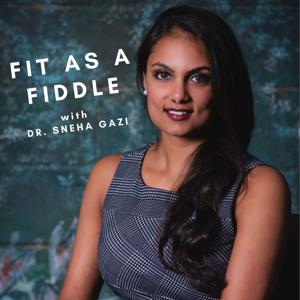


In this episode of Fit as a Fiddle, we welcome back Robin Randisi, a functional nutritionist who specializes in nervous system support and whole-body resilience. Robin breaks down the profound connection between our dietary choices and the autonomic nervous system, explaining how modern life and daily stressors often trap us in a chronic "fight or flight" sympathetic state. She emphasizes that getting our bodies into a parasympathetic "rest, digest, and repair" mode is crucial because that is the only state where we can effectively absorb nutrients, heal tissues, and excrete toxins.
The conversation dives deep into how chronic pain and illness can create a self-reinforcing loop of central sensitization, where the body’s protective physical guarding restricts blood flow and breeds further inflammation. Contrasting her functional approach with conventional medicine's tendency to merely mask symptoms, like prescribing lifelong medications for reflux or hives, Robin advocates for investigating the root cause of physical distress. She also tackles popular wellness trends, cautioning that intermittent fasting is an "advanced maneuver" that often functions as an unnecessary restriction, which can actually increase stress hormones and inflammation over time. Instead, she recommends a much gentler 12 to 13-hour overnight fast.
Finally, Robin shares highly practical, "baby step" strategies for sending signals of safety to your nervous system through food. Her foundational rules include ensuring sufficient overall food quantity, spacing balanced meals out every four hours to avoid blood sugar crashes, and significantly increasing fiber intake. Crucially, Robin insists on not skipping breakfast; for those without a morning appetite, she suggests a small "breakfast appetizer," like a boiled egg or collagen powder in coffee, within an hour of waking up.
Discover more about Robin's Ground, Nourish, Breathe online coaching program and podcast.
Connect with her directly: robinrandisi.com
Check out her past episode here: “The Basics of an Anti-Inflammatory Diet”
Click here and use your exclusive 20% listener discount (Code: Fit20) to enroll in Master Your Pelvic Floor, our signature self-paced course that will change the way you understand and care for your body.
In this episode of Fit as a Fiddle, we sit down with fertility awareness educator Kate Douglas, founder of Earth Body, to explore why your menstrual cycle is much more than your bleed and why ovulation is the main event. Kate shares how seeking non-hormonal contraception led her to cycle charting, challenged what she knew about fertility, and deepened her connection with her body. She breaks down the follicular and luteal phases, estrogen and progesterone, and how tracking cervical fluid and basal body temperature can help identify ovulation, inform non-hormonal birth control, and reveal patterns worth discussing with a healthcare provider.
The conversation expands into mental health, self-trust, and body literacy. Kate explains how daily charting, in under five minutes, can help people recognize cyclical patterns in symptoms and mood, offering validation and grounding. She contrasts this with relying on predictive apps and gently challenges rigid “cycle syncing” protocols, emphasizing compassionate foundations: sleep, nourishment, pain support, and basic phase awareness.
We also explore why everyone, including people without a uterus, benefits from cycle education, and how menstrual shame affects reproductive rights, relationships, and culture. Kate shares how cycle awareness transformed her partnership, encouraging honest conversations about conception, empathy around symptoms, and shared understanding. Whether you’re trying to conceive, avoid pregnancy without hormones, or feel more connected to your body, this episode offers an invitation into practical cycle literacy and greater respect for the menstrual cycle.
Connect with her:
helloearthbody.com
https://helloearthbody.substack.com/
Check out Kate’s Free Resources below:
Click here and use your exclusive 20% listener discount (Code: Fit20) to enroll in Master Your Pelvic Floor, our signature self-paced course that will change the way you understand and care for your body.
Developmental psychologist, somatic clinician, and craniosacral therapist Dr. Ellyce DiPaola joins Fit as a Fiddle for a thoughtful conversation about craniosacral therapy, a gentle, light-touch approach rooted in American osteopathy. She shares how she works with the cranium, spine, and sacrum, describing how she uses her hands to listen for subtle rhythms in the body and explore patterns of tension. Through relatable analogies, like reading the rings of a tree, Ellyce offers a window into her approach and how she tailors each session to the person in front of her.
Ellyce also walks us through what a session can look like, how her work with newborns differs from her work with adults, and why she takes an individualized approach to the pace of change. Drawing on her experience in early relational health and as an adjunct professor at Teachers College, Columbia University, she explores the connections between our nervous systems, relationships, and sense of safety.
At the heart of this conversation is a reassuring message for parents: connection matters more than perfection. Ellyce reminds us that supporting our children begins not with doing every “extra,” but with nurturing our own regulation and creating moments of genuine connection. It’s a warm, curious conversation for anyone interested in craniosacral therapy, body-based care, and supporting families with greater compassion.
Connect with her: ellycedipaola.com
Click here and use your exclusive 20% listener discount (Code: Fit20) to enroll in Master Your Pelvic Floor, our signature self-paced course that will change the way you understand and care for your body.
In this episode of Fit as a Fiddle, Dr. Sneha Gazi sits down with Deb Flashenberg, founder and director of the Prenatal Yoga Center in New York City, to explore what it really means to train for birth, not just in the body, but in the mind and nervous system too. Deb shares how her own 42-hour birth, her experience as a doula at over 100 births, and her certifications in childbirth education and pelvic floor-focused yoga reshaped her approach to prenatal movement. Together, they explore Deb’s three-pronged approach of yoga asana, education, and community, and how each class responds to the pregnant people in the room rather than following a scripted sequence.
The conversation then turns to the often-misunderstood pelvic floor: why “tighten, tighten, Kegel, Kegel” can miss the bigger picture, and why birth preparation involves both support and release. Deb explains how she uses pelvic models, baby models, breathwork, and vivid imagery, including “baby hallway” and jellyfish diaphragms, to make this invisible part of the body feel concrete and empowering. Deb & Sneha also discuss pelvic floor tension, the relationship between breathing, nervous system regulation, and pelvic function, and the importance of individualized pelvic floor physical therapy.
Finally, they explore Deb’s concept of “training for birth” as someone would train for a marathon: starting in early pregnancy or even before conception, building resilience to discomfort, and practicing coping skills rather than only learning them in theory. Hear about Deb’s “mock contraction” wall squat, practicing focus amid hospital-style noise, and why flexibility of the mind matters just as much as flexibility of the hips when birth plans change, whether that means an epidural delay, a fast labor, or an entirely different birth experience.
Connect with Deb Flashenberg: prenatalyogacenter.com
Click here and use your exclusive 20% listener discount (Code: Fit20) to enroll in Master Your Pelvic Floor, our signature self-paced course that will change the way you understand and care for your body.
In this powerful roundtable episode of Fit as a Fiddle, we sit down with licensed mental health counselors Ariel Katz and Kelsey Bates, co-founders of New York Women’s CBT, a therapy practice dedicated to supporting women living with chronic illness. They unpack what cognitive behavioral therapy (CBT) actually is (beyond the stereotypes), how “third-wave” CBT approaches like cognitive processing therapy (CPT), dialectical behavior therapy (DBT), and acceptance and commitment therapy (ACT) can be deeply trauma-informed, and why women with chronic pain and invisible disabilities need providers who truly “get it.” Ariel and Kelsey share their own lived experiences with chronic illness, the shame and dismissal they encountered in traditional therapy, and how that led them to build a practice that centers validation, empowerment, and tangible, skills-based tools.
Together, they dive into the concept of medical trauma: what it is, how it can arise from repeated painful procedures, invalidating encounters, or years of undiagnosed symptoms, and why not every traumatic medical experience looks like textbook PTSD. They explore “moral injury” in healthcare, the harm of being told your pain is “in your head,” and the unique ways women (especially women of color) are under-researched, under-treated, and disbelieved in medical settings. The conversation offers concrete strategies for both providers and patients: how clinicians can listen, validate, and practice within their true scope (including knowing when to refer), and how patients can prepare for appointments, self-advocate, manage nervous system dysregulation, and reduce the mental load of complex medical histories. Throughout, Ariel and Kelsey emphasize that pain is real, you are not “too much,” and it is possible to build a multidisciplinary support team and a life filled with meaning, joy, and self-compassion, even while living with chronic illness.
Connect with Ariel & Kelsey:
womenscbt.com
@womenscbt
Click here and use your exclusive 20% listener discount (Code: Fit20) to enroll in Master Your Pelvic Floor, our signature self-paced course that will change the way you understand and care for your body.
This podcast episode featured Marisol Montoya, a recently certified nurse midwife and holistic nurse, discussing her journey from filmmaking to midwifery and her recent experience learning from Mayan midwives in Guatemala. Marisol shared how she discovered her calling to become a midwife through a spiritual experience in 2012, and described her clinical observations showing how cultural and community practices affect birth outcomes differently between Indigenous and Hispanic populations in New York City. She detailed her recent two-week immersion in Guatemala where she observed traditional practices including herbal medicine, spiritual rituals, and postpartum care methods, while noting which practices could potentially be applicable in Western medicine versus those that would not translate due to safety concerns or lack of scientific evidence.
Connect with her: https://www.linkedin.com/in/marisol-montoya-cnm/
Click here and use your exclusive 20% listener discount (Code: Fit20) to enroll in Master Your Pelvic Floor, our signature self-paced course that will change the way you understand and care for your body.
What if your village wasn’t something you had to search for, but a room you could walk into? In this special episode of Fit as a Fiddle, Dr. Sneha Gazi joins forces with perinatal psychotherapist and parent coach Olivia Bergeron to introduce Rooted and Ready, an intimate NYC-area event on Oct 24, 2026 bringing expectant parents, new parents, and perinatal professionals together. Think honest conversations, trusted guidance, and meaningful connections that help you feel more supported in pregnancy, postpartum, and beyond.
This is not another afternoon of generic parenting advice. We’re bringing you mind-and-body talks with Sneha and Olivia, a candid birth panel featuring two obstetricians, a midwife, and a doula, plus a featured fireside conversation with the author of The Power Pause, Neha Ruch. Add delicious bites from Pura Vida, swag bags, exciting raffle prizes, and opportunities to connect directly with providers and other parents, and you have an afternoon worth making room for. Come with your questions. Leave with connections, resources, and a little more confidence in what comes next.
Here’s the catch: we’re keeping this event intentionally small so you can actually connect, not get lost in a crowd. That means limited space for a room full of meaningful conversations. Whether you’re preparing for a baby, navigating new parenthood, or supporting families professionally, grab your parent or provider ticket through the ticket link in these show notes before the event fills up. Use code ROOTED5 for listeners! Your village starts here.
Check out our Rooted & Ready Page
Check out our promo video
Follow is on IG @_Rooted_Ready
Check out Olivia’s first podcast on our show back in 2020: Overcoming Postpartum Depression: No Need To Be A Martyr.
Click here and use your exclusive 20% listener discount (Code: Fit20) to enroll in Master Your Pelvic Floor, our signature self-paced course that will change the way you understand and care for your body.
In this roundtable episode of Fit as a Fiddle, orthopedic and pelvic health PT Dr. Sneha Gazi sits down with chiropractor Dr. Rob Shire and occupational therapist Dr. Taylor Rahe to unpack how PT, OT, and chiropractic care overlap and differ. They discuss why their collaborative, nervous-system-centered approach is so powerful for patients, especially in the perinatal world. They explore how each profession uses its unique tools to support the same ultimate goal: helping people participate fully and meaningfully in their lives, whether that means dancing at a daughter’s wedding, traveling the world, or simply getting out of bed without fear.
Together, they dig into what “dysregulation” actually means without pathologizing patients, reframing the nervous system as protective and on your side rather than “broken.” The trio discuss regulation versus calm, observing pain from a compassionate, mindful distance, and the role of neuroplasticity in changing ingrained patterns of movement, stress, and identity rooted in chronic pain. They also talk candidly about patient responsibility, the challenge when people do not follow through on home programs, and how tools like HRV biofeedback can make invisible progress visible, and therefore more motivating.
The episode closes with a powerful case for truly multidisciplinary, patient-centered care: why no single profession can be everything to everyone, how to stay in your lane while collaborating deeply, and how to think of care as an individualized “algorithm” that might mix PT, OT, chiropractic, biofeedback, mindfulness, and more. For both providers and patients, this conversation is an invitation to stay curious, understand each profession’s scope, and stay open to different modalities as pathways to the same goal: a fuller, more empowered life in your body.
Connect with them:
Dr. Rob Shire: drrobertshire.com
Dr. Taylor Rahe: drtaylorrahe.com
truwholecare.com
Click here and use your exclusive 20% listener discount (Code: Fit20) to enroll in Master Your Pelvic Floor, our signature self-paced course that will change the way you understand and care for your body.
In this episode of Fit as a Fiddle, Dr. Sneha Gazi sits down with Dr. Tiffany Lin, a board-certified anesthesiologist and pain medicine specialist at Weill Cornell Medicine and NewYork-Presbyterian Hospital, for an approachable, evidence-informed conversation about labor epidurals. Dr. Lin explains what an epidural actually is, how it works on the nerves that carry pain, sensation, and movement, and why modern epidural techniques look very different from the “completely numb and stuck in bed” version many people still picture.
Together, they explore how epidurals can be tailored throughout labor, including lower-dose options that may allow for repositioning in bed, patient-controlled dosing, and adjustments when someone wants more pain relief or more sensation and pressure for pushing. They also discuss what to expect with placement, common medication-related side effects, why a urinary catheter may be used, and the rare but important risks and reasons an epidural may not be appropriate for every patient. Dr. Lin also clears up persistent myths around timing, C-sections, prolonged labor, and paralysis.
Most importantly, this episode makes space for every kind of birth preference. Whether you are planning an unmedicated birth, considering an epidural, scheduling a cesarean, or simply want to understand your options before labor begins, the goal is education, flexibility, and informed consent. Listen in to better understand the benefits, risks, alternatives, and questions to bring to your OB, midwife, and birth hospital as you create a plan that feels right for you.
Click here and use your exclusive 20% listener discount (Code: Fit20) to enroll in Master Your Pelvic Floor, our signature self-paced course that will change the way you understand and care for your body.
In this unique episode, Dr. Sneha Gazi turns the mic on her own birth story with the help of Risa Klein, a certified nurse midwife and the founder of Manhattan Midwife. With over 30 years of experience transitioning from attending home births to working in hospital settings, Risa has dedicated her career to empowering mothers and advocating for low-intervention, high-satisfaction deliveries. Risa shares her journey from working as a TV news producer to discovering her true calling in midwifery, explaining how she now focuses on birth consultations and medical record reviews to help mothers process, understand, and heal from challenging birth experiences.
The conversation takes a deep dive into Sneha’s 45-hour labor, allowing Risa to clinically and emotionally reframe the extended timeline. Risa unpacks the reality of "back labor," explaining how a posterior fetal presentation likely caused Sneha’s prolonged early contractions without significantly dilating the cervix. She emphasizes the crucial need for early communication with care providers, noting that simple positional shifts, like getting in a tub or adopting a polar bear position, can often help turn the baby and save mothers from severe energetic depletion. The episode also clarifies the medical difference between labor induction and augmentation, validating Sneha’s intuitive decision to get a restorative epidural upon reaching active labor.
Finally, Risa and the host explore the broader, often disconnected landscape of modern hospital births. They discuss the pitfalls of navigating large obstetrics practices where mothers might end up with rushed, unfamiliar, or unsympathetic providers who treat birth as a strict schedule rather than an individualized experience. Risa passionately advocates for continuous, trusting relationships between providers and mothers, encouraging listeners to speak up, ask questions, and secure a care team that truly listens to their needs.
Connect with her:
manhattanmidwife.com
Click here and use your exclusive 20% listener discount (Code: Fit20) to enroll in Master Your Pelvic Floor, our signature self-paced course that will change the way you understand and care for your body.
From the publisher's feed
If you want the "in" on your health, search no further. Fit As a Fiddle brings you top tips from experts in many fields of health and wellness. Grow with our community as you learn how to enhance…

90,452 Listeners

227,672 Listeners

12,391 Listeners
564 Listeners

369,057 Listeners
9,289 Listeners
62 Listeners

3 Listeners
28,903 Listeners
12 Listeners
13 Listeners