
Sign up to save your podcasts
Or


In the Soviet Union in the 1970s, “nobody gave a damn” about the official ideology, although “people with higher education were expected to pledge allegiance to it,” says Maria Lipman. She began her career as a medical translator at that time, a job that allowed her to work from home and have as little to do with the state as possible.
She became a translator, researcher, and contributor to the Washington Post in the years immediately after the fall of the Soviet Union, and from 2001 to 2011 a columnist for the newspaper. She has been a fellow at the Carnegie Moscow Center, editor of the Pro et Contra journal, contributor to Foreign Affairs and many other publications, and held a number of prestigious academic positions. Maria continued to live in Moscow until 2022, closely observing Russian society and politics under Gorbachev, Yeltsin, and Putin.
She is currently a visiting scholar at George Washington University.
In this conversation, we cover:
* Life in the Soviet Union during the Era of Stagnation—not all grim
* The post-Soviet era: Journalism under a weakened state
* The rise of Putin and the recentralization of power
* The emergence of political activism and Alexei Navalny
* A shift from hope to repression
* Can Russian journalism thrive in exile?
* Reflections on authoritarianism in the U.S.
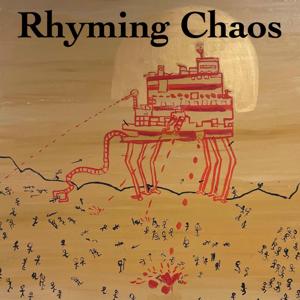
The Rhyming Chaos podcast is produced by Jeremy Goldkorn and Maria Repnikova, and edited by Cadre Scripts. The theme music is Paper Boy, composed and performed on the guzheng by Wu Fei. Our closing music is Erik Satie’s Gymnopédie No. 1, arranged and performed by Wu Fei. Our cover art is by Li Yunfei.
Please subscribe wherever you get your podcasts, leave us a review, and if you like what we’re doing, please take out a paid subscription at rhymingchaos.com.
 View all episodes
 By Jeremy Goldkorn and Maria Repnikova
5
1515 ratings
In the Soviet Union in the 1970s, “nobody gave a damn” about the official ideology, although “people with higher education were expected to pledge allegiance to it,” says Maria Lipman. She began her career as a medical translator at that time, a job that allowed her to work from home and have as little to do with the state as possible.
She became a translator, researcher, and contributor to the Washington Post in the years immediately after the fall of the Soviet Union, and from 2001 to 2011 a columnist for the newspaper. She has been a fellow at the Carnegie Moscow Center, editor of the Pro et Contra journal, contributor to Foreign Affairs and many other publications, and held a number of prestigious academic positions. Maria continued to live in Moscow until 2022, closely observing Russian society and politics under Gorbachev, Yeltsin, and Putin.
She is currently a visiting scholar at George Washington University.
In this conversation, we cover:
* Life in the Soviet Union during the Era of Stagnation—not all grim
* The post-Soviet era: Journalism under a weakened state
* The rise of Putin and the recentralization of power
* The emergence of political activism and Alexei Navalny
* A shift from hope to repression
* Can Russian journalism thrive in exile?
* Reflections on authoritarianism in the U.S.
The Rhyming Chaos podcast is produced by Jeremy Goldkorn and Maria Repnikova, and edited by Cadre Scripts. The theme music is Paper Boy, composed and performed on the guzheng by Wu Fei. Our closing music is Erik Satie’s Gymnopédie No. 1, arranged and performed by Wu Fei. Our cover art is by Li Yunfei.
Please subscribe wherever you get your podcasts, leave us a review, and if you like what we’re doing, please take out a paid subscription at rhymingchaos.com.
4,166 Listeners

1,942 Listeners

536 Listeners
212 Listeners
610 Listeners
207 Listeners
721 Listeners
289 Listeners
87 Listeners
109 Listeners
135 Listeners
142 Listeners
458 Listeners
163 Listeners
394 Listeners