
Sign up to save your podcasts
Or



Based on Podcast App listening data
The episode begins with Corey giving shout-outs to various individuals and branches of the National Association of Letter Carriers (NALC) for their activism and contributions to the union. He then highlights upcoming rallies against the privatization of the United States Postal Service (USPS), providing details on dates, times, locations, and purposes. A significant portion is dedicated to promoting and explaining "Dogs of War," a new initiative to improve the union's success rate in arbitration cases, citing concerning statistics showing a high loss rate for the union in joint statement cases. David Noble joins the podcast to discuss his ongoing legal battle with the Department of Labor (DOL) regarding the 2022 NALC election. He details four key issues in his appeal, focusing on violations of federal law during the election process, such as inadequate advertising, lack of voter verification, restrictions on observer access, and ballot secrecy violations. He expects a court ruling in May, which could lead to a rerun of the election. Noble also shares his plans for the NALC if elected president, encompassing improvements to the grievance procedure, addressing the CCA issue, enhancing the IT department's analysis of postal service finances, and proposing substantial pay increases for members. The discussion concludes with Corey and Noble agreeing on the failings of the current NALC president, Brian Renfroe, highlighting Renfroe's perceived incompetence and dishonesty in negotiations, and the urgent need for change within the union.
fromatoarbitration.com
This episode is a fiery and lengthy discussion, focused on Corey's intense frustration with the union's leadership and management's ongoing violations of the contract. Corey begins by thanking a previous guest and highlighting Mallory's crucial role in maintaining the website and her community engagement. He encourages listeners to support her efforts by utilizing a provided "tip jar" on the website.
The episode then delves into Corey's personal experiences with union leadership, particularly a recent instance where his request to conduct training was blocked by a union official. He expresses skepticism about the union's overall strategy and commitment to carrier rights, characterizing their approach as inadequate and reactive.
Central to the discussion is Corey's critique of management's practices, particularly the implementation of new metrics and policies that he views as detrimental to carrier safety and well-being, including issues with mandatory overtime, restrictive working conditions, and the alleged falsification of training records (e.g., heat training). He argues that management often circumvents the contract, particularly by using scanner data to enforce non-existent standards. He advocates for challenging these practices through a strategic approach based on past arbitration precedents, demanding clear documentation and evidence to counter management claims.
Corey highlights several arbitration cases where management's actions were deemed problematic or dishonest. He emphasizes the importance of understanding how arbitrators interpret issues, particularly regarding the falsification of documents and the concept of "willful misconduct" which can lead to a dismissal or serious punishment.
Crucially, Corey emphasizes the need for carriers to be prepared to fight these issues directly, demanding to see documentation and evidence of any alleged violations of the contract. He presents examples of how to phrase such requests to management, even when confronted with attempts to intimidate them, advocating for a robust and detailed strategy for grievances.
Corey promotes the "Dogs of War" initiative, a group of individuals who will aggressively challenge management's actions and create a hostile work environment for management on the workroom floor, while also creating a supportive environment for carriers to support each other. He repeatedly emphasizes the importance of unity and proactive engagement from all members of the union to combat these issues. The episode ends with a renewed call for collective action and solidarity, urging listeners to be prepared for ongoing battles and to defend their rights.
fromatoarbitration.com
This episode focuses on the concept of "opting" for hold-down assignments for CCA's. Badmouth and Mallory begin by explaining the Joint Contract Administration Manual (JCAM) and its role in interpreting the national agreement. The central topic is the rights and procedures associated with opting, including eligibility requirements (full-time reserves, full-time flexibles, unassigned regulars, and predominantly CCAs). They clarify that opting is for the duration of the assignment, with certain exceptions and stipulations. The discussion includes the limitations on who can opt and specific circumstances when management may interfere with a hold-down assignment. Badmouth and Mallory also emphasize the importance of the correct use of the grievance procedure in these cases.
The episode stresses the value of "holding down" a route for CCAs in terms of gaining valuable experience, building a clearer understanding of the route and procedures, and establishing a more predictable schedule. This is presented as a tool to reduce the unpredictable on-call status often faced by CCAs.
The conversation includes the distinction between "clean bumps" (contractually permissible) and "dirty bumps" (grievable). Badmouth and Mallory provide examples of each type of bump, emphasizing that CCAs should be aware of their rights and should quickly engage their union steward to file grievances in the event of an unfair bump. They strongly advocate for the use of "malicious compliance" in a strategic, petty way to challenge management actions in these situations while still maintaining proper procedure within the contractual framework.
Badmouth and Mallory advocate for active union involvement and encourage listeners to join orgs and movements working for improved working conditions, including open bargaining, fair compensation, and a safer work environment for all carriers. They provide links to relevant organizations. Finally, the episode stresses solidarity and support within the carrier community, encouraging listeners to reach out and support each other during challenging times. The episode ends on a note of hope and solidarity, reminding listeners that the union will fight to protect their rights.
https://fromatoarbitration.com/cca-corner/
https://www.fightingnalc.com/
https://concernedlettercarriers.com/
This episode is an extended discussion, featuring multiple guests, on the upcoming arbitration proceedings and the broader context of the potential threat to the USPS. James Henry emphasizes unity and solidarity among NALC members, regardless of branch or political affiliation, in response to perceived threats to the postal service, particularly the potential for privatization and the removal of the Postal Board of Governors. He stresses the need for collective action and cautions against internal division, urging listeners to support upcoming rallies and the planned "lunchtime call-in" day of action to pressure congressional representatives. Richie Ray addresses concerns about the expedited arbitration process, leadership, and the toxic work environment, advocating for a proactive, rather than reactive, approach. He emphasizes the need for education and transparency within the union. He also outlines his vision for Region 15 as business agent, focused on the grievance procedure, and the importance of empowering the rank and file. Corey concludes the episode with his perspective, calling for unity and collective action among all postal employees to defend the USPS, offering advice on addressing the concerns raised and strategies to be used, along with plans to mobilize teams to combat hostile working environments. The overarching theme is the need for solidarity and collective action amongst all members of the postal service in the face of perceived threats to the postal service, including potential privatization.
http://www.fromatoarbitration.com/
This episode features a discussion about expedited arbitration, focusing on concerns raised by members regarding the process. Charlie Miller, a seasoned union representative, addresses these concerns, explaining the expedited arbitration process and emphasizing the importance of understanding the potential risks and benefits. He highlights the lack of transparency in expedited proceedings, contrasting them with traditional arbitration. Charlie also discusses the larger context of the USPS's potential dismantling, linking it to ideological issues and arguing it is a significant threat to the union's members' livelihoods and the broader economy. Charlie and Corey critique the NALC president's handling of negotiations and the union's current leadership, pointing out missed opportunities and the lack of empathy displayed towards rank-and-file members. He strongly advocates for a proactive approach, urging listeners to participate in a mass phone call campaign to directly influence their congressional representatives. The episode stresses the need for solidarity and collective action to preserve the postal service. The discussion underscores the importance of understanding the political context of the dispute and the need for continued, widespread member involvement.
http://www.fromatoarbitration.com/
This episode discusses the upcoming arbitration proceedings between the NALC and the USPS. Corey expresses deep dissatisfaction with the NALC president's handling of negotiations, criticizing the low offer (1.3%) received after over six hundred days of talks. Corey believes Renfroe failed to negotiate effectively and believes the offer was intentionally timed to force arbitration. He recounts the history of the dispute, emphasizing past arbitration failures, and the union's decision to proceed to interest arbitration. He also highlights a recent case where an arbitrator ruled against management and the subsequent efforts to amend that ruling. Corey argues that the union has a strong position to win concessions in arbitration due to the evidence gathered and the need for the members' voices to be heard. This episode also includes a detailed summary of the interest arbitration process, referencing previous cases and emphasizing that this is a complex and time-consuming procedure. Corey's overall message conveys a strong sense of frustration with the union's current leadership and a determination to fight for fair compensation in the upcoming arbitration. He concludes by expressing confidence in the carrier's determination to achieve a positive outcome.
http://www.fromatoarbitration.com/
This episode of the CCA Corner podcast features an interview with Emily, a newly converted PTF (previously CCA) from Cincinnati. The discussion focuses on union involvement and the importance of CCAs attending branch meetings.
Emily shares her experience successfully passing a resolution for a "no" vote on the recent tentative agreement (TA) at her branch. She emphasizes that despite personally benefiting from the TA, she voted no due to its inadequate address of CCA issues, particularly the low starting wage. Her branch unanimously supported the no vote and publicized their decision. Emily encourages CCAs to attend meetings, emphasizing the free food and drinks, the opportunity to meet union officers, and the importance of CCA voices in shaping the future of the union.
She highlights the generally welcoming atmosphere of meetings and the need for solidarity and support among CCAs. Morris reiterates the importance of attending meetings, even if seemingly unproductive, to ask questions and hold leadership accountable. He also promotes Building a Fighting NALC and the CLC as avenues for further union involvement. The episode concludes with thanks to Emily and a call for solidarity and self-care.
https://fromatoarbitration.com/cca-corner/
This episode focuses on the detrimental actions of current NALC leadership, specifically President Brian Renfroe and Executive Vice President Paul Barner, and contrasts their behavior with the proactive, carrier-focused approach of the Concerned Letter Carriers (CLC).
Corey details the CLC's recent training efforts, emphasizing their commitment to educating members and preparing them for future leadership roles. He criticizes Renfroe and Barner for their opposition to grievances and arbitrations, which he views as essential tools for protecting carriers' rights and securing financial remedies. He alleges that Renfroe is collaborating with management to reduce fixed office time, undermining carriers' efforts to combat the imposed one-hour office time metric.
Corey highlights a template created by a business agent to fight the one-hour office time mandate. This template includes grievance language addressing violations of the national agreement, handbooks, and memorandums. It also emphasizes the importance of carrier statements to document the toxic work environment created by this policy. However, Corey expresses frustration that Renfroe is simultaneously negotiating to reduce fixed office time, rendering the template less effective.
He further criticizes Renfroe for failing to inform carriers about upcoming street observations by a headquarters safety team, as detailed in a letter sent to Renfroe in December. This lack of communication is compared to a betrayal, leaving carriers vulnerable to disciplinary action. Corey also condemns Renfroe's apparent lack of concern for a murdered carrier, focusing instead on James Henry's presence at a memorial event. He criticizes Renfroe for relying on prepared statements and lacking genuine passion.
The episode concludes with a discussion of a successful arbitration case where management was ordered to pay the arbitrator's full fees due to non-compliance with a Step B decision. The arbitrator cited USPS Policy Letter M-01517, establishing that compliance is not optional. However, Corey reveals that Barner, under pressure from national labor, convinced the arbitrator to amend the award and split the fees, a move Corey considers a major setback in the fight against non-compliance. He urges carriers to support the CLC in the upcoming election to oust the current leadership and restore a carrier-focused approach to union representation. He also promotes a uniform discount offered by a carrier-friendly vendor.
Cites: https://fromatoarbitration.com/episodes-201-300/
http://www.fromatoarbitration.com/
This episode delves into the intricacies of the six-day count process, focusing on management's review requirements after route adjustments and the importance of meticulous form review to prevent manipulation of carrier time. Corey emphasizes the necessity of filing grievances if management fails to review routes or make necessary adjustments after an initial adjustment. He advises waiting 60-75 days post-adjustment to file, allowing carriers time to acclimate to the route and gather strong evidence of overburdening. This strategy also counters management's argument that carriers are simply unfamiliar with the route.
The episode then meticulously details sections 243.6 and 243.7 of the M-39 handbook, outlining management's responsibilities for reviewing routes, completing necessary forms (3997, 3999, 1813), examining time records for excessive overtime or auxiliary assistance, and ultimately readjusting routes if found to be out of adjustment. Corey underscores the importance of accurate data entry, highlighting a recent arbitration case where management was found to have falsified time records, and pledges to address such falsification head-on when he becomes Director of City Delivery.
Corey then transitions into a detailed explanation of various forms used in the six-day count process, including the 1840B, 1838C, and 1838. He explains how to interpret the data on these forms, emphasizing potential areas where management might manipulate figures to steal carrier time. He notes the importance of verifying entries for auxiliary street time, excluded time, and mail volume. The analysis of form 1838C emphasizes the need to scrutinize line items to ensure carriers receive appropriate credit for all performed duties. Corey gives examples of how management might misclassify recurring tasks as non-recurring (line 22 instead of 21) to deny carriers credit for their time. He stresses the importance of carrier and steward vigilance in reviewing these forms and requesting interviews with carriers to verify information accuracy.
Finally, Corey discusses form 1838, highlighting how waiting street time is frequently manipulated to underreport actual street time. He warns against unexplained deductions in street time and advises investigating any discrepancies through interviews, form reviews, and employee testimony. He concludes by reiterating the importance of scrutinizing these forms, as management is often trained to find ways to steal time from carriers. He then briefly mentions an upcoming CLC training session and promises a future episode covering other listener-submitted topics.
http://www.fromatoarbitration.com/
This episode features an interview with Tyler Vasseur, a leader of the Build a Fighting NALC (BFN) movement. The discussion focuses on the successful "Vote No" campaign against the recent tentative agreement, the NALC leadership's response, and BFN's plans for the future.
Corey begins by praising BFN's efforts and highlighting Mallory's call for members to submit educational resources to the From A to Arbitration website. He then introduces Tyler, commending his courage and leadership. Tyler discusses the historic nature of the TA rejection, emphasizing the increased voter turnout and the parallels to a similar rejection in 1978. He attributes the "no" vote to inflation, anger at NALC leadership, and the organized efforts of the reform movement. He stresses the importance of making the union a real force in the workplace to increase membership participation.
Corey and Tyler criticize President Renfroe's handling of negotiations, particularly his broken promises and lack of transparency. They see his recent adoption of BFN's talking points, including calls for an all-career workforce and a cost-of-living adjustment (COLA), as an attempt to save face. Tyler, however, views this as a victory for the reform movement, demonstrating the effectiveness of pressure and organized demands. He calls for nationally coordinated contract rallies to maintain momentum.
Tyler outlines BFN's plans for the future, including a campaign for the right to strike. He encourages listeners to join the upcoming BFN Zoom meeting and details how to start a local chapter. He emphasizes the importance of organizing and building a strong foundation for future fights, including the national convention, leadership elections, and contract negotiations in 2026. Corey reiterates his support for BFN and offers to promote their events.
Contact Mallory:
http://www.fromatoarbitration.com/contact
http://www.fromatoarbitration.com/
https://www.fightingnalc.com/
https://us02web.zoom.us/meeting/register/oL-uZSHURhuzHlKGDL-3eA#/registration
From the publisher's feed
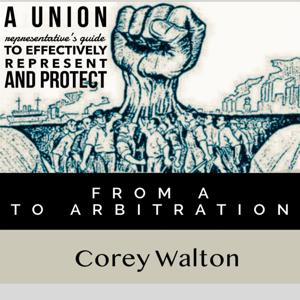
A Union Representative's in-depth Guide to the Dispute Resolution Process
Ranked by our users in the last 21 days
6,267 Listeners

5,641 Listeners
1,062 Listeners
18 Listeners
114 Listeners
99 Listeners
83 Listeners
13 Listeners
22 Listeners

19 Listeners
18 Listeners
41 Listeners
7 Listeners
24 Listeners

15 Listeners