
Sign up to save your podcasts
Or

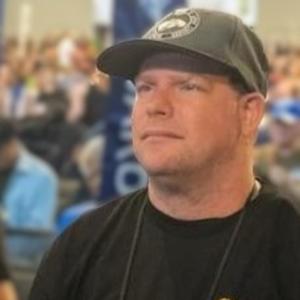


Brother Obadiah Batten's journey is anything but ordinary. Before becoming a city letter carrier and union representative, he spent eight years serving his country in the United States Air Force, earned a degree in Software Engineering, and performed as a professional wrestler. Today, he's one of thenewest voices representing letter carriers as a steward and Formal Step A representative in Branch 496, Richmond, Virginia.
In this episode of Hot House with Richie Ray, we dive into what shaped him, what motivates him to fight for carriers, how military discipline compares to USPS culture, and why serving your brothers and sisters has become his purpose. We also discuss the challenges facing newer carriers, the future of the NALC, and the importance of developing the next generation of union leaders.
In this episode, we break down a problem every city carrier and shop steward needs to understand customer packagepickups being removed from city carrier routes and performed by employees from another craft, including APWU truck drivers.
We go directly into Publication 399, Pickup Services Field Guide, and explain what management is supposed to do, what the city carrier is supposed to do, how PS Forms 5630 and 3996 fit into the process, whathappens when package volume exceeds the carrier's vehicle capacity, and why the words “bulk mailing,” “high volume,” or “we need a bigger truck” do not automatically erase city carrier work.
Then we take apart Staten Island grievance 25C1076from investigation through Informal Step A, Formal Step A, and the final Step B decision. The lesson is bigger than one grievance: this case demonstrates how a steward turns an allegation into a provable case through carrier statements, Publication 399, PS Forms 5630, PS Forms 3999, AMS/Edit Books, management's own admissions, Article 7.2, anddocumentary evidence.
And there is an equally important lesson from what the case did not establish: although the union proved the cross-craft violation and got the pickups returned to Routes 625 and 629,Step B would not award the requested financial remedy because the file did not establish how much time was lost, which employees lost that work, and for how many days. That is a lesson every steward should remember when building thenext case.
This episode is a full-scale training session for shop stewards, branch officers, activists and every letter carrier who has ever wondered what a steward can actually do when management says no.
Using the Fall 2004 edition of the NALC Activist as ourfoundation, we are going to break down five major areas:
We are going to talk about power.
Where does management's power come from?
Where does the Union's power come from?
Why does arbitration matter even when your grievance never reaches arbitration?
What should a steward do when management says, "I don't have time for you today"?
What happens when management tries to make the steward sit silently during an investigative interview?
How do you document a denial?
When should remedies escalate?
And perhaps most importantly:
Who are we training to take our place?
Because a strong union cannot depend upon one president, one chiefsteward, one shop steward or one great grievance writer.
A strong union creates more strong unionists.
This grievance began when a CCA who was working a hold-down assignment reported to work expecting to carry that route. Management later discovered that anotheremployee needed an assignment and decided to remove the CCA from the hold-down.
The carrier objected to being removed, and a disagreement developed on the workroom floor. Management alleged that the carrier refused instructions, became argumentative and disrespectful, and created a hostile environment.Management then removed the carrier from the workplace and placed him in Emergency Placement, off-duty without pay, under Article 16.7.
The Union challenged both the circumstances surrounding the removal from the hold-down and, most importantly, whether management had sufficient grounds to invoke Article 16.7. The Union argued that alleged insubordination, disrespect, raised voices, or a workplace disagreement do not automatically establish the type of emergency required byArticle 16.7.
A major weakness in management's case was its own documentation. Management claimed the carrier had to be immediately removed because of the situation, yetinstructed him to return to work on his next scheduledworkday.
So the central question became:
If this was truly an Article 16.7 emergency requiring immediate removal from the workplace, where was the evidence of the emergency?
That question became the foundation of the Union's grievance and ultimately the reason the Emergency Placement was overturned.
On this episode of Hot House with Richie Ray, we sit down with Justin Frew, candidate for President of NALC Branch 351 in Olympia.
But this conversation isn't going to begin with anelection.
Before somebody asks the membership to trust them withthe presidency of their branch, I want to know who that person is.
Who is Justin Frew?
What kind of letter carrier is he?
What did he experience on the workroom floor?
What pushed him toward union representation?
What did his first grievance teach him?
What did winning feel like?
More importantly, what did losing teach him?
We're going to talk about the grievances that stayedwith him emotionally, the mistakes that made him better, his relationship with management, and how he feels about the carriers he represents.
Then we're going to get into the campaign.
Why does Justin believe Branch 351 needs change?
What problems does he see?
What specifically would he do differently?
And if the membership gives him the opportunity to serve as president, what kind of Branch 351 does he want to build and eventually leave behind?
This isn't just an interview about winning an election.
It's a conversation about experience, mistakes, growth, responsibility, leadership, and earning the trust of the membership.
Nearly 40 years ago, Raquel “Rocky” Acasio began her postal career as a PTF letter carrier in San Diego. Just one year later, she became a shop steward and she has been fighting for letter carriers ever since.
In this special episode of Hot House with Richie Ray, we sitdown with CLC candidate for NALC Secretary-Treasurer Raquel “Rocky” Acasio for a conversation about her journey from the workroom floor to the national stage.
Rocky discusses becoming a steward in 1987, serving on the Dispute Resolution Team at Step B, handling grievances at Informal and Formal Step A, and serving as Branch 70Secretary-Treasurer from 2014–2025 before becoming Branch 70 Executive Vice President in 2026.
But this conversation is also about the future of the NALC.
Why does Rocky believe change is needed? What doesfinancial transparency and accountability mean to her? Why is she running for national office now? And what would she do differently if the membership elects her Secretary-Treasurer?
Most importantly, we discuss the power of the rank-and-file member.
Your vote matters.Your voice matters.
This election isn't simply about choosing candidates it's about deciding what kind of union letter carriers want moving forward.
Whether you support the CLC or another candidate, educate yourself, ask questions, examine the records, and VOTE.
The NALC belongs to its members. Hot House with Richie Ray
Knowledge is Power Your Voice Is Power. Your Vote Is Power. ROCK THE VOTE!
Weir Report as Rocky mentioned here is the link
chrome-extension://efaidnbmnnnibpcajpcglclefindmkaj/https://fromatoarbitration.com/wp-content/uploads/2025/02/Weir_Report_Renfroe_2023.pdf
This episode goes far beyond campaign talking points.
Richie Ray sits down with Region 1 National Business Agent Allan Rios to discuss nearly thirty years of service to letter carriers. Beginning as a casual employee in 1996, Allan shares how his experiences carrying mail shaped the representativehe became. The conversation explores his journey from shop steward to arbitration advocate, DRT representative, Regional Administrative Assistant, and ultimately National Business Agent.
Listeners will hear personal stories from Allan's carrier days, lessons learned representing thousands of carriers, his thoughts on today's challenges facing the NALC, why he chose to run with the Concerned Letter Carriers slate, and whyevery member's vote could shape the future direction of the union.
If you've ever wondered what it takes to become an NBA or what keeps someone fighting for carriers after decades of service this is an episode you won't want to miss.
This isn’t politics as usual this is The Hot House.
In this episode, we sit down with James D. Henry, candidate for National President of the National Association of Letter Carriers, for one of the most direct and unfiltered conversations about the future of our union.
We’re talking about the real issues carriers are dealing with every day forced overtime, excessive discipline, staffing shortages, and a grievance system buried under thousands of cases. Nothing is dodged. Nothing is sugarcoated.
We press on transparency why carriers feel disconnected from leadership and what will actually change. We challenge contract decisions, “give-back” negotiations, and the culture inside the union itself. And we go even deeper into union democracy, accountability, and where the line is drawn between leadership and control.
We also tackle the future: the rise of artificial intelligence, electronic monitoring, and what it all means for the job of a letter carrier inside the United States Postal Service.
This episode isn’t about promises it’s about answers.
If you’re a letter carrier who’s frustrated, paying attention, or wondering what comes next… this is one you don’t want to miss.
For the third maybe even fourth time, Corey Walton returns to the Hot House with Richie Ray. But this conversation is different.
This isn't about introducing Corey Walton. Most letter carriers already know who he is.
This is about where the National Association of Letter Carriers stands today, why so many carriers are concerned about the future of the union, the role the Concerned Letter Carriers (CLC) campaign says it hopes to play in the upcoming election, and why Corey believes education has become one of the most powerful tools available to letter carriers. Corey has served as a city letter carrier for nearly three decades, represented carriers as a steward, Formal Step A representative, arbitration advocate, and safety leader,and built the From A to Arbitration podcast into a major educational resource for carriers.
We'll discuss:
The current state of the NALC.
Why Corey decided to leave the comfort of local representation to run for national office.
The importance of carrier education.
The contract, arbitration, and the challenges facing today'sletter carriers.
Why every vote matters.
What Corey believes must change inside the union.
Then...
We'll end with one of the most entertaining parts of the Hot House...
The Hot House Rapid Fire Game.
A Facebook post started a debate over who deserves credit for defending Branch 41 President John Cruz against a Notice of Removal.
Rather than argue on social media, Richie Ray went back to the original record.
The grievance file. The emails written while the case was happening. John Cruz's own clarification. Orlando Gonzalez's Informal and Formal Step A work. The eventual arbitration preparation by Roy Jancio. And the emails concerning Paul Marks's involvement with the proposed pre-arbitration settlement.
This isn't about denying anyone credit.
It's about answering a bigger question:
Can one person really claim a grievance victory when the case was built through multiple levels of the grievance procedure by multiple union representatives?
From the publisher's feed
78,278 Listeners
18 Listeners
592 Listeners
1,061 Listeners

101 Listeners
83 Listeners

44 Listeners

41 Listeners
25 Listeners

15 Listeners