
Sign up to save your podcasts
Or



Based on Podcast App listening data
Corey discusses backing, stationary events, and street observations, focusing on how to use specific provisions in the M-39 handbook to challenge management actions. This episode speaks on the importance that carriers ask for union representation when management questions them about stationary and backing events, and educating carriers on how to respond to questions about occurrences on street time.
He also stresses the importance of M-39 134: Street Management, section 2, which prohibits management from spying or using covert techniques to observe carriers during street management. This, coupled with M-1458 stating MSP data may not constitute the sole basis for disciplinary action, is the main defense utilized in stationary event discipline. Management must observe time-wasting practices or improper procedure and must make themselves known to the carrier. The only individuals who can conduct covert surveillance of carriers are those within the Office of Inspector General (OIG). Corey also asserts that stewards should ask for PS Form 4584 during discipline for street events, which may further prove a violation of the M-39.
Arbitrator L. Wolitz C-32778: “We agree with the union that [...] M-39 134.22 (Spying/covert techniques) is directly related to working conditions.” “Furthermore, we find that the information gathered as a result of the observation of letter carrier Martin Smith is fruit of a poison tree and therefore must be deleted from all records of the postal service and carrier Smith.”
References In This Episode:
Corey references a carrier in his station where management called and accused him of backing, but the location in question was a turnaround driveway.
This episode discusses the importance of using tenure as an argument against discipline. He encourages listeners to use the "bank of goodwill," which refers to years of good service, in their arguments. Arbitrators often hesitate to discipline long-term carriers due to their tenure. He suggests including seniority dates on the PS Form 8190 to inform the advocate of the carrier's tenure. He urges listeners to use the "bank of goodwill" as a strong argument in any discipline case.
In This Episode: An arbitration for a carrier with a letter of warning for attendance, in which the arbitrator said management failed to recognize the grievant's 33 years of service.
Bank of Good Will: Page 44 of Defenses to Discipline
Case number 3587: Grievant served the employer for over 8 years without discipline.
C5138 A&B: Carrier followed and harassed by a manager, the carrier assaulted the manager, but her 14-year exemplary work record coupled with the circumstances of the incident led the arbitrator to reduce her removal to a reinstatement without loss of seniority or benefits, and back pay less a 30-day disciplinary suspension.
Elkouri and Elkouri - How Arbitration Works, pp 641: Length of Service with a Company; “Long service with a company particularly if unblemished, is a definite factor in the employee's favor when his discharge is reviewed through arbitration. Arbitrators have recognized that the loss of seniority may work great hardship on the employee and that it is not conducive to the improvement of relations between other workers and management.
**PAGE 16-3 pg 254 JCAM examples of behavior**
Corey continues his discussion on how to defend carriers against discipline after an accident, this time focusing on the concept of "corrective rather than punitive" discipline, as outlined in Article 16 of the JCAM. He again advises stewards if the branch president was not notified, it's a violation of due process. He also encourages shop stewards to challenge any claims that the accident was serious in nature, as the 1769 form requires a determination of seriousness. Corey also affirms that management has the burden of proof, and that they must prove an act was intentional. He mentions an accident is not sufficient to warrant automatic suspension or revocation of driving privileges, or automatic application of discipline (Article 29).
In This Episode: A carrier gave their phone to management - don't do that.
Corey continues to discuss how to defend carriers against discipline related to accidents. He emphasizes the importance of Article 41.3P of the JCAM, which requires management to promptly notify the branch president after a vehicle accident. Failure to do so violates due process and provides a strong argument for the carrier. He highlights two boxes on PS Form 1769, “Serious Accident” and “Preventative Action”, as they can be used as defenses to discipline if management filled them out improperly. He encourages shop stewards to be vigilant in advocating for their carriers in accident-related grievances, and to question management's “thorough investigation.”
In This Episode: A carrier knocking a basketball goal over and breaking a mirror, and management's dramatization in their report.
A carrier with a roll-away run-away who did not report it. Removal was revoked in arbitration due to the way management wrote up the PS Form 1769
***GET THE PS FORM*** & C-30421
This episode is the first in a series of episodes focusing on accidents and how to defend carriers against management actions after an accident. Corey highlights the importance of union representation at the scene of an accident, noting that management often tries to gather information and build a case against the carrier without giving them the opportunity to be present or to have representation. He emphasizes the importance of Article 41.3P, which requires management to promptly notify the branch president after a vehicle accident, and argues that failure to do so is a violation of due process.
Corey continues discussing attendance-related discipline, specifically focusing on the concept of "deemed desirable and restricted sick leave." He explains that management uses this to discipline carriers, but it's often a weak argument. He points out that the ELM provision 513.361 states that a carrier is only required to provide documentation for their absences if they are on restricted sick leave or if management deems it necessary for the protection of the Postal Service. He advises shop stewards to challenge these claims, especially when a carrier was not notified of being placed on "deemed desirable."
Corey highlights the importance of understanding national arbitration decisions related to discipline, namely the Vera d Bugg case, a landmark case in attendance arbitration, and suggests using it as a strong argument against management's claims, as it utilizes a percentage of attendance vs absences. He encourages shop stewards to ensure that carriers are aware of their rights and to be proactive in challenging inaccurate or unfair disciplinary actions.
Corey discusses a specific type of attendance-related discipline, "deems desirable and restricted sick leave." He points out that management often tries to circumvent the process by simply stating that the carrier was given a discussion about their absences, even if this isn't accurate. He highlights the importance of challenging these claims by the shop steward, suggesting the use of the ELM (Employee and Labor Relations Manual) provision 513.361 to support their arguments. He encourages shop stewards to educate carriers about these regulations and to challenge any instances where a formal discussion wasn't given.
Corey also encourages shop stewards to look for discrepancies between attendance records and the reasons for discipline. He emphasizes that the charge must be accurate and that the carrier must be given an opportunity to defend themselves against it, and reminds listeners that discipline must be corrective in nature.
Corey talks about the importance of attendance-related discipline in the grievance process. He points out the low success rate of the union as well as the difficulty of these cases, suggesting they are often won or modified in arbitration. He encourages shop stewards to challenge the validity of any "official discussion" claimed by management, as a formal discussion is required for minor offenses, and to ensure the carrier is fully aware of their attendance record and attendance reviews (or lack thereof). It is important to consult with the carrier before an investigative interview, and Corey mentions how to handle management and acknowledging management responsibilities. He also emphasizes the need to be assertive and fight for the carrier, understanding that they might be going through a difficult personal situation.
This episode focuses on the charge and discipline process in labor grievances. Corey emphasizes the importance of scrutinizing the charge itself, ensuring it is accurate and supported by the documentation provided by management. He advises shop stewards to examine the charge thoroughly, ensuring that every detail is correct and that the investigative interview covered all aspects of the charge, and any inaccurate information can be used to weaken management's stance.
The episode also discusses the "official discussion" requirement in Article 16.2 of the JCAM, reminding listeners that management is required to have a formal, private discussion with the employee before issuing discipline for minor offenses. There is also mention of Article 16.3 and the letter of warning, and that Article 16.7 talks about due process and the procedure that must be followed to issue discipline. Corey advises shop stewards to challenge any claims by management that an official discussion took place when it did not.
C-31277: Arbitrator Louise Wolitz “What is in that notice must be true and correct if the removal is to be for just cause.”
Corey explains the importance of understanding the "official discussion" requirement in Article 16.2 of the Joint Contract Administration Manual (JCAM). He explains that management is required to have a formal, private discussion with an employee before issuing discipline for a minor offense. He highlights how management often misrepresents these discussions, claiming they occurred when they actually did not. Corey encourages shop stewards to challenge these claims, as they can be used to weaken management's side of a grievance. He emphasizes the importance of scrutinizing dates and details within disciplinary notices.
From the publisher's feed
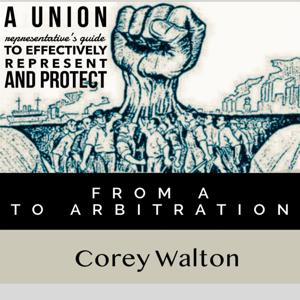
A Union Representative's in-depth Guide to the Dispute Resolution Process
Ranked by our users in the last 21 days

6,267 Listeners

5,641 Listeners

1,062 Listeners

18 Listeners
114 Listeners

99 Listeners

83 Listeners
13 Listeners
22 Listeners

19 Listeners

18 Listeners

41 Listeners
7 Listeners

24 Listeners

15 Listeners