
Sign up to save your podcasts
Or

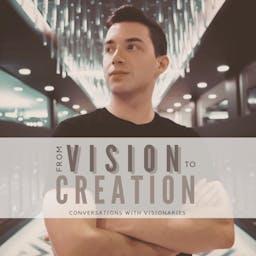


In this episode of From Vision to Creation, Alexander sits down with Jeffrey Smith, longtime music industry executive and former Discogs leader, for a fascinating conversation about the vinyl revival, Gen Z’s obsession with physical media, the psychology of collecting, digital burnout, AI, nostalgia, human connection, and why people are increasingly searching for something tangible in an overwhelmingly digital world.
After nearly a decade at Discogs, Jeffrey joined Alliance Authentic, where he is helping rethink how music, vinyl records, and collectibles are authenticated, preserved, and valued. But this conversation goes far beyond records. Jeffrey explores why the objects we collect often become extensions of our identity, memory, relationships, and the way we want to be seen by the world.
We dive into why Gen Z is embracing vinyl records, CDs, analog technology, watches, board games, and other physical experiences despite growing up digitally native. Jeffrey explains why he believes the movement may be less about nostalgia and more about people craving intentionality, community, discovery, and relief from screens.
The conversation also explores how streaming and constant access have changed our relationship with music, movies, and culture. When everything is available instantly, does anything feel as special? Jeffrey reflects on record stores, movie theaters, physical ownership, the joy of discovering something unexpectedly, and why scarcity can make an experience more meaningful.
Jeffrey also shares his perspective on the growing loneliness epidemic and why hobbies and collecting can create powerful communities. From vinyl records to fine minerals, sports cards, watches, and other collectibles, shared interests can give adults an easier way to meet people, build friendships, and reconnect in real life.
We also dive into artificial intelligence and collecting. Jeffrey discusses why he believes AI can be incredibly useful when you already understand the subject you are using it for, but dangerous when people blindly trust inaccurate information. He shares how he personally uses AI, where he believes it falls short creatively, and why human expertise and trusted communities still matter.
Beyond music, technology, and collecting, Jeffrey opens up about his own journey, growing up in a small town in Kentucky, becoming a musician, working in the music industry for decades, and learning to push through the people who told him “no.” He shares why one of his biggest life lessons is that no does not have to be the final answer.
If you’re attending New York Comic-Con this week or LA Comic-Con at the end of the month, you can also catch Alliance Authentic there and see more of what they’re building around music, collectibles, authentication, and preservation.
This episode is for music lovers, vinyl collectors, entrepreneurs, creators, marketers, Gen Z, technology enthusiasts, and anyone interested in nostalgia, digital culture, personal growth, community, and the future of how we experience art.
🎙️ Hosted by Alexander Schmieding
In this interview, you’ll learn:
#JeffreySmith #Vinyl #VinylRecords #PhysicalMedia #GenZ #Collecting #Discogs #VinylRevival #DigitalBurnout #Nostalgia #ArtificialIntelligence #AI #MusicIndustry #FromVisionToCreation #Podcast
Episode Resources:
https://www.allianceauthentic.com/
https://www.linkedin.com/in/jeffreysmithlouisville
https://www.instagram.com/fromvisiontocreation
https://www.tiktok.com/@fromvisiontocreation
https://www.instagram.com/alexschmieding
Subscribe for more conversations with visionaries turning ideas into reality.
This podcast is brought to you by Proper Placement — a full-service marketing agency helping businesses grow through social media, paid advertising, website design, email campaigns, and more. Learn more at www.properplacement.com.
Learn more about your ad choices. Visit megaphone.fm/adchoices
In this episode of From Vision to Creation, Alexander sits down with singer, songwriter, producer, and Nodaway frontman Chris Jobe for a powerful conversation about 777 Seasons, his near-death motorcycle accident, walking away from music, finding his way back after a 10-year hiatus, artificial intelligence, creativity, self-acceptance, and what it really takes to keep pursuing a life as an artist.
Chris Jobe’s journey with Nodaway has been anything but linear. After releasing just five songs, struggling with expectations, watching friends land record deals, and having his home robbed of his instruments and studio equipment, Chris stepped away from Nodaway and pursued a solo career. What he didn’t realize was that while he was gone, the music continued to grow — eventually reaching tens of thousands of monthly listeners and millions of streams without him actively promoting it.
Then a motorcycle accident in Costa Rica changed everything.
Chris shares the story of losing control of his motorcycle on a dangerous curve and sliding toward the edge of a ravine where people had previously lost their lives. Moments after surviving the crash, the first car to pass him had “777” on its license plate. That experience would eventually inspire the title of his new album, 777 Seasons, and become part of a series of events that led him back to Nodaway.
We dive into how falling in love brought Chris to London, how he found himself working out of the legendary Konk Studios, and how he wrote the entire 777 Seasons album in just one month. Chris also explains why recording with real musicians became so important to him and why he believes imperfections, vulnerability, and human emotion are essential to making meaningful art.
The conversation also explores one of the biggest debates in creativity today: AI versus human creativity. Chris shares why he believes relying on artificial intelligence to generate creative ideas can become a trap, why overly polished content is losing its appeal, and why audiences increasingly want something authentic, imperfect, and human.
Chris also gets candid about the emotional reality of being an artist. He talks about questioning whether he was actually good enough, wondering whether friends and family were simply telling him what he wanted to hear, and learning that success rarely comes from one life-changing moment.
Instead, he believes careers are built through small wins, persistence, experimentation, and continuing even when you have no guarantee that what you’re creating will work.
Beyond music, this episode explores self-acceptance, affirmations, journaling, relationships, childhood experiences, anxiety, vulnerability, and why questioning your path doesn’t necessarily mean you’re on the wrong one.
This is a conversation about creativity, reinvention, purpose, resilience, and learning to trust the process even when the outcome is uncertain.
🎙️ Hosted by Alexander Schmieding
In this interview, you’ll learn:
#Nodaway #777Seasons #ChrisJobe #IndieMusic #MusicPodcast #Songwriter #ArtificialIntelligence #AIMusic #Creativity #FromVisionToCreation #Podcast #MusicIndustry
Episode Resources:
https://www.instagram.com/nodawaymusic/
https://www.instagram.com/chrisjobemusic/
https://linktr.ee/NODAWAY
https://open.spotify.com/artist/6rqctFxBwSTjweKb3cBCCu
https://music.apple.com/us/artist/nodaway/734799551
https://www.instagram.com/fromvisiontocreation
https://www.tiktok.com/@fromvisiontocreation
https://www.instagram.com/alexschmieding
Subscribe for more conversations with visionaries turning ideas into reality.
This podcast is brought to you by Proper Placement — a full-service marketing agency helping businesses grow through social media, paid advertising, website design, email campaigns, and more. Learn more at www.properplacement.com.
Learn more about your ad choices. Visit megaphone.fm/adchoices
In this episode of From Vision to Creation, Alexander sits down with singer, songwriter, producer, performer, and rising theatre-pop artist RAEGAN for an honest conversation about RAEGAN CORE, the music industry, rejection, confidence, manifestation, social media, artistic identity, and what it really takes to build a career without losing yourself.
RAEGAN is creating a world entirely her own. Blending the drama and storytelling of musical theatre with modern pop, raw emotion, fashion, performance art, and cinematic visuals, she has developed a distinctive sound she describes as “musical theatre pop.” Her latest project, RAEGAN CORE, pushes that vision even further—embracing everything she was once told was “too much” and turning it into her creative superpower.
In this conversation, RAEGAN takes us back to her beginnings as a theater kid who never questioned whether performing would become her life. She shares how songwriting eventually became a form of therapy, allowing her to process emotions, understand herself, and turn her inner world into something tangible.
We also explore the reality of pursuing music in an industry where everyone has an opinion about what an artist should sound like, look like, and become. RAEGAN opens up about being told her work is too experimental, too theatrical, and too much—and why she refuses to compromise her identity in order to become more marketable.
One of the biggest themes of the episode is learning how to trust yourself. RAEGAN explains why she believes artists have to put “hunger before fear,” why rejection cannot determine your direction, and why sometimes the most important thing you can protect is your own identity.
The conversation also dives into social media and the pressures facing modern artists. RAEGAN talks candidly about viral videos, hate comments, algorithms, likes, streams, content creation, and learning not to let internet reactions define the value of your work. She shares how she mentally separates “all caps RAEGAN,” the artist she puts into the world, from the more vulnerable person behind the music.
Beyond music, RAEGAN reflects on friendship, ambition, manifestation, confidence, creativity, and the fear of never reaching your potential. She explains why she doesn’t believe in having a Plan B, why consistency and quality matter more than waiting for permission, and why believing in yourself has to come before anyone else believes in you.
This episode is for artists, musicians, creators, entrepreneurs, performers, theater kids, and anyone trying to build something unconventional while staying authentic to who they are.
🎙️ Hosted by Alexander Schmieding
In this interview, you’ll learn:
#RAEGAN #RAEGANCORE #MusicalTheatrePop #MusicIndustry #SingerSongwriter #PopMusic #FromVisionToCreation #Podcast #ArtistInterview #MusicPodcast #Manifestation #CreativeProcess #TheatreKid #IndependentArtist #MusicCareer
Episode Resources:
https://www.raeganmusic.com/
https://www.instagram.com/raegancomplex/
https://www.tiktok.com/@raegancomplex
https://www.youtube.com/@raegancomplex
https://open.spotify.com/artist/2nB2BHirpyBx2sJc4QKfwz
https://podcasts.apple.com/us/podcast/from-vision-to-creation/
https://open.spotify.com/show/0hppHgg
https://www.instagram.com/fromvisiontocreation
https://www.tiktok.com/@fromvisiontocreation
https://www.instagram.com/alexschmieding
Subscribe for more conversations with visionaries turning ideas into reality.
This podcast is brought to you by Proper Placement — a full-service marketing agency helping businesses grow through social media, paid advertising, website design, email campaigns, and more. Learn more at www.properplacement.com.
Learn more about your ad choices. Visit megaphone.fm/adchoices
In this episode of From Vision to Creation, Alexander sits down with relationship expert, coach, and Love At First Fight founder Bruce Muzik for a powerful conversation about attachment styles, relationship conflict, communication, emotional safety, love, vulnerability, and why even couples who deeply love each other can become trapped in destructive patterns.
Bruce’s journey into relationship coaching began with his own relationships. After a divorce and another painful breakup, he had a realization that changed the direction of his life: the common denominator in every failed relationship was himself. Already an established personal development teacher, Bruce turned his attention inward and began studying love, relationships, attachment theory, and the psychology behind why couples fight.
In this conversation, Bruce explains why traditional communication advice often fails and why couples need to feel connected before trying to resolve conflict. His philosophy, “connect first, communicate later,” explores how the nervous system can shift into fight-or-flight when a relationship feels threatened—and why trying to solve an argument from that state can make things worse.
We also dive deep into attachment styles. Bruce breaks down the five relationship patterns he calls the hailstorm, turtle, chameleon, wolf, and sheep, explaining how childhood experiences and survival responses can influence the way we behave in adult relationships. He reveals why some people become angry when they fear abandonment, why others emotionally shut down, and why people-pleasers can quietly lose themselves inside a relationship.
Bruce also explains why arguments about dishes, texting, or seemingly insignificant issues are rarely about the issue itself. Underneath many relationship fights are deeper fears involving trust, respect, abandonment, emotional safety, and whether we truly matter to our partner.
Alexander and Bruce also explore vulnerability, conflict avoidance, people-pleasing, emotional withdrawal, healthy arguments, relationship repair, and whether attachment styles can change over time. Bruce shares why he believes conflict can actually strengthen a relationship when handled correctly—and why the complete absence of conflict can sometimes indicate that important conversations are being avoided.
Beyond relationships, Bruce reflects on his journey becoming a coach, why aspiring life and relationship coaches should gain real experience before teaching others, and the biggest lesson he has learned after speaking with tens of thousands of people about love: “Anything that isn’t love is just a misunderstanding.”
🎙️ Hosted by Alexander Schmieding
In this interview, you’ll learn:
#BruceMuzik #AttachmentStyles #Relationships #RelationshipAdvice #AttachmentTheory #CouplesTherapy #LoveAtFirstFight #Communication #PersonalGrowth #FromVisionToCreation #Podcast
Episode Resources:
https://www.brucemuzik.com/
https://www.loveatfirstfight.com/
https://www.instagram.com/brucemuzik
https://www.tiktok.com/@brucemuzik
https://www.instagram.com/fromvisiontocreation
https://www.tiktok.com/@fromvisiontocreation
https://www.instagram.com/alexschmieding
Subscribe for more conversations with visionaries turning ideas into reality.
This podcast is brought to you by Proper Placement — a full-service marketing agency helping businesses grow through social media, paid advertising, website design, email campaigns, and more. Learn more at www.properplacement.com.
Learn more about your ad choices. Visit megaphone.fm/adchoices
In this episode of From Vision to Creation, Alexander sits down with Hollywood producer, film executive, and Arcana Labs Co-Founder & CEO Jonathan Yunger for a powerful conversation about AI filmmaking, generative AI, Hollywood, entrepreneurship, creativity, the future of movies, and how artificial intelligence could fundamentally change the way films are made.
After more than 15 years working across film production, financing, distribution, sales, and studio leadership, Jonathan has worked on more than 50 films and major franchises including The Expendables, Rambo, Has Fallen, Hellboy, and The Hitman’s Bodyguard. But after watching the economics of independent filmmaking become increasingly difficult, he began exploring a completely different way of making movies.
That journey eventually led to Arcana Labs, an AI production platform designed to help filmmakers dramatically reduce costs while keeping human creativity at the center of the process.
Jonathan explains why he believes AI will not replace filmmakers—but people who learn how to use AI may replace those who refuse to adapt. He breaks down how generative AI can be used for visual effects, previsualization, locations, second-unit shots, storyboarding, and production while preserving the parts of filmmaking he believes should remain deeply human: writing, acting, directing, production design, and music.
We also dive into the economics of filmmaking. Jonathan shares how he and his wife produced a short film that could have traditionally cost roughly $500,000 for under $35,000 by combining traditional production with AI tools. He also discusses Echo Hunter, a 30-minute film created with real SAG actors and a largely generative-AI cinematic world for under $50,000—a project he estimates could have cost millions using traditional visual effects.
But Jonathan’s journey into AI was far from easy.
Despite decades of experience in Hollywood, he had never built a technology platform. What was initially supposed to take months turned into years of development, millions of dollars invested, repeated failures, financial pressure, and moments when Jonathan questioned whether he was qualified to build the company at all.
He opens up about having doors shut in his face by longtime Hollywood colleagues, being told he was going to cannibalize the industry, and spending nearly three years building Arcana before finally feeling like the company was beginning to work.
Beyond AI and filmmaking, this conversation explores the psychology of entrepreneurship, ambition, fear, creativity, persistence, and success. Jonathan explains why entrepreneurs need to be “the right amount of delusional,” why great ideas require both imagination and discipline, and why passion becomes the fuel that keeps you moving when everything else tells you to stop.
Jonathan also shares a powerful perspective on happiness and ambition: if your happiness depends entirely on what you accomplish, you may never actually feel content.
This episode is for filmmakers, creators, entrepreneurs, producers, writers, actors, AI enthusiasts, startup founders, and anyone interested in artificial intelligence, Hollywood, generative AI, storytelling, filmmaking technology, or what the future of the entertainment industry could look like.
🎙️ Hosted by Alexander Schmieding
In this interview, you’ll learn:
#JonathanYunger #AIFilmmaking #ArtificialIntelligence #GenerativeAI #Hollywood #ArcanaLabs #Filmmaking #FutureOfFilm #AI #FromVisionToCreation #Podcast #Entrepreneurship
Episode Resources:
https://www.arcanalabs.ai/
https://www.instagram.com/yonileh
https://www.linkedin.com/in/jonathan-yunger-28b18b369
https://www.instagram.com/fromvisiontocreation
https://www.tiktok.com/@fromvisiontocreation
https://www.instagram.com/alexschmieding
Subscribe for more conversations with visionaries turning ideas into reality.
This podcast is brought to you by Proper Placement — a full-service marketing agency helping businesses grow through social media, paid advertising, website design, email campaigns, and more. Learn more at www.properplacement.com.
Learn more about your ad choices. Visit megaphone.fm/adchoices
In this episode of From Vision to Creation, Alexander sits down with Selling Sunset star, luxury real estate agent, and Selling Sunshine author Mary Bonnet for a deeply personal conversation about resilience, motherhood, reality TV, luxury real estate, reinvention, social media, success, and what it really takes to rebuild your life.
Long before Netflix, Selling Sunset, and The Oppenheim Group, Mary became a mother at 16 while growing up in a strict Catholic household in Indiana. She opens up about the fear, guilt, financial pressure, and uncertainty she experienced at such a young age—and the determination that pushed her to create a different future for herself and her son.
Mary also reflects on one of the most painful chapters of her life, a period marked by fear, control, financial devastation, and eventually losing nearly everything she had built. She shares how she found the strength to leave, return home, and begin rebuilding from the ground up after discovering significant debt and damage to her credit.
From there, Mary’s story became one of reinvention. She discusses rebuilding her finances, starting over professionally, finding her way into luxury real estate, and eventually joining The Oppenheim Group. She also explains why success in real estate is far more complicated than it can appear on television and what really goes into selling multimillion-dollar homes.
We also go behind the scenes of Selling Sunset and reality television. Mary shares the hidden costs of appearing on a Netflix show, why television exposure does not automatically translate into instant wealth, and how increased success changed the way some people around her treated her.
Mary opens up about social media criticism, body image, Botox, filters, beauty standards, ADHD, empathy, people-pleasing, and learning to stop giving other people’s opinions so much power. She also shares why protecting your peace sometimes requires difficult choices—and why success means very little if you lose yourself trying to please everyone around you.
Through every chapter of her story, Mary returns to the importance of continuing forward. Her journey is a powerful reminder that even after major setbacks, loss, uncertainty, and starting over, you still have the ability to decide what comes next.
🎙️ Hosted by Alexander Schmieding
In this interview, you’ll learn:
#MaryBonnet #SellingSunset #SellingSunshine #LuxuryRealEstate #RealityTV #Resilience #FromVisionToCreation #Podcast
Episode Resources:
https://www.instagram.com/themarybonnet/
https://www.tiktok.com/@themarybonnet
https://www.instagram.com/fromvisiontocreation
https://www.tiktok.com/@fromvisiontocreation
https://www.instagram.com/alexschmieding
Subscribe for more conversations with visionaries turning ideas into reality.
This podcast is brought to you by Proper Placement — a full-service marketing agency helping businesses grow through social media, paid advertising, website design, email campaigns, and more. Learn more at www.properplacement.com.
Learn more about your ad choices. Visit megaphone.fm/adchoices
In this episode of From Vision to Creation, Alexander sits down with musician, songwriter, producer, and viral creator Carter Vail for a candid conversation about music, creativity, going viral, social media, songwriting, perseverance, relationships, touring, and what it really takes to build a career as an artist.
Long before millions of people discovered his music online, Carter was trying to figure out whether a creative career was even possible. After college, he briefly took a traditional 9-to-5 job soldering components for guitar pedals before realizing almost immediately that the conventional path was not for him. He quit, kept his expenses low, lived on black beans, and doubled down on making music.
Carter opens up about the years when pursuing music felt like the “wrong choice” in the short term, why there was never one dramatic big break, and how nearly a decade of consistent work slowly turned into momentum. He explains why perseverance and work ethic can matter just as much as talent, why waiting for inspiration is not a viable career strategy, and why consistency is one of the closest things creators have to a cheat code.
We also dive into the story behind Dirt Man, the absurd song Carter thought was “nonsense” before it became the thing most people knew him for. He shares why some of the work he expects to perform best gets ignored while spontaneous ideas can take off, and why creators have to stop trying to perfectly predict the algorithm.
Carter also shares his philosophy for overcoming fear online: “kill the cringe.” He talks about being nervous that people from high school would see his early content, why most people are far less focused on you than you think, and why anyone who wants to build a career online eventually has to become comfortable putting themselves out there.
Beyond social media, Carter reflects on songwriting as a way to process life. He discusses writing 100 Cowboys after the end of a six-to-seven-year relationship, how music became an emotional diary, what breakups can teach you about yourself, and why becoming comfortable with who you are may be one of the most important parts of your 20s.
The conversation also explores touring, creative collaboration, community, internet hate, fame, validation, friendship, success, and why Carter believes there are no awards for doing everything alone. From traveling Europe with his band to staying in terrible motels, getting recognized in public, and watching songs unexpectedly go viral, Carter gives an honest look at the highs and lows behind a modern music career.
This episode is for musicians, songwriters, artists, entrepreneurs, content creators, and anyone trying to build something creative without knowing exactly where the path will lead.
🎙️ Hosted by Alexander Schmieding
In this interview, you’ll learn:
#CarterVail #DirtMan #Songwriting #Music #ContentCreator #SocialMedia #GoingViral #FromVisionToCreation #Podcast
Episode Resources:
https://www.instagram.com/cartervailmusic/
https://www.tiktok.com/@cartervailmusic
https://www.youtube.com/@cartervailmusic/
https://open.spotify.com/artist/4Bu9DnBZ12oX7MiiaJy9hK
https://www.instagram.com/fromvisiontocreation
https://www.tiktok.com/@fromvisiontocreation
https://www.instagram.com/alexschmieding
Subscribe for more conversations with visionaries turning ideas into reality.
This podcast is brought to you by Proper Placement — a full-service marketing agency helping businesses grow through social media, paid advertising, website design, email campaigns, and more. Learn more at www.properplacement.com.
Learn more about your ad choices. Visit megaphone.fm/adchoices
In this episode of From Vision to Creation, Alexander sits down with Wim Hof — globally known as “The Iceman” and creator of the Wim Hof Method — for a powerful conversation about cold exposure, breathwork, anxiety, dopamine, resilience, consciousness, mental strength, healing, and the extraordinary potential of the human mind and body.
Long before cold plunges and breathwork became mainstream wellness practices, Wim Hof was testing the limits of the human body in nature. He shares how an intuitive pull toward freezing water helped quiet his mind, create clarity, and reconnect him with a deeper sense of strength and purpose.
Wim also opens up about the death of his wife, being left to raise four children while facing grief and financial hardship, and how the cold became a tool that helped him move through suffering and regain clarity. His message: no valley is so low that you cannot climb back toward the summit.
We dive into the Wim Hof Method and how cold exposure and breathing techniques can influence stress, anxiety, discomfort, emotion, and mental clarity. Wim explains why the cold can silence the thinking mind, why discomfort may reconnect us with parts of ourselves modern life suppresses, and why learning to regulate our internal state can be so powerful.
Wim discusses dopamine and the euphoric effects people can experience from cold exposure, his approach to cold showers versus ice baths, and why there is no single temperature or amount of cold exposure that works for everyone.
We also explore the breathing component of the Wim Hof Method, why Wim recommends practicing on an empty stomach, and how breathwork can help create greater peace and clarity.
Beyond cold therapy and breathing, this conversation explores consciousness, creativity, intuition, fear, resilience, spirituality, the nervous system, human potential, and our relationship with nature. Wim reflects on world records, extreme physical challenges, early skepticism, scientific research into his methods, and the rise of cold exposure and breathwork as a global wellness movement.
He also shares what decades of pushing his mind and body have taught him about fame, money, success, suffering, purpose, and what it really means to feel alive.
🎙️ Hosted by Alexander Schmieding
In this interview, you’ll learn:
#WimHof #WimHofMethod #ColdPlunge #ColdExposure #Breathwork #Biohacking #FromVisionToCreation #Podcast
Episode Resources:
https://www.instagram.com/iceman_hof/
https://www.youtube.com/@wimhof1
https://www.instagram.com/fromvisiontocreation
https://www.tiktok.com/@fromvisiontocreation
https://www.instagram.com/alexschmieding
❄️ EXPERIENCE THE WIM HOF METHOD
Want to experience the Wim Hof Method for yourself? You can get started for free:
Free Wim Hof Method Mini Class: https://www.wimhofmethod.com/free-mini-class
Download the official Wim Hof Method App for free: https://www.wimhofmethod.com/wim-hof-method-mobile-app
Learn more about Wim Hof and the Wim Hof Method: https://www.wimhofmethod.com/
Want to go deeper? Get 35% off the Wim Hof Method Fundamentals video course with code MEDIA35 at checkout:
https://www.wimhofmethod.com/fundamentals
Subscribe for more conversations with visionaries turning ideas into reality.
This podcast is brought to you by Proper Placement — a full-service marketing agency helping businesses grow through social media, paid advertising, website design, email campaigns, and more. Learn more at www.properplacement.com.
Learn more about your ad choices. Visit megaphone.fm/adchoices
In this episode of From Vision to Creation, Alexander sits down with Love Island USA star, entrepreneur, and real estate investor TJ Palma for an honest conversation about reality TV, sudden fame, his relationship with Iris, anxiety, social media, entrepreneurship, Airbnb, and what it really takes to build a life beyond the show.
Before Love Island USA introduced TJ to a massive audience, he was a college athlete, national champion, and young entrepreneur already searching for unconventional ways to build financial freedom. While still playing baseball in college, TJ began pursuing Airbnb arbitrage—calling landlords from the dugout, learning through trial and error, and building a real estate business without the capital traditionally required to buy properties.
Then Love Island changed his life.
TJ opens up about how he was cast on Love Island USA, the months-long audition process, being flown to Fiji, and what it was actually like preparing to enter the villa. He also reveals the psychological side of reality TV that viewers rarely see—from spending weeks disconnected from the outside world without a phone to forming intense relationships at an accelerated pace.
TJ explains why “days are weeks and weeks are months” inside the villa, why eliminations can feel devastating even when contestants have only known each other for days, and how the isolation and lack of outside stimulation completely changed his emotional experience.
We also dive into TJ’s relationship with Iris and the unusual experience of meeting your partner on television. TJ reflects on whether producers strategically placed them together, why he genuinely went onto the show believing he could find love, and what it has been like building a relationship after leaving the villa and returning to the real world.
TJ also gets candid about the darker side of reality TV fame. He discusses coming home to thousands of strangers suddenly knowing who he was, dealing with hate comments and online criticism, experiencing imposter syndrome, and realizing that the version of someone viewers see on reality television represents only a tiny fraction of who they actually are.
He also explains why watching himself back on Love Island can still trigger anxiety and what the experience taught him about separating reality from the edited version audiences see on television.
Beyond Love Island, TJ shares how he turned his new visibility into an opportunity to expand his real estate business. What began with Airbnb arbitrage has grown into property ownership, Airbnb management, and teaching others how to enter real estate without needing massive amounts of startup capital.
But some of the most powerful moments of the conversation have nothing to do with fame or business.
TJ opens up about being socially awkward and struggling with anxiety growing up, being bullied for putting himself online, deleting his childhood YouTube channel because of that criticism, and eventually choosing to confront the fears he spent years avoiding. He explains how therapy during Love Island helped him recognize that pushing anxiety away wasn’t working—and why facing fear became one of the biggest turning points of his life.
The conversation ends with an emotional reflection on what TJ would tell the younger version of himself who was bullied and afraid to put himself out there: it gets better.
🎙️ Hosted by Alexander Schmieding
In this interview, you’ll learn:
#TJPalma #LoveIslandUSA #LoveIsland #RealityTV #Airbnb #AirbnbArbitrage #RealEstate #Entrepreneurship #FromVisionToCreation #Podcast
Follow TJ:
https://www.instagram.com/tjpalmaa/
https://www.tiktok.com/@tjpalmaa
Purchase TJ’s AirBnb Course:
https://www.bnbunlock.com/learnmore?sid=be772b65-4d2c-4fa5-8241-21b6dd993850
Follow Us:
https://www.instagram.com/fromvisiontocreation
https://www.tiktok.com/@fromvisiontocreation
https://www.instagram.com/alexschmieding
Subscribe for more conversations with visionaries turning ideas into reality.
This podcast is brought to you by Proper Placement — a full-service marketing agency helping businesses grow through social media, paid advertising, website design, email campaigns, and more. Learn more at www.properplacement.com.
Learn more about your ad choices. Visit megaphone.fm/adchoices
In this episode of From Vision to Creation, Alexander sits down with executive coach, leadership expert, and bestselling author Amina AlTai for a powerful conversation about ambition, burnout, nervous system regulation, success, purpose, comparison, healing, and how to build a life that actually feels aligned.
Amina is the author of The Ambition Trap: How to Stop Chasing and Start Living, a book that challenges the belief that success requires constant hustle, overwork, and self-sacrifice. After building a successful career in marketing and brand management, Amina experienced severe burnout and developed two autoimmune conditions. Her health crisis became a turning point that forced her to reconsider everything she had been taught about achievement, productivity, and what it means to be successful.
In this conversation, Amina explains the difference between painful ambition and purposeful ambition and why many high achievers unknowingly build their goals around unresolved emotional wounds. She breaks down the five core wounds—rejection, abandonment, humiliation, betrayal, and injustice—and reveals how they can manifest as perfectionism, control, avoidance, hyper-independence, people-pleasing, and overworking.
We also dive deep into the nervous system and why your body can experience fear even when your rational mind knows you are safe. Amina shares practical nervous system regulation techniques, including body mapping, and explains how past experiences can create patterns that keep us trapped in fight-or-flight.
Amina also explores why so many people achieve everything they thought they wanted only to discover that success still feels empty. She explains how family, culture, social media, and societal expectations can shape our definition of success before we ever stop to ask ourselves what we actually want.
The conversation also examines comparison in the age of social media, why seeing someone else's success can trigger feelings of inadequacy, and why Amina believes that underneath comparison is often a deeper question: Why don't I feel inherently lovable and worthy?
Amina shares her own experience of having her first book proposal fall apart during the pandemic, only to eventually find the right agent, sell The Ambition Trap, and realize that sometimes rejection isn't the end of the story—it's simply part of the timing.
This episode is for entrepreneurs, creators, leaders, high achievers, and anyone who has ever wondered whether the success they're chasing is actually making them happy.
🎙️ Hosted by Alexander Schmieding
In this interview, you'll learn:
#AminaAlTai #TheAmbitionTrap #Burnout #NervousSystem #PersonalGrowth #Success #Ambition #FromVisionToCreation #Podcast
Episode Resources:
https://www.aminaaltai.com/
https://www.instagram.com/aminaaltai/
https://www.amazon.com/dp/0593655303?lv=shuf&channelId=500&plpRedirect=mhFallback
https://www.instagram.com/fromvisiontocreation
https://www.tiktok.com/@fromvisiontocreation
https://www.instagram.com/alexschmieding
Subscribe for more conversations with visionaries turning ideas into reality.
This podcast is brought to you by Proper Placement — a full-service marketing agency helping businesses grow through social media, paid advertising, website design, email campaigns, and more. Learn more at www.properplacement.com.
Learn more about your ad choices. Visit megaphone.fm/adchoices
From the publisher's feed
28,926 Listeners

11,772 Listeners

1,024 Listeners
21,656 Listeners

4,130 Listeners

2,155 Listeners

17,480 Listeners

6,202 Listeners

25,763 Listeners

8,379 Listeners

6,478 Listeners
16,835 Listeners

2,048 Listeners

5,600 Listeners

1,369 Listeners