
Sign up to save your podcasts
Or



GB2RS News
Sunday the 12th of December 2021
The news headlines:
Lincoln hams help TV program
Exams Committee report published
WSJT-X core developer goes SK
In the December issue of RadCom, page 14, we reported on the television programme outlining the design, specification and crews of the WW2 Lancaster bomber. The production company asked Lincoln Short Wave Club to help with a CW sequence during which their anchorman, Guy Martin, would familiarise himself with the vintage Marconi R1155/T1154 and send a short message in Morse using a ‘bathtub’ key. The programme is available to view next Sunday, the 19th of December, on Channel 4 at 9 pm.
The RSGB Examinations Standards Committee has published its 2021 annual report that covers activities in 2020. Despite the challenges of Covid, the Committee was quick to support proposals for changes to the exam system, such as approving online remote invigilation and the suspension of practical assessments. This allowed people to continue to take exams and get involved in amateur radio during the lockdown. The total number of exams administered by the RSGB Exams Department in 2020 increased by 41.9% compared to the previous year. You can read the report on the Committee’s page on the RSGB website.
Sad news now. From Joe Taylor, K1JT, we learned that Bill Somerville, G4WJS, died suddenly and unexpectedly. He was only about 65 years old. Bill was the first to join Joe in 2013, forming a core development group for WSJT-X. He helped to bring the overall programme structure more nearly up to professional standards. Moreover, he devoted countless hours to programme support, patiently answering users’ questions on WSJT-related forums. You can read a fuller obituary on the RSGB website. Our thoughts are with his family and many friends.
This month marks the Centenary of the first amateur radio signals crossing the Atlantic. Signals from the USA were received by Paul Godley, 2ZE, at a specially prepared receiving setup at Ardrossan in Scotland. A commemorative sked has been organised for the 12th of December at 0155 UTC between ARRL CEO, David Minster, NA2AA as the W1AW operator, and the Ardrossan station operating as GB2ZE. RSGB President Stewart Bryant, G3YSX will be present in Ardrossan for the sked, as will be Board Director Len Paget, GM0ONX and General Manager Steve Thomas, M1ACB. The RSGB representatives will also visit the new exhibition at the Heritage Centre at Ardrossan that celebrates these transatlantic achievements. From the 1st to the 26th of December, all UK and Crown Dependency licensees may add the suffix /2ZE to their amateur callsign to mark the centenary. Learn more on the story at rsgb.org/transatlantic-tests.
The ARRL and the RSGB jointly sponsored the 160m Transatlantic Centenary QSO Party that ran between 0200 and 0800UTC today, the 12th. Certificates and prizes are available. For more details go to rsgb.org/transatlantic-tests.
Amateur Radio on the International Space Station has received schedule confirmation for an ARISS radio contact with astronauts. This will be a telebridge contact via amateur radio between astronaut Matthias, KI5KFH onboard the ISS and students in Germany. The downlink frequency for this contact is 145.800MHz narrowband FM and may be heard by listeners in Europe that are within the ISS footprint. The ARISS radio contact is scheduled for Monday the 13th of December at 0951UTC.
The RSGB has been granted the callsign GB21YOTA, for allocation to youngsters to operate throughout December for Youngsters on the air. Today, the station will be operated by the Radio Society of Harrow using G3EFX. On Friday evening, M0YTE will operate the callsign and next Saturday M0SDV will put the callsign on the air. To see what operating slots are still available please look up GB21YOTA on QRZ.com.
And now for details of rallies and events
Now is the perfect time to let us know your group’s rally or event plans for 2022. Email [email protected] with details and we’ll publicise your event for free in RadCom, on GB2RS, and online. If you don’t tell us, we can’t publicise your event.
Now the DX news
Ferdy, HB9DSP has had to postpone his December trip to Kenya and now plans to be active as 5Z4/HB9DSP around mid-January. DJ6TF and DL7BO have also had to postpone their December trip to Zimbabwe and now plan to be active as Z21A and Z22O in early February.
Celebrating Christmas and the New Year, special callsigns PH21XMAS will operate until the 3rd of January and PH22HNY will operate until the 31st of January. Both will use SSB and digital modes. QSL via the operator's instructions.
Mario, IK1MYT is active as 9J2MYT from Lusaka, Zambia until June 2022. He operates SSB on 40, 20, 17, 15 and 10 metres. QSL direct to IZ3KVD.
The S21DX operation from St Martin’s Island, Bangladesh, IOTA AS-140, has been brought forward and is now expected to take place until the 16th of December, in accordance with the operating permission granted by the licencing authority. S21AM and S21RC will run one station on the HF bands SSB and FT8; a second station will be on QO-100. QSL via EB7DX.
Now the Special Event news
Today, the 12th of December is the 120th anniversary of the very first wireless signals across the Atlantic by Marconi. Ofcom has licensed a number of special event stations to mark the event. Chelmsford ARS has been granted GB120MT, licenced up to New Year’s Day.
Special event station GB1002ZE will be operated by Crocodile Rock Amateur Group near Ardrossan. In addition to the radio celebrations, North Ayrshire Council have jointly created an exhibition surrounding this Centenary that will be hosted in the North Ayrshire Heritage Centre, Saltcoats. This exhibition is open until mid-December.
Kilmarnock and Loudoun ARC will operate GS2ZE, a commemorative station adjacent to the site of the original transatlantic experiment at Ardrossan. It will be on the air for 24 hours ending at 1200UTC today, the 12th.
Celebrating the 100th anniversary of the historic Transatlantic Tests of December 1921, members of the HB4FR Amateur Radio Club will be active as HB1BCG throughout December. 1BCG was the callsign of the Connecticut station whose message crossed the Atlantic Ocean to be received in Scotland. QSL via HB9ACA.
Now the contest news
When operating in contests, please keep yourself and fellow amateurs safe by following relevant pandemic-related government recommendations. December is a quiet month for contests, indeed there are no RSGB HF contests at all this month.
The ARRL 10m contest runs for 48 hours ending at 2359UTC today, the 12th. Using CW and phone, the exchange is signal report and serial number, with US and Canadian stations, also sending their State or Province code.
On Tuesday the 432MHz FM Activity Contest runs from 1900 to 2000UTC. It is followed between 2000 and 2230UTC by the all-mode 432MHz UK Activity Contest. The exchange for both is signal report, serial number and locator.
Thursday sees the 70MHz UK Activity Contest from 2000 to 2230UTC. Using all modes, the exchange is signal report, serial number and locator.
Next weekend it’s the Stew Perry Top Band Challenge. Running for 24 hours from 1500UTC on the 18th to 1500UTC on the 19th, it is CW only. The exchange is your 4-character locator.
Now the radio propagation report, compiled by G0KYA, G3YLA, and G4BAO on Friday the 10th of December
The predicted elevated Kp index that we talked about last week didn’t amount to much at the end of the day. The solar wind remained reasonably calm and the Kp index only peaked at three. This rapidly fell to one by Tuesday and stayed at one or two for the rest of the week.
Solar activity has also been quiet, with the solar flux index falling to the high 70s on Tuesday, where it remained until at least Thursday the 9th. In fact, on Thursday there were zero sunspots and an SFI of 77. Looking at the STEREO Ahead spacecraft data shows very little activity turning into view and, as a result, the NOAA forecast is for only a slight increase in the SFI to the low 80s, perhaps climbing to 87 by the end of next week. It is not surprising, therefore, that Propquest is showing that the extrapolated MUF over a 3,000km path is often below 21MHz during daytime.
The long-range forecast from the US Air Force is for the SFI to remain below 90, at least until the third week in January, so get used to operating in this low SFI domain for a while longer. The good news is that sunspots can appear at any time, so our forecast may be inaccurate. Let’s hope so!
And now the VHF and up propagation news.
We are fighting our way through a very disturbed weather pattern, and the unsettled pattern over this weekend will bring some rain scatter possibilities, but as it’s winter, these may not produce the DX as summer storms do. Often local rain overhead produces strong rain scatter signals from relatively local stations that seem independent of beam heading.
There are signs of high pressure returning during next week, so hopefully not long to wait for tropo now. There are signs that from Tuesday, a stronger build of pressure will occur. Initially, this will be over the south of the country but gradually extend to northern areas during the second part of the week. This will bring some good Tropo opportunities, especially into the near continent and across the North Sea to southern Scandinavia.
Meteor scatter and aurora is always worth checking, but the key one to focus upon this week will be the Geminids meteor shower that peaks on Monday night, the 13th to 14th. Expect plenty of strong bursts, especially in the early hours of the 14th.
Moon declination goes positive again on Sunday so the EME week will be characterised by lengthening Moon windows and increasing peak Moon elevations, which occur later in the evening. The Moon reaches apogee next Saturday so path losses will be at their highest. 144MHz sky noise will be low for most of the week.
And that’s all from the propagation team this week.
GB2RS News
Sunday the 5th of December 2021
The news headlines:
The RSGB has launched a new version of the Society’s EMF calculator, v11d, that is now available in a new browser-based version as well as the spreadsheet version. The web browser version does not require you to have Excel or another spreadsheet on your computer. It also has several great new features to make compliance checking simpler and quicker. You can find both versions on the RSGB EMF web pages or you can go directly to the new web app via rsgb.org/emccalculator.
This month marks the Centenary of the first amateur radio signals crossing the Atlantic. Signals from the USA were received by Paul Godley, 2ZE, at a specially prepared receiving setup at Ardrossan in Scotland. From the 1st to the 26th of December, all UK and Crown Dependency licensees may add the suffix /2ZE to their amateur callsign to mark the centenary. Learn more on the story at rsgb.org/transatlantic-tests.
The annual ARRL 160m Contest began at 2200UTC on Friday the 3rd of December and ends at 1559UTC today, the 5th. This 42-hour CW-only contest is the most similar to the original Transatlantic Tests. The RSGB is planning to activate special callsigns to commemorate the centenary of the Tests. Stations from the UK and Crown Dependencies will use up to seven different prefixes such as G6XX, GD6XX, GI6XX, GW6XX and so on.
One week later, the ARRL and the RSGB are jointly sponsoring the 160m Transatlantic Centenary QSO Party between 0200 and 0800UTC on the 12th. Stations participating will operate only on CW, trying to contact the two official callsign activations, W1AW and GB2ZE. At times the stations may listen for callers 1kHz above their transmitting frequency, to help those looking for them. They may also periodically ask for DX callers, only. Callsign and signal reports will be exchanged. The GMDX Group will award a quaich, which is a traditional Scottish drinking cup representing friendship, to the first stations in North America and the UK to complete contacts with both W1AW and GB2ZE during the QSO Party. A commemorative certificate will be available for download. Log submissions will not be required from participants. The official logs from W1AW and GB2ZE will be used to determine the winners and for certificates. For more details go to rsgb.org/transatlantic-tests.
It’s not too late to support December YOTA Month 2021. The RSGB has been granted the callsign GB21YOTA, for allocation to youngsters to operate throughout December. To see what operating slots are still available please look up GB21YOTA on QRZ.com. Today, the station will be operated by GM1DSK. On Monday, M0SCY takes over. Next Saturday, G0HRS will operate the station followed by G3EFX on the 12th.
There is also an award programme available for the YOTA event. Work as many YOTA stations on as many bands and modes as possible and be eligible for your Bronze, Silver, Gold and Platinum award, all of which are issued for free. This programme promotes radio activity on the airwaves and shows that there is and will be activity in the future. Visit events.ham-yota.com for more information about the award rules.
The Bath Based Distance Learning team has processed over 100 expressions of interest for their Intermediate course starting in January. Further details were published in the December RadCom. The closing date for applications is the 15th of December so if you are interested, please contact team leader Steve, G0FUW, for full details and an application form as soon as possible, via email to [email protected].
And now for details of rallies and events
Now is the perfect time to let us know your group’s rally or event plans for 2022. Email [email protected] with details and we’ll publicise your event for free in RadCom, on GB2RS, and online. If you don’t tell us, we can’t publicise you.
Now the DX news
Ferdy, HB9DSP will be active as 5Z4/HB9DSP from Malindi, Kenya until the 16th of December. He will operate SSB and some FT8 on the 20, 15 and 10m bands. QSL via Logbook of The World and via his home call, with the bureau preferred.
DL2SBY will be active holiday-style from the Dominican Republic until the 14th of December. He will operate CW, FT8 and possibly some SSB as HI7/DL2SBY from Punta Cana, IOTA reference NA-096 and Bayahibe, NA-096. QSL via Logbook of The World, or direct only to home call or Club Log’s OQRS. He no longer uses the bureau.
Harald, DF2WO will be active as XT2AW from Burkina Faso until the 20th of December. He will be operating on all bands and also via QO-100. QSL via M0OXO’s OQRS and Logbook of The World.
DJ6TF and DL7BO will be active as Z21A and Z22O from Harare, Zimbabwe until the 15th of December. They will operate CW, SSB, FT8 and FT4 on 160-10 metres. QSL both calls via DJ6TF.
Now the Special Event news
Special event station GB1002ZE will be operated by Crocodile Rock Amateur Group near Ardrossan. In addition to the radio celebrations, North Ayrshire Council have jointly created an exhibition surrounding this Centenary that will be hosted in the North Ayrshire Heritage Centre, Saltcoats. This exhibition is open until mid-December.
Kilmarnock and Loudoun ARC will operate a commemorative station adjacent to the site of the original transatlantic experiment at Ardrossan. It will be on the air between 1200UTC on the 11th until 1200UTC on the 12th. The station, GS2ZE, will be used for the celebration except for the first hour of the 160m CW QSO Party and it will take part in the message relay as GB2ZE. GM2ZE is also expected to be operational on several bands from the station of Jason, GM7VSB, which is also adjacent to the site of the original Ardrossan experiment. An attempt will be made to re-enact Godley’s original successful reception of transatlantic signals exactly at the same time and date as 100 years ago.
Celebrating the 100th anniversary of the historic Transatlantic Tests of December 1921, members of the HB4FR Amateur Radio Club will be active as HB1BCG throughout December. 1BCG was the callsign of the Connecticut station whose message crossed the Atlantic Ocean to be received in Scotland. QSL via HB9ACA.
Now the contest news
When operating in contests, please keep yourself and fellow amateurs safe by following relevant pandemic-related government recommendations. December is a quiet month for contests, indeed there are no RSGB HF contests at all this month.
The ARRL 160m CW contest ends its 42-hour run at 1600UTC today, the 5th. Using CW only on the 160m band, the exchange is signal report, serial number and locator. W and VE stations also send their ARRL or RAC section info. During the contest, the RSGB will activate special event 1920s vintage callsigns to commemorate the transatlantic tests.
Today, the 5th, sees the 144MHz AFS contest, running from 1000 to 1400UTC. Using all modes on the 2m band, the exchange is signal report, serial number and locator.
On Tuesday the 144MHz FM Activity Contest runs from 1900 to 1955UTC. It is followed by the all-mode 144Hz UK Activity Contest from 2000 to 2230UTC. The exchange for both is signal report, serial number and locator.
Thursday sees the all-mode 50MHz UK Activity Contest take place from 2000 to 2230UTC. The exchange is signal report, serial number and locator.
Next weekend the ARRL 10m contest runs from 0000UTC on the 11th to 2359UTC on the 12th. Using CW and phone, the exchange is signal report and serial number, with US and Canadian stations, also sending their State or Province code.
Now the radio propagation report, compiled by G0KYA, G3YLA, and G4BAO on Friday the 3rd of December
The last week was characterised by unsettled geomagnetic conditions, but a reasonable solar flux index of 92, falling to 86. Despite NOAA predicting that the Kp index would be around two, we had an excursion up to five on Tuesday. This was due to an enhanced solar wind stream containing a sector of southward Bz, which kicked up a minor, G1-class geomagnetic storm. The southward direction of the interplanetary magnetic field meant that it could more easily couple with the Earth’s magnetic field, allowing solar plasma to flood it. This continued until the end of Wednesday, with the Kp index finally returning to one on Thursday morning.
Last weekend was the CQ Worldwide CW contest and HF conditions were aided by a very low Kp index. This was beneficial, especially for signals going over the pole. As a result, many stations were able to put the North Pole Contest Group, KL7RA, in Alaska, into their logs on 20 metres, where their signal was reasonably free of polar flutter.
Next week NOAA predicts that the solar flux index will start in the high 80s, but may tail off as the week progresses. Once again it predicts that the Kp index will be around two, but this is very dependent on there being no coronal mass ejections, which could add to the solar wind. A large coronal hole was Earth-facing on Thursday, which could possibly result in an elevated Kp index over the weekend and reduced maximum usable frequencies. Keep an eye on solarham.com for details.
And finally, the darker and longer nights mean the low bands can start to come alive, so don’t ignore 160, 80 and 40 metres.
And now the VHF and up propagation news.
Testing times for antennas during this current spell of unsettled weather, which looks as though it will stay with us through all of the coming week. This means periods of wet and windy weather will bring a hint of rain scatter at times, but effectively rules out any tropo opportunities. Once again, it will be down to the slim chance of aurora and reliable random meteor scatter to liven up VHF operating.
The big Geminids meteor shower with a ZHR of 120+ is underway, but won’t hit its peak until the morning of the 14th of December. Predictions show a ZHR of 150 at peak, as ZHR has shown a slight increase over the last decades. It has reached 140 to 150 in recent years. The Geminids peak is broad, and close-to-peak rates persist for several hours. Expect several days of good meteor scatter activity in the days up to the 14th and expect it to decay fairly quickly after the maximum.
It’s an inconvenient period for EME enthusiasts, especially on the GHz bands, with the current phase of lowest path loss coinciding with the lowest declination continuing. Perigee was last Friday, so path losses will increase as the week progresses. With Moon declination at its minimum today, Moon windows will be short and it will not get above 15 degrees elevation until Wednesday. 144MHz sky temperatures are high during the early part of the week and combined with the low elevation, VHF EME will be a noisy affair. In all, it’s looking like a very good week to try some satellite operation!
And that’s all from the propagation team this week
GB2RS News
Sunday the 28th of November 2021
The news headlines:
December 2021 marks the Centenary of the first amateur radio signals crossing the Atlantic. Signals from the USA were received by Paul Godley, 2ZE, at a specially prepared receiving setup at Ardrossan in Scotland. From the 1st to the 26th of December, all UK and Crown Dependency licensees may add the suffix /2ZE to their amateur callsign to mark the centenary. A programme of celebratory events will take place throughout December on both sides of the Atlantic; more details will be included in next week’s GB2RS News. Meanwhile, you can learn more about the story at www.transatlantic.org.uk
The team at ICQ Podcast invited the RSGB to have a chat with them in their latest episode. RSGB President Stewart Bryant, G3YSX talks about the IARU Region 1 workshop; ESC Chair Tony Kent, G8PBH gives an update on training and exams; whilst General Manager Steve Thomas, M1ACB and Comms Manager Heather Parsons discuss the recent online Convention and the way forward for the event. Go to icqpodcast.com and find episode 364. The RSGB section starts just after one hour and 29 minutes into the podcast.
The RSGB National Radio Centre at Bletchley Park has announced its opening times for the Christmas and New Year periods. The NRC will be closed on Christmas Eve, Christmas Day, Boxing Day and New Year’s Day. On New Year’s Eve, the Centre will close at 2 pm. See www.nationalradiocentre.com for useful info to help you plan your visit.
It's not too late to support December YOTA Month 2021. We need your help to get youngsters on the air and interested in radio communications. We have been granted the callsign GB21YOTA, for allocation to youngsters to operate throughout December. To see what operating slots are still available please look up GB21YOTA on QRZ.com. You can register your interest by emailing [email protected]. You must be a Full licence holder or have a Full licence holder willing to supervise the activity.
Recently in the media spotlight was Dave Rowntree, M0IEG. Apart from being a radio amateur and a county councillor in Norfolk, Dave is the drummer for the rock band Blur and has recently signed a solo contract with record company Cooking Vinyl. The story in Music Week quotes Dave describing how he enjoyed tuning around the spectrum in his youth. You can read the report at tinyurl.com/GB2RS-2811A
The German national amateur radio society DARC has studied the recent flooding disasters in North Rhine-Westphalia and Rhineland-Palatinate and will use the information to help develop future plans. The DARC department for emergency and disaster radio aims to be able to support the population and independent helpers on-site in times of a prolonged communications failure. The aim is to build up a pool of material and helpers who can then set up and operate a temporary network with access to the internet, for example. The full report, in German, is on the DARC website at tinyurl.com/GB2RS-2811B
The RSGB understands that its sister society in Norway, the NRRL, is working to establish a beginners’ licence in that country, which presently has only one licence class. Hoping to target those as young as 12 or 13, the licence is proposed to permit 10 watts and to encourage newcomers to build their own equipment.
And now for details of rallies and events
As previously announced, the Bishop Auckland RAC rally, which was planned for today, has been cancelled.
Now is the perfect time to let us know your group’s rally or event plans for 2022. Email [email protected] with details and we’ll publicise your event for free.
Now the DX news
Take, JI3DST is operating from Shodo Island, IOTA reference AS-200, as JI3DST/5, JR8YLY/5, and JR8YLY/p until the 2nd of December. QSL via ClubLog OQRS and LoTW.
Lester, W8YCM is in Jamaica, NA-097 until January next year and will be on the air as 6Y6Y. QSL via W8YCM.
Peter, HB9DVG is on the air as A52CC from Phodrang in Bhutan until the 21st of December. Activity is in his spare time on the HF bands using SSB and FT8. QSL via N4GNR.
Brian, ND3F is active as C6AQQ on the HF bands until the 7th of December from New Providence Island, NA-001. QSL via EA5GL.
Elvira, IV3FSG is on the air as C92R from Mozambique until the 30th of November. Activity is in her spare time on the HF bands using SSB and digital modes. QSL direct to IK2DUW.
Bob, WX4G is active as V4/WX4G from Calypso Bay on St Kitts, IOTA NA-104, until the 2nd of December. Find him anywhere from 160 to 6 metres, including 60 metres, using CW, SSB, FT8 and FT4. QSL via LoTW.
Tom, DL7BO and Tom, DJ6TF will be on the air as Z22O and Z21A, respectively, from Harare in Zimbabwe, from the 2nd to the 15th of December. CW, SSB, FT8 and FT4 will be used from 160 to 10m. QSL both via DJ6TF.
Now the Special Event news
Throughout December, Crocodile Rock Amateur Group will operate “Special Special” Event Station GB1002ZE and Special Event Station GB2ZE. Activities will be from near Ardrossan, Scotland, marking the first amateur transatlantic communication a century ago.
Special event stations 8H13H, 8H13U, 8H13T, 8G13T, 8G13A, 8G13N, 8G13G, 8G13S, 8G13E, and 8G13L will be on the air until the 12th of December to commemorate the 13th anniversary of South Tangerang City, Indonesia. Activity will be on 80, 40, 20, 15 and 10 metres using SSB and FT8. QSL via operators’ instructions.
Friday the third of December is the United Nations International Day of Persons with Disabilities, or IDPD. GB1NHS will be on the air in the UK and many other countries will see special event stations to mark the day. Members of Tanzania Amateur Radio Club will be active on the 3rd from Dar es Salaam, Tanzania, as 5H3ARC. They will operate on 20, 15, 10m and possibly other bands. QSL via 5H3ARC. In Bosnia & Herzegovina, radio club Tuzla will be active as E71AVW on 14MHz SSB from 10 am to 6 pm on the 3rd. Those on the air will include a group of blind and otherwise disabled amateurs. In Switzerland, HB9IPHA will be on the air from 0900 to 1600 UTC on the 3rd from Restaurant Pfaffenboden, Walchwil, locator JN47GC. Their activities will be on 40 to 10m.
Now the contest news
When operating in contests, please keep yourself and fellow amateurs safe by following relevant pandemic-related government recommendations.
The CQWW DX CW contest concludes its 48-hour run at 2359UTC tonight, Sunday. Using CW only on the 1.8 to 28MHz contest bands, the exchange is a serial number, signal report and CQ Zone, which for the UK is 14.
On Monday the FT4 Series #9 takes place on the 80m band from 2000 to 2130 UTC. The exchange is signal report plus Locator.
The 144MHz FT8 Activity Contest takes place on Wednesday from 1900 to 2100 UTC. Using FT8 only on the 2m band, the exchange is signal report and locator.
Wednesday sees the start of the UK Six Metre Group Winter Marathon. It’s not a contest, just an invitation to work as many people as possible on the 50MHz band using any mode. The exchange is signal report plus locator. The event ends on the 31st of January next year.
The ARRL 160m CW contest begins at 2200 UTC on Friday the 3rd and continues until Sunday at 1600UTC. Using CW only on the 160m band, the exchange is signal report, serial number and locator. W and VE stations also send their ARRL or RAC section info. During the contest, the RSGB will activate special event 1920s vintage callsigns to commemorate the transatlantic tests.
Sunday the 5th sees the 144MHz AFS contest, running from 1000 to 1600 UTC. Using all modes on the 2m band, the exchange is signal report, serial number and locator.
Now the radio propagation report, compiled by G0KYA, G3YLA, and G4BAO on Friday 26th November 2021.
We had yet another week with low solar activity. The solar flux index started the week at 79 and by Thursday had only climbed to 83. Ideally, we want the SFI to be above 100 to guarantee good 10m openings. Geomagnetically, the Sun has been quiet with a maximum Kp index of three. On Thursday it was at one for most of the day. Propquest says that the MUF over a 3,000km path has exceeded 28MHz at times, but was stuck below 24.9MHz on Thursday. As a result, 10m sounded very quiet indeed.
This weekend is the CQWW CW contest, which is bound to generate some interest across the bands. Do take a look, especially on 21 and 28MHz, where we can expect some good DX at times, albeit somewhat fleetingly.
NOAA has the SFI pegged between 82 and 85 next week as well. There are signs of a possible new sunspot building on the STEREO Ahead spacecraft imagery, but we will have to wait and see.
The Kp index may rise to three this weekend, but next week looks quite settled with a Kp index of two forecast. There are coronal holes on the solar surface, but these are relatively small at the time of writing and look non-threatening. As always, things can change quite quickly so don’t take out word for it. Keep an eye on solarham.com for updates and Propquest.co.uk for near real-time critical frequency figures.
And now the VHF and up propagation news.
The current unsettled spell of weather has curtailed any thoughts of Tropo for the period, which includes all of the coming week. This leaves rain scatter to discuss and these heavy showers, some wintry with hail or even thunder, may prove useful for the GHz bands. It is usually the case that showers can be quite vigorous early in the winter season, gaining their energy from the still relatively warm seas. This means that rain scatter paths will often involve showers running south or southeast over the North Sea or the Irish Sea, which online weather radars or lightning displays can locate easily.
Other modes are available, such as meteor scatter or aurora and it's well worth finding a good activity-logging website that displays these exotic paths to be there when the propagation is present. Most of the November meteor showers are past their peak, with the exception of the small November Orionids, active from the 13th of November to the 6th of December, peaking on the 28th of November.
The big Geminids meteor shower with a ZHR of 120+ is getting closer. It usually starts to build up from the beginning of December so watch out for improving meteor scatter conditions. Remember that the period around dawn is the best for random, ie non-shower, meteor scatter conditions.
For EME enthusiasts, Moon declination is still positive until Tuesday and reaches perigee on Saturday. Expect shortening Moon windows and lower peak elevations, but decreasing path losses as the week progresses. Next Saturday morning the Moon and Sun are close in the sky so expect high sky temperatures due to Sun noise, with levels reaching over 3,000 Kelvin at 144MHz on Sunday.
And that’s all from the propagation team this week
GB2RS News
Sunday the 21st of November 2021
The news headlines:
Former IARU Region 1 President and RSGB Past-President Don Beattie, G3BJ, was recently presented with the prestigious Michael J Owen Award by the IARU Administrative Council. The award recognises those outstanding volunteers whose exceptional service to the IARU reflect the spirit, hard work and dedication of the late Michael Owen. IARU President Tim Ellam, VE6SH offered his congratulations to Don.
On Monday 6 December, Tonight @ 8 will feature Noel Matthews, G8GTZ who will be presenting on the latest developments in the ever-evolving world of amateur TV. Noel will give an overview of ATV activity in the UK and, in particular, how the use of Reduced Bandwidth signals has enabled ATV QSOs on the lower VHF bands. This free webinar can be seen on the RSGB’s YouTube channel or on the special BATC stream and you’ll be able to ask your questions live.
Amateur radio was the lead item in a BBC News article on what made people happy during the pandemic. John Emery, 2E0HWE was pictured in front of his radio, microphone in hand, describing how he had made new friends thanks to amateur radio. You can read the full article at tinyurl.com/GB2RS-1121
Galway Radio Club is running a DMR Challenge, which is open to all DMR operators. The DMR challenge requires nine tasks to be fulfilled. There is no time limit, so you can work on it in your own time. Rules and a log sheet may be obtained from Steve, EI5DD, whose email address is correct on QRZ.com. Those interested in digital radio can download a copy of the Digital Radio Operating Manual from the Galway Radio Club web page, www.galwayradio.com. The manual is packed with information about digital modes, information about repeaters and gateways, maps, and lists of EI, GI and UK Talk Groups.
It’s not too late to register your interest for December YOTA Month 2021. We have been granted the callsign GB21YOTA, for allocation to youngsters to operate throughout December. To see what operating slots are still available please look up GB21YOTA on QRZ.com. You can register your interest by emailing [email protected]. You must be a Full licence holder or have one willing to supervise the activity.
Caradon Hill Repeater Group has upgraded the 70cm equipment at their site in Cornwall. GB3CH has changed to a 7.6MHz split, now operating on RU70 with 77Hz CTCSS. An Allstar node, number 43678, has been added to allow remote access. A new 70cm DMR repeater, GB7LK, has also been installed. Connected to the Phoenix DMR network, GB7LK uses channel RU65 and colour-code 5. The 2m voice repeater GB3JL continues to work well on channel RV63, using 77Hz CTCSS for access. For more information on the group and its repeaters, email [email protected].
And now for details of rallies and events
Some rallies have been cancelled, as previously publicised, including the Bishop Auckland RAC rally, originally due to be held on the 28th of November.
The next rally we have details for is the Sparkford Wireless Group Rally, due to take place on the 2nd of January at Davis Hall near Yeovil.
Now is the perfect time to let us know your group’s rally or event plans for 2022. Email [email protected] with details and we’ll publicise your event for free.
Now the DX news
Ali, EP3CQ is on the air as 6O1OO from Mogadishu in Somalia until the first week in December. Activity is mostly on 40, 30 and 20 metres using FT8 and FT4, but also CW and SSB. QSL direct to his home call.
Lee, DS4NMJ is QRV as DT8A as part of a scientific team on the King Se-Jong Korean Antarctic Base on King George Island, IOTA AN-010, until December 31. Activity is on the HF bands using CW, SSB and FT8. QSL via DS5TOS.
John Paul, KN6NNF is QRV as 5X3Z from Kubamitwe, Uganda. Activity is on 80 to 10 metres using FT8. QSL via LoTW.
Damian, G4LHT is QRV as V31HT from San Pedro Ambergris Caye in Belize until the 29th of November. Activity is on 40 to 10 metres using SSB and FT8. QSL via G4LHT.
Don, K6ZO will be QRV as D60AB from Comoros, IOTA reference AF-007, from the 22nd to the 29th of November. Activity will be on the HF bands using CW and SSB. This includes an entry in the upcoming CQ World Wide DX CW contest. QSL direct to his home call.
Dario, KP4DO is QRV as FJ/KP4DO on St Barthelemy, NA-146, until the 24th of November. Activity is mainly on 20 metres, but also on 40, 17, and 10 as propagation permits. QSL direct to home call.
Ulmar, DK1CE is QRV as TZ1CE from Bamako in Mali until the 8th of December. Activity is on 160 to 6 metres using CW, possibly SSB, and FT8. QSL to home call.
Now the Special Event news
The Quantum Technology Club and Southport & District Amateur Radio Club will jointly run GB5LD to celebrate Lancashire Day on the 27th of November. The station is at St Marks Church Hall, Scarisbrick, near Ormskirk. New licensees are particularly invited to visit, bringing a copy of their licence so they can experience operating different modes. From 2.30 pm there will be a Lancashire Day net on 2m. Details are at www.quantumtech.club
Special event station AU2JCB will be on the air until the 14th of December to commemorate Jagadish Chandra Bose's birthday. Activity will be on 80, 40, 20, 15 and 10 metres using SSB, with FM on 10 metres and 6 metres. QSL direct to VU2DSI.
AM500ESP will be active until the 27th of November to commemorate Magellan's circumnavigation of the globe. Activity will be on the HF, VHF and UHF bands using CW, SSB, SSTV and various digital modes. QSL via EA7URF.
E7BOSNIA is QRV from the ancient royal cities of Bobovac, Visoko, and Jajce until the 28th of November to celebrate Statehood Day of Bosnia and Herzegovina. QSL via the bureau.
Now the contest news
When operating in contests, please keep yourself and fellow amateurs safe by following relevant pandemic-related government recommendations.
On Tuesday the SHF UKAC takes place from 1930 to 2230UTC. Using all modes on the 2.3 to 10GHz bands, the exchange is a serial number, signal report and locator.
Wednesday sees the UKEICC 80m CW contest, which runs from 2000 to 2100 UTC. Using CW only on the 80m band, the exchange is your 6-character locator.
The Autumn Series continues on Thursday with the CW leg on 80m from 2000 to 2130UTC. The exchange here is a serial number, signal report and locator.
Next weekend it’s the CQWW DX CW contest, running from 0000UTC on Saturday until 2359UTC on Sunday. Using CW only on the 1.8 to 28MHz contest bands, the exchange is a serial number, signal report and CQ Zone, which for the UK is 14.
Now the radio propagation report, compiled by G0KYA, G3YLA, and G4BAO on Friday the 19th of November 2021.
We had a week of lower sunspot activity, almost back to the days of sunspot minimum. The solar flux index ranged from 78 on Sunday 14th to 79 on Thursday 18th with a high of 80 on the 16th. So, nothing to write home about there. Geomagnetic conditions were mainly unsettled, with a maximum Kp index of four, mainly due to an enhanced solar wind from an expected coronal hole stream. There was a C-class solar flare event on the 13th, but this caused us little harm.
Despite the relatively low solar flux numbers the ionosphere has been quite respectable. Propquest shows that extrapolated MUFs over a 3,000km path have continued to exceed 28MHz around lunchtime and early afternoon. Next week NOAA’s space weather prediction centre has the SFI in the low to mid-80s with a maximum Kp index of two. It doesn’t seem to think that we will see a rise in sunspot numbers for at least another week.
Let’s hope that geomagnetic conditions remain settled for the CQ Worldwide CW contest next weekend, as this offers the best chance of DX even without higher sunspot numbers.
And now the VHF and up propagation news.
This week is going to be one of weather contrasts, with a change to proper cold weather from midweek. We have seen some useful areas of high pressure giving some Tropo during the second half of the week just finishing.
This weekend a cold front will bring colder and more unsettled weather south across the country, but soon a new high will build in from the Atlantic for the beginning of next week, so perhaps a little Tropo again. It all changes midweek as a more active weather system moves south and will introduce very much colder air, with talk of wintry weather for some areas and strong northerly winds. This could mean some rain scatter conditions are possible, but overall fairly flat conditions otherwise.
With the Leonids meteor shower past its peak, all eyes will be on the upcoming Geminids, which start to build up from the beginning of December. With a ZHR of 120+, it’s a big one! Until then stick to the period around dawn for the best random meteor scatter conditions.
For EME enthusiasts, the Moon is at apogee today and reaches maximum declination on Tuesday so expect long Moon windows and high peak elevations reaching 64 degrees on the day. Path losses are also at maximum, getting lower as the week progresses.
And that’s all from the propagation team this week.
GB2RS News
Sunday the 14th of November 2021
The news headlines:
Bletchley filming will disrupt NRC days
Canadians mark transatlantic first
Newsreader ‘Jon Island Jon’ goes SK
The RSGB National Radio Centre at Bletchley Park will be closed to all visitors this coming Wednesday, Thursday and Friday. This is due to filming taking place at Bletchley Park and no visitors will be on-site during this time. Please check the Bletchley Park site before planning your visit. NRC staff and volunteers plan to re-open as normal on Saturday the 20th of November.
CF3BP will be operating from the York region near Toronto until the 12th of December. It will mark the anniversary of the first transatlantic amateur radio transmission from Canada by Edward Rogers Senior using the call 3BP. He was one of the few amateurs to successfully transmit across the Atlantic in an ARRL-sponsored test and the only Canadian to succeed, using a 500W spark gap transmitter. Operated by members of the York Region ARC, a schedule will be available at yrarc.org/cf3bp. You can also read more about the historical event at the same place.
The RSGB has learned, with sadness, that Jon Hague, GM3JIJ, has become a Silent Key. Jon was a member of the Society for 72 years. Affectionately known as ‘Jon Island Jon’ to his many on-air friends, he delivered the GB2RS News from his QTH at Stornoway on the Isle of Lewis for 26 years, his big signals covering the Highlands & Islands on 80m, 40m and 2m each Sunday. Our thoughts are with Jon’s family and many friends.
On Saturday the 13th of November, Barry ARS was featured in a programme on Channel 4 at 8 pm called Britain by Beach. The club was shown doing a recreation of Marconi and Kemp’s CW transmissions from Lavernock Point in South Wales. You can watch the episode on the Channel 4 website by searching for Britain by Beach.
The RSGB HF Contest Committee is going to use the information from a short survey to inform its planning. The committee is considering some changes to an existing contest and may introduce a new contest. Additionally, the RSGB VHF Contest Committee is finalising the VHF Contest rules for next year. It is not proposing major changes to the rules, but have a few areas where it would appreciate your feedback. You can answer both surveys, before the 17th of November, by going to thersgb.org/gb2rs/013/
The RSGB held its second online Convention on the 9th of October. A new video, RSGB 2021 Convention: Unwrapped, gives you a behind-the-scenes look at how we created the event. Months of planning went into this online event, which provided 15 presentations across two live streams throughout the day as well as regular content from the RSGB National Radio Centre. You can find it on the RSGB YouTube channel or on the Convention web page at rsgb.org/convention.
And now for details of rallies and events
Before travelling to any rally or event, please check the event’s website as there may still be alterations or cancellations due to the pandemic, even as we head into the 2022 diary.
The next rally we have details for is in 2022. The Sparkford Wireless Group Rally is due to take place on the 2nd of January at Davis Hall near Yeovil. More dates for 2022 as we get closer to the end of the year.
Some rallies have been cancelled, as previously publicised, including the Bishop Auckland RAC rally, originally due to be held on the 28th of November.
Now is the perfect time to let us know your group’s rally or event plans for 2022. Email [email protected] with details and we’ll publicise your event for free in RadCom, on the RSGB website and in GB2RS.
Now the DX news
TM60ANT will be on air from the 16th to the 30th of November to commemorate the 60th anniversary of the Antarctic Treaty signature. Operated by François, F8DVD from Mâcon, JN26JH, operations will be on the 10 to 40m bands. Information about the event and the QSL route can be found on QRZ.com.
Robert, S53R is now stationed in Kathmandu, Nepal for the foreseeable future, and will be active as 9N7AA (a reissued callsign, previously used by UA3AA in 2014). He is waiting to move to a permanent residence and for part of his equipment to arrive. He says that for the time being only limited operation is planned, but the pace should pick up by end of November. QSL via LoTW, or direct to S57DX.
Oleh, KD7WPJ will be active as PJ7/UR5BCP from Sint Maarten, IOTA reference NA-105, from 18-24 November. He will operate CW, SSB and FT8 on 40 to 6m. QSL via KD7WPJ.
Abie, AB1F will be active as VU2ABE from Shillong, in the Indian state of Meghalaya, between 6 November and 18 December. He will be QRV on 40, 20, 15 and 10m. QSL via home call, direct or bureau and LoTW; he will upload his log also to eQSL, QRZ and Club Log on a regular basis.
Now the Special Event news
OQ05PHI is the special callsign for the UBA Section de Philippeville to celebrate its 5th anniversary. It will be active until the 22nd of November. QSL via ON4PHI.
Celebrating Saint Andrew, patron saint of Scotland, Welland Valley ARS will be active as GB0SA between 6 November and 3 December. QSL via G4XEX, LoTW and eQSL.
Now the contest news
When operating in contests, please keep yourself and fellow amateurs safe by following relevant pandemic-related government recommendations.
The WAE DX RTTY contest ends its 48 hour run at 2359UTC today, the 14th. Using the contest bands between 3.5 and 28MHz, the exchange is signal report and serial number.
The UK Microwave Group Low Band contest runs from 1000 to 1400UTC today. Using all modes on the 1.3 to 3.4GHz bands, the exchange is signal report, serial number and locator.
On Tuesday the 1.3GHz UK Activity Contest runs from 2000 to 2230UTC. Using all modes, the exchange is signal report, serial number and locator.
Thursday sees the 70MHz UK Activity Contest, also running from 2000 to 2230UTC. Using all modes, the exchange is signal report, serial number and locator.
On Saturday, the Second 1.8MHz contest runs from 1900 to 2300UTC. It is CW only and the exchange is signal report, serial number and your District code.
Now the radio propagation report, compiled by G0KYA, G3YLA & G4BAO on Friday the 12th of November.
This last week was a little more settled than the previous one. The solar flux index remained in the high 80s and geomagnetic conditions were mostly quiet, with a maximum Kp index of three. That isn’t to say that the Sun has been inactive – far from it. A long-duration M2.0 solar flare took place on the 9th of November around region 2891, which is now located behind the northwest limb. Its associated CME was luckily not Earth-directed, so it looks like we escaped that one. As a result of the settled conditions maximum usable frequencies have remained quite high. On Thursday lunchtime they were topping out at just over 28MHz over a 3,000km path.
Manubhai, VU2XO in India has been logged on 10m SSB on a few occasions and Stuart VK8NSB has also found his way into many logbooks according to the 10m UK Net group on Facebook.
The 10m Australian beacon VK8VF/B in Darwin has also been logged in Southern Ireland on 28.268MHz. According to the Propagation Studies Committee’s beacon listing on RSGB.org the beacon runs only 25W.
Next week, NOAA predicts more of the same, with the solar flux index rising from around 80 to perhaps around 90 as the week progresses. Geomagnetic conditions are currently predicted to be unsettled around the 15th when the Kp index could rise to four. But at this point in the cycle, it is hard to be precise as CMEs can disrupt the ionosphere approximately two days after a solar flare and CME event, and they are very hard to predict with any accuracy. The best advice is to keep an eye on solarham.com for news of solar events.
And now the VHF and up propagation news.
High pressure will build in from Scandinavia as we move into early next week. This high should bring some Tropo opportunities but suffer a brief knockback midweek as a new low pushes a weakening front south. After this, a new high will build, but this time from the Azores High with a moister surface airflow and a better prospect for Tropo. The Tropo prospects will favour southern UK regions, whereas the north will remain closer to low pressure and be less likely to generate Tropo. Rain showers may again provide some rain scatter on the GHz bands.
The Leonids meteor shower peaks this week, so obviously a good chance to test out those meteor scatter techniques using digimodes MSK144 and FSK441 if you’ve not tried them before. SSB and fast CW on the lower VHF bands will also be possible for well-equipped stations using the right techniques.
For EME enthusiasts, Moon declination goes positive again on Monday, but path losses are rising as we head for apogee a week today, the 21st. The Moon will be at 34 degrees elevation this evening, Sunday, at its zenith, getting higher as the week progresses.
And that’s all from the propagation team this week
GB2RS News
Sunday the 7th of November 2021
The news headlines:
The RSGB Board is pleased to announce that Richard Horton, G4AOJ has been co-opted as a Board Director until the 2022 AGM. He has served as the RSGB Honorary Treasurer since 2011 and the RSGB Board is advertising for Richard’s successor. Applications from financially-qualified candidates are invited and should be emailed in the first instance to [email protected] For full details of both announcements see the RSGB Notices section of the Society’s website.
The next Bath Based Distance Learning course will be for the Intermediate level running from January to May 2022. The closing date is the 15th of December. All applicants must complete some pre-course work using BBDL systems. A Full licence course will run from August to December. More info from [email protected]
The RSGB has just published the individual presentations in the ‘Learn more about’ stream from its online Convention. This means that you can now see all 15 presentations in the RSGB’s web video archive, or in the RSGB Convention 2021 playlist on the RSGB’s YouTube channel. The presentations are getting some great feedback so do take a look at youtube.com/theRSGB.
The 3Y0J Bouvet Island DXpedition team says that with its first deposit on its contract to have the SS Marama provide transportation to Bouvet, it has confirmed its plans to activate the second most-wanted DXCC entity in November 2022. You can follow the plans via the expedition’s website and the 3Y0J Facebook page.
At a recent meeting of the Examination Standards Committee, it was agreed that the current mock exam papers on the RSGB website should be replaced by a fresh set. There will now be one mock exam paper per licence level. These new papers are generated from the same, Exams and Syllabus Review Group-vetted, RSGB question bank as real exam papers, using the same question selection process. You can find the new mock exam papers for all three licence levels on the RSGB website at rsgb.org/mock-exams.
Ofcom has agreed to the RSGB request to extend the 146/147MHz Notice of Variation for a further year. However, it is made available on a non-interference basis and applicants should note that as the band is increasingly used by other users, the NoV is subject to a 30-day notice period of change or withdrawal. Full licence holders can apply for the 146/147MHz NoV via the RSGB website at rsgb.org/nov.
It's not too late to register your interest for December YOTA Month 2021. We have been granted the callsign GB21YOTA, for allocation to youngsters to operate throughout December. To see what operating slots are still available please look up GB21YOTA on QRZ.com. You can register your interest by emailing [email protected]. You must be a Full licence holder or have one willing to supervise the activity.
And now for details of rallies and events
Before travelling to any rally or event, please check the event’s website as there may still be alterations or cancellations due to the pandemic.
The Holsworthy Radio Rally takes place today, the 7th of November, at the Holsworthy Leisure Centre, Well Park, Western Road, Holsworthy, Devon EX22 6DH. Doors open at 10 am. There will be traders, a Bring & Buy and catering will be available on site.
The next rally we have details for is in 2022. The Sparkford Wireless Group Rally is due to take place on the 2nd of January at Davis Hall near Yeovil.
Some rallies have been cancelled, as previously publicised. These are the Bush valley ARC rally due for the 7th of November and the Bishop Auckland RAC rally due to be held on the 28th of November.
Now the DX news
David, F4FKT will be active as FT4YM and FT4YM/P from Antarctica until late February or early March. In his spare time, he will operate mainly SSB on the 20 and 40m bands from various bases. Updates will be posted to the Polar DX Group’s Facebook group. QSL via F5PFP.
Gunter, DK2WH will be active as V51WH from Namibia between November 2021 and March 2022. QSLs via DK2WH, direct or bureau. He does not use Logbook of The World.
Stan, K5GO will be active as ZF9CW from Cayman Brac, IOTA reference NA-016, until the 24th of March 2022. He operates mainly CW, with some SSB but no digital modes. QSLs via Logbook of The World, or direct to home call.
Now the Special Event news
OQ05PHI is the special callsign for the UBA Section de Philippeville to celebrate its 5th anniversary. It will be active until the 22nd of November. QSL via ON4PHI.
Celebrating the 60th anniversary of the Antarctic Treaty, OQ60ANT will be active until the 31st of December. All QSOs will be confirmed automatically via the bureau; logsearch and OQRS on Club Log.
Now the contest news
When operating in contests, please keep yourself and fellow amateurs safe by following relevant pandemic-related government recommendations.
This weekend, the Marconi CW Contest ends its 24-hour run at 1400UTC today, the 7th. It’s CW-only on the 144MHz band and the exchange is signal report, serial number and locator.
On Tuesday the 432MHz FM Activity Contest runs from 1900 to 1955UTC. It is followed by the all-mode 432MHz UK Activity Contest from 2000 to 2230UTC. The exchange is the same for both, signal report, serial number and locator.
On Wednesday, the SSB leg of the 80m Autumn Series runs from 2000 to 2130UTC. The exchange is signal report and serial number.
The 50MHz UK Activity Contest takes place between 2000 and 2230UTC on Thursday. Using all modes, the exchange is signal report, serial number and locator.
On Saturday, the Club Calls 1.8MHz AFS contest runs from 2000 to 2300UTC using CW and SSB. The exchange is signal report, serial number and your affiliated club information.
Next weekend, the WAE DX RTTY contest runs for 48 hours from 0000UTC on the 13th until 2359UTC on the 14th. Using the contest bands between 3.5 and 28MHz, the exchange is signal report and serial number.
Next Sunday, the 14th, the UK Microwave Group Low Band contest runs from 1000 to 1400UTC. Using all modes on the 1.3 to 3.4GHz bands, the exchange is signal report, serial number and locator.
Now the radio propagation report, compiled by G0KYA, G3YLA & G4BAO on Friday the 5th of November.
What a roller coaster week we had. From great conditions on HF last weekend, to a severe geomagnetic storm this week, it has been hard to predict what’s coming next. The Kp index hit seven on Thursday, thanks to incoming plasma from a full halo coronal mass ejection produced by an M1.7 flare from active region 2891 on November 2nd. NOAA classed this as a strong G3 geomagnetic storm after the DSCOVR spacecraft clocked the incoming material at more than 700 kilometres per second. At this time the solar flux index had reduced from more than 100 to just 89.
The Propquest website shows just what effect this storm had on the ionosphere, with critical frequencies on Thursday morning down to the mid 3MHz range. This meant maximum usable frequencies over a 3,000km path were estimated to be down to around 11MHz. The day before at the same time, they were up above 6MHz with MUFs over 3,000km above 25MHz. This probably sets the scene for the rest of this solar cycle, as explained in Steve, G0KYA’s presentation Solar Cycle 25 – The good, the bad and the downright ugly during the recent RSGB conference, which is now available to view on YouTube.
Next week NOAA predicts that the solar flux index will remain in the high 80s to mid-90s. Geomagnetic conditions are predicted to remain calm, with a Kp index of two. However, as we warned last week this could well turn out to be over-optimistic, as a solar flare and any associated CME could easily push this up to five or higher. The best advice is to work the DX while it is there. At this time of year, and with SFI figures up in the 90s, you can expect the upper HF bands to come into their own, but only if geomagnetic conditions remain calm.
And now the VHF and up propagation news.
It still looks like a changeable pattern for VHF, but there are a few chances in there. The main theme continues to be that of unsettled weather with periods of rain interspersed by brighter showery interludes. This should provide further options for rain scatter on the GHz bands. There are a few fleeting options for Tropo, as weak ridges develop from high pressure over Biscay and the near continent, particularly during this first weekend. This is most likely across southern Britain and will probably favour paths to the near continent and across Biscay to Spain.
The recent solar activity gave a nice 144MHz aurora last Thursday, showing that it’s always worth checking for this exotic mode by keeping an eye on the space weather sites. Meteor scatter should also be on your watch list, since we are approaching the November Leonids, which peak mid-month around the 17th/18th. Now would be a good time to get some practice sessions going with digimodes if you’ve not tried it before. Until the shower peak, stick to the time around dawn to maximise your chances with random meteors.
For EME enthusiasts, path losses are low but rising after perigee last Friday, but with minimum declination today the Moon will be low in the sky at Zenith, getting higher as the week progresses.
And that’s all from the propagation team this week.
GB2RS News
Sunday 31st of October 2021
The news headlines:
The RSGB Exam Standards Committee has clarified the licence conditions regarding the supervised operation of Foundation licence candidates. The full announcement can be found on the examination announcements page of the RSGB website, thersgb.org/gb2rs/012
Don’t forget that in the UK the clocks changed to UTC or GMT today. The clocks went back 1 hour at 2 am this morning, the 31st of October.
The RSGB National Radio Centre welcomes thousands of people through its doors each month. They need to expand the team of volunteers and are particularly looking for people who can be part of the team during the week. If you’re interested in becoming an NRC volunteer you should enjoy meeting people and be prepared to work a minimum of one, preferably two, days per month. Full training is given. Please contact NRC Coordinator Martyn, G0GMB for further information via [email protected].
The RSGB online Convention’s keynote presentation is now available separately on the Society’s YouTube channel. This inspiring talk by Professor Cathryn Mitchell, M0IBG explores the connections between radio and space and also looks at the many ways in which everyone can get involved. The seven presentations from the Introduction to stream have also been uploaded individually so that it will be even easier to find the presentation you’d like to watch. That full day’s stream has received over 5,000 views already, with some great reviews. We’ll be releasing the Learn more about stream presentations next week. Go to youtube.com/theRSGB and choose the RSGB Convention 2021 playlist.
The Quantum Technology Club, in West Lancashire, will be resuming Foundation licence training courses on the 11th of November. The training sessions will continue on the second and fourth Thursday of the month thereafter with a few exceptions for holidays. Different topics, as well as practical demonstrations and interactive sessions, will take place. Everyone is welcome; you do not have to be a member of the club to join. Please contact them via quantumtech.club before attending.
A new QSL sub-manager has been appointed for the G4TAA-ZZZ series. You can send your C5 sized stamped addressed envelopes using 2nd class stamps to Pete Rivers, G4XEX, whose details are on the RSGB website under the On The Air tab. Please remember to put your callsign and Membership number in the top left corner of each envelope.
Can you lend a generator? The Kilmarnock & Loudoun ARC Team at Ardrossan are trying to borrow a generator for an event in early December. They are looking to borrow a 240V generator with an output of 5 to 10kVA. Please email [email protected] if you can help.
And now for details of rallies and events
Before travelling to any rally or event, please check the event’s website as there may still be alterations or cancellations due to the pandemic.
The Holsworthy Radio Rally will take place on the 7th of November at the Holsworthy Leisure Centre, Well Park, Western Road, Holsworthy, Devon EX22 6DH. Doors open at 10 am. There will be traders, a Bring & Buy and catering will be available on site.
The next rally we have details for is in 2022. The Sparkford Wireless Group Rally is due to take place on the 2nd of January in Davis Hall near Yeovil.
Some rallies have been cancelled, as previously publicised. These are the Bush valley ARC rally due for the 7th of November and the Bishop Auckland RAC rally due to be held on the 28th of November.
Now the DX news
Remo, HB9SHD will be active as 8Q7RM from the Maldives, IOTA reference AS- 013, throughout November. He will operate mainly FT8, with some SSB and slow CW, on the 6 to 40m bands. QSL via his home call either direct or via the bureau, Club Log’s OQRS and Logbook of the World.
Richard, NN2T and Linda, KN4KJC will be active as C6AHB from the Bimini Islands, NA-048, until the 3rd of November. They will operate SSB and digital modes. QSL via Logbook of The World, Club Log’s OQRS, or direct to NN2T.
Janusz, SP9FIH will be active as PJ7P from Sint Maarten, NA-105, until the 3rd of November. He will operate SSB, FT8 and RTTY on the 30, 15, 12 and 10m bands. QSL via Club Log’s OQRS or via his home call.
Now the Special Event news
Until the 2nd of November, West of Scotland ARS will be running a special event station GB4GDS, celebrating 90 years of the Guide Dog Association. More information about the station can be found at www.wosars.club.
OQ05PHI is the special callsign for the UBA Section de Philippeville to celebrate its 5th anniversary. It will be active until the 22nd of November. QSL via ON4PHI.
Now the contest news
When operating in contests, please keep yourself and fellow amateurs safe by following relevant pandemic-related government recommendations.
The 48-hour CQ World Wide DX SSB contest ends at 2359UTC today, the 31st, using the 1.8 to 28MHz contest bands. The exchange is signal report and your Zone, 14 for the UK.
On Monday the data leg of the 80m Autumn Series runs from 2000 to 2130UTC. The exchange is signal report and serial number.
Also, on Monday is the Silent Key Memorial that runs from 0600 to 0900. It’s CW only on the 3.5 and 7MHz bands. The exchange is a signal report and a silent key callsign.
Tuesday sees the 144MHz FM Activity Contest run from 1900 to 1955UTC. It is followed by the all-mode 144MHz UK Activity Contest from 2000 to 2230UTC. The exchange is the same, signal report, serial number and locator.
The UK EI Contest Club 80 contest takes place on Wednesday from 2000 to 2100UTC. It is SSB only and the exchange is your 6-character locator.
Also, on Wednesday is the 144MHz FT8 Activity Contest. Running from 1900 to 2100UTC, the exchange is your report and 4-character locator.
Next weekend the Marconi CW Contest runs from 1400UTC on the 6th to 1400UTC on the 7th. It’s CW-only on the 144MHz band and the exchange is signal report, serial number and locator.
Now the radio propagation report, compiled by G0KYA, G3YLA & G4BAO on Friday the 29th of October.
Well, we had another topsy-turvy week, with the sunspot number going from a lowly 10 to a much more impressive 91. We started last week with a virtually spotless solar surface, but this week the Sun is peppered with spots, with five active regions in place on Thursday. The net result is the maximum usable frequencies have been climbing, with 3,000km-plus paths being reached at times on 24 and even 28MHz, according to the Propquest website.
There has been plenty of DX to be worked as well, with HD8R in the Galapagos Islands, VK9DX on Norfolk Island, both on CW, and 7P8RU in Lesotho making it into many amateur’s logs. The first two were on 30 metres, which is well worth a look. Special event station HS400OZ in Thailand has also been putting in an appearance on 30m FT8 and has been workable from the UK. With Solar Cycle 25 now well underway, it is always worth checking the higher bands too, such as 12 and 10 metres.
Next week NOAA predicts the solar flux index will be in the range 85-96, starting the week at the higher end and then declining. Geomagnetic conditions are predicted to be quiet, with a maximum Kp index of two. However, this could change if a coronal mass ejection occurs. For example, Region 2887, which was Earth-centric on Thursday, has unleashed one M-class and several C-class flares. A large flare, accompanied by a CME, could easily disrupt the HF bands for days.
And now the VHF and up propagation news.
The current spell of unsettled weather will become more widespread and affect much of the country during the first half of the coming week. There had been a hint of Tropo in the southeast last week, but we’ll have to wait for the second half of the week before there is a return of weak Tropo in the south as a transient ridge crosses the country. This will be replaced by further unsettled weather by the weekend. In propagation terms, this means that rain scatter on the GHz bands may be on offer again through much of the coming week. Otherwise, it is the chance of aurora or meteor scatter that could entice us onto the VHF bands.
The Orionids meteor shower is coming to an end and the Taurids are in progress, but with a ZHR of not more than five, there’s little to get excited about. We have to wait until mid-November for the Leonids, so stick to the time around dawn to maximise your chances with random meteors until then.
For EME enthusiasts, Moon declination is high early this week, going negative on Tuesday. Path losses are at their lowest with perigee on Friday but this coincides with low negative declination, meaning the Moon will be low in the sky at zenith. This trend of lowest declination getting closer to perigee reverses in June next year, but not until June 2026 will we see maximum declination coincide with perigee.
And that’s all from the propagation team this week.
GB2RS News
Sunday 24th of October 2021
The news headlines:
Are you looking for a new challenge? The RSGB has just released an updated video that gives a short introduction to amateur radio on the microwave bands. It explains how microwave technology is involved in everyday life and highlights the opportunities as well as the challenges of this aspect of amateur radio. You can watch the video on the RSGB YouTube channel or on the RSGB’s microwave web page at rsgb.org/microwaves
The RSGB Nominations Committee includes representatives of the Board, Regional Team and the Committees who work together to select Nominated Directors to serve on the RSGB Board. The Nominations Committee is seeking a wide range of new candidates with skills that will complement the existing skills and knowledge on the Board. If you are an RSGB Member with the skills, time and energy to help lead the Society as a Board Director, please contact the Chair of the Committee via email to [email protected].
Today, the 24th of October is United Nations Day and the historic Alexanderson alternator in Grimeton, Sweden, with callsign SAQ, is scheduled to send out a message on 17.2kHz using CW. The live stream on YouTube starts at 1425UTC, with tuning at 1430UTC. The transmission begins at 1500UTC. Just search for SAQ Grimeton to find out more.
The RSGB QSL bureau is continuing to search for a new sub-manager for the G4T to G4Z group. Members in this call group are encouraged to check the RSGB website for the latest information and not to send further collection envelopes until a new appointment is made. If you enjoy QSL cards, have space and time, plus some basic spreadsheet skills to record and distribute around 20,000 cards a year, plus a desire to support your fellow amateurs, email your interest to [email protected].
Don’t forget that in the UK the clocks change to UTC or GMT next weekend. Clocks go back 1 hour at 2am on Sunday the 31st of October.
The WSJT development team has announced the General Availability release of WSJT-X version 2.5.1. This release mainly contains improvements and defect repairs related to Q65 and JT65 modes when used with non-standard and compound calls. Also included is a new feature for microwave aircraft scatter, and repairs for defects detected since the 2.5.0 release. Just type WSJT-X into your favourite search engine.
Eclipse and Frequency Measurement Festivals are worldwide citizen science campaigns in which amateurs and short wave listeners measure Doppler shift from their home stations, using their regular HF receivers. As the shadow of the moon passes across Antarctica on the 4th of December, it will generate travelling ionospheric disturbances that will, in turn, affect radio propagation. Data collection will run from the 1st to the 10th of December and the results will be made available for scientific analysis. All radio amateurs and short wave listeners are invited to join in, even those located far from the path of totality. In 2020, more than 100 individuals from 45 countries took part in eclipse festivals. For more information, go to hamsci.org.
The Yasme Foundation Board of Directors has announced that it will be giving a grant to the Seychelles Amateur Radio Association to establish a facility for its amateur radio club.
And now for details of rallies and events
Before travelling to any rally or event, please check the event’s website as there may still be alterations or cancellations due to the pandemic.
The Holsworthy Radio Rally will take place on the 7th of November at Holsworthy Leisure Centre. Doors open at 10 am.
Several rallies have been cancelled, as previously publicised. The Galashiels Rally, scheduled to take place today, the 24th of October is cancelled. The Bush valley ARC rally due for the 7th of November has also had to be cancelled. Finally, the Bishop Auckland RAC rally due to be held on the 28th of November is now planned for 2022.
Now the DX news
A team of four operators will be active as C5C from Kololi, in The Gambia between the 24th of October and the 19th of November. Expect activity on all bands using SSB, CW and FT8 in Fox & Hound mode, plus the QO-100 satellite. See QRZ.com for their planned operating frequencies. QSL direct to F5RAV.
Bart, PD1BAT will be working on Saba, NA-145, from the 30th of October to the 5th of November. In his spare time, he will operate as PJ6/PD1BAT on the 40 and 20m bands using FT8 and some SSB. QSL via his home call.
Miguel, EA1BP will be active as FM/EA1BP from Martinique, IOTA reference NA-107, from the 27th of October to the 5th of November, including an entry in the CQ WW DX SSB Contest as TO7O. QSL via his home call; the logs will be uploaded to Logbook of the World and Club Log.
Toni, EA5RM and a large multi-national team will be active as HD8R from San Cristobal, Galapagos Islands, SA-004, from the 26th of October to the 7th of November. They will operate CW, SSB and FT8 on the 6 to 160m bands, plus RTTY on 20 metres, with at least four stations on the air simultaneously. QSL via EA5RM.
Now the Special Event news
From the 25th of October, British Railways ARS members Mark, G1PIE and Pam, 2E1HQY will be operating GB0LMR as part of the society’s 55th anniversary year. Operations will be from Preston in Lancashire and 40m will be the main band. More at brars.info.
Until the 2nd of November, West of Scotland ARS will be running a special event station GB4GDS, celebrating 90 years of the Guide Dog Association. More information about the station can be found at www.wosars.club.
Cray Valley Radio Society will be active as GB75CV until the 29th of October to celebrate its 75th anniversary. QSL via Club Log’s OQRS and Logbook of The World only.
Now the contest news
When operating in contests, please keep yourself and fellow amateurs safe by following relevant pandemic-related government recommendations.
This weekend, the UK EI Contest Club DX SSB contest ends its 24-hour run at 1200UTC today, the 24th. Using the contest bands between 3.5 and 28MHz, the exchange is signal report, which is optional, serial number and your district code.
On Tuesday the SHF UK Activity Contest runs from 1830 to 2130UTC. Using all modes on the bands between 2.3 and 10GHz, the exchange is signal report, serial number and locator.
On Wednesday the UK EI Contest Club 80m contest runs from 2000 to 2100UTC. Using CW only, the exchange is your 6-character locator.
The 80m Autumn Series runs from 1900 to 2030UTC on Thursday. Using SSB only the exchange is signal report and serial number.
Next weekend is the 48-hour CQ World Wide DX SSB contest. Ending at 2359UTC on the 31st, it uses the 1.8 to 28MHz contest bands. The exchange is signal report and your Zone, which for the UK is 14.
Now the radio propagation report, compiled by G0KYA, G3YLA & G4BAO on Friday the 22nd of October.
After a week of sunspots and DX fun it looks like we are back in the doldrums again. The Sun currently has just one sunspot visible, meaning the sunspot number is 11. This represents one sunspot in one group.
There has been DX to be had, mostly thanks to DXpeditions, including Guinea Bissau, J5T, The Kingdom of Eswatini, 3DA0WW, and Sao Tome and Principe, S90K. These have been relatively easy to work and brought much-needed excitement to the HF bands.
Geomagnetic conditions have been mixed, with the Kp index hitting four on Tuesday. This was the result of a large coronal hole that was Earth-facing earlier in the week. Next week, NOAA predicts the solar flux index will climb again to the high 80s, ending the week in the low to mid-90s. This is likely due to a large active region that is visible on the STEREO Ahead spacecraft’s imager and which should rotate into view over the next few days. This may bring a surge in activity again, which should be welcomed by HF operators.
And now the VHF and up propagation news.
After a reminder of how unsettled Autumn can be, this weekend will see a weak and transient ridge crossing the country, and a possible brief Tropo window, especially to the east across the North Sea. Apart from that, the unsettled autumn flavour continues through the whole of next week and, as we have seen recently, that can mean some pretty wet and windy weather. Rain scatter on the GHz bands is, of course, an option in these conditions, but there is little else to bring cheer unless meteor scatter and aurora come into play.
Today the Moon is at apogee, so EME path losses are at their maximum. Moon declination reaches maximum positive declination again on Tuesday so we’ll see the Moon reaching its highest elevations at its zenith.
The Orionids shower is still active and the Leonis Minorids peaks today, so there’s still some interest for meteor scatter enthusiasts. The best time for reflections is, as always, around dawn.
And that’s all from the propagation team this week.
GB2RS News
Sunday 17th of October 2021
The news headlines:
The RSGB is delighted that its 2021 Online Convention was watched by people across the world, many of whom have since thanked the Society for the excellent content and professional production. The streams have received hundreds more views since Saturday and people are enjoying the 15 presentations. If you weren’t able to watch the event live, the two streams are available on the Society’s YouTube channel. You can also see the extra content and interviews that were broadcast from the RSGB National Radio Centre between presentations at youtube.com/theRSGB. The individual presentations will be released in due course so look out for announcements shortly.
AMSAT-UK will be holding their annual International Space Colloquium on Sunday the 24th of October. The online Zoom webinar will run from 10.45 am to approximately 4 pm. With speakers from the UK, Europe and North America, each 30-minute presentation will include a 5 minute Q and A session. A full programme and registration details are available at amsat-uk.org under the Colloquium tab. You don’t have to be a member of AMSAT-UK to attend, and the event is free of charge.
The second day of the RAF Air Cadets Blue Ham Radio Communications Exercise is today, the 17th of October. They are contacting radio amateurs on the shared section of the 5MHz bands. A Blue Ham participation certificate is available to those who contact 15 or more special Cadet callsigns during the exercise. Just search for exercise blue ham to find out more information.
The next Amplitude Modulation Amateur Radio Society club net will be held today, the 17th, at the new time of 1700UTC on 3.625MHz. The control station will be Robert, GW6GBY using the club callsign GC5AMS and Andy, G4FCI will also be assisting by listening for any weaker stations depending on conditions. If you are interested in joining the group, look at the qrz.com page for G5AMS.
Jamboree On The Air is an annual event in which Scouts and Guides all over the world communicate with each other via amateur radio. JOTA 2021 ends its 48-hour run at 2359UTC today, the 17th. You can find out more at jotajoti.info.
On United Nations Day, the 24th of October, the historic Alexanderson alternator in Grimeton, Sweden, with callsign SAQ, is scheduled to send out a message on 17.2kHz using CW. The live stream on YouTube starts at 1425UTC, with tuning at 1430. The transmission begins at 1500UTC. They are planning to carry out some test transmissions on the 22nd of October between 1100UTC and 1400UTC. Just search for SAQ Grimeton to find out more.
And now for details of rallies and events
Before travelling to any rally or event, please check the event’s website as there may still be alterations or cancellations due to the pandemic.
Today, the 17th of October, the Hornsea Amateur Radio Rally is at the Driffield Show Ground, YO25 3AE. Doors open at 10 am and parking is free. Admission is £2. There will be trade stands, a Bring & Buy and a car boot area. Catering will be available on site.
Also today, the 17th, the Hack Green Radio Surplus Hangar Sale is at the Hack Green Secret Nuclear Bunker in Nantwich. Doors open at 10 am and there will be equipment, components and amateur radio gear on sale.
On the 20th of October, the Lothians Radio Society Surplus Sale will take place at St. Fillans Church, 8 Buckstone Dr, Edinburgh EH10 6PD. Everyone attending should be double vaccinated unless medically exempt. Doors open from 7.15 pm and the sale will begin at 8 pm sharp. Details from the club’s website.
Looking ahead, the Holsworthy Radio Rally will take place on the 7th of November at Holsworthy Leisure Centre. Doors open at 10 am.
Several rallies have been cancelled, as previously publicised. The Galashiels Rally, scheduled to take place on the 24th of October is cancelled. The Bushvalley ARC rally due for the 7th of November has had to be cancelled. Finally, the Bishop Auckland RAC rally due to be held on the 28th of November is now planned for 2022.
Now the DX news
John, W2GD will be active as P40W from Aruba, SA-036, between the 18th and 25th of October. QSL via Logbook of The World, or direct only to N2MM.
A team will be active as 3DA0WW from Eswatini, or Swaziland, until the 26th of October. They will operate CW, SSB, RTTY and FT8 using Fox & Hound mode on the 10 to 160m bands. QSL via Club Log's OQRS or direct to YL2GN.
Now the Special Event news
From the 25th of October, British Railways ARS members Mark, G1PIE and Pam, 2E1HQY will be operating GB0LMR as part of the 55th anniversary year. Operations will be from Preston in Lancashire and 40m will be the main band. More at brars.info.
From the 6th of October through to the 2nd of November, West of Scotland ARS will be running a special event station GB4GDS, celebrating 90 years of the Guide Dog Association. More information about the station can be found at www.wosars.club.
Dundee ARC will be active as part of the Jamboree On The Air weekend. They will be using HF and VHF, so if you hear them please give them a call.
Cray Valley Radio Society will be active as GB75CV until the 29th of October to celebrate its 75th anniversary. QSL via Club Log's OQRS and Logbook of The World only.
Now the contest news
When operating in contests, please keep yourself and fellow amateurs safe by following relevant pandemic-related government recommendations.
This weekend, the Worked All Germany contest ends its 24-hour run at 1500UTC today, the 17th. Using SSB and CW on the contest bands between 3.5 and 28MHz, the exchange is signal report and serial number. German stations will also send DOK.
Today, the 17th, there are four contests taking place. The first is the 50MHz AFS contest, between 0900 and 1300UTC, using all modes and the exchange is signal report, serial number and locator. Stations in the UK and Commonwealth Dependencies also exchange the first two letters of their postcode.
The second contest is The UK Microwave Group 24 to 76GHz Contest runs from 0900 to 1700UTC. Using all modes, the exchange is signal report, serial number and locator.
The IRTS 40m Daytime Counties Contest runs from 1200 to 1300UTC and is the third contest on the 17th. It uses CW and SSB and the exchange is signal report and serial number. EI and GI stations will also send their County code.
Finally, for today, the second Rolling Locator, or RoLo, contest runs from 1900 to 2030UTC. It is CW-only on the 3.5MHz band. The exchange is the signal report and the rolling locator.
On Monday, the eighth FT4 Series contest runs from 1900 to 2030UTC on the 80m band. The exchange is a report and a 4-character locator.
The 1.3GHz UK Activity Contest takes place between 1900 and 2130UTC on Tuesday. Using all modes, the exchange is signal report, serial number and locator.
On Thursday, the 70MHz UK Activity Contest runs between 1900 and 2130UTC. Using all modes, the exchange is signal report, serial number and locator.
Next weekend, the UK EI Contest Club DX SSB contest runs between 1200UTC on Saturday to 1200UTC on Sunday. Using the contest bands between 3.5 and 28MHz, the exchange is signal report, which is optional, serial number and your district code.
Now the radio propagation report, compiled by G0KYA, G3YLA & G4BAO on Friday the 15th of October.
Last week saw a mixed bag in terms of HF propagation with good conditions at times, but horrendous conditions mid-week after a coronal mass ejection saw the Kp index shoot up to six. Matter from the CME, which was accompanied by an M1.6 solar flare on the 9th of October, hit the Earth in the early hours of the 12th. A geomagnetic storm then ensued and the widespread visible aurora was reported at high latitudes.
On Tuesday MUFs were affected adversely with maxima over a 3,000km path down from 28MHz to less than 14MHz at times during the day.
By Thursday, and with the Kp index back down to between zero and two, signals had recovered to near-normal levels, with a maximum daytime critical frequency of 7.125MHz being recorded on the Chilton Digisonde, which equates to more than 27MHz over a 3,000km path.
This does go to show that we can expect more CMEs, and poorer conditions at times, as we head towards the solar maximum in a few years’ time.
Next week NOAA predicts the solar flux index will be in the range 85-90 with a maximum Kp index of four on the 19th.
So make the most of the Autumnal HF conditions and work as high in frequency as you can to minimise D-layer absorption.
And now the VHF and up propagation news.
The coming week’s weather will change to mixed and unsettled, with little chance of Tropo propagation, caused by periods of rain, showers and strong winds. At best we can hope for some rain scatter activity.
The exact time when these changes of type occur in our weather patterns is one of the hardest for the models to get right, but at the moment most suggest Sunday night into Monday.
Since the autumn is typically a good season for auroras, perhaps some warbling auroral notes will return again after last week when plenty of auroral QSOs were reported on 144MHz. Sadly for the UK, they were almost exclusively for the more northerly Nordic countries. A few northern UK stations, namely G4KUX, MI0XXZ and GM4VVX reported a few auroral CW QSOs on the 12th.
The 21st sees the peak of the Orionids meteor shower with a ZHR of 15. Orionids are pieces of Comet 1P/Halley, famously known as Halley's comet. Add this to two small meteor showers, the Epsilon Geminids with a ZHR of three peaking on the 18th, and the Leonis Minoris with a ZHR of two peaking on the 24th, next week should be good for meteor scatter enthusiasts.
Moon declination goes positive again on Monday so we’ll see the Moon reaching higher elevations at its zenith. Path losses are still increasing as we are past perigee.
A seasonal reminder from the team to do your end of summer check on those antenna ropes and fixings before we see too many windy days.
And that’s all from the propagation team this week.
GB2RS News
Sunday 10th of October 2021
The news headlines:
At 1112UTC on 12 October, GB4MHN will be calling the International Space Station to enable ten deaf children to speak to a NASA Astronaut. The children at the Mary Hare School for deaf children in Newbury will be assisted by Lloyd, M5LDF and other members of Newbury and District Amateur Radio Society. The children will each ask a question to the astronaut and the reply will then be interpreted into subtitles and sign language. The event is made possible by ARISS, which heads up the radio contacts for space agencies NASA and ESA. The ISS signal can be received on the 2m band or watched live at live.ariss.org.
The RSGB's new exam online booking system is now live. On the first page, you choose whether you are an individual who wants to book a remote invigilation exam or a club that wants to book an exam for candidates at the club premises. Clubs will be able to choose whether to book and pay for their candidates, or just book the date and time then receive a link that candidates will use to pay for their own exams. You can find the new booking process and an FAQ to help you at rsgb.org/exam-bookings.
The Australian Communications and Media Authority will commence the release of brand new 2 x 1 Australian contest callsigns at 10 am, 13 October 2021. The contest callsign template comprises the VK, VJ or VL prefix followed by one number then one letter. There are a number of rules governing the application for a short contest call and they will be allocated on a first-come, first-served basis.
The RAF Air Cadets are planning to run the next Blue Ham Radio Communications Exercise on the 16th and 17th of October. They hope that radio amateurs can put some time aside to join in with the cadets and staff on the shared section of the 5MHz bands. A Blue Ham participation certificate is available to those who contact 15 or more special Cadet callsigns during the exercise. Just search for exercise blue ham to find out more information.
As part of the day of lectures for the British Amateur Television Club CAT21 day, Ian, GM3SEK is giving a talk on the application of the RSGB-Ofcom Calculator to microwave bands and QO-100 satellite operation on Saturday the 16th of October at 1.30 pm. Registration is not required and full details of the day and how to view can be found at batc.org.uk/live/cat21.
Jamboree On The Air is an annual event in which Scouts and Guides all over the world communicate with each other via amateur radio. JOTA 2021 runs for the full 48 hours of the 16th and 17th of October. You can find out more at jotajoti.info.
Members of the BBC’s radio club, The London BBC Radio Group, have been granted an exceptional all-year Special Event callsign to help celebrate the BBC’s centenary year in 2022. Ofcom will permit GB100BBC to operate throughout the year, starting at midnight on New Year’s Day, from the headquarters station in Broadcasting House, London. Operating slots will then be allocated for use by individual members and local groups of operators, from their home QTH, or BBC premises throughout the UK.
And now for details of rallies and events
Before travelling to any rally or event, please check the event’s website as there may still be alterations or cancellations due to the pandemic.
The second part of the BATC Convention for amateur TV will take place on the 16th of October. It will be a day of free online talks about amateur television. Just search for BATC CAT21 and follow the link for the live stream.
Essex CW Amateur Radio Club will hold a CW Boot Camp on the 16th of October in Witham. You can find out more by searching on the internet for Essex CW ARC and clicking their Boot Camp link.
On the 17th of October, the Hornsea Amateur Radio Rally is due to be held at the Driffield Show Ground, YO25 3AE. Doors open at 10 am and parking is free. Admission is £2. There will be trade stands, a Bring & Buy and a car boot area. Catering will be available on site.
Also on the 17th, the Hack Green Radio Surplus Hangar Sale will be held at the Hack Green Secret Nuclear Bunker in Nantwich. Doors open at 10 am and there will be equipment, components and amateur radio gear on sale.
The Galashiels Rally, scheduled to take place on the 24th is cancelled, as previously publicised.
The Members of Bishop Auckland RAC have, sadly, had to cancel their annual rally due to be held on the 28th of November. It will now be planned for 2022.
Now the DX news
Nobby, G0VJG has cancelled his operation from the Maldives and will be active as 3B8/G0VJG from Mauritius, AF-049, until the 16th of October. He will operate SSB and digital modes on the 80 to 10m bands. QSL via M0OXO's OQRS.
Robert, 3B9FR is a resident of Rodrigues Island, AF-017, and is now active again. He operates mainly CW, with some occasional SSB and FT8. QSL via M0OXO's OQRS.
Curtis, KC5CW will be active as FY/KC5CW from French Guiana until the 3rd of November. He will operate SSB, slow CW, PSK and FT8 on the 160 to 6m bands. He will upload his log to the Logbook of The World and Club Log.
Alex, VE1RUS and Pierre, VE3TKB will be active from VY0ERC, the Eureka Amateur Radio Club station located on Ellesmere Island, NA-008, between the 12th of October and the 22nd of November. QSL via M0OXO's OQRS and Logbook of The World.
Now the Special Event news
From the 6th of October through to the 2nd of November, West of Scotland ARS will be running a special event station GB4GDS, celebrating 90 years of the Guide Dog Association. More information about the station can be found at www.wosars.club.
Dundee ARC will be active over the weekend of the 16th and 17th of October as part of the Jamboree On The Air weekend. They will be using HF and VHF, so if you hear them please give them a call.
Now the contest news
When operating in contests, please keep yourself and fellow amateurs safe by following relevant pandemic-related government recommendations.
This weekend, the Oceania DX CW contest ends its 24-hour run at 0800UTC today, the 10th. Using the contest bands between 1.8 and 28MHz, the exchange is signal report and serial number.
Today, the 10th is the UK Microwave group’s 122 to 248GHz contest. Running from 0900 to 1700UTC, it uses all modes. The exchange is signal report, serial number and locator.
On Tuesday the 432MHz FM Activity Contest runs from 1800 to 1855UTC. It is followed by the all-mode UK Activity Contest from 1900 to 2130UTC. The exchange for both is signal report, serial number and locator.
Wednesday sees the data leg of the 80m Autumn Series running from 1900 to 2030UTC. The exchange is signal report and serial number.
The 50MHz UK Activity Contest runs from 1900 to 2130UTC on Thursday. Using all modes the exchange is signal report, serial number and locator.
Next weekend is the Worked All Germany contest running for 24 hours from 1500UTC on the 16th. Using SSB and CW on the contest bands between 3.5 and 28MHz, the exchange is signal report and serial number. German stations will also send DOK.
Next Sunday, the 17th, there are four contests taking place. The first is between 0900 and 1300UTC the 50MHz AFS contest uses all modes and the exchange is signal report, serial number and locator. Stations in the UK and Commonwealth Dependencies also exchange the first two letters of their postcode.
The second contest is The UK Microwave Group 24 to 76GHz Contest runs from 0900 to 1700UTC. Using all modes, the exchange is signal report, serial number and locator.
The IRTS 40m Daytime Counties Contest runs from 1200 to 1300UTC and is the third contest on the 17th. It uses CW and SSB and the exchange is signal report and serial number. EI and GI stations will also send their County code.
Finally, for the 17th, the second Rolling Locator, or RoLo, contest runs from 1900 to 2030UTC. It is CW-only on the 3.5MHz band. The exchange is the signal report and the rolling locator.
Now the radio propagation report, compiled by G0KYA, G3YLA & G4BAO on Friday the 8th of October.
Solar activity has dipped a little over the last two weeks. From a solar flux high of 102 on the 20th of September, activity declined to the mid-80s and stayed there. That isn’t to say that HF activity has been poor. Far from it. There are numerous reports of DX being worked, including S9OK on Sao Tome and Principe. The Czech DXpedition, off the coast of western Africa, has been logged on many bands and continues to be popular. Ten metres has thrown up SSB contacts into Brazil, Chile and Uruguay for many, and openings to the Far East at times. Autumnal HF conditions are driving the DX, rather than the solar flux index. Maximum usable frequencies over a 3,000km path are often above 24 or even 28MHz in the afternoons.
Next week is looking like more of the same, with NOAA predicting a solar flux index of 85, declining to 75 later in the week. Having said that, the STEREO Ahead spacecraft is highlighting two active regions due to rotate into view that may or may not develop into sunspots, so NOAA’s forecast may turn out to be pessimistic.
The good news is that a decline in coronal hole activity means the Kp index may remain low, perhaps down to two, which may result in continued settled geomagnetic conditions.
As always, we maintain that October is one of the best months for HF DX, so do make the most of it.
And now the VHF and up propagation news.
High pressure this weekend should be producing good Tropo conditions for the southern half of the country, but probably peaking on Saturday the 9th. It is likely to return at times after mid-week as high pressure becomes more dominant over the country.
Remember that Tropo can be long-lasting, as opposed to brief Sporadic-E openings, and it is often better on higher frequencies, so if 2m feels good then look at 70cm and 23cm too. It is worth looking up on beaconspot.uk, checking out some of the useful beacons across DL, OZ, SM, SP, LY, YL, and ES and getting them in your rig memories. In the second part of the week Tropo is more likely to favour the western side of the UK and support paths south to France or Spain.
Other modes such as rain scatter, aurora and meteor scatter are worth checking and of course, you have a number of opportunities using the low earth orbit and geostationary satellites to keep you interested.
The Draconids meteor shower peaked on Friday and we have the small delta-Aurigids, with a low ZHR of two, peaking on the 11th.
For EME enthusiasts, the SV5/HB9COG DXpedition to Rhodes is now over, with the team making QSOs on all bands from 432MHz up to 10GHz with just a lightweight 1.5metre portable dish and a single Yagi.
Moon declination reaches minimum on Tuesday with the Moon barely reaching 11 degrees elevation at its zenith that day. Path losses are still low but increasing.
And that’s all from the propagation team this week.
From the publisher's feed

871 Listeners

37 Listeners

127 Listeners

3,717 Listeners

2,100 Listeners

381 Listeners

30 Listeners

14 Listeners

404 Listeners
65 Listeners
203 Listeners
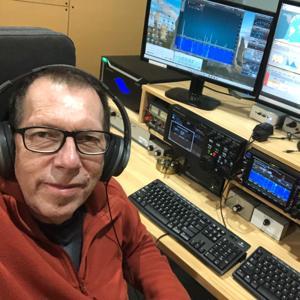
1 Listeners
1 Listeners

894 Listeners

1,096 Listeners