
Sign up to save your podcasts
Or

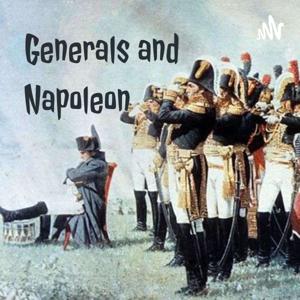


In this episode, we explore the life and legacy of General Jan Henryk Dombrowski, the Polish patriot who fought to restore his nation’s independence—on and off the battlefield.
From the formation of the Polish Legions in Italy to his leadership under Napoleon Bonaparte, Dombrowski became a symbol of national resilience and pride. Special guest Jonathan North joins the show to examine his key military campaigns, his relationship with the French Empire, and how he inspired Poland's national anthem.
Was he a freedom fighter, a pragmatist, or a pawn in Napoleon’s larger ambitions? Join us as we uncover the story of a general who fought not just for victory—but for the very soul of Poland.
X/Twitter: @andnapoleon
In this episode, we examine the Battle of Talavera (July 27–28, 1809), a hard-fought clash of the Peninsular War where Sir Arthur Wellesley, later the Duke of Wellington, won his first major battlefield victory over Napoleon’s marshals in Spain. Facing the French armies of Marshal Victor and King Joseph Bonaparte, British and Spanish forces held firm against repeated attacks under brutal summer conditions.
Special guest Josh Provan discusses the key phases of the battle, including the fighting on Cerro de Medellín, French night assaults, and Wellington’s disciplined defensive tactics. Learn why Talavera earned Wellesley his peerage, exposed the limits of Spanish cooperation, and revealed the challenges Britain would face in Iberia—despite tactical success.
Ideal for listeners interested in the Napoleonic Wars, Wellington, Spanish campaigns, and 19th-century warfare.
X/Twitter: @LandOfHistory, @andnapoleon
In this episode, we break down Napoleon’s military strategies and the battlefield principles that made him the most feared commander of the Napoleonic Wars. From the corps system and rapid maneuver to central position, decisive battle, and relentless pursuit, Napoleon reshaped how wars were fought across Europe.
Special guest & podcaster Jonathan Abel explores how Napoleon used speed, deception, and concentration of force to defeat larger coalitions at battles like Austerlitz, Ulm, and Jena–Auerstedt, while also examining the limits of his system in Spain and Russia. Learn how logistics, artillery, and flexible command allowed the Grande Armée to dominate—and why these same strategies eventually failed against adaptive enemies.
Perfect for fans of military history, strategy and tactics, and operational-level warfare.
X/Twitter: @HistorianAbel, @andnapoleon
Clausewitz and Jomini were two of the most influential military thinkers in history. Both experienced the Napoleonic Wars, both studied the campaigns of Napoleon, and both attempted to answer the same fundamental question: What makes armies win wars? But they reached very different conclusions.
In this episode, special guest Joshua Meeks will compare Clausewitz vs. Jomini and examine how two veterans of the Napoleonic era developed competing theories of warfare that continue to influence military officers, historians, and strategists today.
Jomini served in the armies of both France and Russia and became famous for analyzing Napoleon’s campaigns. Jomini believed that warfare could be understood through identifiable principles. His writings emphasized concepts such as decisive points, lines of operation, concentration of force, maneuver, and the strategic importance of geography. Jomini sought to explain the practical principles behind Napoleon’s battlefield success.
Carl von Clausewitz, a Prussian officer who fought against Napoleon and later served with the Russian army during the Campaign of 1812, approached war differently. In his masterpiece, On War, Clausewitz argued that warfare could not be reduced to a simple formula.
War was shaped by uncertainty, human emotion, politics, chance, and what Clausewitz famously described as friction and the fog of war. Most importantly, Clausewitz argued that war was fundamentally connected to politics and political objectives.
Their contrasting approaches created one of the great debates in the history of military thought. We explore how Napoleon influenced both Clausewitz and Jomini, where their theories agreed and differed, and how their ideas shaped military thinking throughout the 19th and 20th centuries and into the modern era.
Join us for Clausewitz vs. Jomini, a fascinating examination of two men who witnessed the Napoleonic Wars and transformed their experiences into competing theories about the nature of war itself.
If you enjoy military history, military strategy, Napoleon Bonaparte, the Napoleonic Wars, Clausewitz, Jomini, and the study of great commanders, subscribe to the channel for more discussions about the generals, battles, and ideas that shaped warfare.
#Clausewitz #Jomini #MilitaryStrategy #MilitaryHistory #Napoleon #NapoleonicWars #OnWar #Strategy
X/Twitter: @andnapoleon
In this episode, we examine the Battle of Lützen (May 2, 1813), Napoleon’s first major battle after the disaster in Russia and the opening clash of the War of the Sixth Coalition. Facing the combined Russian and Prussian armies under Wittgenstein and Blücher, Napoleon’s rebuilt Grande Armée fought a brutal struggle across the villages of Grossgörschen, Kaja, and Rahna.
Special guest & blogger Jonas de Neef breaks down the battlefield tactics and Napoleon’s reliance on mass artillery to secure victory—despite the absence of his experienced cavalry. Learn why Lützen was a tactical success but strategic warning, revealing the strengths and weaknesses of Napoleon’s new army and setting the stage for the campaigns of Bautzen, Dresden, and ultimately Leipzig.
Ideal for listeners interested in the Napoleonic Wars, 1813 campaign, Prussian–Russian resistance, and the decline of Napoleon’s military system.
X/Twitter: @andnapoleon
In this episode, we examine General Loison, one of Napoleon’s most notorious generals during the Peninsular War. Nicknamed “Maneta” or "One-Hand" by his opponents, Loison earned a brutal reputation for his harsh counter-insurgency operations, scorched-earth tactics, and ruthless discipline—methods that fueled resistance rather than crushed it.
Special guest Charles Mackay traces Loison’s rise during the French Revolutionary Wars, his service under Napoleon, and his key role in campaigns across Portugal and Spain, including the aftermath of Évora and the retreat toward Torres Vedras. Learn how Loison’s aggression contrasted with Napoleon’s expectations, why his conduct damaged French political goals in Iberia, and how his career reflects the wider failures of French strategy in Spain.
Bluesky: @bubblesvampire.bsky.social, @andnapoleon.bsky.social
In this episode, we examine the Battle of Albuera (May 16, 1811), the bloodiest battles of the Peninsular War. British, Portuguese, and Spanish forces under Marshal Beresford faced the French Army led by Marshal Soult in a savage struggle marked by relentless infantry combat and catastrophic casualties.
Special guest Marcus Beresford breaks down Soult’s bold flanking attack, the desperate stand of British infantry under crushing fire, and the role of Spanish and Portuguese troops in holding the line. Learn why Albuera was a tactical stalemate but strategic Allied success, how it exposed both the strength and fragility of coalition warfare, and why veterans remembered it as one of the most brutal fights of the Napoleonic era.
X/Twitter: @andnapoleon
One of more striking figures in Napoleon's cavalry squadrons was the imposing General Montbrun. Special guest and blogger Jonas de Neef joins the show to discuss this intrepid commander of the Grande Armee who died on the battlefield of Borodino.
X/Twitter: @andnapoleon
The 1807 Battle of Eylau was a bloody stalemate that inflicted horrendous casualties on both sides. It may have also provided a blueprint on how to defeat Napoleon. Special guest & author Alexander Mikaberidze discusses the monumental clash between Napoleon's Grande Armee and the Russian army.
X/Twitter: @AMikaberidze, @andnapoleon
In this episode, we explore General Charles Antoine Morand, one of Napoleon’s most capable battlefield commanders and a key figure in Marshal Davout’s III Corps. As a commander of division, Morand helped make Davout’s corps the most disciplined and feared formation in the Grande Armée.
Special guest Charles Mackay follows Morand’s career through the great battles of the Napoleonic Wars, including Auerstedt and the 1812 Russian Campaign, highlighting his skill in defensive fighting, rapid maneuver, and iron discipline. Learn how Morand’s steady leadership under fire embodied Davout’s command philosophy and why he remains less famous—but no less important—than many of Napoleon’s marshals.
Perfect for listeners interested in Napoleonic generals, elite French units, Davout, and operational-level warfare during the early 19th century.
Bluesky: @bubblesvampire.bsky.social, @andnapoleon.bsky.social
From the publisher's feed
Ranked by our users in the last 21 days
4,275 Listeners
537 Listeners
1,240 Listeners
4,764 Listeners
2,069 Listeners
474 Listeners
1,438 Listeners
181 Listeners
583 Listeners
125 Listeners
15,606 Listeners
342 Listeners
137 Listeners
100 Listeners
1,129 Listeners