
Sign up to save your podcasts
Or

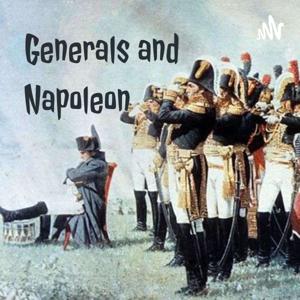


Napoleon’s Conscripts: What Life Was Really Like for Soldiers in the Napoleonic Wars
What was it actually like to serve in Napoleon’s Grande Armée? Behind Napoleon’s legendary victories were hundreds of thousands of ordinary men—many of them conscripts—who marched across Europe, endured brutal conditions, and fought in some of the most famous battles in military history.
In this episode, special guest & author Graeme Callister explores the lives of Napoleon’s conscripts and the realities of serving as a soldier during the Napoleonic Wars. How were men selected for military service? Could they avoid conscription? What happened when a young Frenchman received his orders to join the army?
⚔️ We examine the everyday experience of the Napoleonic soldier—from recruitment and training to uniforms, weapons, food, pay, discipline, camp life, long marches, disease, and combat.
🎖️ What was training like in Napoleon’s army?
🥖 What did French soldiers eat on campaign?
🥾 How far could the Grande Armée march in a day?
💰 How much were Napoleon’s soldiers paid?
🏕️ Where did they sleep while campaigning across Europe?
⚔️ What was it like to stand in an infantry formation as artillery and musket fire tore through the ranks?
And perhaps most importantly: why did so many ordinary soldiers continue to follow Napoleon through years of almost constant warfare?
From the triumphs of Austerlitz and Jena to the catastrophe of the Russian Campaign of 1812 and the desperate fighting of Napoleon’s final campaigns, discover the Napoleonic Wars from the perspective of the men who actually marched and fought in them.
This is the story of Napoleon’s conscripts—the ordinary soldiers behind the extraordinary legend of the Grande Armée.
🇫🇷 If you enjoy Napoleonic history, military history, Napoleon Bonaparte, the Grande Armée, and the lives of ordinary soldiers, like the video, subscribe to the channel, and tell us in the comments: Would you have survived life in Napoleon’s army?
#Napoleon #NapoleonicWars #NapoleonBonaparte #GrandeArmee #MilitaryHistory #FrenchArmy #NapoleonicHistory #MilitaryHistoryDocumentary #History
X/Twitter: @graemecallister, @andnapoleon
Napoleon’s Influence on Churchill and Hitler: How the Emperor’s Legacy Shaped WWII
More than a century after Napoleon Bonaparte’s fall, his victories, mistakes, ambitions, and extraordinary career continued to fascinate the leaders of Europe. Among those who studied and invoked Napoleon were two of the most consequential figures of World War II: Winston Churchill and Adolf Hitler.
But what influence did Napoleon actually have on Churchill and Hitler?
In this episode, special guest Warren Dockter will explore how Napoleon’s legacy survived into the 20th century and how two very different wartime leaders viewed the French Emperor and the lessons of the Napoleonic Wars.
Churchill and Napoleon — Discover Churchill’s interest in Napoleon, his understanding of the Napoleonic era, and how Britain’s long struggle against Napoleon became part of the historical backdrop against which Churchill viewed Britain’s fight against Nazi Germany.
Hitler and Napoleon — Examine Hitler’s fascination with Napoleon and the historical parallels surrounding their attempts to dominate continental Europe.
Napoleon, Hitler & Russia — In 1812, Napoleon invaded the Russian Empire with the Grande Armée. In 1941, Hitler launched Operation Barbarossa against the Soviet Union. How useful are the famous comparisons between these two enormous invasions—and where do the similarities end?
Britain Stands Against Continental Domination — Napoleon failed to force Britain out of the war. More than a century later, Hitler also confronted a Britain determined to continue fighting despite the defeat or occupation of much of continental Europe.
⚔️ The Lessons of History — From coalition warfare and economic pressure to overstretched armies and campaigns in Russia, Napoleon’s career provided later generations with powerful examples of both spectacular military success and catastrophic strategic failure.
Napoleon died in 1821, but his influence on military strategy, politics, leadership, and popular culture continued long after the Napoleonic Wars ended. By the time Europe descended into another enormous conflict in World War II, Napoleon remained an unavoidable historical figure for statesmen, soldiers, and dictators attempting to understand power and war in Europe.
How did Winston Churchill interpret Napoleon’s legacy? What did Adolf Hitler make of the French Emperor? And how much can Napoleon’s wars really tell us about the events of World War II?
Join us as we explore Napoleon Bonaparte’s influence on Churchill and Hitler and the remarkable ways the Napoleonic era continued to echo through European history more than a century later.
👍 If you enjoy Napoleon, Winston Churchill, World War II, military history, military strategy, and the Napoleonic Wars, like the video, subscribe to the channel, and join us for more stories about the leaders, generals, and battles that shaped history.
#Napoleon #WinstonChurchill #WorldWarII #NapoleonBonaparte #MilitaryHistory #NapoleonicWars #WWII #MilitaryStrategy #EuropeanHistory #History
X/Twitter: @WarrenDockter, @andnapoleon
The Lines of Torres Vedras were one of the most remarkable defensive systems of the Napoleonic Wars. Built in secret north of Lisbon during the Peninsular War, these massive fortifications helped stop Marshal André Masséna's French army during the 1810 invasion of Portugal and played a crucial role in the eventual Allied victory under the Duke of Wellington.
Special guest Mark S. Thompson will explore how the Lines of Torres Vedras were constructed, why Wellington chose this location, and how thousands of Portuguese civilians and soldiers helped transform the landscape into an enormous defensive network. Discover the forts, redoubts, roads, obstacles, and strategic positions that made the Lines such a formidable barrier.
We'll examine Masséna's invasion of Portugal, the French advance toward Lisbon, and the dramatic standoff that followed. With French supplies running dangerously low, Masséna was eventually forced to retreat, beginning one of the most important turning points of the Peninsular War.
Topics covered:
• The construction of the Lines of Torres Vedras
• Wellington's defensive strategy
• Marshal Masséna's invasion of Portugal
• The French Army reaches the Lines
• Wellington's use of terrain and fortifications
• Portuguese civilian and military contributions
• French supply problems and starvation
• Masséna's retreat from Portugal
• The importance of the Lines to the Peninsular War
The Lines of Torres Vedras demonstrate how preparation, intelligence, engineering, logistics, and terrain could combine to defeat a much larger invading army.
If you enjoy Napoleonic Wars history, military strategy, battlefield analysis, Wellington, the Peninsular War, and the history of Napoleon's campaigns, be sure to like, subscribe, and leave a comment with your thoughts on one of the most impressive defensive systems in military history.
#LinesOfTorresVedras #Napoleon #NapoleonicWars #PeninsularWar #Wellington #Massena #MilitaryHistory #BattlefieldHistory #PortugueseHistory #FrenchHistory #HistoryPodcast
X/Twitter: @andnapoleon
How Napoleon’s Armies Fought: Napoleonic Tactics Explained
How did Napoleon’s armies actually fight battles? What made the Grande Armée so successful, and how did Napoleon combine infantry, cavalry, and artillery to defeat the armies of Europe?
In this episode, special guest Major Michael Hamel will break down the battlefield tactics of the Napoleonic Wars and explain how Napoleon’s armies operated—from the movements of individual infantry battalions to the coordination of entire corps on the battlefield.
⚔️ Infantry Tactics — Discover how French infantry used lines, columns, skirmishers, and squares, and why commanders shifted between different formations during battle.
🔫 Muskets & Bayonets — Learn how soldiers fought with smoothbore muskets, how volleys were delivered, and the role of the bayonet in Napoleonic combat.
💥 Artillery — See how Napoleon concentrated his guns to weaken enemy positions and how artillery could help prepare the way for a decisive attack.
🐎 Cavalry — Explore the roles of cuirassiers, dragoons, hussars, and lancers and how cavalry was used for reconnaissance, pursuit, battlefield shock, and attacks against vulnerable infantry.
🦅 The Corps System — Understand how Napoleon organized his Grande Armée into flexible, semi-independent corps capable of marching separately and concentrating rapidly for battle.
🗺️ Napoleon’s Battlefield Strategy — Examine how speed, maneuver, concentration of force, combined arms, and attacks against critical points helped produce victories such as Austerlitz, Jena, Friedland, and Wagram.
Napoleonic warfare was far more complicated than soldiers simply marching forward in colorful uniforms. Success depended on formation, timing, terrain, morale, command, artillery support, cavalry, skirmishers, and the ability to concentrate overwhelming force at the decisive moment.
From the infantryman carrying his Charleville musket to Napoleon directing an army of more than 100,000 men, this episode explains how a Napoleonic battle actually worked.
If you enjoy Napoleon, the Napoleonic Wars, military tactics, battlefield strategy, the Grande Armée, and military history, subscribe to the channel and join us as we explore the generals, battles, and armies that shaped the Napoleonic era.
💬 Which Napoleonic tactic do you think was most important to Napoleon’s success? Let us know in the comments!
#Napoleon #NapoleonicWars #NapoleonicTactics #MilitaryHistory #NapoleonBonaparte #GrandeArmee #MilitaryTactics #MilitaryStrategy #FrenchArmy #History
X/Twitter: @andnapoleon
Napoleon’s Imperial Guard: The Elite Soldiers of the Grande Armée
They were Napoleon Bonaparte’s most famous soldiers—the veterans, cavalrymen, artillerymen, and elite troops of the Imperial Guard. Feared by Napoleon’s enemies and revered throughout the Grande Armée, the Guard became one of the most legendary military formations of the Napoleonic Wars.
But who were the men of Napoleon’s Imperial Guard, and what made them so formidable?
In this episode, special guest & author Michael Broers will explore the history, organization, battlefield role, and legendary reputation of the troops Napoleon called upon at the most critical moments of his campaigns.
🦅 The Old Guard — Meet Napoleon’s hardened veterans, including the famous Grenadiers and Chasseurs of the Imperial Guard, whose experience and loyalty made them symbols of the Napoleonic army.
⚔️ The Middle and Young Guard — Discover how Napoleon dramatically expanded the Imperial Guard as his empire grew and how its different formations were used on campaign.
🐎 Guard Cavalry — From the Grenadiers à Cheval and Chasseurs à Cheval to the Polish Lancers, explore some of the most celebrated cavalry formations in Napoleon’s army.
💥 Guard Artillery — Learn about the powerful artillery arm that provided Napoleon with an elite reserve of guns and experienced artillerymen.
🎖️ Life in the Imperial Guard — How did a soldier qualify for the Guard? What privileges, uniforms, pay, and status did Guardsmen receive compared with ordinary troops of the Grande Armée?
⚔️ The Guard in Battle — Follow Napoleon’s elite soldiers through campaigns including Austerlitz, Eylau, Wagram, Russia, Leipzig, the defense of France in 1814, and Waterloo.
At Waterloo in 1815, Napoleon committed elements of the Imperial Guard during the climactic final attack against Wellington’s army. Their repulse became one of the defining moments of Napoleon’s final battle and helped give rise to one of the enduring legends of the Napoleonic era: “The Guard dies, but does not surrender.”
From their distinctive bearskin caps and magnificent uniforms to their reputation for courage and discipline, Napoleon’s Imperial Guard became much more than an elite military formation. They became a symbol of Napoleon, the Grande Armée, and the French Empire itself.
Discover the soldiers who fought closest to the Emperor and followed Napoleon from the height of his power to his final defeat.
👍 If you enjoy Napoleon Bonaparte, the Napoleonic Wars, the Grande Armée, military history, and the soldiers and generals of the French Empire, like the video, subscribe to the channel, and join us for more stories from the Napoleonic era.
💬 Which unit of Napoleon’s Imperial Guard do you find most fascinating? Let us know in the comments!
#Napoleon #ImperialGuard #OldGuard #NapoleonicWars #NapoleonBonaparte #GrandeArmee #MilitaryHistory #FrenchArmy #Waterloo #MilitaryHistoryDocumentary
X/Twitter: @andnapoleon
Henry Paget, 2nd Earl of Uxbridge, was one of Britain’s finest cavalry commanders of the Napoleonic Wars—and the man who commanded the Duke of Wellington’s cavalry at the Battle of Waterloo. A daring battlefield leader with a colorful personal life, Uxbridge is also remembered for one of the most famous exchanges in military history after a cannonball shattered his leg near the end of the battle.
In this episode, special guest Marcus Cribb explores the remarkable career of Henry William Paget, Lord Uxbridge, later the 1st Marquess of Anglesey.
Paget established his reputation as a brilliant cavalry commander during the Peninsular War, particularly during Sir John Moore’s retreat to Corunna in 1808–1809. His aggressive handling of British cavalry demonstrated a talent for mounted warfare that would eventually earn him one of the most important commands in Wellington’s army. But Paget's career was nearly derailed by scandal.
His affair with Lady Charlotte Wellesley, wife of Wellington’s brother Henry Wellesley, created a sensational scandal in British society and contributed to years of tension between Paget and the Wellesley family. Despite their complicated history, Wellington selected Uxbridge to command the Allied cavalry during the Waterloo Campaign of 1815.
At Waterloo, Uxbridge commanded thousands of cavalrymen and helped direct some of the battle’s most famous mounted actions, including the spectacular charges of the Household Brigade and Union Brigade against Napoleon’s forces.
Uxbridge repeatedly exposed himself to enemy fire while leading from the front. Near the end of the battle, a French cannonball struck his right leg while he was beside Wellington.
According to the famous story, Uxbridge calmly remarked:
“By God, sir, I’ve lost my leg!”
To which Wellington supposedly replied:
“By God, sir, so you have!”
Uxbridge survived the amputation and went on to live for decades after Waterloo, eventually becoming Marquess of Anglesey and continuing a distinguished career in British public life.
How good was Lord Uxbridge as a cavalry commander? Why did Wellington trust a man connected to such a painful family scandal with command of his cavalry? How important were the British cavalry charges at Waterloo? And what really happened when Uxbridge lost his leg?
Topics covered: Lord Uxbridge • Henry Paget • Marquess of Anglesey • Battle of Waterloo • Duke of Wellington • Napoleon Bonaparte • Waterloo 1815 • British Cavalry • Household Brigade • Union Brigade • Peninsular War • Sir John Moore • Napoleonic Wars • Wellington’s Generals • Waterloo Cavalry Charges • Lord Uxbridge’s Leg
#LordUxbridge #BattleOfWaterloo #Wellington #Napoleon #NapoleonicWars #Waterloo #BritishCavalry #MilitaryHistory
X/Twitter: @mcribbHistory, @andnapoleon
Support our podcast growth: patreon.com/generalsandnapoleon
Napoleon Bonaparte conquered much of Europe and built one of the most powerful empires of the 19th century—but there was one problem even Napoleon could not solve on the battlefield: who would succeed him?
In this episode, special guest Katherine Bayford will explore Napoleon’s succession crisis, one of the most important political and personal challenges of his reign. After declaring himself Emperor of the French in 1804, Napoleon needed more than military victories to secure his dynasty. He needed an heir.
His marriage to Joséphine had produced no children, raising an increasingly dangerous question: What would happen to the Napoleonic Empire if Napoleon suddenly died?
Several potential successors emerged. Napoleon’s brothers—Joseph, Louis, and Jérôme Bonaparte—were members of the new imperial dynasty, but Napoleon frequently questioned their abilities and loyalty. His stepson Eugène de Beauharnais became one of his most trusted relatives and an accomplished military commander. Napoleon also showed enormous affection for his nephew Napoléon Charles, the son of Louis Bonaparte and Hortense de Beauharnais, before the boy’s tragic death in 1807.
The succession problem ultimately helped lead Napoleon to one of the most painful decisions of his life: divorcing Joséphine.
In 1810, Napoleon married Archduchess Marie Louise of Austria, daughter of Emperor Francis I. The following year she gave birth to the son Napoleon had desperately wanted—Napoleon François Charles Joseph Bonaparte, immediately given the title King of Rome. At last, Napoleon had a direct heir.
But the succession crisis was not over. As Napoleon’s empire collapsed in 1814, the future of his dynasty became part of the struggle over Europe itself. Napoleon attempted to preserve the throne for his young son, and after Waterloo he would again abdicate in favor of the boy—creating the brief and disputed reign of Napoleon II.
Could Napoleon have established a lasting Bonaparte dynasty? Was divorcing Joséphine necessary to protect the Empire? Could Eugène de Beauharnais or one of Napoleon’s brothers realistically have succeeded him? And what became of the son Napoleon intended to inherit his empire?
Topics covered: Napoleon’s succession crisis • Napoleon Bonaparte • Napoleon II • King of Rome • Joséphine de Beauharnais • Marie Louise of Austria • Eugène de Beauharnais • Joseph Bonaparte • Louis Bonaparte • Jérôme Bonaparte • Napoléon Charles • Bonaparte dynasty • First French Empire • Napoleon’s heir • Napoleon and Joséphine • Napoleon’s family • Napoleonic Wars
#Napoleon #NapoleonBonaparte #NapoleonII #Josephine #NapoleonicWars #FrenchEmpire #Bonaparte #MilitaryHistory
X/Twitter: @kebayf, @andnapoleon
Please do support our podcast: patreon.com/generalsandnapoleon
🔥 Marshal Jean Lannes: Napoleon’s Fireman
When Napoleon found himself in the most desperate situations, there was one marshal he repeatedly trusted to hold the line, lead the attack, and somehow turn disaster into victory: Jean Lannes.
Known for his extraordinary courage, aggressive battlefield leadership, and close personal relationship with Napoleon, Marshal Lannes rose from humble beginnings to become the Duke of Montebello and one of the most celebrated commanders of the Napoleonic Wars.
But what made Lannes so valuable to Napoleon—and why has he sometimes been described as “Napoleon’s fireman”?
⚔️ Special guest & author Graeme Callister will follow Lannes from his early service during the French Revolutionary Wars and Napoleon’s campaigns in Italy to the great battles of the Napoleonic era.
Discover his role at Montebello, Austerlitz, Jena, Pultusk, Friedland, and Tudela, where his courage and tactical ability helped establish his reputation as one of Napoleon’s finest battlefield commanders.
🔥 Unlike some of Napoleon’s marshals, Lannes was frequently entrusted with difficult assignments at critical moments. Whether leading an assault, stabilizing a dangerous situation, or commanding an exposed portion of Napoleon’s army, Lannes developed a reputation as a commander who could be relied upon when the fighting was at its fiercest.
🦅 Lannes & Napoleon — Their relationship went far beyond that of emperor and subordinate. Lannes was one of the few men who could speak frankly to Napoleon, and their friendship stretched back to the campaigns that first made Bonaparte famous.
💥 Aspern-Essling, 1809 — Lannes’ remarkable career came to a tragic end during Napoleon’s first major battlefield defeat. Mortally wounded after the fighting at Aspern-Essling, Lannes died days later. Napoleon was devastated by the loss of one of his closest friends and most dependable commanders.
From his fiery personality and legendary bravery to his evolution into an accomplished commander, Jean Lannes embodied the fighting spirit of Napoleon’s Grande Armée.
Was Lannes Napoleon’s greatest battlefield marshal? And how might the Emperor’s later campaigns have been different if Lannes had survived beyond 1809?
Join us as we explore the life, battles, personality, and legacy of Marshal Jean Lannes—Napoleon’s fireman.👍 If you enjoy Napoleon Bonaparte, Napoleon’s Marshals, the Napoleonic Wars, the Grande Armée, military history, and battlefield strategy, like the video, subscribe to the channel, and join us for more stories from the Napoleonic era.
#MarshalLannes #JeanLannes #Napoleon #NapoleonBonaparte #NapoleonicWars #NapoleonsMarshals #GrandeArmee #MilitaryHistory #AspernEssling #FrenchHistory
X/Twitter: @GraemeCallister, @andnapoleon
Marshal Marmont: Napoleon’s Marshal and His Controversial Life After 1815
Few of Napoleon’s Marshals left behind a more controversial legacy than Auguste de Marmont, Duke of Ragusa. Once a trusted friend and commander of Napoleon, Marmont fought across Europe during the Napoleonic Wars—but his actions during the fall of the French Empire would forever change how history remembered him.
In this episode, special guest David Montgomery will explore the remarkable career of Marshal Auguste de Marmont, from his early relationship with Napoleon and rise through the French Army to the controversy of 1814—and the fascinating life he lived after Napoleon’s final defeat.
The Napoleonic Wars — Explore Marmont’s service in Italy, Egypt, Dalmatia, the 1809 campaign, the Peninsular War, and the desperate battles fought to defend France as Napoleon’s empire collapsed.
💥 The Controversy of 1814 — As Allied armies closed in on Paris, Marmont entered negotiations that resulted in his corps passing into Allied control. To Napoleon’s supporters, his actions became synonymous with betrayal. Marmont maintained that he acted in France’s interests during a military and political situation that had become hopeless.
👑 The Bourbon Restoration — What happened to Marmont after Napoleon abdicated? Discover his complicated relationship with the restored Bourbon monarchy and his place in French society after the Napoleonic Empire.
⚜️ The July Revolution of 1830 — Marmont returned to the center of French history when King Charles X placed him in command of government forces during the revolution in Paris. Once again, the former marshal found himself caught between loyalty, politics, and revolution.
🌍 Exile and Life After Napoleon — After 1830, Marmont spent much of the remainder of his long life traveling through Europe and writing about the extraordinary era he had witnessed. He outlived Napoleon by decades and became one of the last surviving Marshals of the Empire.
Was Marmont a traitor to Napoleon—or a soldier attempting to save his men and France from a war that was already lost?
From the battlefields of the Napoleonic Wars to revolution, exile, and controversy, discover the extraordinary story of Marshal Auguste de Marmont, a man whose life after Napoleon was nearly as fascinating as his career under the Emperor.
👍 If you enjoy Napoleon Bonaparte, Napoleon’s Marshals, the Napoleonic Wars, the Grande Armée, French history, and military history, like the video, subscribe to the channel, and join us for more stories about the generals and personalities of the Napoleonic era.
💬 How should history remember Marmont: as a betrayer of Napoleon, or as a commander trapped in an impossible situation? Let us know in the comments.
#MarshalMarmont #Marmont #Napoleon #NapoleonBonaparte #NapoleonicWars #NapoleonsMarshals #GrandeArmee #FrenchHistory #MilitaryHistory #BourbonRestoration
X/Twitter: @TheSiecle, @andnapoleon
The Battle of Vitoria, fought on June 21, 1813, was one of the most decisive Allied victories of the Peninsular War and a devastating blow to Napoleon’s empire. Led by Arthur Wellesley, the future Duke of Wellington, the Allied army smashed the forces of King Joseph Bonaparte and Marshal Jean-Baptiste Jourdan, effectively ending French domination of Spain.
In this episode, special guest & author Josh Provan will explore the Battle of Vitoria, where Wellington orchestrated an ambitious multi-column attack against the French positions surrounding the city. British, Portuguese, and Spanish troops advanced from several directions, threatening the French flanks and cutting into their lines of retreat.
The French army fought to escape as Wellington’s forces broke through their defenses. What followed became one of the most extraordinary scenes of the Napoleonic Wars. Joseph Bonaparte’s retreating army abandoned artillery, wagons, supplies, treasure, and enormous amounts of loot accumulated during years of French occupation in Spain.
The Allied soldiers descended upon the abandoned baggage train, and the pursuit largely collapsed as men stopped to seize the riches. Wellington was furious, famously complaining about the condition and discipline of his victorious army after the battle.
But strategically, Vitoria was a disaster for Napoleon.
French power in Spain was effectively broken. Joseph Bonaparte fled, the remnants of the French army withdrew toward the Pyrenees, and Wellington soon carried the war across the frontier and into France itself.
The victory also had consequences far beyond Spain. News of Vitoria spread across Europe as Napoleon struggled to rebuild his forces following the catastrophic Russian Campaign of 1812. The battle demonstrated that the French Empire could be defeated and strengthened the coalition forming against Napoleon.
How did Wellington outmaneuver the French? Why were Joseph Bonaparte and Marshal Jourdan unable to stop him? And how did an Allied victory turn into one of the greatest episodes of looting in the history of the Peninsular War?
Join us as we examine the commanders, strategy, battlefield decisions, and dramatic aftermath of the Battle of Vitoria—one of Wellington’s greatest victories and one of Napoleon’s most consequential defeats in Spain.
Topics covered: Battle of Vitoria • Vitoria 1813 • Duke of Wellington • Arthur Wellesley • Napoleon Bonaparte • Joseph Bonaparte • Marshal Jourdan • Peninsular War • Napoleonic Wars • British Army • Portuguese Army • Spanish Army • French Army • Wellington in Spain • Napoleon’s Generals • Military History
#BattleOfVitoria #NapoleonicWars #Wellington #Napoleon #PeninsularWar #MilitaryHistory #NapoleonBonaparte #BritishArmy
X/Twitter: @landofhistory, @andnapoleon
From the publisher's feed
Ranked by our users in the last 21 days
4,275 Listeners

537 Listeners
1,240 Listeners

4,764 Listeners
2,069 Listeners
474 Listeners
1,438 Listeners
181 Listeners

583 Listeners
125 Listeners
15,606 Listeners
342 Listeners
137 Listeners
100 Listeners

1,129 Listeners