
Sign up to save your podcasts
Or

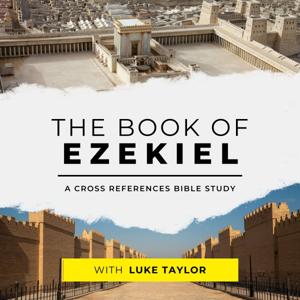


We’re finally here, the most famous section of Ezekiel: chapters 38 and 39. The battle of Gog and Magog.
This chapter is about an alliance of nations that band together to attack Israel in the end times. The list of nations includes names like Cush, Put, Togarmah and more, and they’re led by a figure named Gog.
I don’t know about you, but these sound like someone in Scrabble trying to make up words with whatever tiles they have left. In fact, it’s hard to know who all it’s talking about unless we do some historical research to find out what these words meant to Ezekiel’s original audience.
And that’s not difficult to do, except when it comes to the identity of the leader of this alliance: Gog.
Who is Gog? That’s the question we’re going to start this multi week study with, and it all begins today on the Cross References podcast.
0:00 - Introduction
4:30 - Meshech and Tubal
14:50 - Magog
18:25 - Gog
28:25 - Is Gog the Antichrist?
If you want to get in touch with me, send an email to [email protected]
If you’re looking for a detailed Ezekiel Bible study, cross-referenced with supporting scripture, this podcast will provide an in-depth look at the prophets of the Bible, with clear Bible prophecy explained. We explore Ezekiel’s visions and other Old Testament Bible study topics through careful Bible exegesis to help you in understanding the Book of Ezekiel in a deeper way. I’m glad you’re here, and don’t forget to SUBSCRIBE so you never miss an episode!
It was the week before Halloween in the fall of 1988 when Bill Scott picked up the phone at his job at a Christian radio station and his life was never the same.
What follows is a story of demonic possession, deliverance, and a long list of what to do and what NOT to do when standing up to the powers of darkness.
I’ve been doing a series on the abilities of demons here on this podcast. Bill joins me today to share his story with my listeners here. It’s going to add some insight and depth to your understanding of spiritual warfare. But let me warn you: parts of his interview will rock your world, get a little scary, and a lot weird.
So if you’re ready, let’s get weird.
Find Bill's book right here: https://www.amazon.com/Day-Satan-Called-Encounter-Possession/dp/0892968982/ref=tmm_pap_swatch_0?_encoding=UTF8&qid=&sr=
The Day Satan Called: A True Encounter with Demon Possession and Exorcism. Available in paperback and on Kindle.
If you want to get in touch with me (Luke Taylor), my email is [email protected]
Hosted by Luke Taylor
If you’re intrigued by strange Bible stories, uncovering Bible mysteries, or learning about unusual biblical teachings, this podcast is for you! Dive deep into weird Bible facts, biblical controversies, and the supernatural in the Bible, while exploring the hidden stories of the Bible you may have never heard. Get a fresh perspective as we explain the Bible in ways that challenge the norm and uncover the unexpected. I’m so glad you’re here- don’t forget to SUBSCRIBE so that you never miss an episode!
I’m going to give you a great Bible Study tip, because some people have a really hard time figuring out what the Bible is saying. So here’s a little tip that always helps me: when the Bible tells you what it’s saying, then you don’t have to try to figure out what it’s saying. You can just go with what the Bible tells you it’s saying.
Sound good? Great. Now you can throw out half your commentaries on the book of Ezekiel. Or, at least, you can come throw out half of mine, because it’s astounding how many Bible teachers- literal scholars- will totally miss the point of Ezekiel 37.
We talked about it last time, and it’s going to come up in this lesson, too. Now, I don’t want to sound arrogant, or like I’m smarter than all these guys. Why do I say they get it wrong? Well, because they bring all these preconceptions to the table when the crack open their Bibles, and whatever they read in the Bible must always fit the preconceptions they had before they opened it.
And these preconceptions are things like covenant theology or replacement theology. And if you want to make Ezekiel 37 fit replacement theology, you have to ignore what the Bible says when it tells you exactly what it says it means and make words mean things that the Bible never said.
The Book of Ezekiel creates some major headaches for people who want to make the Bible fit their preconceptions rather than letting the Bible mean what it clearly says.
So today, we’re going to leave our preconceptions right here in the intro, and we’ll let Ezekiel 37 tell us exactly what it’s telling us. And you’ll learn what that is today on the Cross References podcast.
0:00 - Introduction
2:00 - v15-16, A Tale of Two Sticks
10:50 - v17-21, The Power of One
18:55 - v22-28, Who is David?
25:05 - Debunking Replacement Theology
30:40 - Plans for the Rest of This Year
34:10 - Remembering October 7, 2023
40:45 - The 10 Lost Tribes Myth
If you want to get in touch with me, send an email to [email protected]
If you’re looking for a detailed Ezekiel Bible study, cross-referenced with supporting scripture, this podcast will provide an in-depth look at the prophets of the Bible, with clear Bible prophecy explained. We explore Ezekiel’s visions and other Old Testament Bible study topics through careful Bible exegesis to help you in understanding the Book of Ezekiel in a deeper way. I’m glad you’re here, and don’t forget to SUBSCRIBE so you never miss an episode!
There are two chapters of the book of Ezekiel that I feel are most abused when it comes to interpretation. Two chapters that people seem to just want to allegorize and make them mean whatever they want. And one of those chapters is right here. Ezekiel 37.
Many Christians try to make this chapter about a future resurrection. That may be the most popular interpretation of this chapter. But Ezekiel 37 has a context, and that’s not it.
Some try to take this passage literally and say it’s about the power of our words. But Ezekiel 37 has a context, and that’s not it.
Some try to make this passage about the origin of the church. But Ezekiel 37 has a context, and that’s not it.
Some try to make this passage about how God can bring life to things that seem dead and revive things that looked long-gone and turn your whole life situation around. And God certainly can do all those things, but Ezekiel 37 is not about you. Ezekiel 37 has a context, and that’s not it.
So today, we’ll talk about the context of Ezekiel 37 to try and understand what it really means. It had a meaning back then, and it also has a meaning for modern times, and you’ll learn it today on the Cross References podcast.
0:00 - Introduction
3:20 - v1-6, Death Valley
10:05 - v7-10, Revival
15:25 - v11-14, What It All Means
20:00 - Regathered and Restored
35:40 - Next Time
37:25 - Regenerated
If you want to get in touch with me, send an email to [email protected]
If you’re looking for a detailed Ezekiel Bible study, cross-referenced with supporting scripture, this podcast will provide an in-depth look at the prophets of the Bible, with clear Bible prophecy explained. We explore Ezekiel’s visions and other Old Testament Bible study topics through careful Bible exegesis to help you in understanding the Book of Ezekiel in a deeper way. I’m glad you’re here, and don’t forget to SUBSCRIBE so you never miss an episode!
I can't figure out why I keep making everybody mad at me, so I brought in an expert to explain it. Craig of Awaiting Christ ministry and podcast joins me today to explain dispensationalism and how it relates to the modern state of Israel and rapture theology- both hot button issues in today's political and church climate.
Craig is a seminary student and also a writer for GotQuestions.org. Find out more about him at: https://linktr.ee/AwaitChrist
There’s a strange contradiction in God’s promises to the Jewish people.
In Genesis 12, God makes a covenant with Abraham to give him the land of Israel. In Genesis 17:7, God told Abraham that His covenant with him and his descendants would be an everlasting covenant.
But then in Leviticus 26, God warns that if the Jewish people break His commandments, He will kick them out of their land.
And then we know from our studies in the book of Ezekiel that that’s exactly what happened. In fact, in Ezekiel 16, God even tells us that the covenant was broken.
This was in the 500s BC. But God had said He was making an everlasting covenant around 2000 BC. So since when does “everlasting” have an expiration date after 1500 years? How can God say that a covenant can ever be broken if God had already promised it was everlasting?
And does this mean that the Jewish people actually have no right to the claim of the land of Israel today?
Now, I actually believe there are NO contradictions in God’s Word, and that when we think we’ve found one, we actually just need to rightly divide the Word of Truth to figure out how it all fits together.
And that’s what we’ll do today as we finish up Ezekiel 36 on the Cross References podcast.
0:00 - Introduction
5:30 - v28-30, The Return
10:35 - v31-32 True Repentance
18:00 - v33-38, The Regrowth of Israel
23:25 - Two Covenants (with Craig from Awaiting Christ)
31:50 - Closing Thoughts
If you want to get in touch with me, send an email to [email protected]
Trying to figure out the next step in your life's journey? Today, I chat with Chris Pace about his new book Level Up. As I tell the story in this episode, I actually met Chris recently while on vacation, and he gave me a copy of his book. This interview will share several insights with you about discovering God's will. Here is a link where you can find more about Chris' book: https://chrispace.org/
I will also paste my Amazon review below...
I was incredibly blessed to come across this book by Chris Pace! It spoke directly to some issues I have been dealing with in my own life. I really took my time with it because I wanted to soak it all in. Sometimes I didn't even read a full chapter before I put it down because it gave me so much to think about.
I highly encourage this book to people who feel "stuck" at their current place in life and want direction on discovering what God may have next for them. If you want encouragement, are feeling aimless in life, or you need a recalibration of your calling, this book can give you the tools you need to reset yourself.
I also encourage you to finish it, because I found that the book became better and better the deeper I got into it. This surprised me because many books try to put its most important information first and then they kind of drag out the rest to increase the page count. Not this one. Every chapter got more engaging and practical, all the way up to the very end. I couldn't believe some of the insights I was still discovering even in the last 10 pages of the book.
I think anyone who reads this book will find something helpful! Easily 5 stars.
Today, I am sharing an episode from my other podcast, Weird Stuff in the Bible. Each week, I dive into a different weird topic regarding bizarre things in scripture. Hear more by subscribing to this podcast as well! And tune back in on Cross References next week to hear an interview with Chris Pace of Messenger International about his new book, Level Up.
On a recent episode of this podcast, I was discussing a weird story about Moses in Exodus 4, I came across another pretty odd verse that generates some confusion among Christians: Exodus 4:21.
Now, I didn’t want to stop and analyze that verse because it would have taken me on a rabbit trail, and I was already trying to talk about a different weird thing, and I would have had to go down a weird-ception of weird-within-a-weird. So I decided to come back to it this week.
And what does Exodus 4:21 say? Well, it’s as Moses is on his way back to Egypt, and God says
(Exodus 4:21)
“When you go back to Egypt, see that you do before Pharaoh all the miracles that I have put in your power. But I will harden his heart, so that he will not let the people go.
So that’s strange because it raises the question of whether Pharaoh even had a choice about how everything was going to play out. Because if you know the story, Pharaoh doesn’t want to let the people go, and he pays a pretty steep price for it.
And yet Pharaoh never relents. All throughout the story, his heart is harder than your grandma’s fruit cake at Christmas.
But this claim that God would harden Pharaoh’s heart makes it seem like Pharaoh wasn’t even really able to let the people go if he wanted to. So what gives? Did Pharaoh have free will?
And perhaps more importantly to us: do you and I have free will?
I find this to be weird, and I’d like to explore why it’s in the Bible.
Turn to Exodus 4, and let’s get weird.
0:00 - Introduction
2:40 - What is a Hard Heart?
6:20 - God vs Pharaoh
9:40 - Is Anyone at Fault?
13:40 - Next Time
15:25 - Would God Harden our Hearts?
If you want to get in touch, my email is [email protected]
Hosted by Luke Taylor
Last week I talked about how I did my parental duty and instilled the love of star wars into my child.
Now let me talk about one of the stupidest things in star wars.
And it comes from the same place that all of the stupidest things in star wars come from: the new Disney movies.
This one is flies right into the face of common sense.
It comes from the inner turmoil experienced by the villain of Episode 7: Kylo Ren.
Kylo is on the dark side. He seeks to prove himself a true, fully committed disciple of the dark side throughout the movie, and throughout the film he makes some comments. One of them is:
Forgive me. I feel it again. The pull to the light.
Throughout the film, Kylo is dealing with this “quote-unquote-temptation” to turn good, and this is one of the lines he uses.
Now, to write a line like that betrays any understanding of how the human heart actually operates. We want to be good, but we wrestle with the temptation to be bad.
Like it says in Galatians 5: the desires of the Spirit are against the flesh…to keep you from doing the things you want to do.
The Bible says we “want” to do good, but it’s our sinful desires that pull us back. But Kylo wants to be bad and wrestles with a temptation to be good. It’s completely backwards. It’s like saying, “Pray for me, I’m really tempted to eat this salad when I know I should order a double cheeseburger.”
There is not something naturally inside of us that pulls us toward righteousness and away from evil. What is inside of us pulls us to the flesh, to our natural instincts, toward selfishness and evil, toward…the dark side.
We aren’t tempted toward the light. The decision to pursue the light does not come from something within us naturally; but something that is given to us by God.
To be drawn toward the light requires God to put a new heart and a new spirit within us.
Which sounds like what we’ve been studying as we go through the book of Ezekiel, and it’s something you’ll find out about today on the Cross References podcast.
0:00 - Introduction
3:00 - The Spirit
11:00 - The Spirit Empowers You
14:15 - The Spirit Seals You
17:30 - The Spirit Guides You
27:00 - The Spirit is a Point of Connection Between You and God
32:00 - Next Time
34:15 - A Note about Hearing from the Spirit
If you want to get in touch with me, send an email to [email protected]
Poor Nicodemus. That guy really gets a bad rap.
Nicodemus was the Pharisee who famously came to Jesus by night, because he was afraid if he approached Jesus during the day that people might see, and people might talk. He was a wise man, a religious man, a scholar.
And it’s a good thing that he comes to Jesus in the middle of the night like this because if anyone did hear what Nicodemus was saying, he’d never hear the end of it. When he was told that he must be born again, in
John 3:4, he replied to Jesus,
How can a man be born when he is old? Can he enter a second time into his mother's womb and be born?
And if this were a sitcom, modern people will stick the laugh track right here and we’ll all high-five and laugh at the dumb question. So Jesus makes this statement:
(Verse 5)
Truly, truly, I say to you, unless one is born of water and the Spirit, he cannot enter the kingdom of God.
Nicodemus is still confused. He says to Jesus,
“How can these things be?” 10 Jesus answered him, “Are you the teacher of Israel and yet you do not understand these things?”
Now the laugh track probably goes off again, but we should stop and consider this question. It’s actually kind of a tricky one. Jesus expects Nicodemus to know this.
But why should he be expected to understand this? Why should Nicodemus know about concepts like “born again” and “born of water and the Spirit.” It’s not like the Old Testament teaches about these things.
Or does it? You’ll find out today on the Cross References podcast.
0:00 - Introduction
2:00 - v24, The Return
4:20 - v25, Cleansed by Water
13:00 - v26,
19:30 - A Note on the Future
23:40 - Closing Thoughts
If you want to get in touch with me, send an email to [email protected]
From the publisher's feed

2,563 Listeners

648 Listeners

1,255 Listeners
1,023 Listeners
5,422 Listeners

65,453 Listeners

576 Listeners

2,442 Listeners

916 Listeners

5,215 Listeners
687 Listeners
13,156 Listeners
409 Listeners
53 Listeners
381 Listeners